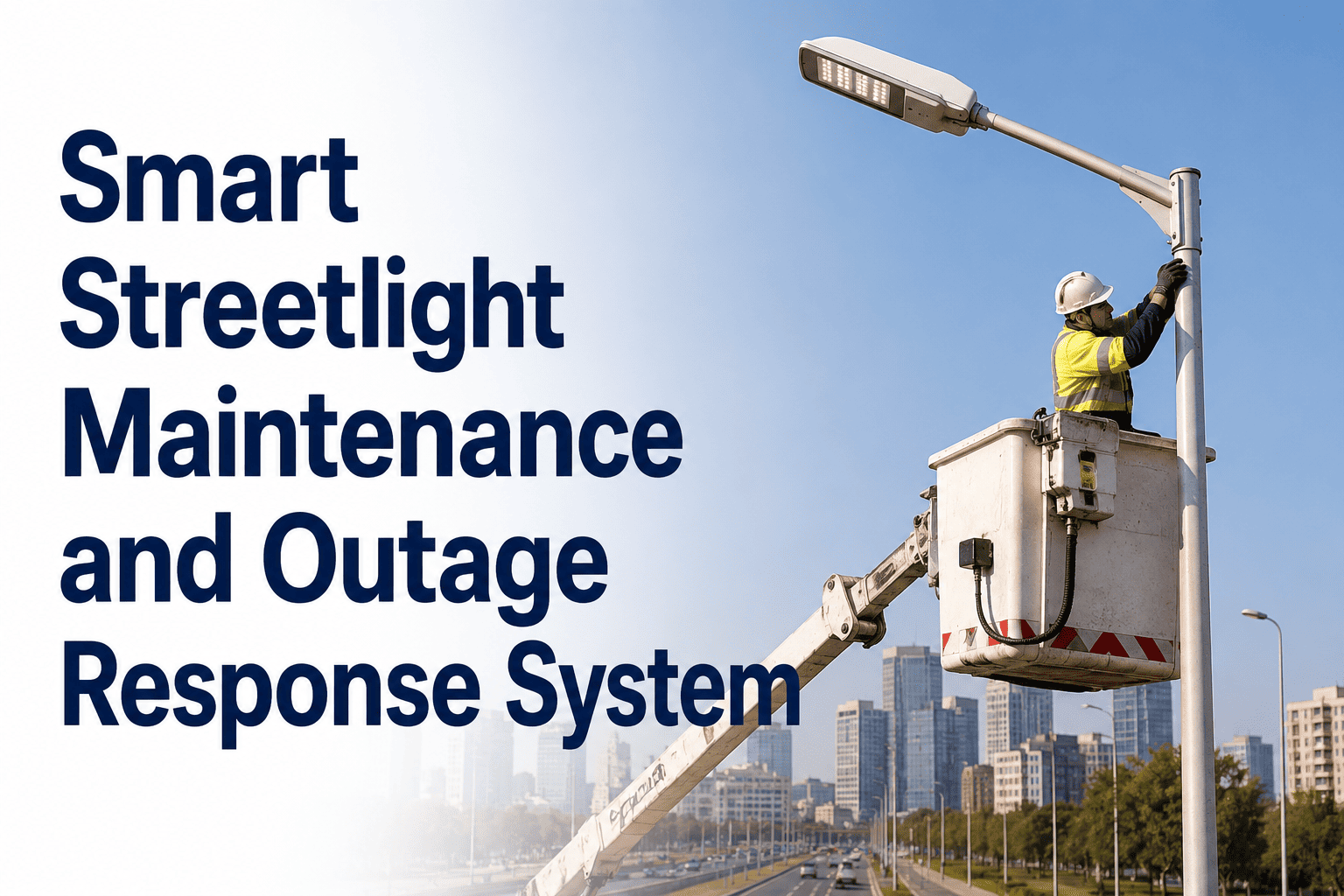
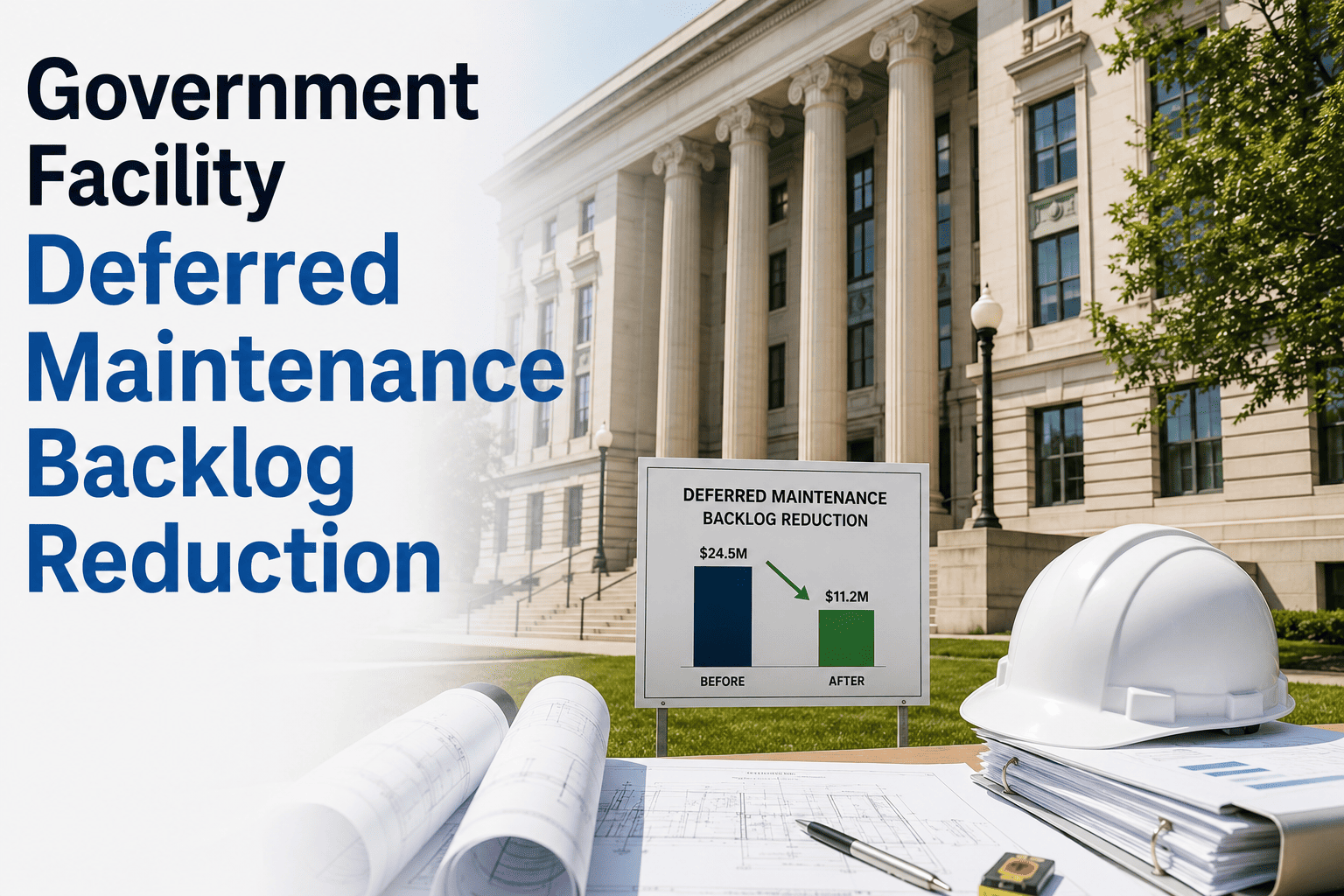
Smart cities are deploying thousands of connected streetlights — but without an intelligent maintenance platform, those assets generate outage tickets faster than crews can close them. OxMaint's IoT Sensor Integration connects directly to smart streetlight networks, auto-creates work orders on fault detection, and gives operations teams real-time outage maps that reduce citizen complaint resolution time from days to hours.
Smart City Infrastructure · IoT Sensor Integration · 2026
Smart Streetlight Maintenance and Outage Response System
From fault detection to crew dispatch to citizen closure — automated, real-time, and fully documented.
Book a Live Demo
73%
Faster outage resolution
89%
Citizen complaint reduction
31%
Energy cost reduction
6 min
Avg. fault-to-work-order time
The Smart Streetlight Maintenance Challenge
01
Fault Discovery Lag
Without sensors, outages are discovered by citizen complaints — averaging 3–7 days after failure. Night crews can't see what daytime sensors would catch instantly.
02
Manual Work Order Bottleneck
Control room staff manually log complaints, assign crews, and track closures across spreadsheets — creating delays, errors, and unresolved backlogs.
03
No Predictive Intelligence
Traditional maintenance replaces lamps after failure, not before. LED and driver degradation patterns are detectable weeks in advance — but only with sensor data.
04
Compliance Documentation Gaps
Many cities cannot prove outage response times for ADA compliance, public safety SLAs, or council reporting — because records exist only in email threads.
OxMaint IoT Integration: How It Works End-to-End
Sensor Fault Detected
Current, voltage, and photocell sensors detect lamp failure, driver fault, or unusual energy consumption in real time — 24/7/365.
Auto Work Order Created
OxMaint instantly generates a geo-tagged work order with asset ID, fault type, priority level, and required parts — no human input needed.
Crew Dispatched
The nearest available technician receives a mobile alert with the exact GPS location, asset history, and repair instructions on their phone.
Closure Documented
Repair completion is logged with timestamp, technician ID, parts used, and resolution time — automatically updating the public dashboard and compliance records.
Response Time Comparison: Before vs. After OxMaint
| Response Stage |
Manual Process |
OxMaint IoT |
Time Saved |
| Fault discovery |
3–7 days (citizen report) |
Under 6 minutes |
99% |
| Work order creation |
1–4 hours (manual) |
Instant (automated) |
100% |
| Crew dispatch |
Same/next day |
Within 2 hours |
75% |
| Full resolution |
5–10 days avg. |
12–36 hours avg. |
73% |
| Compliance report |
Manual, 1–3 weeks |
One-click, instant |
95% |
See OxMaint's Smart City IoT Dashboard Live
Watch how a real municipality went from 7-day outage response to under 24 hours — in a 30-minute demo session.
Compatible Smart Streetlight Systems
TALQ Protocol
OxMaint natively supports TALQ-compliant central management systems including Echelon, Telensa, and Ubicquia networks.
MQTT / REST API
Direct integration with sensor platforms using MQTT broker or REST API — works with Itron, Sensus, and custom IoT stacks.
SCADA / DMS
Bidirectional sync with SCADA and Distribution Management Systems for utilities managing streetlights alongside grid assets.
GIS Layer Export
Asset maps export to Esri ArcGIS and QGIS — enabling city-wide infrastructure visualization for public works planning.
Expert Review
"The gap between smart streetlight deployment and effective maintenance management is one of the most costly oversights in smart city implementation. Cities invest millions in connected infrastructure but retain paper-based maintenance workflows — negating the value of their sensor investment. IoT-native CMMS platforms that auto-generate work orders from sensor faults reduce operational cost by 25–40% and can pay back the entire smart streetlight infrastructure investment in 3–5 years through energy and maintenance savings combined."
Prof. Lena Hartmann — Smart City Systems, TU Munich; contributor, IEA Street Lighting Efficiency Report 2025
Frequently Asked Questions
Does OxMaint work with our existing streetlight control system without replacing hardware?
Yes — OxMaint integrates with existing TALQ-compliant, MQTT, and REST API-based streetlight management systems without requiring hardware replacement or network reconfiguration. The platform acts as an intelligent maintenance layer on top of your current control infrastructure, adding predictive alerts, automated work orders, and compliance reporting to your existing sensor data streams.
Book a technical integration demo.
How does OxMaint handle mass outage events like storm damage?
OxMaint's bulk work order generation handles mass-fault events by clustering geographically adjacent outages into crew routes, prioritising outages by traffic volume and public safety classification, and providing dispatchers with a single dashboard showing all active outages, crew locations, and estimated resolution times. This reduces multi-day storm recovery cycles to coordinated same-day or next-day operations.
See storm response workflows in a free trial.
Can OxMaint generate public-facing outage transparency reports for residents?
OxMaint includes a configurable public dashboard showing current outage counts, average resolution times, and neighbourhood-level service status — meeting the citizen transparency expectations increasingly mandated by municipal councils and state open-government laws. Reports are automatically published on a schedule you define, with no additional staff effort required for each publication cycle.
Make Your Streetlight Network Self-Managing
OxMaint connects to your smart city infrastructure and eliminates manual outage management — free to start, no hardware changes required.