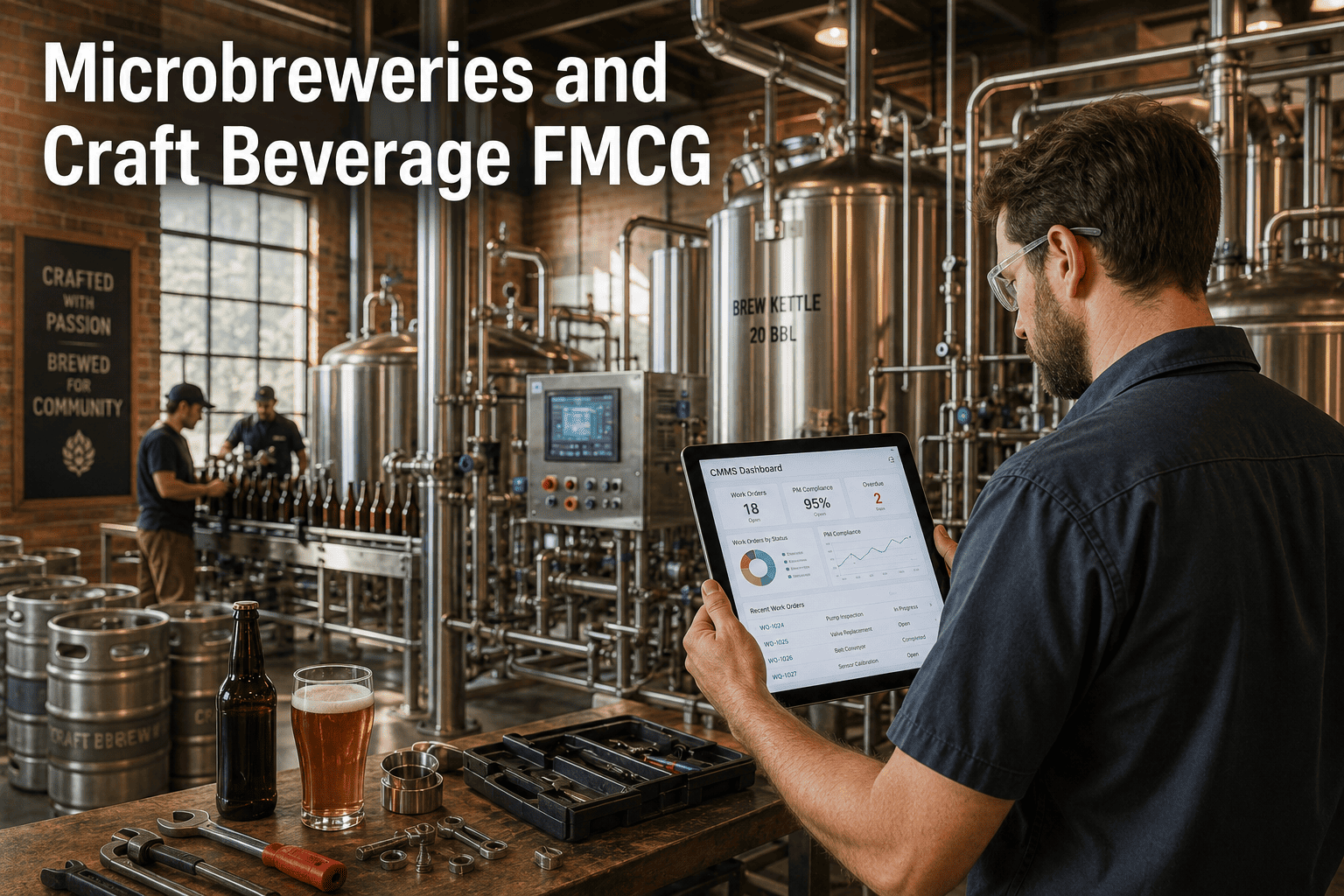
Microbreweries, craft cideries, kombucha producers, and brewpubs operate at production volumes under 15,000 barrels per year — but their maintenance complexity rivals plants ten times their size. CIP cycles are non-negotiable after every batch. Glycol chilling systems run around the clock. Fermentation tanks, bright beer vessels, and canning lines all require calibrated, traceable PM schedules. Yet most craft beverage operations still rely on spreadsheets, whiteboards, or the brewer's memory to manage it all. This page shows exactly how a purpose-built CMMS transforms maintenance at small-to-mid craft beverage plants — reducing unplanned breakdowns, keeping CIP records audit-ready, and giving ownership teams the operational data they need to grow profitably.
Start Free Trial Book 30-Min Demo- One missed CIP validation on a fermentation tank can contaminate an entire batch — eliminating weeks of revenue in a single oversight
- FSMA Rule 204 (effective January 2026) requires lot-linked maintenance records for covered beverages — paper logs no longer suffice
- Glycol chiller failure during fermentation is the single most common and costly unplanned downtime event in sub-15,000-barrel craft plants
What Makes Craft Beverage Maintenance Uniquely Complex?
A microbrewery or craft beverage operation under 15,000 barrels/year typically runs with two to five production staff who wear multiple hats — brewmaster, cellar operator, packaging lead, and maintenance technician, often simultaneously. Unlike an enterprise food plant with a dedicated maintenance department, the craft beverage operator has no buffer. When the glycol chiller trips, the brewmaster fixes it. When the canning line seamer jams, the packaging lead troubleshoots it. When the FDA inspector asks for CIP records for a specific batch, it's whoever is closest to the filing cabinet.
This environment creates four overlapping maintenance risks. First, CIP and sanitation gaps that contaminate products and trigger costly recalls. Second, glycol and temperature control failures that ruin fermentation batches worth thousands of dollars. Third, canning and packaging line breakdowns that delay taproom inventory and distributor orders. Fourth, compliance documentation gaps that create FSMA 204, TTB, or BRC audit exposure. A CMMS built for the craft beverage scale addresses all four with workflows that fit a lean team — not enterprise processes designed for 50-person maintenance departments.
8 Critical Maintenance Areas in Craft Beverage Plants
CIP and Sanitation Validation
Clean-in-place cycles must be documented after every batch across fermentation tanks, bright beer tanks, transfer lines, and packaging equipment. CIP records must capture chemical concentrations, contact times, temperatures, and pre-operational inspection sign-offs — traceably linked to the batch they protect. Undocumented CIP is the top compliance finding in TTB and BRC craft beverage audits.
Glycol Chilling System PM
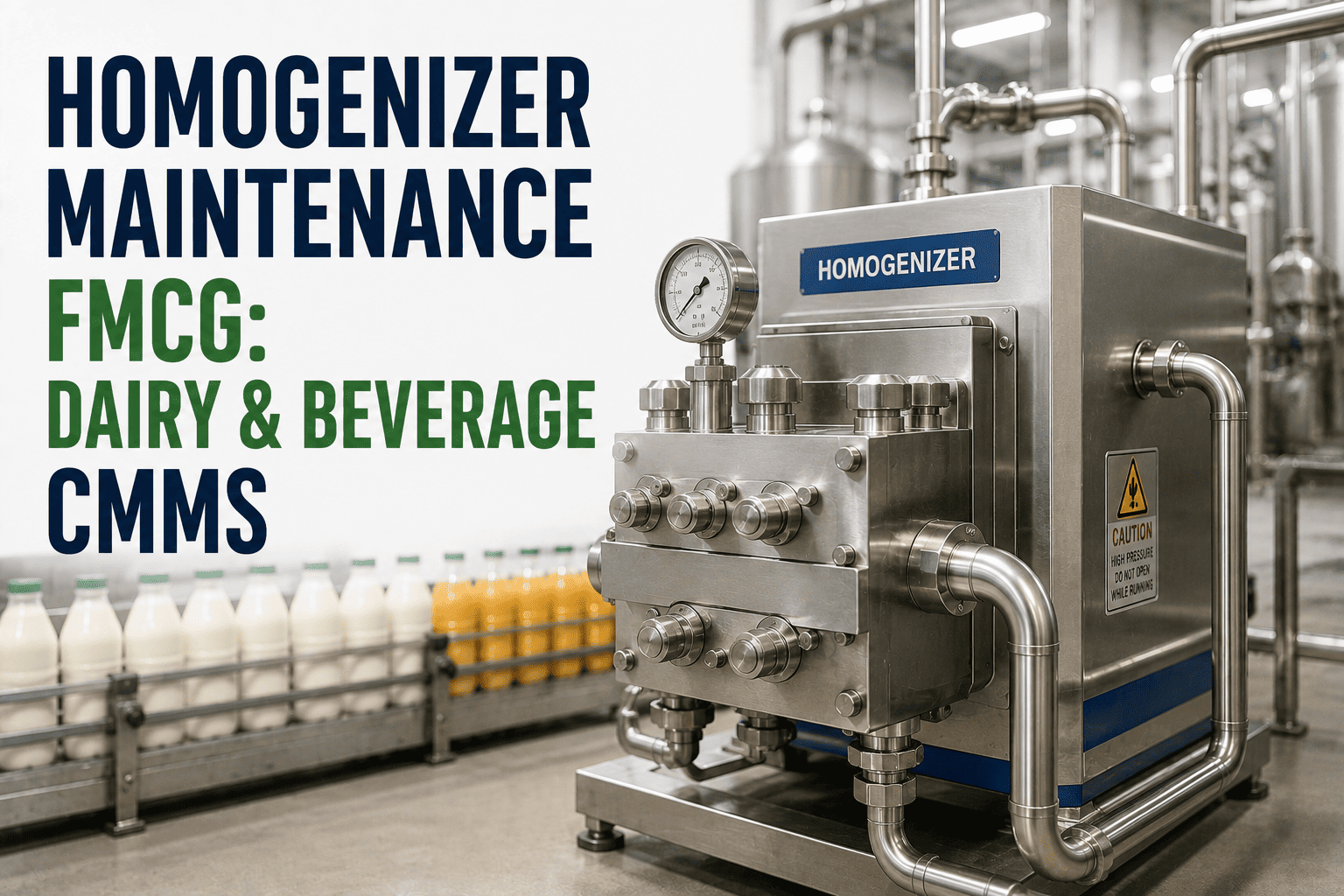
Glycol chillers maintain fermentation temperatures for every tank simultaneously. A chiller failure during active fermentation can ruin an entire batch in hours. Scheduled PMs covering glycol concentration checks, compressor inspections, pump seal integrity, and heat exchanger cleaning are the most financially critical maintenance tasks in any craft beverage plant — yet are the most commonly deferred on spreadsheet-managed programmes.
Fermentation Tank Inspection and Calibration
Fermentation tanks and brite tanks require regular pressure relief valve inspections, sample port integrity checks, glycol jacket integrity verification, and pH/DO probe calibration. Probe calibration records must be traceable to specific batches for FSMA 204 compliance. Uncalibrated instruments are a direct cause of out-of-spec fermentation and quality rejections.
Canning and Bottling Line Maintenance
The canning line — filler, seamer, rinser, labeller, date-coder, and conveyor — is the revenue bottleneck for most microbreweries. Seamer die wear, fill-head O-ring failure, and labeller registration drift are the most common failure modes. Preventive replacement schedules with part-level tracking prevent the downtime events that delay taproom stock and miss distributor windows.
Brewhouse Equipment PM
The mash mixer, lauter tun, boiling kettle, whirlpool, and hot liquor tank form the core brewhouse asset group. Heat element inspection, pump seal replacement, valve cycling verification, and kettle jacket integrity checks all require scheduled PMs with documented completion. Brewhouse failures on brew day have direct, immediate revenue impact — and are almost always preventable with structured PM programmes.
CO₂ and Gas System Safety
Microbreweries use CO₂ for carbonation, purging, and counter-pressure transfer. CO₂ accumulation in enclosed cellar spaces is a documented occupational safety hazard. Gas line leak checks, regulator calibration, and CO₂ monitor sensor testing must be scheduled and documented as both a safety and regulatory compliance requirement — not left to informal practice.
Cold Room and Cellar Refrigeration
Cold room failures exposing finished product to temperature excursions are a direct quality and shelf-life risk. Evaporator coil cleaning, door seal inspection, thermostat calibration, and condenser maintenance are scheduled tasks that protect both product quality and food-safety compliance. Temperature excursion records are increasingly required by retail and distribution partners as quality assurance evidence.
Regulatory and TTB/FSMA Compliance Logs
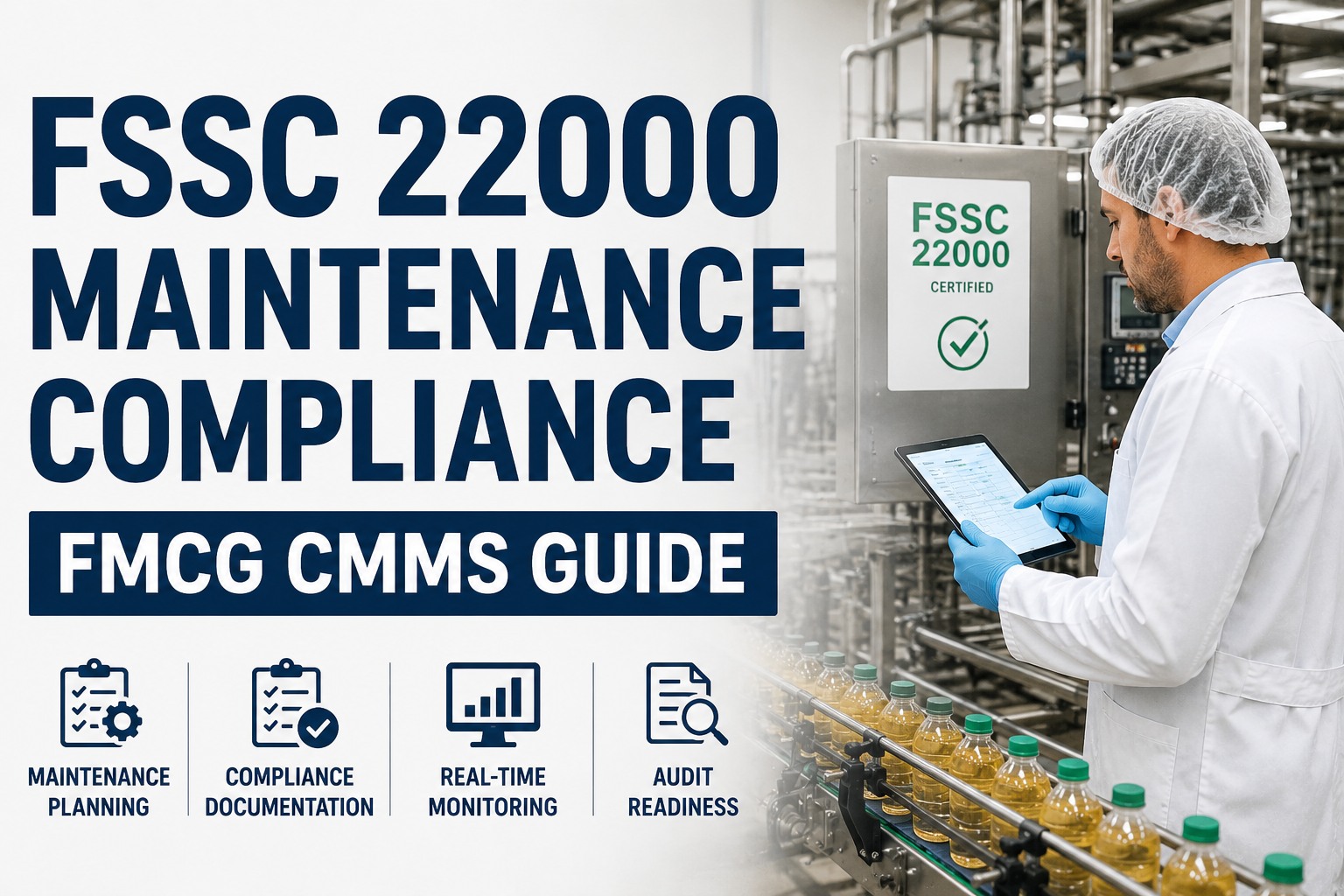
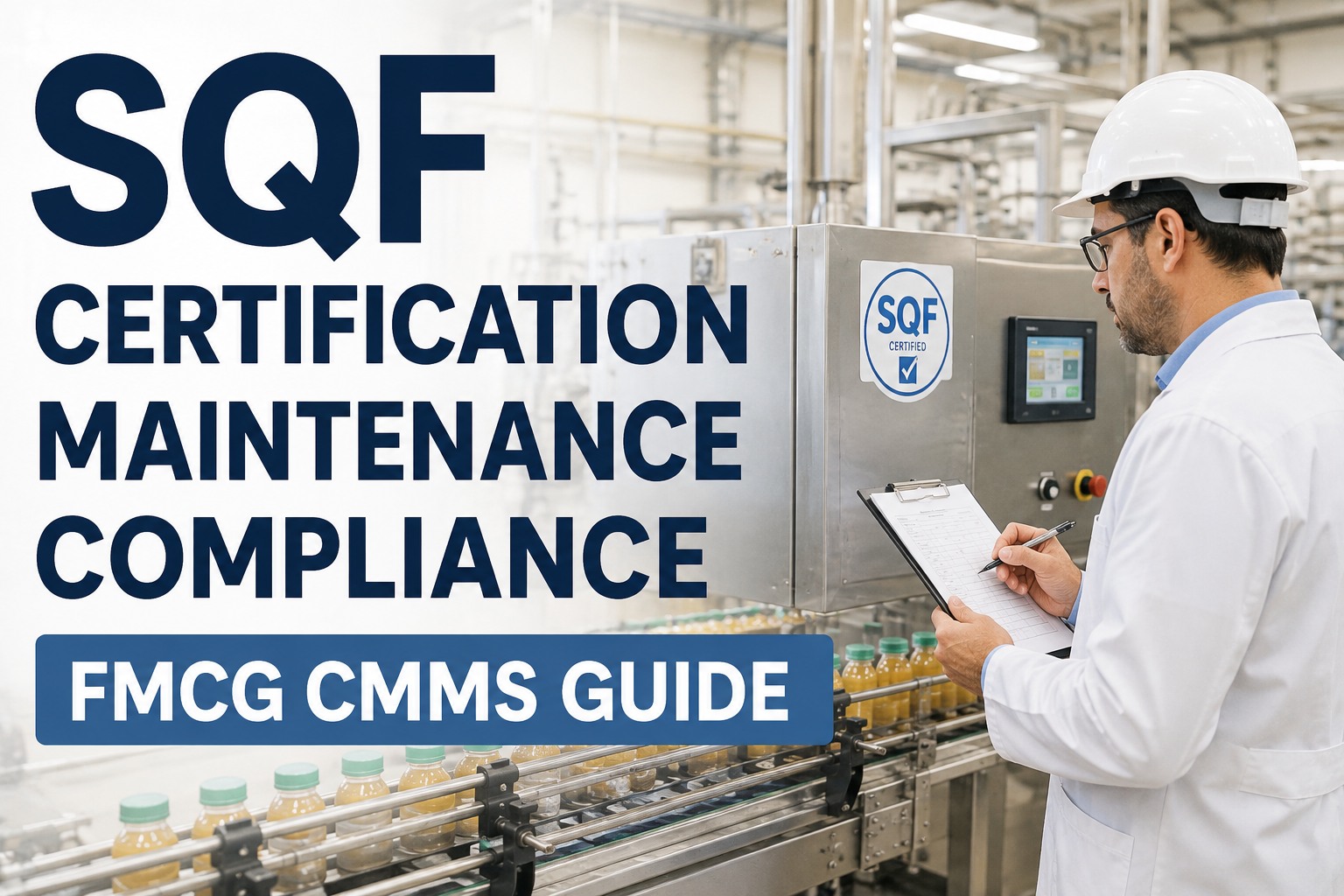
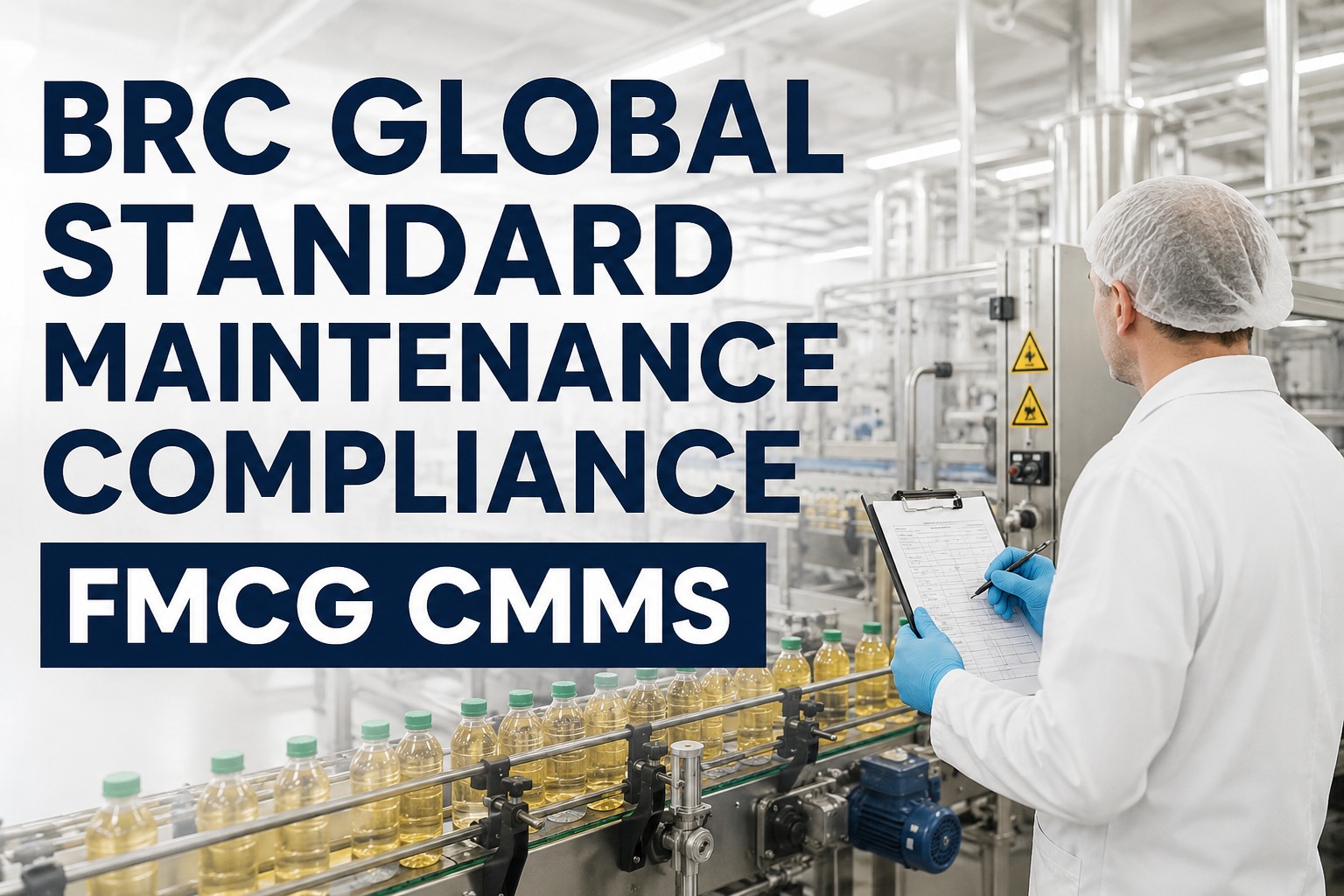
Craft beverage plants must maintain equipment calibration records, sanitation logs, and maintenance documentation for TTB compliance (label approval, formula documentation), FSMA Rule 204 (lot traceability), and quality certifications including BRC and SQF. With FSMA Rule 204 effective January 2026, maintenance records linked to production lots are now a federal compliance requirement — not a best practice.
6 Pain Points Craft Beverage Plants Hit Without a CMMS
Batch-Ruining Glycol Failures
A glycol chiller that trips during active fermentation can raise tank temperature outside yeast tolerance within hours. By the time the problem is discovered — often at the start of the next shift — the batch is compromised. At $5,000–$20,000+ of materials, labour, and opportunity cost per batch, a single deferred glycol PM pays for a full year of CMMS subscription many times over.
CIP Records That Don't Exist
In craft beverage plants running on verbal sign-offs or informal checklists, CIP completion is assumed rather than documented. When a quality complaint traces back to a specific batch, the plant cannot prove sanitation was completed correctly. In a FSMA 204 inspection, undocumented CIP is a critical finding that triggers corrective action demands and can escalate to regulatory action for repeated non-compliance.
Canning Line Downtime at the Worst Possible Time
Seamer failures and fill-head breakdowns inevitably happen on peak-volume days — pre-event canning runs, holiday production cycles, or distributor fulfilment windows. Without a structured PM and parts inventory system, the brewery has no ready spare parts, no failure history to diagnose the fault quickly, and no documented service history to support a warranty claim.
Audit Requests That Take Days to Answer
TTB, FDA, and retail customer quality audits all request maintenance documentation: calibration certificates, sanitation records, equipment inspection logs. In a craft beverage plant without a CMMS, assembling this evidence means searching emails, asking staff what they remember, and hoping the paper binder wasn't misfiled. The evidence gap creates audit findings even when the actual maintenance was performed correctly.
No Spare Parts Visibility Until a Breakdown Happens
Craft beverage plants carry a wide range of seals, O-rings, gaskets, pump impellers, and sensor parts across disparate equipment from multiple suppliers. Without a CMMS inventory module, the first indication that a critical spare is out of stock is when the line breaks down and the part isn't on the shelf. Emergency shipping costs and production delay easily exceed a full year's CMMS cost.
Knowledge Walking Out When Staff Leave
Craft beverage operations experience high staff turnover — particularly in cellar and packaging roles. When a cellar tech who "knows how to reset the glycol controller" leaves, that institutional knowledge leaves with them. Without documented maintenance procedures and fault histories in a CMMS, every staff departure is also a technical knowledge loss that costs time and money to relearn.
How OxMaint Fits a Craft Beverage Operation
Brewery-Ready PM Templates
OxMaint ships with configurable PM templates for common craft beverage assets: glycol chillers, fermentation tanks, CIP stations, canning lines, and brewhouse equipment. Pre-built schedules include industry-standard PM frequencies — deploy in days, not months. No maintenance engineer or IT implementation required to go live.
Batch-Linked CIP and Sanitation Records
Log CIP completion directly against batch numbers in OxMaint — capturing chemical concentrations, contact times, temperatures, and operator sign-off. FSMA 204 traceability links maintenance records to production lots automatically. When FDA or a retail customer requests sanitation evidence for a specific batch, the record is retrieved in seconds — not assembled over two days.
Glycol and Temperature System Monitoring
Connect OxMaint to temperature sensors on glycol circuits and cold rooms. Automated alerts fire when temperature deviates from setpoints — catching potential failures before they affect fermentation. PM schedules for glycol concentration checks, compressor inspections, and pump maintenance are triggered automatically by runtime hours or calendar intervals.
Canning Line Parts and WO Tracking
Register every canning and bottling line component as an asset in OxMaint. Track O-ring replacement cycles, seamer die wear, and labeller calibration intervals. When a line fault occurs, the work order is created instantly from the mobile app with full repair history visible. Spare parts stock levels are tracked in real time — no more discovering the critical part is out of stock at the point of breakdown.
Lean-Team Mobile Workflows
OxMaint's mobile app is designed for staff who work across multiple roles. Work order creation, PM completion sign-off, CIP logging, and inspection records are all completed in under 60 seconds from a phone — without logging into a desktop system. When a cellar tech moves on, their complete work history stays in OxMaint, fully accessible to their replacement from day one.
Audit-Ready Compliance Reporting
Generate TTB maintenance summaries, FDA FSMA 204 traceability reports, BRC audit evidence packs, and calibration certificate registers directly from OxMaint. Reports are pre-formatted for the most common craft beverage audit frameworks. When an auditor arrives unannounced, your compliance evidence is one filtered search away — not two days of document assembly.
Spreadsheet-Managed Maintenance vs OxMaint for Craft Beverage
| Dimension | Spreadsheet / Paper System | OxMaint CMMS |
|---|---|---|
| Glycol PM Tracking | Manual calendar reminders; PMs deferred without record | Automated PM triggers by runtime or calendar; overdue alerts sent to mobile |
| CIP Documentation | Paper log or verbal sign-off; not linked to batch number | Digital CIP record linked to batch; timestamped, signed, FSMA-ready |
| Canning Line Faults | No fault history; technician diagnoses from scratch every time | Full fault and repair history per asset; repeat faults identified in one search |
| Spare Parts Visibility | Stock-outs discovered at breakdown; emergency shipping costs | Real-time stock levels; reorder alerts triggered before stock-out |
| Audit Response | 1–2 days assembling records; risk of incomplete evidence | Filtered compliance report in minutes; complete, timestamped, auditor-ready |
| Staff Turnover Impact | Institutional knowledge lost when staff leave | All maintenance history and procedures retained in CMMS; accessible from day one for new hires |
| Mobile Access | Desktop-only or paper; no field access for cellar staff | Full mobile app — WOs, PMs, CIP logs, and inspections completed from the cellar floor |
| Temperature Excursion Alerts | Manual temperature logs; excursions discovered after damage | Sensor-linked alerts notify staff of glycol or cold room deviations in real time |
Frequently Asked Questions
Is a CMMS worth the cost for a microbrewery producing under 5,000 barrels per year?
Yes — at craft beverage scale, the financial exposure from a single preventable failure typically exceeds the annual cost of a CMMS platform. One ruined fermentation batch from a deferred glycol PM, one canning line breakdown during a peak production run, or one FSMA audit finding from undocumented CIP records can each cost more than a full year of OxMaint subscription. The ROI threshold is low precisely because craft beverage equipment failures are high-cost events with direct revenue impact.
Does FSMA Rule 204 apply to microbreweries and craft beverage producers?
FSMA Rule 204, effective January 2026, applies to any facility handling foods on the FDA's Food Traceability List (FTL). For craft beverage producers, the rule's primary relevance is through the equipment maintenance and calibration records that support traceability: printers and labellers used for lot coding, refrigeration units maintaining cold-chain integrity, and sanitation equipment preventing cross-contamination. Producers whose beverages fall outside the FTL still face general FSMA requirements around documented maintenance affecting food safety — and many retail distribution partners require FSMA-aligned documentation as a supply condition regardless of FTL status.
How long does it take to set up OxMaint for a craft beverage plant?
Most microbrewery and craft beverage operations go live with OxMaint within 2–4 weeks for basic asset registers, PM schedules, and CIP logging workflows. Full deployment — including IoT sensor integrations, spare parts inventory setup, and multi-asset PM optimisation — completes within the standard 12-week onboarding timeline. OxMaint's FMCG-experienced implementation team handles the brewery-specific configuration so brewing staff can focus on brewing, not software setup.
Can OxMaint handle both fermentation equipment and taproom facility maintenance?
Yes. OxMaint's asset register handles any physical asset class — fermentation tanks, glycol chillers, canning lines, CO₂ systems, draft beer system maintenance, taproom HVAC, walk-in cooler compressors, and facility infrastructure. Many microbreweries manage both production and taproom/pub facility maintenance from a single OxMaint account, giving ownership a unified view of all maintenance spend, compliance status, and upcoming PM requirements across the full operation.
Protect Your Batches, Your Compliance, and Your Growth
OxMaint is the CMMS built for craft beverage scale — mobile-first, brewery-ready PM templates, batch-linked CIP records, and audit-ready reporting that a lean team can run without a dedicated maintenance department.
Start Free Trial Book 30-Min Demo