OSHA citations for food and beverage manufacturing increased 14% in 2024, with machine guarding violations, lockout/tagout failures, and chemical exposure representing 62% of serious violations carrying penalties from $15,548 to $156,259 per incident. Beyond regulatory exposure, workplace incidents in FMCG facilities cost $45,000–$120,000 per injury when including medical costs, productivity loss, investigation time, and potential litigation — yet 71% of food manufacturing sites still conduct safety inspections using paper checklists that capture compliance snapshots without trending risk indicators or generating corrective action workflows. Modern CMMS platforms like OxMaint transform safety inspection from checkbox compliance to risk intelligence by digitizing protocols, automating non-conformance reporting, and tracking corrective action completion to closure — start a free trial to digitize your facility's safety inspection program, or book a demo to see how automated workflows close the safety management loop.
GMP-compliant inspection workflows. Used by facilities managing 1,000+ inspection points. Works offline on mobile devices.
What Is an OSHA-Compliant Safety Inspection?
An OSHA-compliant safety inspection is a systematic evaluation of workplace conditions, equipment safeguards, and operational procedures against federal safety standards codified in 29 CFR regulations covering machine guarding (Subpart O), lockout/tagout energy control (1910.147), hazard communication (1910.1200), personal protective equipment (Subpart I), and walking-working surfaces (Subpart D). Compliance requires documented inspection protocols, qualified inspector training, corrective action tracking, and verification of hazard elimination — not just generating checkbox audit trails.
The inspection process differs fundamentally from informal safety walks where observations remain verbal or captured in emails that disappear into inboxes. Compliant programs establish recurring inspection schedules aligned with equipment risk classifications, use standardized evaluation criteria that multiple inspectors can apply consistently, generate corrective action work orders automatically when deficiencies are discovered, and maintain inspection history as evidence of due diligence during OSHA site visits or post-incident investigations. Food manufacturing facilities face additional requirements from FDA Food Safety Modernization Act which mandates environmental monitoring programs that integrate with OSHA mechanical and chemical safety inspections, creating comprehensive facility safety documentation — start a free trial to implement digital safety inspection workflows, or book a demo to review your current inspection program against OSHA requirements.
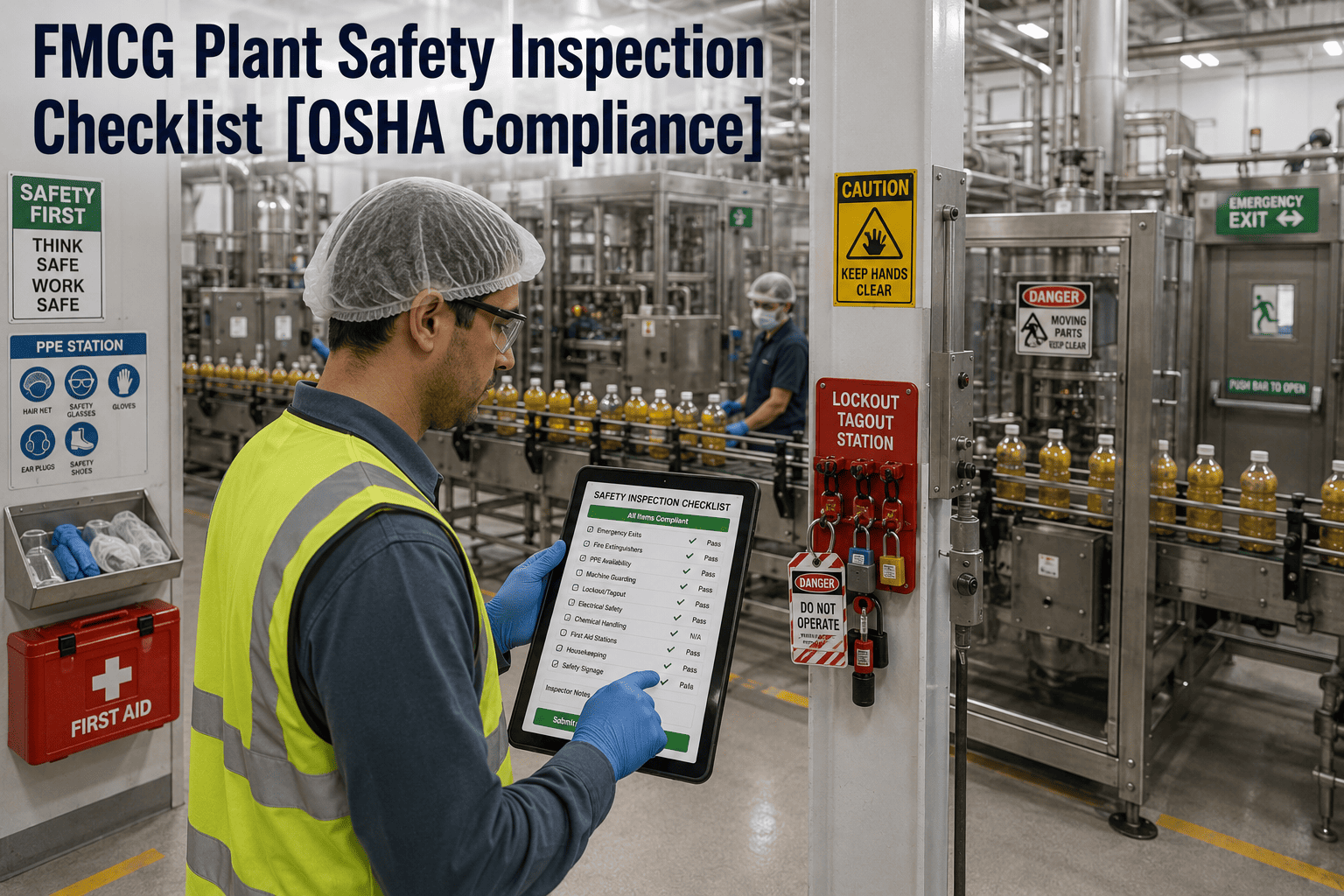
FMCG Plant Safety Inspection Protocol
Machine Guarding & Equipment Safety (29 CFR 1910.212)
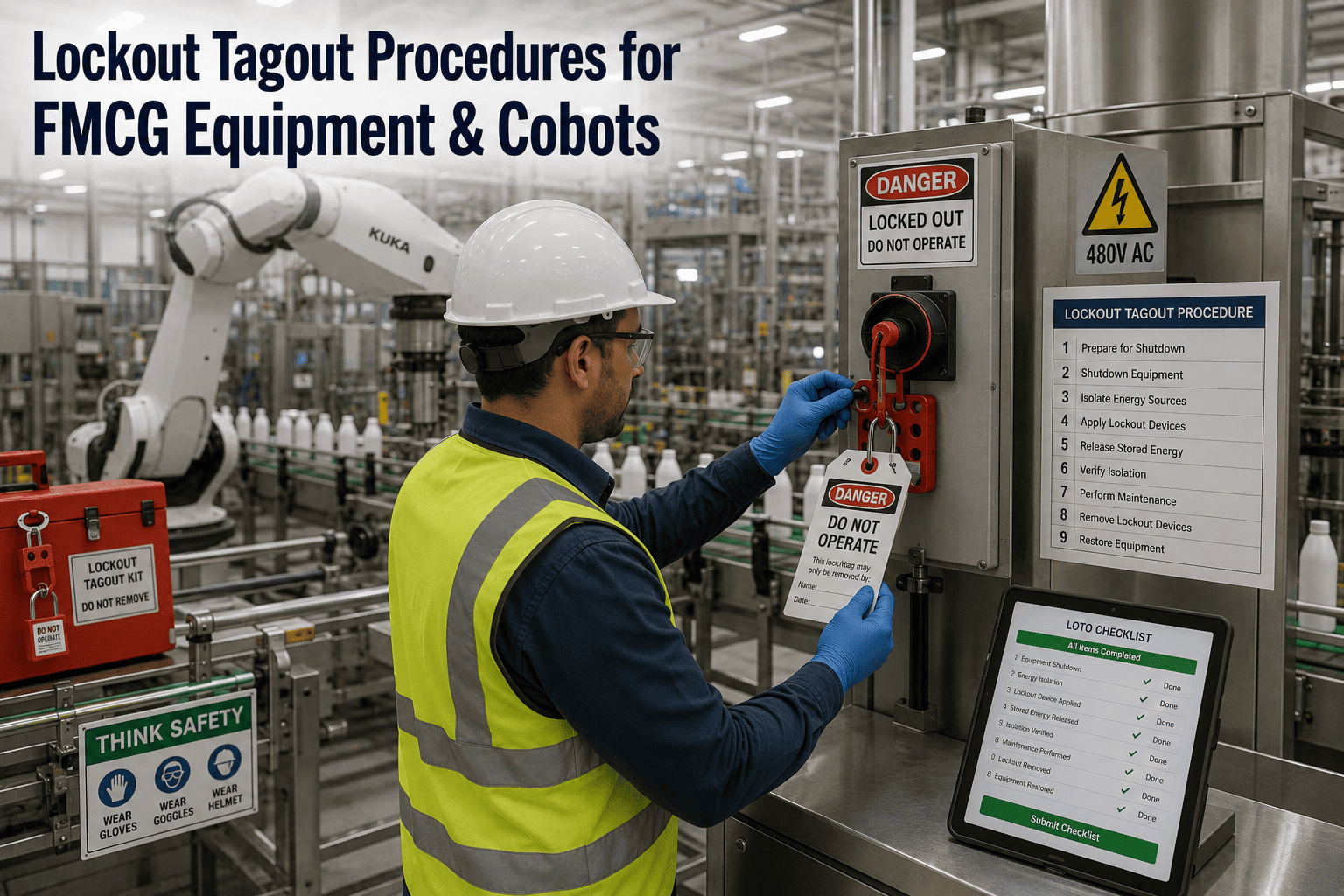
Lockout/Tagout Energy Control (29 CFR 1910.147)
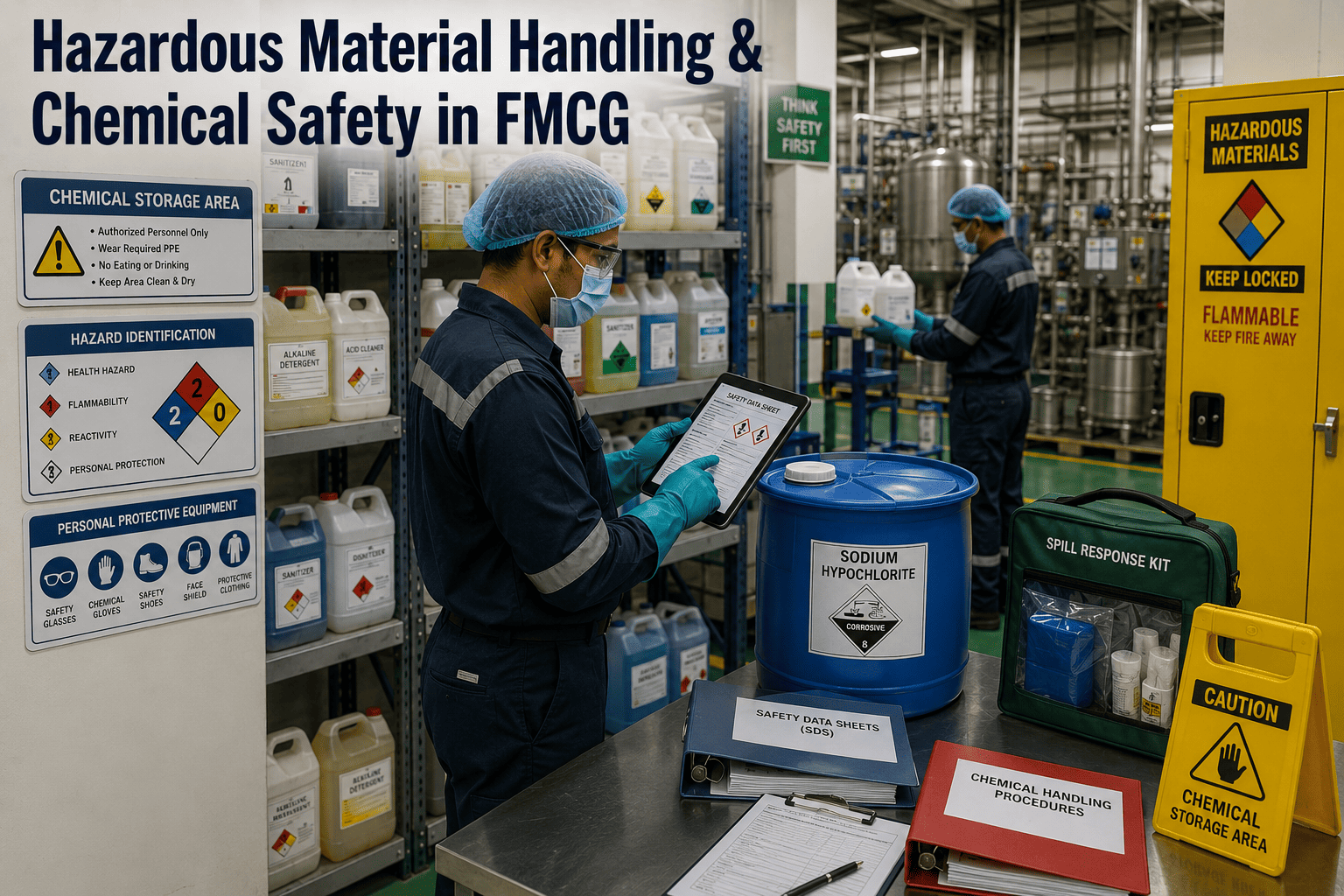
Chemical Safety & Hazard Communication (29 CFR 1910.1200)
62% of OSHA citations in food manufacturing stem from machine guarding, LOTO, and chemical safety violations.
Personal Protective Equipment (29 CFR 1910.132-138)
Fall Protection & Working Surfaces (29 CFR 1910.22-30)
Electrical Safety (29 CFR 1910.303-308)
Fire Safety & Emergency Response (29 CFR 1910.36-39, 157)
Compressed Air & Pneumatic Safety (29 CFR 1910.242)
Why Safety Inspection Programs Fail in FMCG Facilities
Paper Checklist Blind Spots
Inspectors mark checkboxes on paper forms that get filed and forgotten — no trending of recurring issues, no automatic work order generation for deficiencies, no visibility into whether corrective actions were completed. Critical safety gaps persist because the inspection system cannot connect observation to correction to verification.
Inconsistent Inspector Training
Different inspectors apply different standards when evaluating "adequate guarding" or "accessible emergency stops" — leads to false compliance where serious hazards pass inspection by lenient evaluators while strict inspectors find violations everywhere. Inconsistency undermines the entire program's credibility and legal defensibility.
Corrective Action Black Holes
Deficiencies noted during inspections disappear into maintenance backlog without priority assignment, completion tracking, or verification closure — same issues appear on inspection reports month after month while management assumes problems were fixed. Creates liability exposure when incidents occur on known but uncorrected hazards.
Zero Photo Documentation
Verbal descriptions like "guard missing on conveyor 3" provide insufficient information for maintenance teams to understand severity, locate the specific problem, or verify correction — leads to incomplete repairs, repeat callbacks, and continued exposure to hazards that were "fixed" but remain dangerous.
Inspection Frequency Gaps
Monthly inspections scheduled on calendar regardless of equipment risk — critical high-speed packaging lines with amputation hazards receive same attention as low-risk administrative areas. Risk-based frequency adjustment never occurs because paper systems cannot analyze incident patterns or failure modes systematically.
Management Visibility Failure
Plant managers cannot see facility-wide safety performance, identify high-risk areas requiring resources, or track inspector effectiveness because paper inspection data stays locked in file cabinets — prevents strategic safety investment and allows chronic problems to escalate until OSHA citations or serious injuries force attention.
These systemic weaknesses explain why facilities can conduct hundreds of safety inspections annually yet still receive OSHA citations or experience preventable incidents. The inspection program creates compliance theater rather than actual risk reduction because the underlying process cannot close the loop from hazard identification through corrective action to verified elimination, which is why operations leaders implementing digital safety management systems see 40–60% reduction in recurring safety deficiencies within the first year — start a free trial to digitize your safety inspection workflow, or book a demo to see how automated corrective action tracking closes safety gaps.
How OxMaint Transforms Safety Inspection Programs
Mobile Digital Checklists with Photo Capture
Inspectors use smartphones or tablets to complete standardized protocols, attach photos documenting conditions, and add GPS-tagged notes — eliminates illegible handwriting, provides visual proof of hazards, and works offline in areas without WiFi coverage.
Automated Non-Conformance Work Orders
When inspector marks "fail" on any checklist item, system automatically generates corrective action work order with hazard description, photo evidence, priority level, and assignment to qualified technician — nothing falls through cracks.
Risk-Based Inspection Frequency Scheduling
Equipment with high incident rates or critical safety systems trigger more frequent inspections automatically — resources concentrate on actual risks rather than treating all areas identically regardless of hazard severity.
Deficiency Trending and Hotspot Analysis
Dashboard visualizes recurring safety issues by location, equipment type, and deficiency category — exposes chronic problems requiring engineering controls rather than repeated temporary fixes, guides capital investment to highest-risk areas.
Corrective Action Verification Required
Work orders cannot close until technician photographs completed repair and inspector verifies hazard elimination during next inspection — creates accountability loop ensuring deficiencies actually get fixed rather than just marked complete in system.
OSHA Audit Trail Documentation
Complete inspection history, corrective action records, training documentation, and verification photos stored permanently with timestamp and inspector credentials — provides legal protection demonstrating due diligence during compliance audits or post-incident investigations.
Paper vs Digital Safety Inspection Systems
| Process Element | Paper-Based Inspection | Digital with OxMaint | Operational Impact |
|---|---|---|---|
| Inspection Data Capture | Handwritten checkboxes, illegible notes, no photos | Standardized digital forms, required photos, GPS tagging | 80% better deficiency clarity |
| Deficiency Reporting | Inspector writes up separate report, submits to manager, waits for action | Auto-generates work order instantly with photo and priority assignment | 5× faster correction initiation |
| Corrective Action Tracking | Excel spreadsheet updated manually, no completion alerts | Real-time dashboard, overdue alerts, verification required | 60% fewer open deficiencies |
| Hazard Trending Analysis | Manual review of paper files once yearly, if at all | Automatic hotspot identification, recurring issue alerts | Proactive elimination of chronic hazards |
| Inspector Consistency | Subjective interpretation varies by person and day | Standardized criteria, photo examples, pass/fail guidance | 40% more consistent evaluation |
| Management Visibility | Summary reports delayed 1-2 weeks, incomplete data | Real-time facility-wide safety dashboard with drill-down | Strategic resource allocation |
| OSHA Audit Preparation | Search file cabinets for paper forms, missing records common | Complete digital audit trail instantly searchable by date/location/type | 75% faster compliance verification |
The performance gap between paper-based and digital safety inspection systems compounds over time as deficiencies accumulate, recurring hazards persist, and compliance documentation quality degrades. Facilities that maintain paper processes typically see safety incidents and near-misses increase 2–5% annually while those implementing digital workflows achieve 25–40% reduction in recordable incidents within 18 months through improved hazard identification, faster correction, and systematic elimination of chronic problems — start a free trial to implement mobile digital safety inspections, or book a demo to review your facility's current inspection program effectiveness.