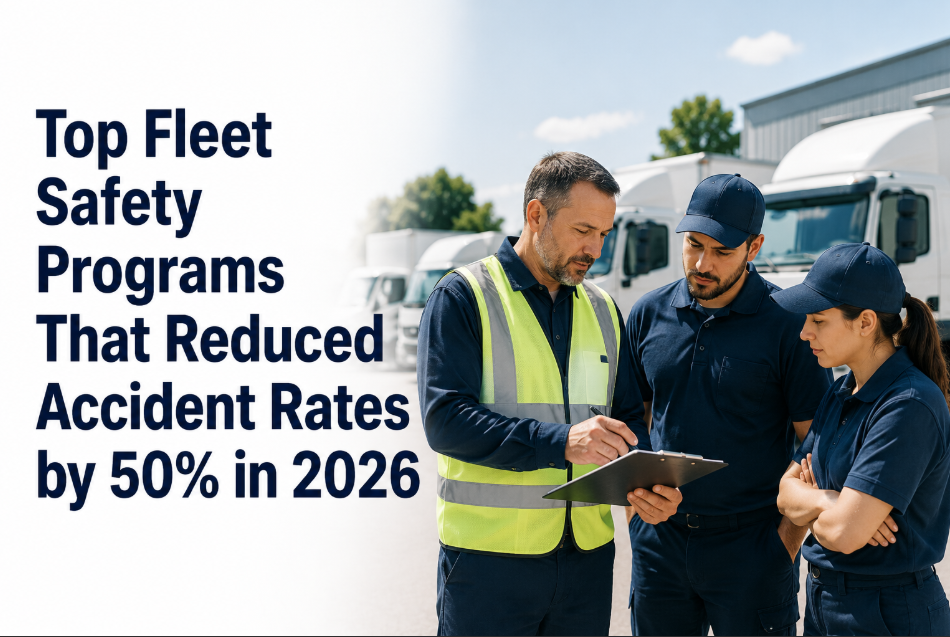
Fleet accidents cost US commercial operations an average of $91,000 per incident when factoring in vehicle damage, medical expenses, insurance premium increases, legal fees, and lost productivity. Yet 72% of fleet accidents are preventable through structured safety programs that combine driver coaching, pre-trip inspections, safety incentives, and CMMS-integrated maintenance tracking. The fleets achieving 50%+ accident reduction in 2026 are not relying on luck or one-time training sessions — they are running data-driven safety programs that integrate directly with their maintenance and compliance systems. Platforms like Oxmaint are enabling this integration by connecting vehicle maintenance records, inspection compliance, and defect tracking into a single system that ensures no safety-critical maintenance item falls through the cracks. Want to build a safer fleet operation? Start a free trial for 30 days and book a demo to see how Oxmaint supports fleet safety management.
Top Fleet Safety Programs That Reduced Accident Rates by 50% in 2026
Real programs, real results. How dashcam coaching, safety incentives, pre-trip training, and CMMS-integrated safety management are cutting fleet accident rates in half.
Why Most Fleet Safety Programs Fail
Before examining what works, it is critical to understand what does not. The majority of fleet safety programs fail because they treat safety as an annual training event rather than an integrated operational system. Here are the 4 most common failure patterns — and the correction that high-performing fleets have made.
82% of fleet safety training content is forgotten within 30 days without reinforcement. Annual classroom sessions produce compliance certificates but do not change driver behavior. High-performing programs use weekly micro-coaching tied to real driving data.
23% of fleet accidents involve a vehicle mechanical defect — brake failure, tire blowout, lighting malfunction. When maintenance records are disconnected from safety tracking, defects go unaddressed. CMMS integration closes this gap by ensuring every inspection defect triggers a tracked work order.
Programs that punish drivers for incidents without providing coaching see 34% higher turnover and no sustained safety improvement. The best programs use dashcam footage and telematics data for coaching conversations — not disciplinary actions.
Without measurable safety KPIs — accident rate per million miles, inspection compliance rate, near-miss frequency — there is no way to evaluate program effectiveness. Fleets without KPI tracking are 2.8x more likely to see accident rates plateau or increase year-over-year.
The 6 Safety Program Components That Deliver 50%+ Accident Reduction
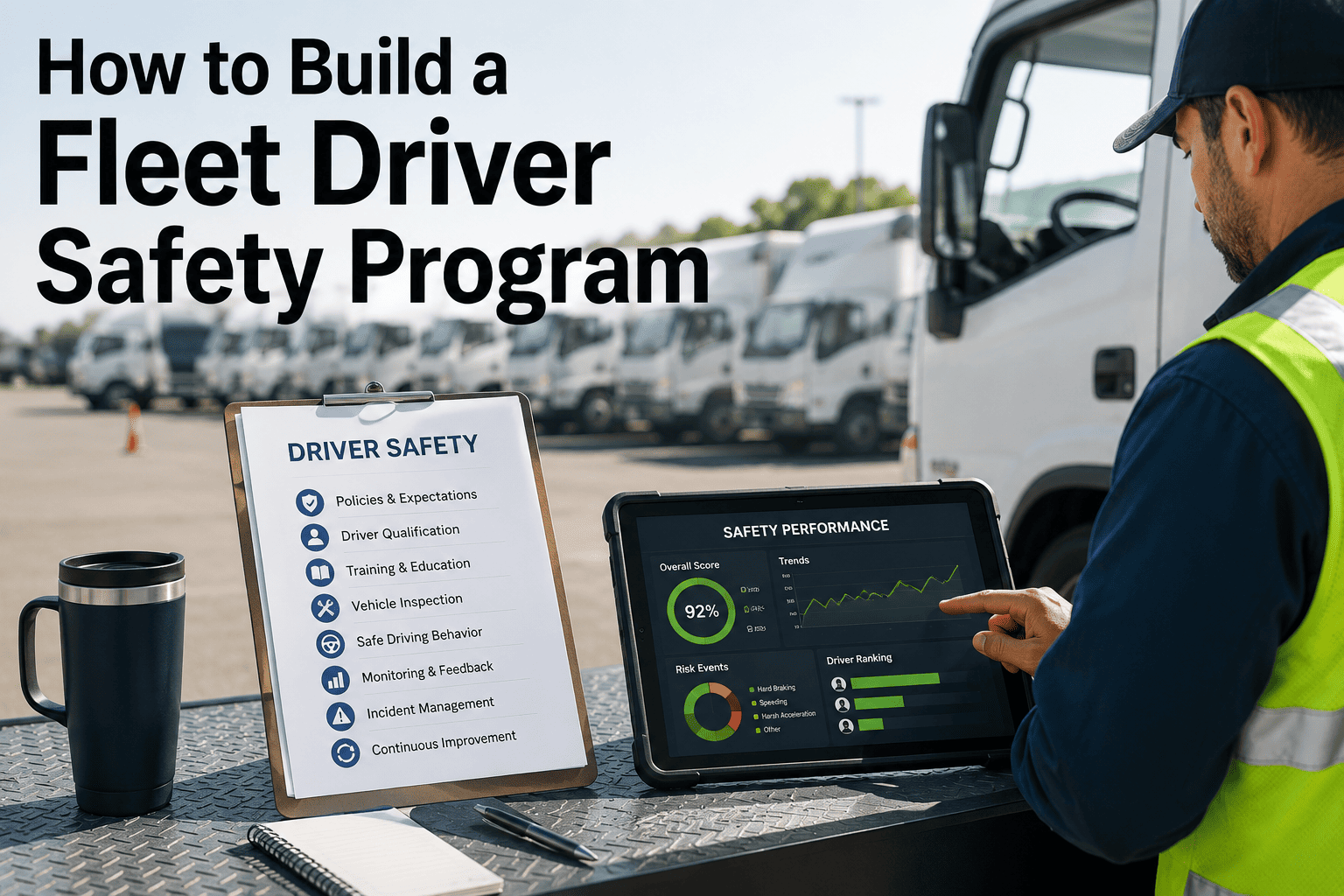
The fleets achieving the highest safety improvements in 2026 share a common framework — they combine driver behavior management with vehicle condition management in a single integrated system. Here are the 6 program components delivering the most measurable results.
Forward and driver-facing cameras capture risky events — hard braking, distracted driving, following distance violations. AI filters out false positives and flags only coachable events. Fleets using AI dashcam coaching see 47% reduction in risky driving events within 90 days. The key is weekly 1-on-1 coaching sessions using real footage, not surveillance-style monitoring.
Paper DVIRs are completed in 3 minutes with no real vehicle check performed. Digital inspection workflows with mandatory photo evidence, GPS location stamps, and pass/fail logic on critical items (brakes, tires, lights, mirrors) ensure inspections are actually conducted. Defects flagged during digital inspections automatically create work orders in CMMS — no manual handoff. Oxmaint's digital inspection module supports configurable checklists with automatic defect escalation to the maintenance team.
Drivers who go 90+ days without a preventable incident receive recognition and rewards — gift cards, paid time off, public acknowledgment, or bonus pay. The most effective programs track and display safety scores publicly within the fleet. Fleets with structured incentive programs see 31% lower accident rates compared to those relying on penalties alone.
Brake and tire failures account for 29% of mechanical-defect-related fleet accidents. CMMS platforms that track brake pad thickness, tire tread depth, and replacement intervals by vehicle prevent these failures from reaching the road. Oxmaint tracks component-level maintenance history — brake pads, rotors, tire position rotation — and triggers PM work orders before components reach safety thresholds.
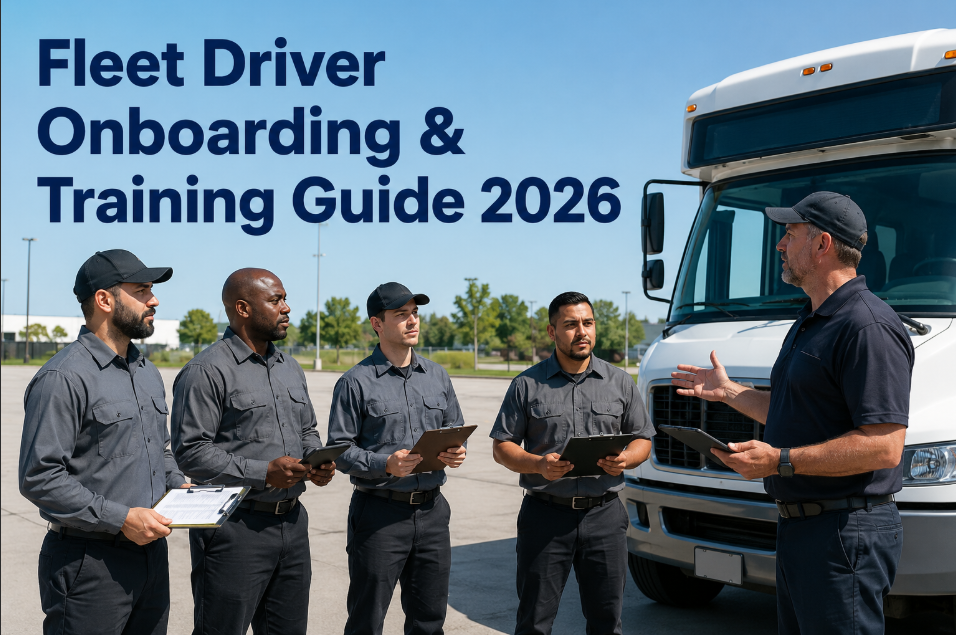
Instead of annual 4-hour classroom sessions, high-performing fleets deliver 5-minute weekly micro-training modules on specific topics — backing accidents (40% of fleet incidents), intersection safety, adverse weather driving, and load securement. Completion tracking ensures 100% participation. Fleets using micro-training see 38% improvement in knowledge retention versus annual classroom training.
For every fleet accident, there are an estimated 10 near-miss events. Programs that capture and analyze near-misses identify systemic risks before they produce incidents. Oxmaint's work order system can be configured to track near-miss reports as safety work orders — creating a searchable database of risk patterns that inform targeted interventions.
Safety Program ROI: Before and After Results
These results are achievable within 12-18 months of implementing a structured safety program integrated with CMMS-based maintenance management. The combination of driver behavior data and vehicle condition data creates a complete safety picture that neither system can produce alone. Want to see how Oxmaint connects maintenance and safety for your fleet? Start a free trial or book a demo today.
Fleet Safety KPIs Every Manager Should Track in 2026
| KPI | What It Measures | Industry Benchmark | Top Performer Target |
|---|---|---|---|
| Accident Rate per Million Miles | Overall fleet safety performance | 6.0-8.0 | Below 3.5 |
| Preventable Accident Percentage | Driver behavior contribution to incidents | 65-75% | Below 40% |
| DVIR Completion Rate | Pre/post-trip inspection compliance | 40-60% | 95%+ digital |
| DOT Inspection Pass Rate | Vehicle mechanical readiness | 78% | 95%+ |
| Safety Training Completion | Driver training program participation | 70% | 100% monthly |
| Near-Miss Reporting Volume | Proactive risk identification culture | 0.5 per driver/month | 2+ per driver/month |
Frequently Asked Questions
How quickly can a fleet safety program reduce accident rates?
How does CMMS software improve fleet safety specifically?
What is the ROI of investing in a fleet safety program?
Can Oxmaint handle both maintenance management and safety tracking?
Build a Fleet Safety Program That Delivers Results
The safest fleets in 2026 are not the ones with the most training hours — they are the ones with the most integrated systems. Oxmaint connects digital inspections, defect-to-work-order automation, maintenance compliance tracking, and vehicle condition management into one platform. Stop letting safety and maintenance operate in silos. See the difference in a 30-minute demo or start building your program today with a free trial.



.png)