The fleet management industry is undergoing its most significant transformation in decades. With 78% of fleet operators reporting increased pressure to adopt digital tools in 2025, the trends shaping 2026 are not speculative — they are already being implemented by forward-thinking operations. From AI-driven predictive maintenance cutting unplanned breakdowns by 41% to electric vehicle adoption reaching a tipping point in commercial fleets, the landscape is shifting fast. Fleet managers who understand these trends will reduce costs, improve uptime, and gain a competitive edge. Those who ignore them risk falling behind on compliance, safety, and operational efficiency. Platforms like Oxmaint's fleet CMMS are at the center of this transformation, helping operations move from reactive chaos to data-driven fleet management. Want to see how these trends apply to your fleet? Get a free trial for 30 days and book a demo with our fleet specialists.
Top 9 Fleet Management Trends Reshaping the Industry in 2026
From AI-powered predictive maintenance and EV fleet adoption to CMMS automation and connected vehicles — the definitive guide to what is changing and how to stay ahead.
Why 2026 Is a Turning Point for Fleet Management
The convergence of regulatory pressure, technology maturity, and labor shortages has created a perfect storm for fleet transformation. FMCSA compliance requirements are tightening, diesel costs remain volatile at $4.10+ per gallon, and the average fleet technician vacancy now takes 67 days to fill. These pressures are forcing fleet managers to adopt smarter systems — not as innovation projects, but as survival strategies. The 9 trends below represent the highest-impact shifts that will define competitive fleet operations in 2026 and beyond. Fleets already leveraging platforms like Oxmaint are seeing measurable results within 90 days of implementation. Ready to modernize your fleet operations? Start a free trial today or book a demo to see the platform in action.
The 9 Trends Reshaping Fleet Management in 2026
AI algorithms now analyze sensor data, maintenance history, and environmental conditions to predict failures 2-6 weeks before they occur. Fleets using predictive maintenance report 41% fewer roadside breakdowns and 28% lower repair costs. Oxmaint integrates predictive triggers directly into automated work order generation — no data science team required.
EV adoption in commercial fleets hit 12% in 2025 and is projected to reach 22% by end of 2026. Total cost of ownership for medium-duty EVs is now 18-24% lower than diesel equivalents over a 7-year lifecycle. Fleet CMMS platforms must now track battery health, charging schedules, and regenerative brake wear — a fundamentally different maintenance model.
Manual PM scheduling using spreadsheets and calendar reminders is being replaced by automated CMMS platforms that trigger work orders based on mileage, engine hours, or condition thresholds. Fleets using automated scheduling see PM compliance rates jump from 62% to 94%. Oxmaint automates the entire cycle — from trigger to assignment to completion tracking.
By 2026, 85% of new commercial vehicles ship with embedded telematics. The trend is shifting from standalone GPS tracking to fully integrated systems where telematics feeds directly into CMMS for real-time DTC code monitoring, fuel efficiency analysis, and automatic maintenance alerts. Oxmaint connects with major telematics providers to close the loop between vehicle data and maintenance action.
Fleet technicians spend 68% of their time away from a desk. Mobile CMMS adoption is no longer optional — it is the primary interface. In 2026, leading platforms offer offline-capable mobile apps for inspections, work order completion, parts requests, and photo documentation. Oxmaint's mobile app enables full work order lifecycle management from any device, even without cell signal.
Fleet replacement decisions are moving from fixed-cycle models to data-driven lifecycle analysis. CMMS platforms now track total cost of ownership per vehicle — including maintenance spend, downtime cost, and depreciation — to identify the optimal replacement point. Oxmaint provides rolling 5-10 year CapEx forecasting models that give fleet managers and CFOs the data to justify replacement budgets.
DOT/FMCSA inspection compliance is shifting from paper DVIRs to digital inspection workflows with photo evidence, GPS stamps, and automatic defect escalation. Fleets using digital inspections reduce inspection-related violations by 52% and cut pre-trip inspection time from 25 minutes to 8 minutes. Oxmaint digitizes the entire inspection process with configurable checklists and automatic work order creation for flagged defects.
EPA and state-level emissions reporting requirements are expanding. By 2026, fleets over 100 vehicles in 14 US states must report Scope 1 emissions data. CMMS platforms that track fuel consumption, idle time, and emissions per asset are becoming essential compliance tools — not just maintenance systems. Oxmaint tracks fuel and emissions data at the individual vehicle level for audit-ready sustainability reports.
Trend 9: The Rise of Unified Fleet Platforms
The biggest trend of 2026 is not a single technology — it is the consolidation of fleet management tools into unified platforms. Fleet operations that previously required 5-7 separate tools (GPS tracking, maintenance scheduling, parts inventory, inspections, fuel management, compliance documentation, and driver management) are being consolidated into single CMMS platforms. This reduces software costs by 34%, eliminates data silos, and gives fleet managers a single source of truth for every vehicle in the fleet.
Fleets running unified platforms report 34% lower software costs and 2.4 hours saved per manager per day on reporting. Oxmaint is purpose-built for this consolidation — giving fleet managers everything they need in one mobile-ready platform. See how it works for your fleet — start a free trial or book a demo today.
Which Trends Matter Most by Fleet Size
| Fleet Size | Highest-Impact Trends for 2026 | Expected ROI Timeline | Oxmaint Feature Match |
|---|---|---|---|
| 10-50 Vehicles | CMMS Automation, Mobile-First, Digital Inspections | 30-60 days to measurable PM improvement | Automated PM scheduling, mobile app, digital DVIRs |
| 50-200 Vehicles | Predictive Maintenance, Connected Telematics, Parts Inventory | 60-120 days to downtime reduction | Telematics integration, predictive triggers, inventory module |
| 200-500 Vehicles | Unified Platform, CapEx Planning, Sustainability Reporting | 90-180 days to full platform consolidation | Multi-site portfolios, CapEx forecasting, fuel tracking |
| 500+ Vehicles | All 9 trends — enterprise-scale digital transformation | 6-12 months for full transformation | Enterprise CMMS with API integrations, portfolio reporting |
How Oxmaint Positions Your Fleet for 2026
Oxmaint is not a general-purpose tool adapted for fleets — it is built for the operational realities of commercial fleet management. Every trend on this list maps directly to a feature already live in the platform.
Trigger work orders by mileage, engine hours, calendar interval, or condition threshold. No more missed oil changes or overdue inspections. PM compliance rates exceed 94% within 60 days.
Every repair, inspection, part replacement, and cost is linked to the individual vehicle. Build a complete lifecycle record that supports replacement decisions and resale documentation.
Technicians complete work orders, log parts, attach photos, and close tasks from their phone. Works offline for remote yards and job sites. 90% crew adoption within 30 days.
Track parts across multiple locations, set minimum stock levels, and automate reorder alerts. Reduce parts-related repair delays by 38% and eliminate overstocking waste.
Configurable inspection checklists with pass/fail logic, photo evidence, and automatic defect escalation. DOT-ready documentation generated automatically at every inspection.
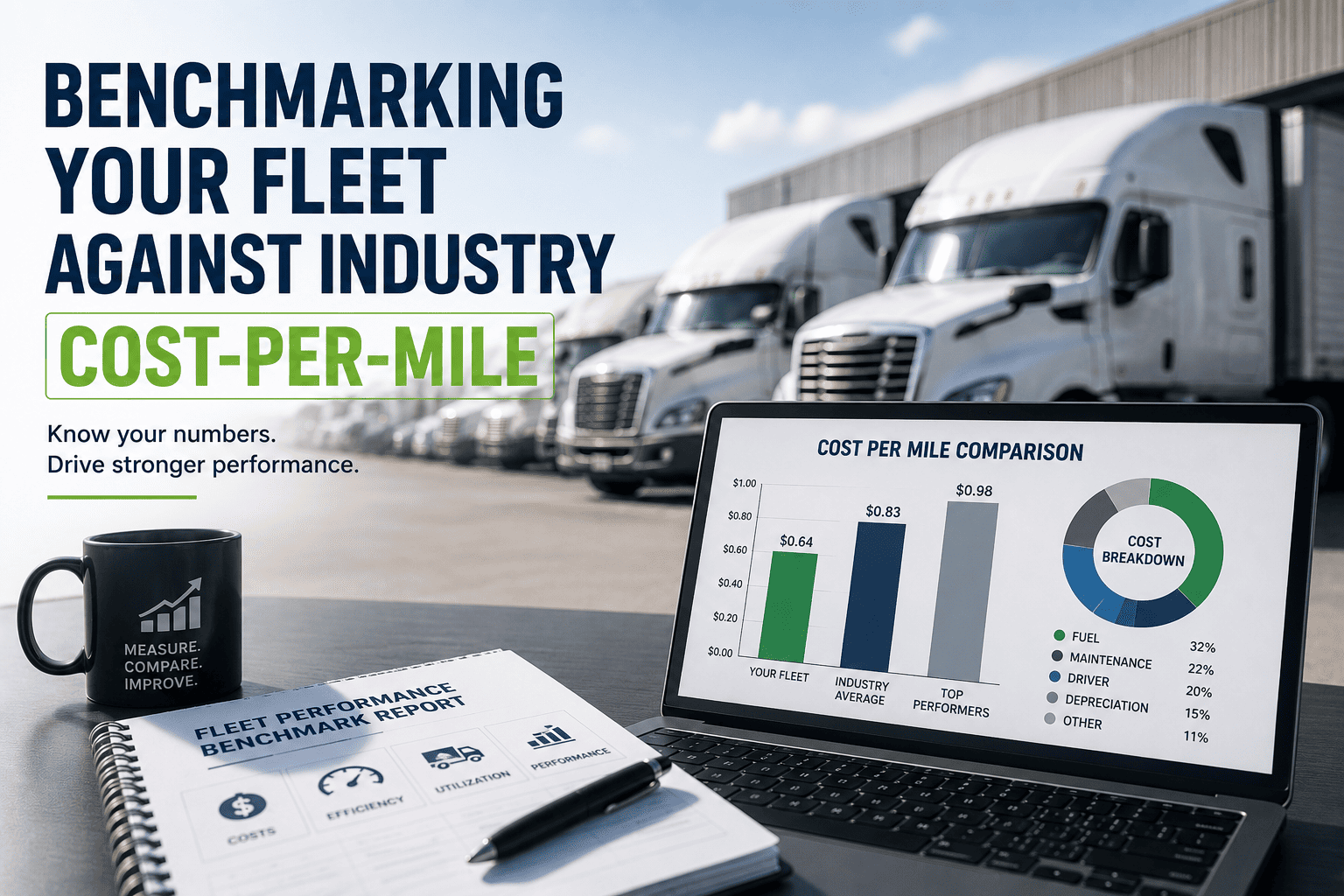
Real-time cost per vehicle, cost per mile, and rolling CapEx models. Give your CFO investor-grade fleet financial data — not spreadsheet estimates.
Frequently Asked Questions
Which fleet management trend will have the biggest impact on small fleets in 2026?
How do I prepare my fleet for EV adoption from a maintenance perspective?
Is predictive maintenance realistic for mid-size fleets, or is it only for enterprise operations?
How long does it take to implement a modern fleet CMMS like Oxmaint?
Your Fleet's 2026 Strategy Starts Here
Every trend on this list points in the same direction — fleets that digitize their maintenance operations will outperform those that do not. Oxmaint gives you the unified platform to act on these trends today, with automated PM scheduling, mobile work orders, digital inspections, parts inventory, and CapEx forecasting — all in one system. See it in action with a free trial or a 30-minute personalized demo.



.png)
-(1).png)
.png)