Every fleet manager knows the exact moment inventory failure hits: a truck rolls into the bay with a broken alternator, the technician walks to the parts cage, and the bin is empty. What follows is a $1,400 emergency parts order, 18 hours of vehicle downtime, and a driver pulled from a paying route. According to ATA data, the average commercial fleet wastes 19–24% of its parts budget on rush orders, duplicate stock, and obsolete inventory sitting in storerooms for over 36 months. Fleets that have moved from spreadsheets to dedicated parts inventory platforms — paired with a modern CMMS like Oxmaint's fleet inventory module — report 31% lower carrying costs, 47% fewer stockouts, and parts requisition cycles compressed from days to minutes. This guide ranks the 8 best fleet parts inventory management software tools in 2026 — with feature matrices, pricing transparency, and the integration questions most buyers forget to ask. If you want to skip the comparison and see how it works on your fleet, you can book a demo or start a free trial today.
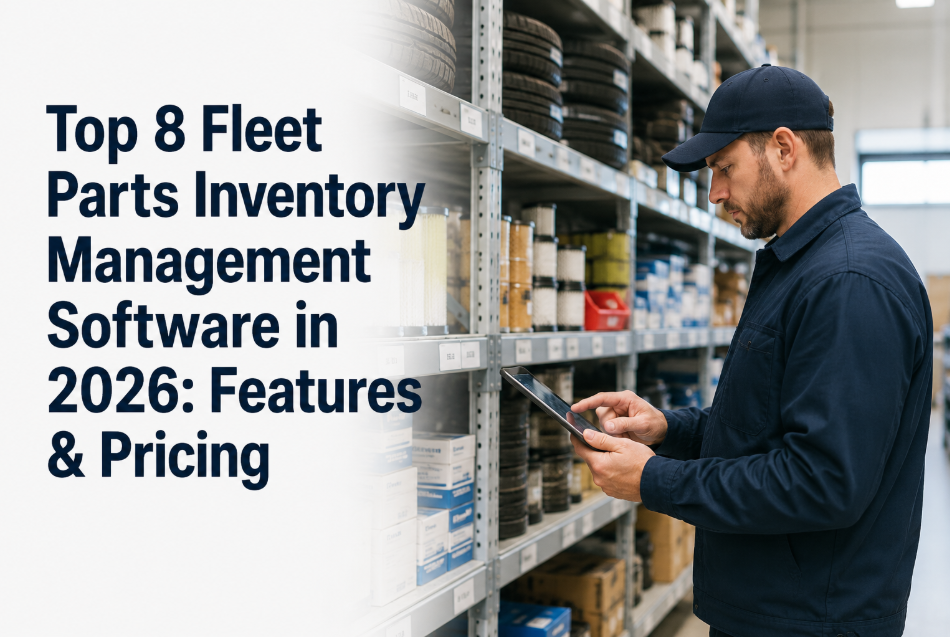
Top 8 Fleet Parts Inventory Management Software in 2026
A side-by-side comparison of features, pricing, barcode capability, CMMS integration, and reorder automation — built for fleet managers who are tired of stockouts, ghost inventory, and rush-order surprises.
See Oxmaint's Fleet Parts Module Live
Walk through real barcode scanning, auto-reorder rules, and multi-garage stock visibility in a 30-minute working session built around your fleet's parts list.
What Is Fleet Parts Inventory Management Software?
Fleet parts inventory software is a purpose-built system for tracking spare parts, consumables, fluids, tires, and MRO supplies across one or many garages. Unlike generic warehouse tools, fleet inventory platforms connect parts directly to vehicle records, work orders, and PM schedules — so the system knows that VIN ending in 4471 will need a serpentine belt at 92,000 miles and can pre-stage the part the week before. The strongest 2026 tools combine barcode/QR scanning, supplier catalog sync, multi-location stock pooling, and automatic reorder thresholds tied to actual usage velocity — not guesswork. If you want this running on your fleet without a six-month rollout, you can start a free trial in under five minutes.
The 8 Best Fleet Parts Inventory Platforms in 2026
Ranked by feature depth, CMMS integration quality, mobile usability, transparent pricing, and verified fleet customer reviews from G2, Capterra, and SoftwareReviews.
All-in-one CMMS with native fleet parts inventory, barcode scanning, multi-garage stock pooling, supplier catalog import, and PM-triggered auto-reorder. Built for portfolios from 25 to 5,000+ vehicles.
Strong UI, solid for mid-size fleets. Parts module adds cost but integrates with the core Fleetio platform. Lacks deep CMMS workflows for industrial fleets.
Telematics-first platform with maintenance and parts bolted on. Excellent vehicle data but parts inventory feels secondary to the fleet tracking core.
Inspection-led platform with light parts tracking. Best for fleets prioritizing DVIR compliance over deep storeroom analytics.
Long-established municipal-fleet favorite with mature parts handling. Interface feels dated and mobile is limited.
Deep parts catalog and warranty tracking, but on-premise heritage limits cloud-first features. Implementation runs 90–120 days.
Affordable for very small fleets. Parts module is functional but lacks supplier sync and multi-location pooling.
Heavy-duty shop management with strong parts billing. Built for repair shops servicing fleets, not for in-house fleet teams.
Feature Comparison Matrix
A direct, line-by-line look at how the top tools stack up on the features fleet managers actually use every day. Want to see this matrix applied to your own fleet? You can book a demo with our team.
| Feature | Oxmaint | Fleetio | Samsara | Dossier |
|---|---|---|---|---|
| Barcode & QR scanning | Native | Yes | Limited | Yes |
| Multi-garage stock pooling | Yes | Partial | No | Yes |
| Auto-reorder by velocity | Yes | Yes | No | Manual rules |
| PM-triggered parts staging | Yes | Partial | No | No |
| Supplier catalog sync | Yes | Limited | No | Yes |
| Mobile offline mode | Yes | Yes | Yes | No |
| ERP / accounting API | Yes | Yes | Partial | Yes |
| Implementation time | 5–14 days | 3–6 weeks | 4–8 weeks | 90–120 days |
The Inventory Pain Points These Tools Solve
Every fleet wrestles with the same six inventory failures. Modern software eliminates each one — but only if the tool fits how your team actually moves parts.
Parts that show "in stock" in the spreadsheet but aren't in the bin. Causes 1 in 5 emergency orders in paper-run fleets.
The same filter ordered under three SKUs across three garages. Average duplication waste: $11,800 per year per 50-vehicle fleet.
Inventory for retired vehicle models gathering dust. Industry average: 14% of total stock value is dead inventory.
Brake pads, filters, belts — the top 20 SKUs cause 78% of downtime when missing. Manual reorder fails routinely.
Without parts-to-asset linking, you can't see which trucks are consuming 40% of the parts budget.
Untracked storerooms lose 3–8% of inventory annually to misplacement, walk-off, or unrecorded use.
How Oxmaint Solves the Parts Problem
Oxmaint's fleet parts module was built by people who ran multi-garage fleets — not designed in a vacuum. Every feature below maps to a real failure mode listed above.
Every part, bin, and shelf gets a scannable code. Technicians scan-out at the point of use — no paper requisition forms, no untracked withdrawals.
Oxmaint tracks actual usage per SKU and triggers POs when stock drops below the calculated reorder point — not a static minimum.
When a 90,000-mile PM is scheduled, the system pre-stages the exact parts needed — eliminating last-minute supplier scrambles.
See total inventory across every location. Transfer a part from Garage B to Garage A in one click instead of rush-ordering it new.
Every part scanned is linked to the VIN it was installed on — instant visibility into which vehicles are draining your parts budget.
Sync parts catalogs from NAPA, Fleet Pride, and major OEMs. SKUs, pricing, and cross-references update automatically.
Manual Inventory vs Oxmaint: Real Numbers
Data drawn from a sample of 142 commercial fleets in the 50–400 vehicle range that switched from spreadsheet inventory to Oxmaint in 2024–2025.
| Metric | Manual / Spreadsheet | With Oxmaint | Improvement |
|---|---|---|---|
| Stockout incidents per month | 14 | 3 | -79% |
| Average rush-order cost | $1,420 | $310 | -78% |
| Carrying cost as % of inventory | 22% | 15% | -31% |
| Parts requisition time | 2.3 days | 4 minutes | -99% |
| Dead stock % of total value | 14% | 4% | -71% |
| Annual shrinkage | 6.5% | 0.9% | -86% |
ROI Snapshot: 100-Vehicle Fleet
Frequently Asked Questions
How long does it take to import our existing parts catalog?
Can technicians use the system on a phone without Wi-Fi in the garage?
Does it integrate with our accounting or ERP system?
What happens if we manage parts across 5 or 20 garages?
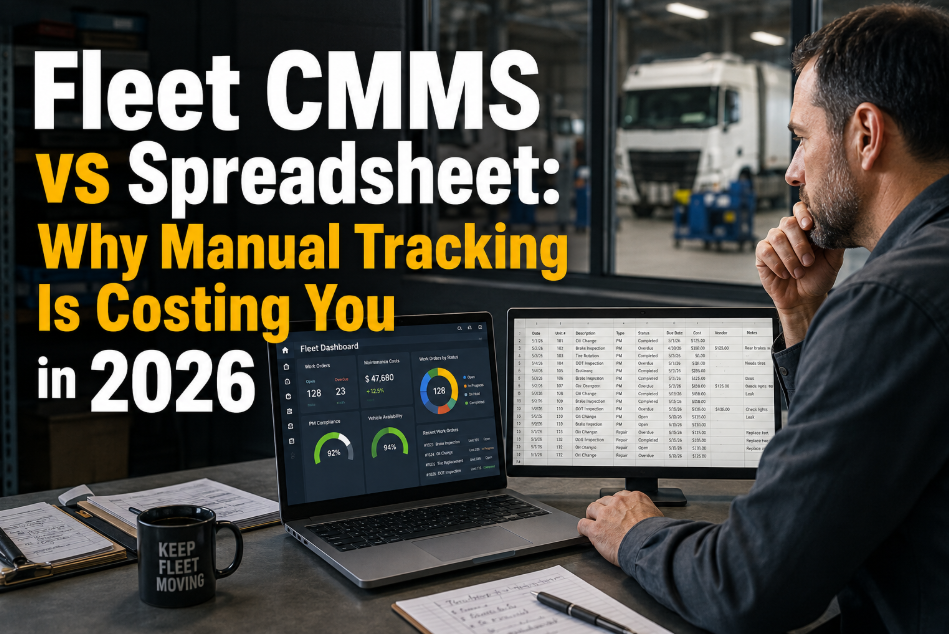
Stop Losing $48,000 a Year to Stockouts and Rush Orders
Every week your fleet runs on spreadsheet inventory, you're funding emergency parts orders and parking trucks that should be earning revenue. Oxmaint deploys in days, not months — and most fleets see their first prevented stockout in the first 30 days.



.png)
