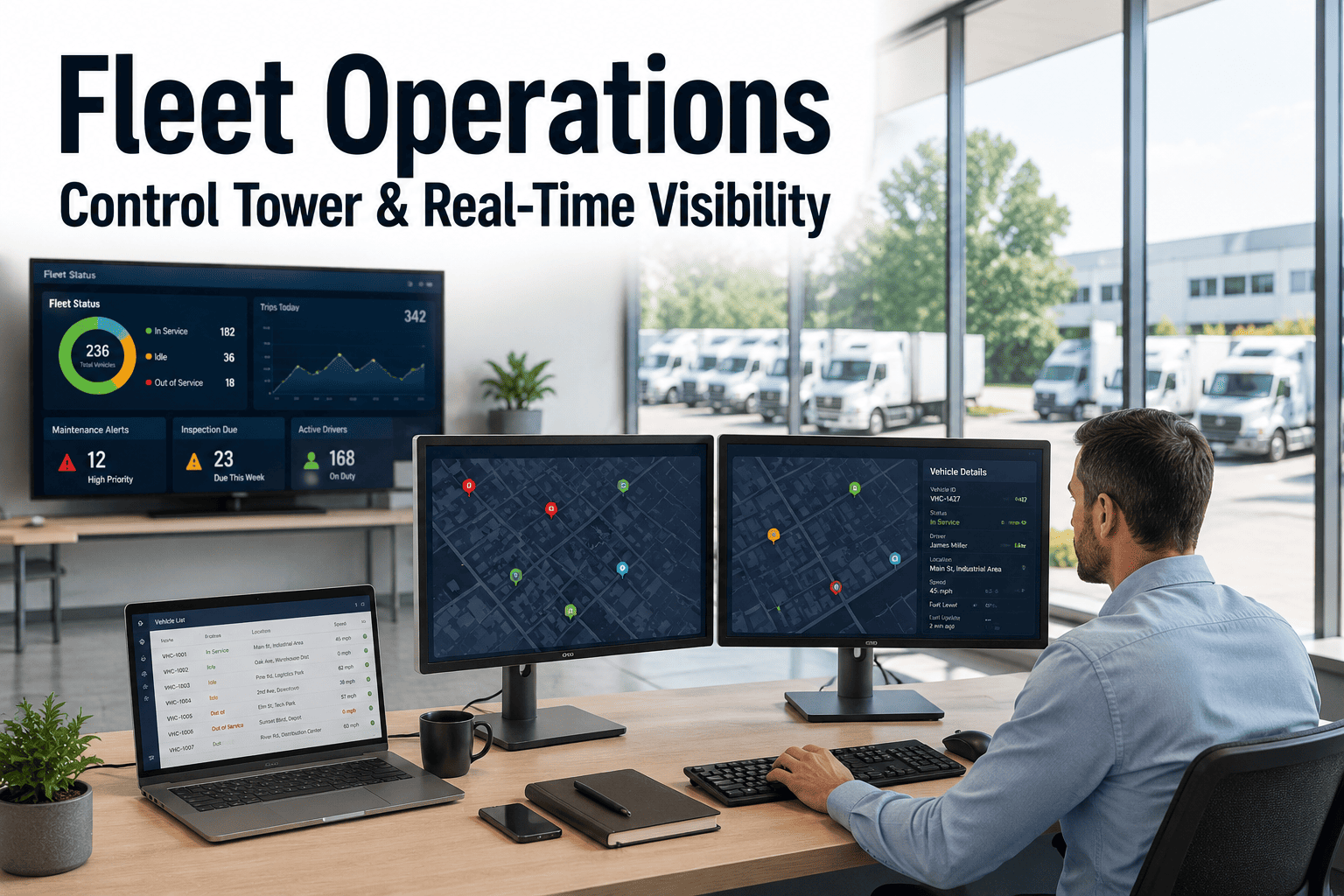
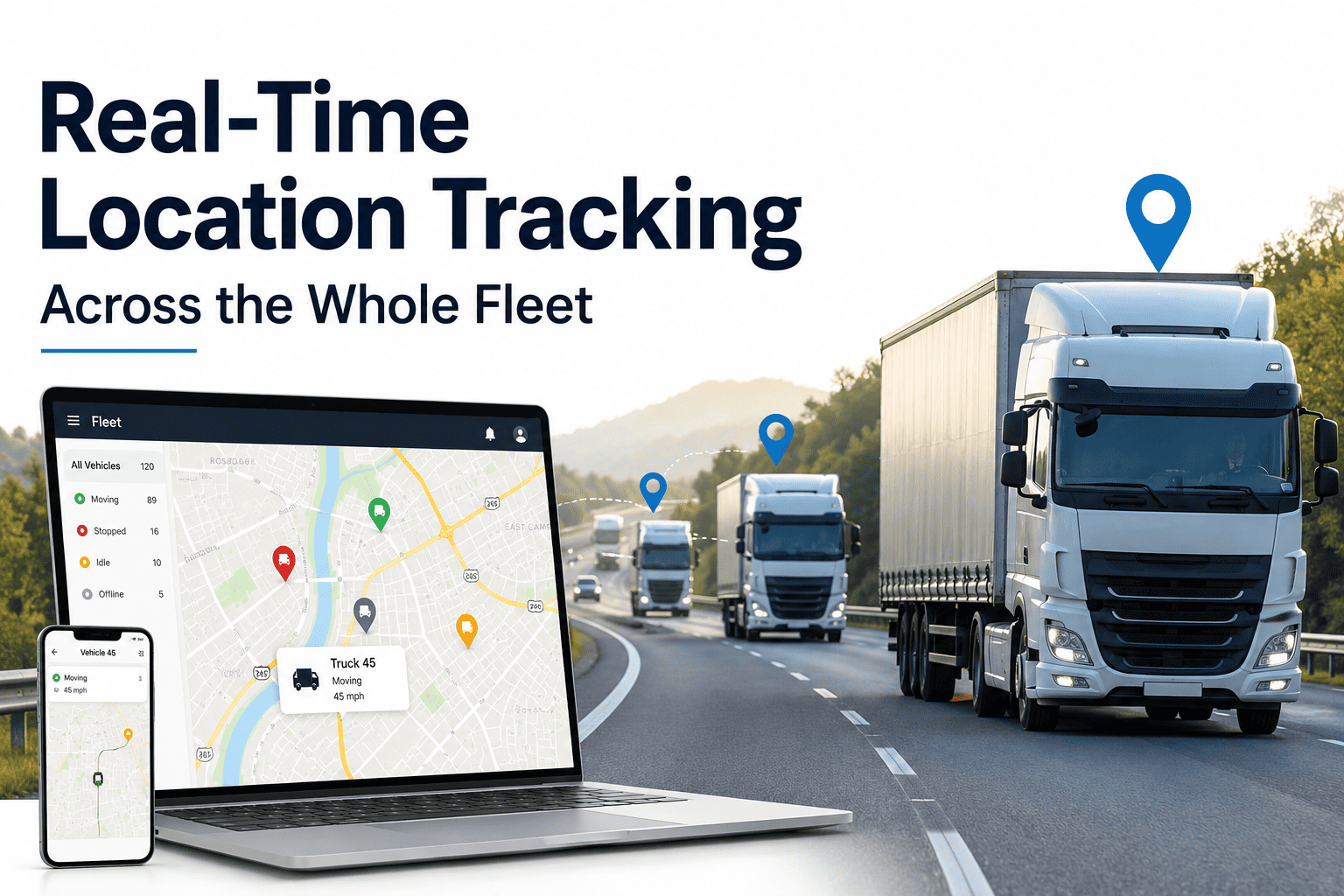
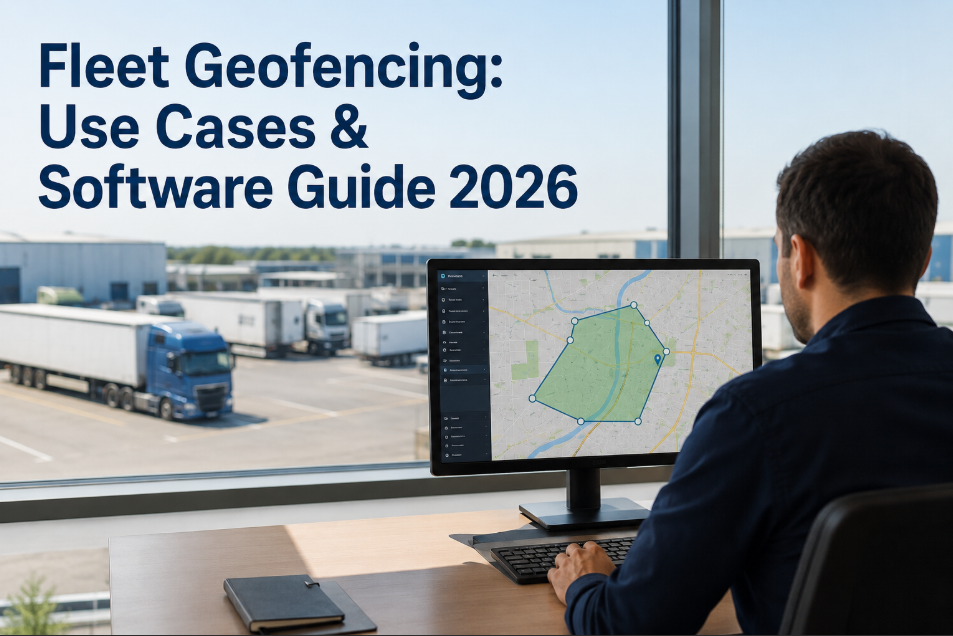
Real-time fleet tracking has moved far beyond a dot on a map — modern GPS-AI systems combine live satellite positioning with onboard diagnostics, AI-powered route analysis, geofencing triggers, and predictive deviation alerts to give fleet managers complete operational visibility across every vehicle, every minute of the day. For fleets operating across the USA, UK, Canada, Germany, Australia, and UAE, the difference between reactive dispatch and intelligent real-time tracking is measured in fuel savings, driver safety incidents prevented, and on-time delivery rates that directly impact customer retention. OxMaint integrates live GPS tracking with CMMS maintenance scheduling — so a vehicle that deviates from route or triggers an OBD fault code generates a maintenance work order automatically, without any manual intervention.
Real-Time Fleet Tracking: GPS & AI-Powered Monitoring
Live vehicle location, speed monitoring, geofencing, AI-powered route deviation alerts, and OBD integration — the complete guide to real-time fleet visibility for operations teams in USA, UK, EU, Canada, Australia, UAE, and global manufacturing fleets.
How GPS + AI Tracking Works — The Five-Layer System
Modern real-time fleet tracking is not a single technology — it is five integrated layers that each contribute a different type of intelligence. GPS provides position; OBD provides vehicle health; AI camera vision provides driver behaviour; AI Digital Twin provides predictive status; and CMMS integration closes the loop by converting data signals into maintenance actions. OxMaint connects all five layers into a single operations dashboard — live position, vehicle health, and maintenance status visible on one screen per vehicle.
What Real-Time Tracking Catches — Alert Categories
The commercial value of real-time GPS tracking is not the position data itself — it is the alerts that fire when vehicles deviate from expected behaviour. The six alert categories below account for 94% of all actionable fleet events generated by GPS-AI systems. Each alert has a defined trigger threshold, a response time target, and a downstream CMMS action. OxMaint configures all six alert types per fleet — with custom threshold settings per vehicle class, route, and operating region.
| Alert Type | Trigger | Response Target | CMMS Action | Risk |
|---|---|---|---|---|
|
Route Deviation
|
>500m from planned route | <2 minutes | Dispatch alert + log event | Medium |
|
Speed Violation
|
>10 mph above posted limit | Real-time | Driver alert + safety log | High |
|
Unauthorised Stop
|
Engine off, not at depot/stop >15 min | <5 minutes | Manager notification | Medium |
|
OBD Fault Code
|
Any active DTC while en route | <1 minute | Work order auto-created | High |
|
Geofence Breach
|
Vehicle enters/exits defined zone | Real-time | Zone log + client alert | Medium |
|
Driver Fatigue (AI)
|
Eye closure >2 sec or head drop | Real-time in-cab | In-cab audio + safety flag | Critical |
Technology Stack: AI Camera, Digital Twin, OBD, SAP & PLC
GPS position alone is the least actionable data a fleet generates. The intelligence comes from combining GPS with five technology layers that each add a dimension of awareness. OxMaint's platform integrates all five layers — transforming raw location streams into operational decisions: when to reroute, when to schedule maintenance, when to flag a driver, and when to pre-order parts before a vehicle reaches the workshop.
GPS & AI Tracking Implementation Checklist
Most fleet GPS deployments fail to deliver ROI because they stop at position tracking and never connect the data to maintenance, procurement, or driver management workflows. The checklist below maps the 12 implementation steps that separate a high-ROI tracking deployment from a basic dot-on-map system. OxMaint's onboarding team completes all 12 steps within the first 30 days of deployment — with dedicated integration support for OBD, SAP, and PLC connections.
ROI by Fleet Size — What GPS-AI Tracking Delivers
Return on investment from real-time GPS-AI tracking scales with fleet size, route complexity, and the number of technology layers activated. The comparison below shows actual measured outcomes across three fleet segments — light commercial (10–30 vehicles), mid-fleet (31–100 vehicles), and heavy fleet (100+ vehicles). OxMaint's ROI calculator generates a fleet-specific projection based on your vehicle count, average daily mileage, current fuel spend, and maintenance cost per vehicle.
We deployed OxMaint GPS-AI tracking across 68 vehicles in three countries. Within 90 days — fuel spend down 19%, driver safety incidents down 84%, and our workshop backlog cleared because OBD fault codes were generating work orders before drivers even reported a problem.
Frequently Asked Questions
Know Where Every Vehicle Is. Know When Every One Will Fail.
GPS + AI + CMMS in one platform. Free to start.