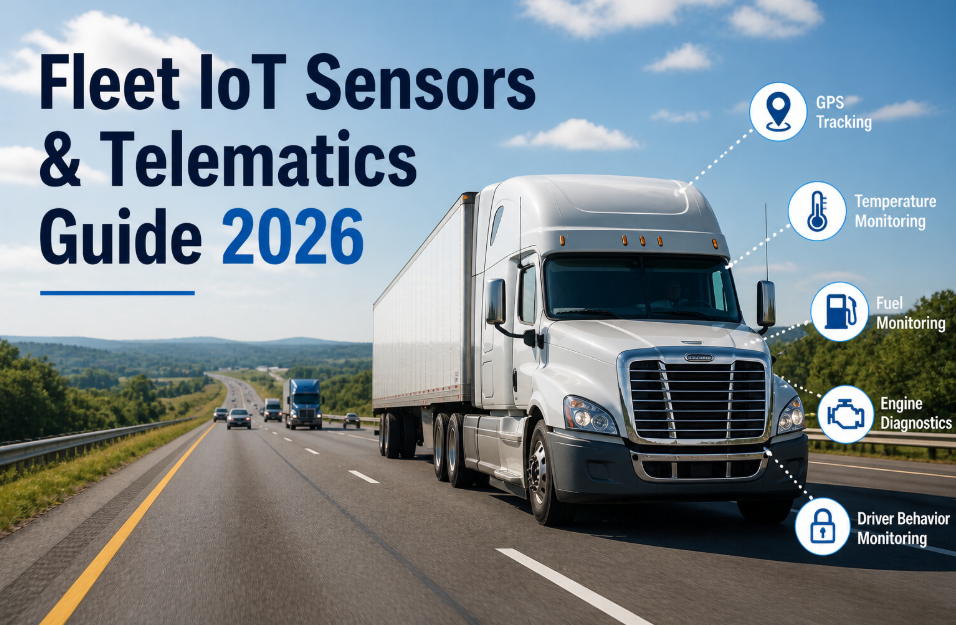
Fleet managers in 2026 are drowning in data they cannot act on. Telematics dashboards show GPS pings. Fuel cards show spend. Spreadsheets show scheduled maintenance dates. But none of these systems talk to each other — and the result is a maintenance operation running on guesswork, manual follow-ups, and reactive repairs that cost 4.8x more than planned interventions. IoT sensors are the bridge between raw vehicle data and intelligent maintenance decisions. When OBD-II engine diagnostics, tire pressure monitors, fuel consumption trackers, and battery health sensors feed directly into a connected CMMS, fleets shift from calendar-based servicing to condition-based precision. Fleets that have made this transition through platforms like OxMaint report 41% lower maintenance costs, 58% fewer unplanned breakdowns, and maintenance budgets that land within 5% of forecast — not 30% over.
Fleet IoT Sensors and Telematics: The Complete Guide to Real-Time Vehicle Monitoring in 2026
A practical breakdown of every major IoT sensor type used in fleet management today — from OBD-II diagnostic trackers and tire pressure monitors to fuel sensors and engine health arrays — and how to connect all of them into automated maintenance workflows.
What Is Fleet IoT Sensor Management?
Fleet IoT sensor management is the practice of connecting physical sensors embedded in or attached to vehicles to a central data platform — and using the continuous stream of live readings to drive maintenance decisions, flag anomalies, and trigger work orders before components fail. In 2026, the average sensor-equipped commercial vehicle transmits data across 28 or more parameters every few seconds. The challenge is not collecting data — most fleets already have telematics devices installed. The challenge is converting raw sensor readings into automated, actionable maintenance tasks. Without a CMMS layer, IoT data sits in a telematics dashboard as alerts that someone may or may not act on. With a connected platform like OxMaint, a tire pressure reading crossing the 15% deviation threshold automatically creates a prioritized inspection work order, assigns it to a technician, and logs it against the vehicle asset record. That is the difference between monitoring and managing. Ready to connect your sensors to automated work orders? Start a free trial or book a demo to see the live data pipeline in action.
Sensors capture engine, tire, fuel, battery, and environmental data continuously — no manual logging, no missed readings.
Data streams via cellular, Wi-Fi, or CAN bus protocols to a central cloud platform in near real time — typically every 5-30 seconds.
Threshold rules and machine learning models compare live readings against baselines — flagging deviations that signal developing failures.
Threshold breaches auto-create prioritized CMMS work orders with sensor data attached — assigned to technicians before breakdowns occur.
Every Major Fleet IoT Sensor Type: What It Monitors and Why It Matters
Not all fleet sensors are equal — each covers a distinct failure domain. Understanding what each sensor type monitors, what its critical thresholds are, and what it prevents is the foundation of building an effective IoT maintenance strategy.
The OBD-II port, standard on all commercial vehicles manufactured after 1996, provides access to 47 standardized engine parameters — RPM, coolant temperature, throttle position, fuel system status, oxygen sensor readings, and diagnostic trouble codes (DTCs). Modern OBD-II trackers read DTCs the moment an engine fault is detected, transmitting the code to your CMMS before the dashboard warning light illuminates. This 15-30 minute early detection window is the difference between a scheduled repair and a roadside emergency. Fleets using OBD-II triggered work orders reduce engine-related breakdowns by 39%.
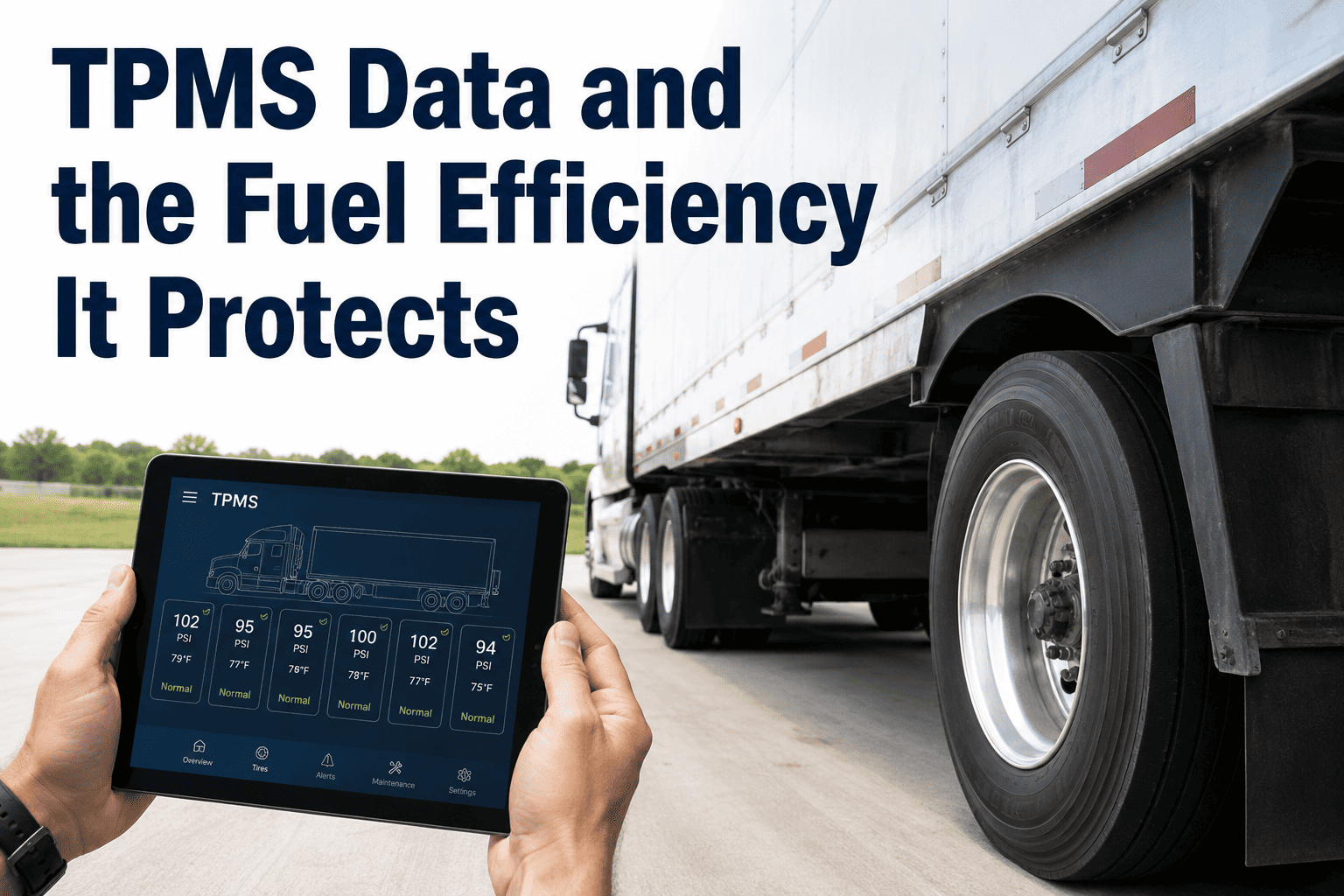
Tire failures are the leading cause of roadside commercial vehicle breakdowns — accounting for 28% of all breakdown incidents. TPMS sensors mounted inside each tire rim continuously measure internal pressure and temperature, transmitting readings every 10 seconds. A 10% pressure drop increases rolling resistance, raises fuel consumption by 3%, and accelerates tread wear by 25%. At 20% underinflation, blowout risk increases by 300%. OxMaint receives TPMS data and fires alerts when any tire deviates 15% from the target pressure — automatically creating a tire inspection work order before the driver notices anything wrong.
Thermal runaway is one of the most destructive failure modes in fleet engines — causing irreversible head gasket damage, warped cylinder heads, and catastrophic engine seizure. Temperature sensors mounted on coolant lines, oil galleries, and exhaust manifolds provide continuous thermal readings. The critical insight is not a single high reading but a rising trend — an engine running 8 degrees above its normal operating band for two consecutive hours signals a developing fault (blocked radiator, failing water pump, coolant leak) that requires inspection now, not when the temperature gauge redlines. OxMaint creates work orders based on thermal trend signatures, not just threshold crossings.
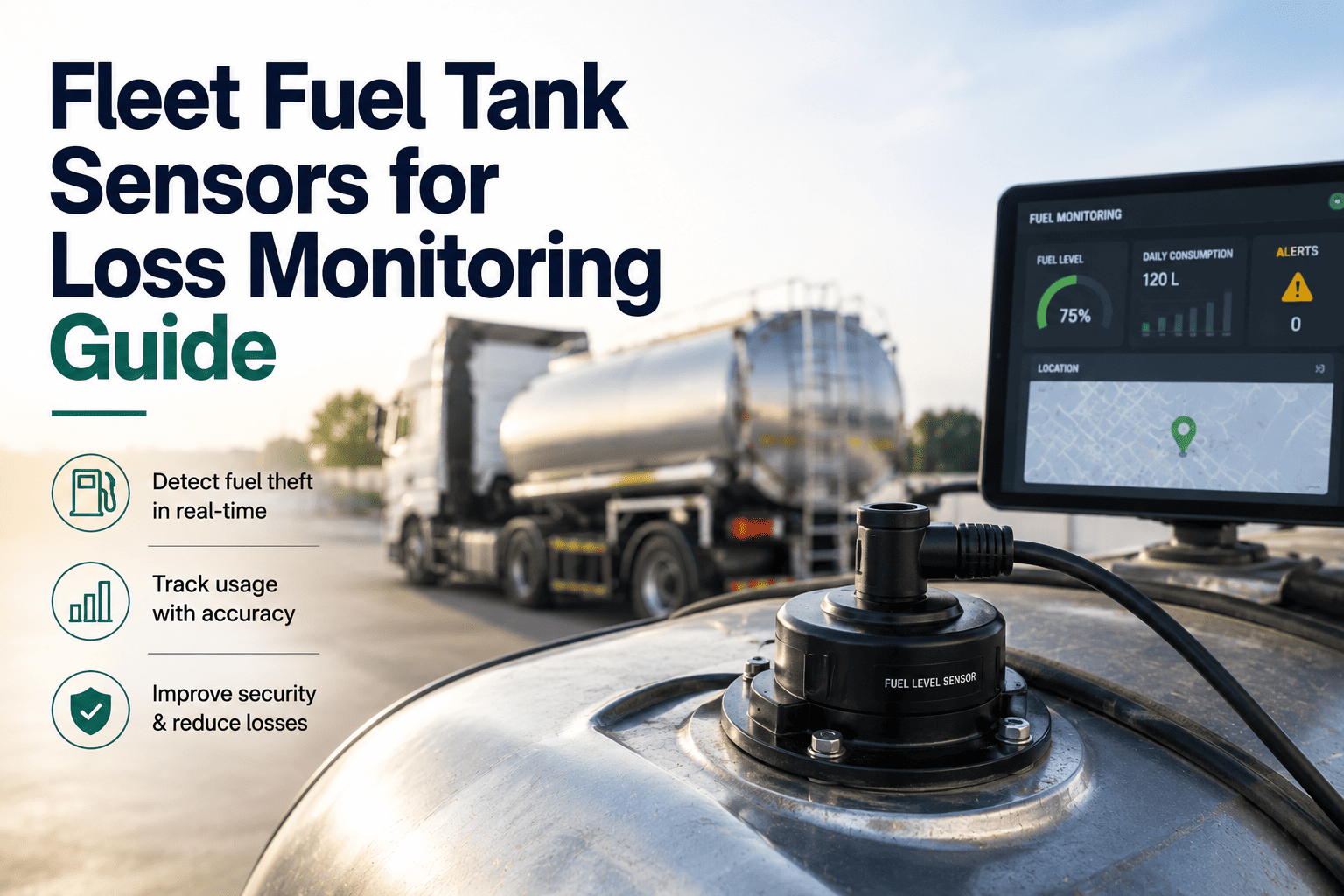
Fuel sensors go beyond measuring tank levels — they calculate real-time consumption rates per trip, per route, and per driver. A sudden 12% increase in fuel consumption on a vehicle that has not changed routes or load profiles is a clear signal of a developing mechanical issue: clogged air filter, fouled injectors, drivetrain drag, or parasitic electrical draw. Left unaddressed, a vehicle consuming 12% excess fuel will cost an average fleet operator an additional $3,400 per year per vehicle in direct fuel costs alone — before accounting for the component damage compounding underneath. OxMaint compares each vehicle consumption baseline and flags deviations as maintenance triggers, not just fuel management metrics.
Battery failure is the second most common cause of fleet vehicle no-starts — a problem that is almost entirely preventable with continuous monitoring. Battery sensors measure terminal voltage, state of charge, cold-cranking amps (CCA), and discharge rate under load. A battery losing 15% of its rated CCA capacity is statistically 80% likely to fail within 30 days — but it will still start the vehicle normally on a warm morning, giving no visible warning. OxMaint processes daily battery health snapshots and predicts replacement needs 14-21 days in advance, enabling planned replacement during scheduled downtime rather than emergency jump-starts in a customer car park.
Brake pad thickness sensors and suspension load cells form the safety-critical layer of a fleet IoT stack. Pad wear sensors measure remaining brake material to within 1mm accuracy — triggering replacement work orders when pads reach 20% remaining thickness, giving a 2-3 week servicing window before safety limits are breached. Suspension load sensors detect overloading events (which accelerate wear on axles, wheel bearings, and chassis) and provide weight data that supports legal compliance for vehicles operating under gross vehicle weight regulations. In regions with strict DVSA or DOT enforcement, this sensor data doubles as compliance documentation.
How IoT Data Flows Into OxMaint: The Real-Time Pipeline
Collecting sensor data is the easy part. What fleet managers need is a clear picture of how raw telemetry becomes a prioritized, assigned, and tracked maintenance action. This is the data pipeline inside OxMaint — from sensor reading to closed work order.
Tire pressure drops to 74 PSI. Threshold set at 85 PSI minimum. Deviation: 13%.
Reading streams via cellular to OxMaint cloud within 10 seconds of detection.
Threshold breach detected. Severity classified as HIGH. Work order auto-generated.
Assigned technician receives mobile push notification with sensor reading and vehicle location.
Repair logged with parts used, technician signature, and updated readings. Audit trail complete.
The entire sequence — from sensor anomaly to technician notification — takes under 60 seconds in a properly configured OxMaint deployment. Compare that to the traditional process: sensor anomaly occurs, driver may or may not notice during next walkaround, report goes on a clipboard, supervisor reviews at end of shift, work order handwritten and pinned to a board. Average response lag: 6-18 hours. Want to see the pipeline running on live vehicle data? Book a demo and we will walk through a live sensor integration during the session.
Reactive Telemetry vs. Connected IoT Maintenance
Most fleets have telematics. Very few have connected IoT maintenance. The difference is not hardware — it is what happens after the data is collected.
| Operational Area | Reactive Telemetry Only | OxMaint Connected IoT Maintenance |
|---|---|---|
| Sensor Alert Handling | Dashboard notification, someone manually follows up (or does not) | Auto-creates prioritized work order, assigns technician within 60 seconds |
| Tire Pressure Drop | Alert visible on telematics screen, action depends on dispatcher | Inspection work order fired immediately, parts pre-checked in inventory |
| Engine DTC Detected | Code logged in telematics, exported to spreadsheet, scheduled next week | Fault code linked to asset record, repair priority set, technician briefed |
| Fuel Consumption Spike | Visible in fuel report next month, cause identified retrospectively | Deviation triggers diagnostic inspection within 24 hours |
| Battery Health Decline | Not monitored until vehicle fails to start | Declining CCA trend triggers replacement 14-21 days before failure |
| Maintenance Records | Separate from telematics — manually linked or never linked | Every event linked to vehicle asset record with full history |
| Audit Compliance | Telematics export plus manual records — two separate documents | Single audit-ready report combining sensor data and maintenance actions |
| Budget Forecasting | Based on historical averages and gut feel | Sensor condition data feeds 5-year CapEx models accurate to within 8% |
How OxMaint Connects Every Sensor to Every Maintenance Action
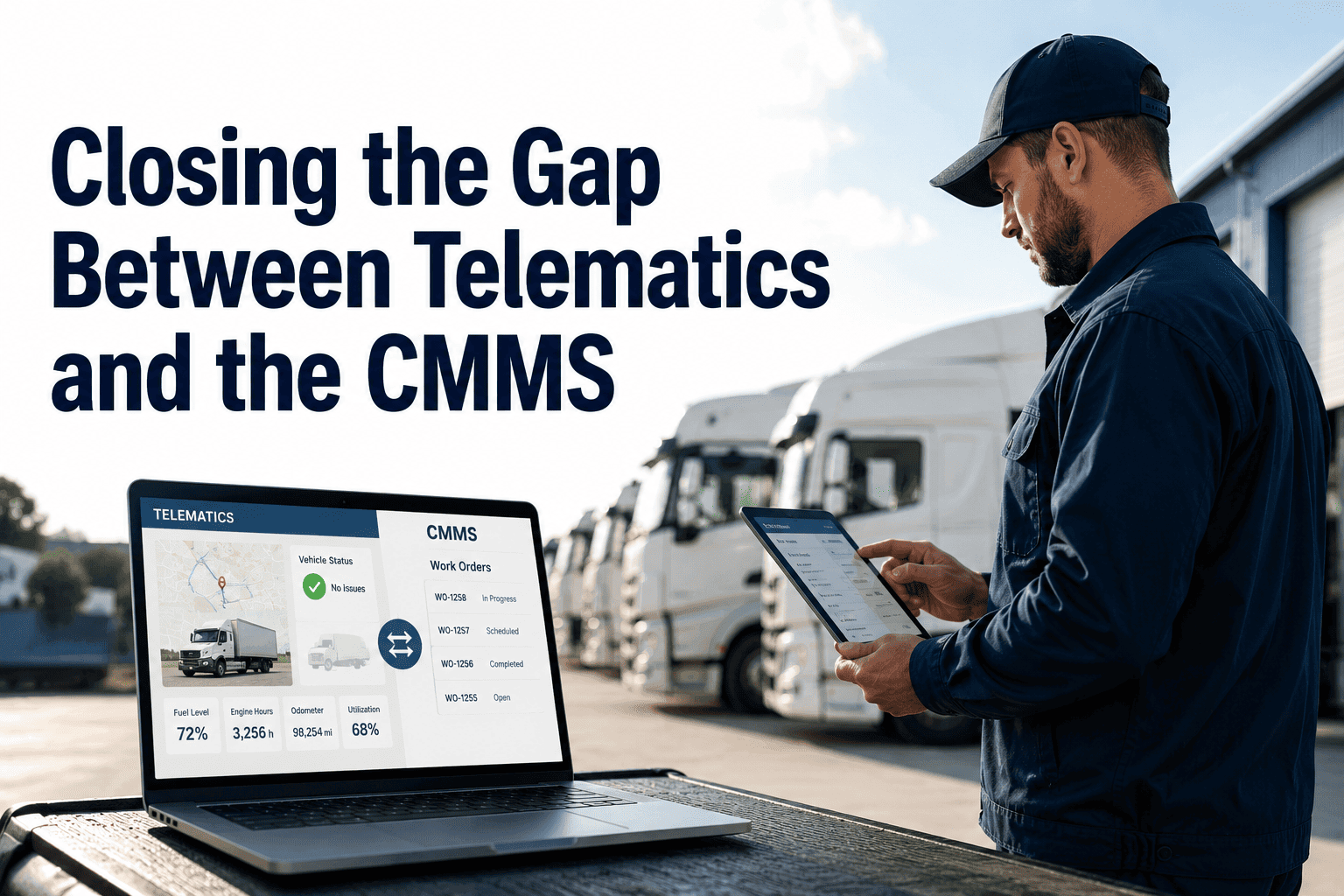
OxMaint is built as the operational layer that sits above your existing telematics and sensor hardware — receiving data via standard APIs and converting readings into structured maintenance workflows. No ripping out existing hardware. No new telematics contracts.
Native integrations with Geotab, Samsara, CalAmp, and Verizon Connect. Custom sensor feeds via REST API and MQTT protocol. Most integrations live within 48 hours.
Configurable threshold rules for every sensor type. Single-breach, trend-based, and composite triggers. Zero manual intervention required for work order creation.
Every sensor reading, work order, parts replacement, and cost entry attaches to a single vehicle profile. Complete asset history from acquisition to disposal.
Technicians receive sensor-triggered work orders on their phones with the triggering data attached. Complete repairs, log photos, and sign off — all from the field.
Live sensor condition scores feed 5-year vehicle lifecycle models. Replacement forecasts accurate to within 8% — transforming fleet finance conversations from guesswork to data.
Every sensor alert, work order trigger, and repair action is automatically timestamped. DOT, DVSA, and OSHA audit packages generated in minutes — not assembled over days.
The net result is a maintenance operation that responds to actual vehicle condition — not scheduled calendar dates — and documents everything automatically. Start a free trial to connect your first vehicles and see condition-based work orders generating automatically.
ROI Benchmarks: What IoT-Connected Fleet Maintenance Delivers
These are benchmarked outcomes from fleets that have deployed IoT sensor data pipelines connected to a CMMS. Results measured at the 6-month and 12-month marks post-deployment.
Shifting from calendar-based to condition-triggered PMs eliminates unnecessary servicing while catching failures earlier — when repairs cost a fraction of emergency fixes.
Sensor-detected anomalies resolved during planned stops eliminate the majority of breakdown events. Average breakdown costs $15,000 all-in — prevention ROI is immediate.
Sensor-triggered maintenance of fuel system components restores fuel efficiency and eliminates the hidden fuel cost of deferred maintenance across the entire fleet.
Automated work order creation and mobile technician notifications push completion rates from a paper-based average of 58% to 92%+ within 90 days of deployment.
Sensor condition data feeding CapEx models reduces budget variance from the industry average of 28% to within 5% — transforming fleet finance conversations entirely.
Combined savings from breakdown prevention, fuel optimization, reduced emergency repair premiums, and extended vehicle life deliver 3.4x return in the first 12 months.
Frequently Asked Questions
Do we need to replace our existing telematics hardware to use OxMaint?
No. OxMaint integrates with your existing telematics devices and platforms via API — including Geotab, Samsara, CalAmp, Verizon Connect, and most OBD-II compatible hardware. You do not need to change hardware or telematics providers. OxMaint sits as the CMMS layer above your existing setup, receiving data and converting it into maintenance workflows. Most integrations are configured and live within 48 hours of deployment.
What happens if a sensor goes offline or loses signal during a trip?
OxMaint handles sensor dropouts with a configurable alert policy. If a monitored sensor fails to transmit for longer than a defined window (typically 30-60 minutes for mobile assets), the system generates a connectivity alert and flags the vehicle for inspection on return to depot. Readings buffer locally on OBD-II devices during cellular dead zones and sync when connectivity is restored — so no data is permanently lost during signal gaps.
How do we set thresholds without creating alert fatigue?
OxMaint provides default threshold templates for all major sensor categories based on industry benchmarks — OEM specifications for engine parameters, DOT/DVSA minimums for brake systems, and manufacturer ratings for tire pressure. These defaults work immediately for most fleets. For specific operational profiles (cold climate, heavy-load routes, high-mileage cycles), thresholds are adjusted per vehicle class during onboarding. The system also learns baseline patterns per vehicle over the first 30 days and flags statistically significant deviations rather than fixed threshold crossings alone.
Can IoT sensor data support insurance claims and regulatory audits?
Yes — and this is one of the most underutilized benefits of fleet IoT integration. Every sensor reading, threshold breach, work order, and repair action in OxMaint is automatically timestamped and stored against the specific vehicle asset record. For insurance claims, this provides objective, dated evidence of vehicle condition before and after an incident. For DOT, DVSA, and OSHA audits, the system generates compliance reports that combine inspection records, sensor logs, and maintenance histories into a single exportable document — typically reducing audit preparation from days to under two hours.
Stop Watching Sensor Data. Start Acting On It.
Your vehicles are already generating the data that could prevent your next breakdown, reduce your fuel bill by 18%, and extend your fleet life by over a year. The only missing piece is a CMMS that converts that data into automatic, prioritized maintenance actions. OxMaint connects to your existing sensors and telematics in 48 hours — with no new hardware, no lengthy implementation, and condition-based work orders generating from day one.

-for-commercial-fleets.png)


