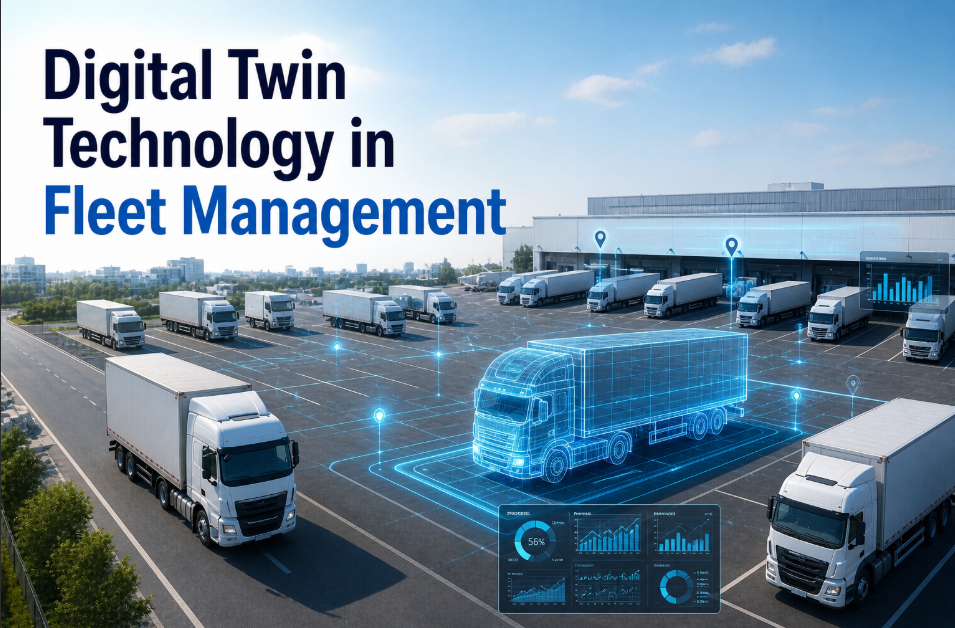
In 2026, fleet managers are no longer limited to reviewing what went wrong after a breakdown. Digital twin technology has crossed from aerospace and manufacturing into mainstream commercial fleet operations, creating continuously-updated virtual replicas of every vehicle that sync in real time from onboard sensors and telematics feeds. Fleets that have deployed digital twins are reporting 30% fewer unplanned breakdowns and 25% lower total maintenance spend within their first 18 months. The performance gap between digitally-twinned fleets and those still running on reactive maintenance is compounding every quarter — and 2026 is the year this technology stops being a pilot project and becomes the operational baseline. To see how Oxmaint brings this capability to real fleet operations without heavy implementation overhead, start a free trial for 30 days and connect your first assets to the platform, or book a demo with a fleet management specialist at Oxmaint today.
Digital Twin Technology in Fleet Management
A complete 2026 guide covering virtual vehicle models, real-time condition monitoring, predictive maintenance twins, route simulation, and how CMMS platforms connect digital twin data into automated work orders — for fleet operations that can no longer afford reactive maintenance.
See Fleet Digital Twin Management Live on Oxmaint
Oxmaint unifies IoT sensor feeds, vehicle telemetry, maintenance history, and CapEx forecasting into a single platform — giving your operations team live condition scores, predicted failure windows, and automated work orders. No heavy implementation fees. No long onboarding cycles. Most fleet customers are generating condition-based work orders within their first week.
What Is a Fleet Digital Twin?
A fleet digital twin is a continuously-synchronized virtual replica of a physical vehicle — built from real-time sensor data, historical maintenance records, usage telemetry, and manufacturer specifications. Unlike static vehicle records or annual inspection reports, a digital twin updates every time the vehicle's condition changes. Fleet managers can query the twin to see current component health scores, run failure simulations, or model maintenance schedule changes without touching the physical asset. The result is a fleet management layer that is always current, always predictive, and always connected to actionable maintenance decisions. If you are ready to move beyond fixed maintenance intervals into condition-driven operations, start a free trial for 30 days and connect your first vehicles to Oxmaint, or book a demo to see the full digital twin workflow live.
A digital model mirroring every component of the physical vehicle — engine, transmission, brakes, tires, and electronics — built from OEM specs and updated continuously from live sensor data.
OBD-II data, CAN bus signals, GPS telemetry, and IoT sensors feed the twin every 30–60 seconds — capturing mileage, temperatures, pressures, vibration levels, and fault codes as they occur.
Machine learning models trained on fleet-wide failure data score each component's remaining useful life — flagging bearings, belts, and brake pads before they cross failure thresholds.
When the twin detects a condition threshold breach, it automatically triggers a prioritized work order in the CMMS — pre-filled with asset history, repair procedure, and required parts list.
How the Data Pipeline Actually Works
Understanding how sensor readings become maintenance decisions separates digital twin strategy from digital twin hype. The four-step pipeline below is how Oxmaint handles this in production fleets across the USA, UK, UAE, Australia, and Canada — today. Every step is automated. No manual data entry. No spreadsheet handoffs. To experience this pipeline with your own fleet data, start a free trial for 30 days on Oxmaint, or book a demo and see a live walk-through of the full data flow.
OBD-II dongles, tire pressure sensors, engine probes, and GPS trackers feed real-time data every 30–60 seconds. Engine fault codes, idle hours, fuel consumption, and brake wear are captured without any manual input.
Incoming data is processed against the vehicle's digital model. Component condition scores update in real time. Anomaly detection flags readings outside normal operating envelopes immediately — not during the next inspection.
Each component receives a Remaining Useful Life (RUL) score based on current condition, usage history, and manufacturer thresholds. Components scoring below 20% RUL trigger high-priority alerts before failure occurs.
Threshold breaches auto-generate prioritized work orders in Oxmaint — with component history, repair procedures, and parts inventory status pre-attached. Technicians get mobile notifications with full asset context instantly.
The Fleet Pain Points Digital Twins Are Built to Eliminate
Most fleet maintenance failures are not caused by mechanical failure alone — they are caused by information failure. Managers do not know a component is degrading until it has already failed. Digital twins are the information layer that closes this gap permanently. Fleets relying on time-based maintenance schedules are operating with a structural blind spot that costs, on average, 4.8x more per repair event than condition-based maintenance. To stop paying that premium, start a free trial for 30 days and run Oxmaint's condition scoring on your first 10 vehicles, or book a demo to see live fleet dashboards.
Vehicles are maintained after breakdown, not before. Each reactive repair costs 4.8x more than a planned intervention — and creates cascading schedule failures across the entire fleet, compounding downtime and overtime spend.
Inspection records are snapshots taken every 6–12 months. Between inspections, component degradation is completely invisible — until a roadside failure forces emergency intervention at 3–5x standard repair cost.
Without condition data, fleet replacement planning relies on age and mileage alone — leading to early retirements of serviceable vehicles and expensive late replacements of assets that have already degraded past safe operation.
Depots and regions maintain separate maintenance logs — making portfolio-level visibility impossible without manually consolidating data from systems that were never designed to communicate with each other.
How Oxmaint Delivers Fleet Digital Twin Functionality
Oxmaint is not a visualization tool that shows a 3D model of your fleet. It is a full CMMS and asset management platform with native condition-based maintenance triggers, IoT sensor integration, real-time asset condition scoring, rolling CapEx forecasting, and portfolio-level reporting — the eight operational capabilities that digital twin fleet management actually requires in production. Used today by multi-site operations across the USA, UK, Canada, UAE, and Australia, Oxmaint connects every layer of the digital twin pipeline to maintenance execution. To see all eight capabilities working together on your fleet, start a free trial for 30 days, or book a demo for a guided walk-through tailored to your fleet size and structure.
Every vehicle gets a complete digital record — make, model, components, full service history, and a live condition score driven by sensor inputs and inspection data. No more guessing about vehicle state between service dates.
Connects to OBD-II telematics, TPMS sensors, engine monitors, and SCADA gateways. Live sensor readings flow directly into asset condition scores and trigger maintenance actions automatically — no manual data entry required.
PMs triggered by mileage, engine hours, cycles, or condition score thresholds — not just calendar dates. Vehicles are serviced when components need it, not when a spreadsheet says so, reducing both over-maintenance and under-maintenance.
Condition threshold breaches instantly create prioritized work orders pre-filled with component history, repair procedures, and parts availability status. Mobile-first notifications reach technicians wherever they are on-site.
Asset condition scores feed into rolling CapEx models — showing fleet directors which vehicles are approaching end-of-life, when replacements will be needed, and what the 10-year fleet renewal budget looks like by depot and portfolio.
View condition scores, maintenance costs, PM compliance rates, and downtime metrics across every depot and region in a single dashboard — from portfolio level all the way down to an individual vehicle's component health.
Every work order timestamped, technician-signed, and linked to its vehicle record. OSHA, DOT, and regional compliance reports generated on demand — not assembled under pressure the week before an inspection.
Parts inventory linked directly to vehicle condition scores — when a component is predicted to fail within 30 days, Oxmaint checks stock levels and triggers reorder requests before the repair work order is even created.
Traditional Fleet Management vs Digital Twin Fleet Management
The operational difference between reactive fleet management and digital twin-driven fleet management is not incremental — it is structural. The comparison below shows the key contrasts across the dimensions that matter most to fleet operations managers, asset directors, and CapEx planners. For organizations in the USA managing OSHA compliance, or Australian fleets where high labor costs make preventive ROI especially strong, this table represents the business case in clear numbers. Ready to move to the right-hand column? Start a free trial for 30 days with Oxmaint, or book a demo to map the transition to your fleet structure.
| Dimension | Traditional Fleet Management | Digital Twin Fleet Management |
|---|---|---|
| Vehicle Health Visibility | Periodic inspection snapshots, 6–12 months apart | Continuous real-time condition scores, updated every 30–60 seconds |
| Maintenance Trigger | Calendar-based intervals or post-failure | Condition-based triggers from sensor thresholds and RUL scores |
| Work Order Creation | Manual, after breakdown or scheduled date | Automatic, triggered by condition threshold breach before failure occurs |
| CapEx Planning Basis | Vehicle age and mileage alone — no condition data | Condition-driven replacement forecasts with 5–10 year rolling CapEx models |
| Cost Per Repair Event | 4.8x higher for emergency and reactive repairs | Planned maintenance cost — no emergency premium, no overtime callouts |
| Multi-Site Reporting | Manual consolidation from separate depot logs | Portfolio-level dashboard with drill-down to individual vehicle component |
| Compliance Documentation | Assembled manually before audits — weeks of effort | Auto-generated on demand with timestamps and digital technician signatures |
| Annual Downtime Per Vehicle | Average 180–240 unplanned downtime hours per year | Reduced to 90–110 hours — a 45% improvement within 18 months |
The ROI Numbers Fleet Leaders Are Reporting
The business case for fleet digital twins is no longer theoretical. Operations directors managing multi-site fleets with Oxmaint are reporting measurable outcomes across maintenance cost reduction, asset uptime improvement, compliance efficiency, and CapEx forecasting accuracy. These four figures represent the metrics that appear most consistently across Oxmaint fleet customers after 12–18 months of deployment. To see projected ROI for your fleet size, start a free trial for 30 days and run your own numbers on the platform, or book a demo for a fleet-specific ROI walkthrough with our team.
Emergency repairs cost 4.8x more than planned interventions. Digital twins shift the planned-to-reactive ratio from 40:60 to 80:20 — a structural cost reduction, not a one-time saving.
Fleets using condition-based maintenance report unplanned downtime dropping from an average of 200+ hours per vehicle per year to under 110 — within 18 months of Oxmaint deployment.
Calendar-based PM compliance averages 45–60% across traditional fleets. Condition-triggered scheduling through Oxmaint pushes PM completion rates consistently above 90%.
Most fleets deploying Oxmaint report full platform cost recovery within 18 months — driven by reduced emergency repair spend, lower parts waste, and extended vehicle working life.
Frequently Asked Questions
What types of vehicles and assets can be modeled in a fleet digital twin?
Any vehicle or mobile equipment with sensor connectivity can be modeled — HGVs, delivery vans, buses, construction equipment, forklifts, and specialist vehicles. Oxmaint supports any asset with telemetry output, OBD-II data, or manual inspection inputs. Even assets without embedded sensors can be modeled using inspection-based condition scoring. Assets are progressively enriched as more data accumulates over time, so starting with partial data is completely normal and expected. To see how your specific asset types are handled, start a free trial for 30 days and import your first asset list, or book a demo to see asset types similar to yours configured live.
Do we need to replace our existing telematics system to use Oxmaint?
No. Oxmaint integrates with existing telematics providers and IoT platforms via API. Your current GPS trackers, OBD-II devices, and fleet management tools continue operating — Oxmaint ingests their data feeds and layers the CMMS and condition-scoring logic on top. There is no requirement to replace hardware or software you have already invested in. The integration layer is handled by Oxmaint's implementation team, not by your IT department. Start a free trial for 30 days to test the integration path with your existing stack, or book a demo for a technical discussion about your current telematics setup.
How long until the first digital twin work orders are running on Oxmaint?
Most fleet customers have their first vehicles producing live condition scores and automated work orders within their first week. Asset import from spreadsheets, telematics integration, and PM template setup are guided steps — not multi-month implementation projects. Oxmaint is built for fleet managers running real operations, not for IT departments running technology projects. The guided onboarding covers asset registry setup, sensor connection, PM template configuration, and technician mobile access in a single structured onboarding session. Start a free trial for 30 days and go live with your first assets this week, or book a demo to see the onboarding process mapped to your fleet structure.
Can Oxmaint handle multi-depot and multi-region fleet portfolios?
Yes. Oxmaint's asset hierarchy — Portfolio, Property, System, Asset, Component — maps directly to multi-depot fleet structures. A national fleet director can view condition scores, PM compliance rates, and maintenance cost metrics across all depots in a single portfolio dashboard, while depot managers see only their assigned vehicles and technicians. Role-based access controls and investor-grade CapEx reporting are built into the platform, not sold as add-on modules. Oxmaint is used today by fleet portfolios spanning the USA, UK, Canada, UAE, and Australia. Start a free trial for 30 days and set up your multi-site hierarchy from day one, or book a demo to see how a fleet portfolio similar to yours is structured in Oxmaint.
Your Fleet's Digital Twin Layer Is One Platform Away
Oxmaint gives fleet operations teams the condition scoring, predictive maintenance triggers, automated work orders, and CapEx forecasting that digital twin-powered fleet management requires — across every depot, every vehicle type, and every region. Most fleets are generating condition-based work orders within their first week on the platform.




.png)