Every interstate commercial fleet operator knows IFTA exists — but fewer than 40% of fleet managers report being confident their IFTA filings are completely accurate. The gap between "filed on time" and "filed correctly" is where audits happen. The International Fuel Tax Agreement requires quarterly reporting of fuel purchased and miles driven in every jurisdiction a commercial vehicle operated in — and the calculation is jurisdiction-by-jurisdiction, not fleet-wide. A truck that ran routes across Texas, Oklahoma, Kansas, and Missouri in one quarter owes fuel tax calculations for each of those states separately, with credits for fuel purchased in each. Miss a state's mileage, misallocate a fuel transaction, or fail to retain 4 years of supporting documentation, and you are looking at penalties of $50 per quarter plus interest on underpayments — and a full IFTA audit that can reach back 4 years. Fleets that automate mileage tracking and fuel card data integration into their compliance systems report 87% reduction in IFTA audit findings and eliminate 6–12 hours of manual quarterly filing labor per vehicle. To see how Oxmaint's fleet management tools support compliance documentation, start a free trial or book a demo to see live fleet compliance dashboards.
Fleet Compliance · IFTA · 2026 Filing Guide
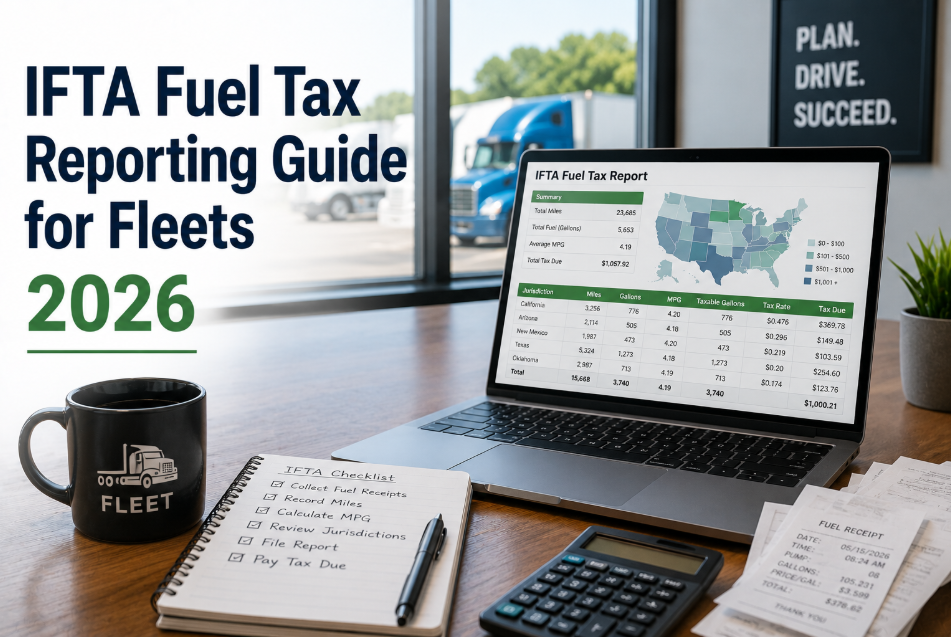
IFTA Fuel Tax Reporting: Complete 2026 Fleet Guide
Filing deadlines, mileage tracking requirements, fuel tax calculations, audit triggers, and how automated fleet systems eliminate the manual errors that cost fleets thousands in penalties.
58
IFTA member jurisdictions — all US states except AK and HI, plus Canadian provinces and DC
4 yrs
minimum record retention required for all IFTA supporting documentation — mileage logs and fuel receipts
87%
reduction in IFTA audit findings for fleets using automated mileage tracking vs manual odometer logs
$50+
per quarter penalty for late IFTA filing — plus 1% monthly interest on any underpayment balance
Fleet Compliance Documentation Built Into Every Work Order
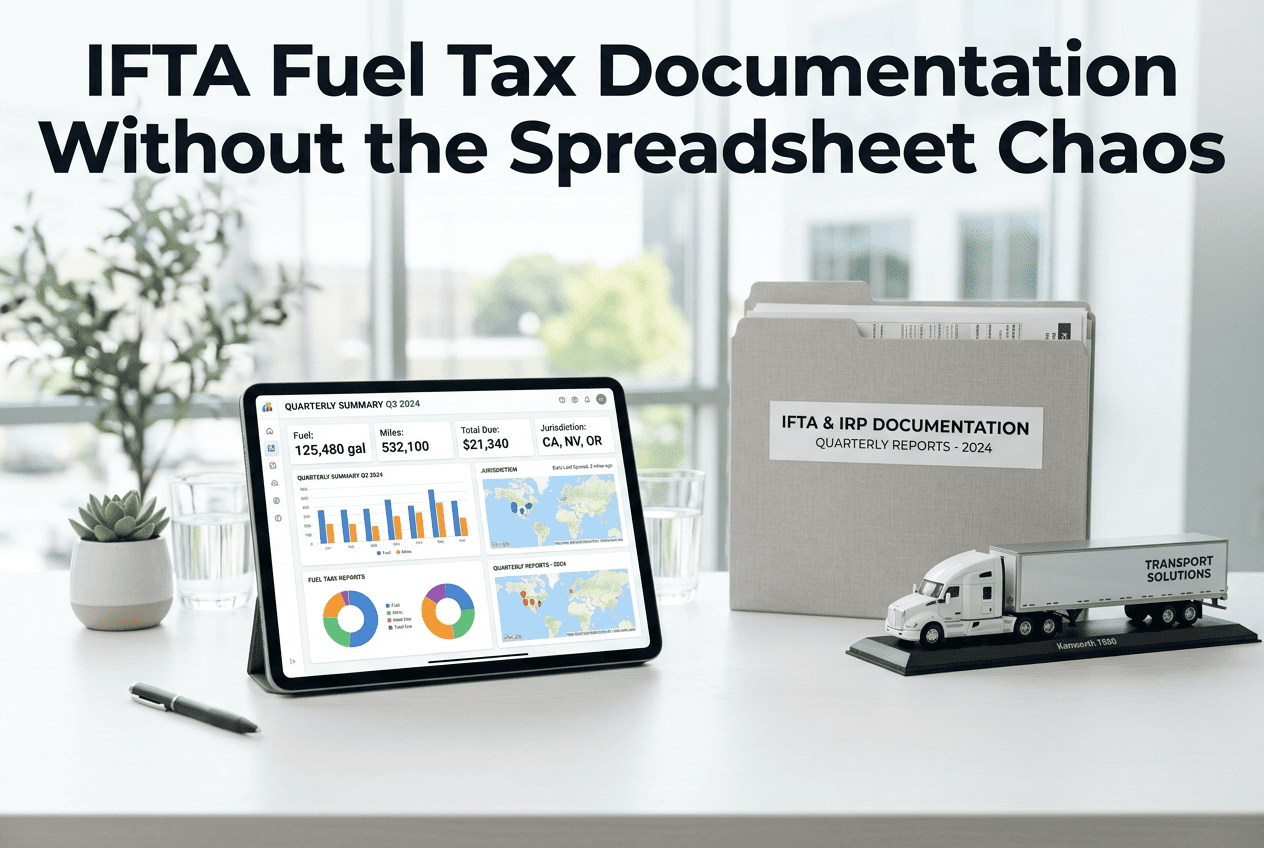
Oxmaint tracks vehicle maintenance records, inspection history, and compliance documentation that auditors review alongside IFTA filings — all timestamped, vehicle-specific, and exportable on demand.
Start a free trial and connect your first vehicles today, or
book a demo to see the full compliance documentation stack.
What IFTA Is — And What It Requires Per Quarter
Who
IFTA Applies to Your Fleet If:
Your commercial motor vehicle operates in two or more IFTA jurisdictions AND has 2+ axles and GVWR over 26,000 lbs — OR 3+ axles regardless of weight. Single-state operators are exempt. Registration is in your base jurisdiction (the state where the vehicle is registered or where the carrier's operational control is based).
When
IFTA Filing Deadlines — 2026
Q1 (Jan–Mar): due April 30. Q2 (Apr–Jun): due July 31. Q3 (Jul–Sep): due October 31. Q4 (Oct–Dec): due January 31. Late filing triggers a minimum $50 penalty plus 1% monthly interest on any tax due. Zero-activity quarters still require a return — a zero-mile zero-fuel return is still required on time.
What
What Must Be Tracked Per Vehicle Per Quarter
Total miles driven in each jurisdiction. Total gallons of fuel purchased in each jurisdiction. Fuel purchase receipts showing date, jurisdiction, seller, gallons, and vehicle ID. Odometer or GPS-based mileage verification. All data must reconcile — total miles on the return must match vehicle odometer progression or GPS records.
How
How the IFTA Calculation Works
Average fuel economy = Total miles / Total gallons. For each jurisdiction: fuel owed = (miles in jurisdiction / avg MPG) × jurisdiction tax rate. Subtract gallons actually purchased in that jurisdiction. Positive balance = tax owed. Negative balance = credit or refund from that jurisdiction. Net across all jurisdictions = your quarterly payment or refund.
IFTA Deadlines, Rates, and Key Compliance Details — 2026
| Filing Quarter |
Period Covered |
Due Date |
Late Penalty |
Common Error Category |
| Q1 2026 |
January 1 – March 31 |
April 30, 2026 |
$50 + 1%/month interest |
Winter route mileage misallocated across state lines |
| Q2 2026 |
April 1 – June 30 |
July 31, 2026 |
$50 + 1%/month interest |
Fuel card transactions not matched to vehicle ID |
| Q3 2026 |
July 1 – September 30 |
October 31, 2026 |
$50 + 1%/month interest |
Summer peak mileage — GPS vs odometer reconciliation gaps |
| Q4 2026 |
October 1 – December 31 |
January 31, 2027 |
$50 + 1%/month interest |
Year-end vehicle additions — IRP and IFTA not aligned |
| Annual Renewal |
License and decal renewal |
Varies by base jurisdiction |
Suspended license + out-of-service |
New vehicles added without IFTA decal — audit trigger |
The 6 IFTA Audit Triggers Fleet Managers Must Eliminate
01
Mileage That Doesn't Reconcile With Odometer
If your total IFTA miles for a quarter are 12% less than the odometer delta for the same vehicle, auditors flag the discrepancy immediately. Every mile driven in any jurisdiction must be accounted for — unattributed miles are presumed to be in the base jurisdiction, which is often the highest-tax state.
02
Fuel Receipts Without Vehicle Identification
IFTA fuel records must identify the specific vehicle, not just the fleet account. Fuel card transactions missing vehicle ID cannot be allocated to specific IFTA returns. Unallocated fuel is excluded from the tax calculation — understating your fuel credit and potentially triggering a tax liability the fleet already paid.
03
Significant MPG Variance From Fleet Baseline
Auditors compare your reported fleet MPG against industry averages by vehicle class and route type. A fleet reporting 9.8 MPG for Class 8 tractors doing highway miles (baseline 6.5 MPG) signals either a mileage undercount or a fuel overcount — both audit-triggering. Consistency matters as much as accuracy.
04
Missing Records for the 4-Year Retention Period
An IFTA audit can reach back 4 years from the filing date. Paper fuel receipts fade, driver logs get discarded, and spreadsheets get overwritten. When auditors request Q3 2022 records in 2026, fleets that relied on paper systems frequently cannot produce complete documentation — creating presumed liability on any gap.
05
Zero-Activity Returns Not Filed
A fleet vehicle that sat idle for an entire quarter still requires a zero-activity IFTA return — miles zero, fuel zero, tax zero. Missing this return triggers a late filing penalty as if activity was unreported. Fleets managing seasonal vehicles or equipment that goes offline periodically consistently miss zero-activity deadlines.
06
New Vehicle Not Added to IFTA Account Before First Dispatch
Every vehicle subject to IFTA must be registered and display valid IFTA decals before its first interstate trip. A vehicle dispatched before decals arrive — even for a single trip — creates a retroactive compliance gap for every mile it traveled while unregistered. New vehicle additions to IFTA accounts require advance processing time that urgent dispatch schedules frequently compress.
Manual IFTA Filing vs Automated Fleet Compliance
Manual IFTA Tracking
Mileage Tracking
Driver-reported odometer by state — 15–20% accuracy variance, retroactive correction impossible
Fuel Allocation
Fuel card statements manually matched to vehicle — 6–12 hrs per vehicle per quarter
Reconciliation
Spreadsheet totals — no automatic odometer cross-check, discrepancies found at filing, not during the quarter
Audit Response
Paper receipts and driver logs assembled manually — incomplete records trigger presumed liability
New Vehicle Compliance
Manual reminder to add to IFTA account — missed for vehicles added during peak dispatch periods
Error Rate
Industry average 12–18% error rate on manual IFTA filings — primary audit selection trigger
Automated Fleet Compliance System
Mileage Tracking
GPS-based jurisdiction mileage — real-time allocation by state line crossing, zero driver input required
Fuel Allocation
Fuel card integration — automatic vehicle-level allocation, zero manual matching labor
Reconciliation
Continuous odometer vs GPS cross-check — discrepancies flagged during quarter before filing
Audit Response
4-year digital record archive per vehicle — filterable by date and jurisdiction, exportable in minutes
New Vehicle Compliance
Vehicle onboarding checklist — IFTA registration verified before first dispatch approval
Error Rate
Sub-2% error rate — GPS accuracy eliminates the mileage discrepancy that triggers 73% of IFTA audits
What Automated IFTA Compliance Delivers — In Numbers
87%
fewer audit findings
for fleets using GPS-based mileage tracking versus manual driver-reported odometer logs — the primary audit trigger eliminated
6–12 hrs
labor saved per vehicle per quarter
manual fuel card matching and mileage reconciliation eliminated by automated fuel card integration and GPS mileage allocation
$0
late filing penalties
when automated deadline alerts notify fleet managers 30 days before each quarterly deadline — zero-activity returns included
4 yrs
digital record archive
complete mileage logs, fuel records, and vehicle maintenance history retained digitally — full audit response in minutes, not weeks of document assembly
Frequently Asked Questions
What records must a fleet retain to survive an IFTA audit?
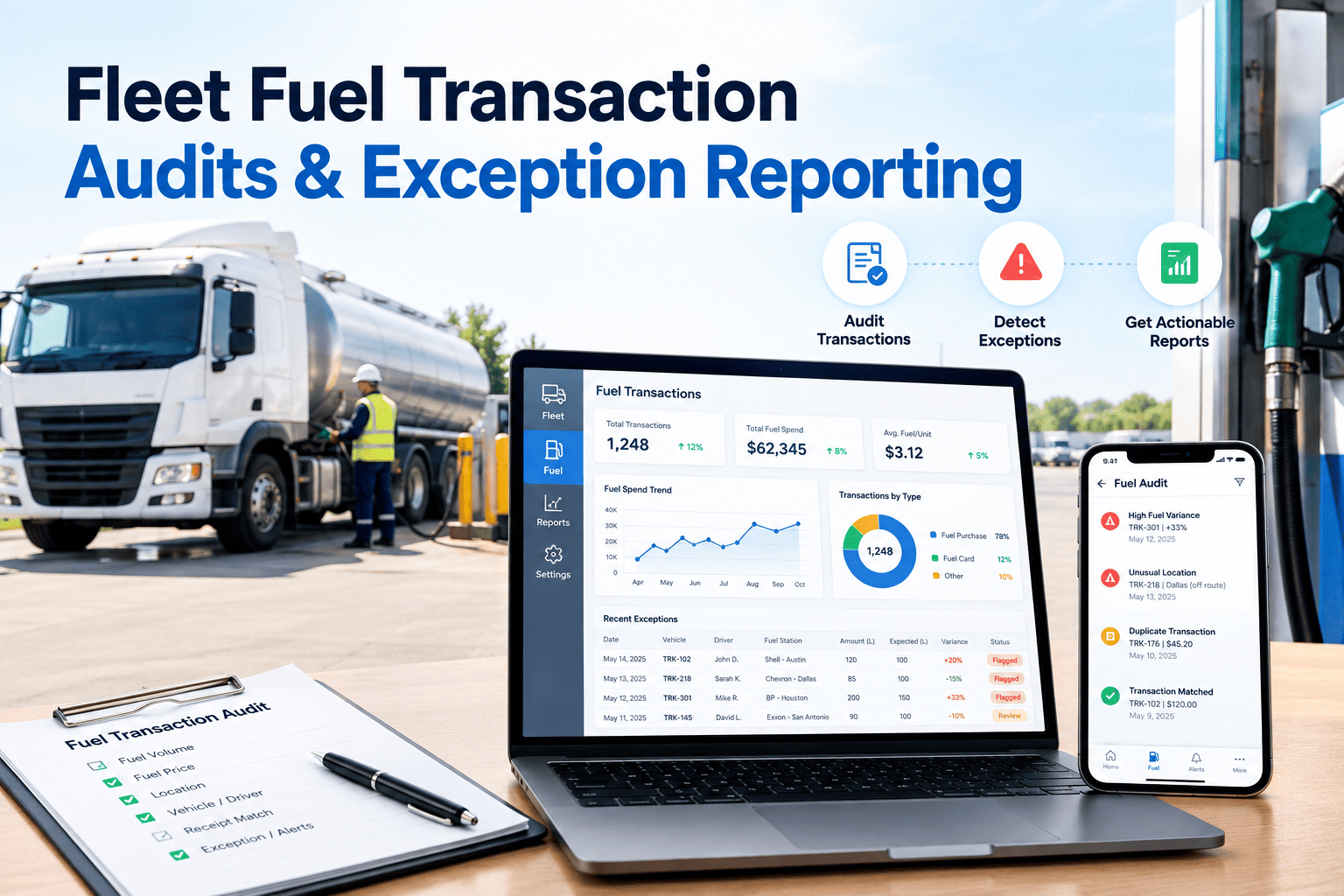
IFTA auditors require four categories of documentation going back 4 years from the filing date: (1) Individual Vehicle Mileage Records (IVMRs) — per-vehicle records showing date, route, starting and ending odometer, and jurisdiction-by-jurisdiction mileage breakdown for every trip; (2) fuel receipts showing date, jurisdiction, name and address of seller, type of fuel, number of gallons, vehicle identification, and price per gallon; (3) fleet fuel card statements if fuel cards are used, showing the same data as individual receipts; and (4) reconciliation records showing how IVMRs were compiled into quarterly returns. Paper records are acceptable but high-risk — receipts fade, logs get discarded, and manual files get lost. GPS-based systems with digital fuel card integration create all four categories automatically and store them for the full audit window without manual intervention.
Does IFTA apply to vehicles that only occasionally cross state lines?
Yes — there is no minimum mileage threshold for IFTA applicability. If a qualifying vehicle (2+ axles over 26,000 lbs GVWR, or 3+ axles regardless of weight) operates in any two IFTA jurisdictions during a quarter — even for a single trip — that vehicle must be included in the IFTA return for that quarter with all miles and fuel transactions allocated correctly. Occasional interstate operation is actually more administratively burdensome than regular cross-state operation, because tracking systems are not always active or properly configured for infrequent events. Fleets that dispatch vehicles into interstate routes on an ad-hoc basis are high-risk for IFTA record gaps precisely because the compliance infrastructure for those trips is not systematically maintained.
How are fuel taxes calculated when a vehicle uses alternative fuels or has mixed fuel types?
Each fuel type is tracked separately under IFTA — diesel, gasoline, LNG, CNG, ethanol, and hydrogen each have their own jurisdiction-specific tax rates and unit-of-measure conversions. For CNG fleets, fuel is measured in DGE (Diesel Gallon Equivalent) or GGE (Gasoline Gallon Equivalent) rather than gallons. For LNG, conversion factors by jurisdiction apply. A mixed fleet operating both diesel and CNG vehicles files separate IFTA calculations for each fuel type within the same return. The administrative complexity of multi-fuel IFTA reporting is significantly higher than single-fuel — and the error rate on manual mixed-fuel returns is disproportionately high, making these fleets audit targets.
What happens during an IFTA audit and how long does it take?
An IFTA audit is conducted by your base jurisdiction's IFTA audit staff. The process: initial audit notification letter identifies the audit period (typically 4 years) and requests documentation within 30–60 days; field audit follows where auditors review IVMRs, fuel records, and quarterly returns; discrepancies between reported and auditor-calculated figures generate assessments; final audit report details any tax due, interest, and penalties. Duration ranges from 60 days for straightforward fleets with complete digital records to 12+ months for fleets with paper-based or incomplete documentation. Fleets with complete digital records — GPS mileage, digital fuel receipts, and auditor-ready reports — typically clear field audits in one session. Fleets reconstructing records from paper take multiple rounds and frequently discover uncorrectable documentation gaps that result in assessed liability.
Oxmaint Fleet CMMS · Compliance Documentation
IFTA Accuracy Starts With Vehicle Records You Can Actually Trust.
The same vehicle maintenance and inspection records that support IFTA compliance — odometer readings, vehicle identification, operational history — are the records Oxmaint captures on every work order and inspection. Build the fleet documentation foundation that keeps IFTA filings accurate and audits defensible, without the manual assembly.