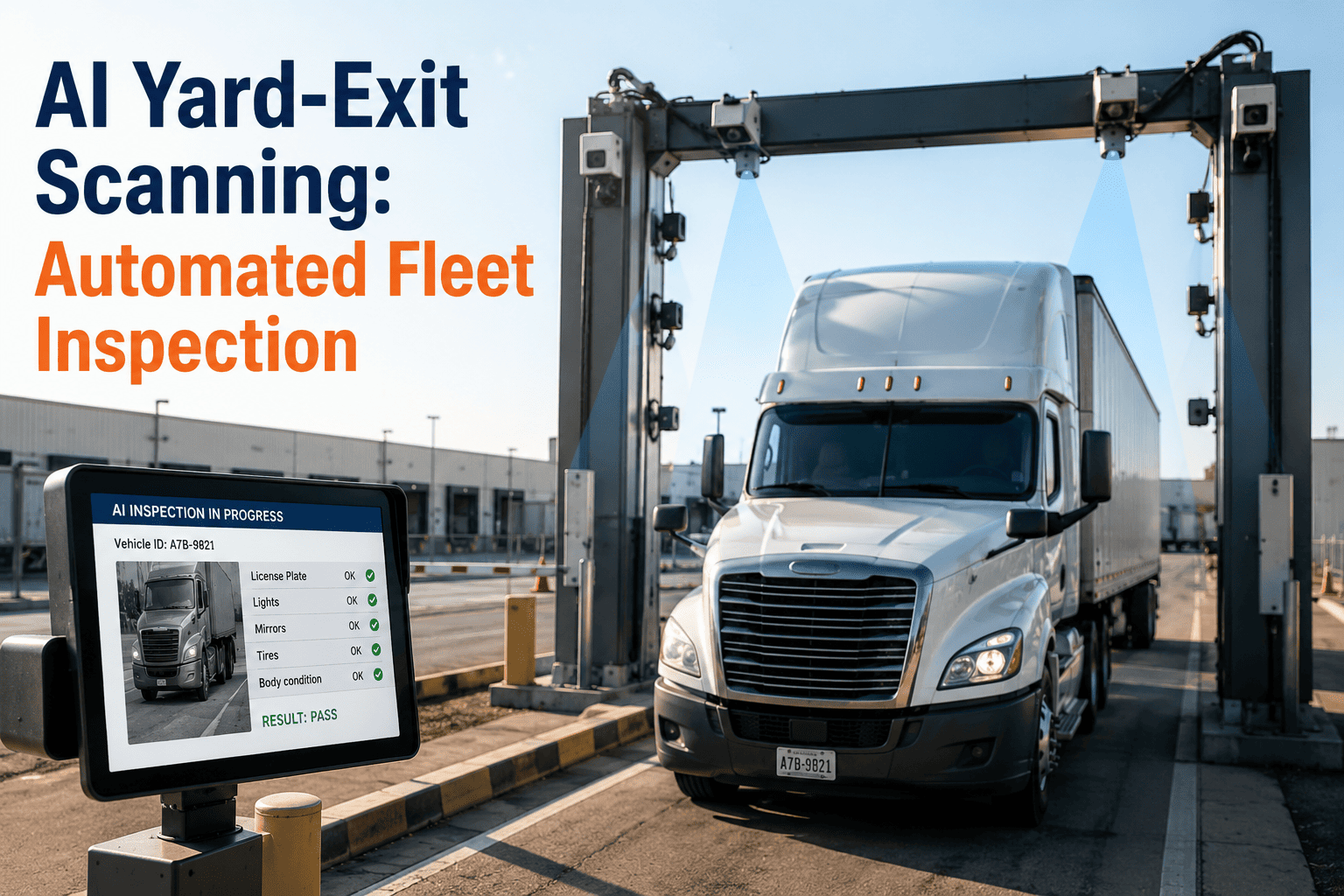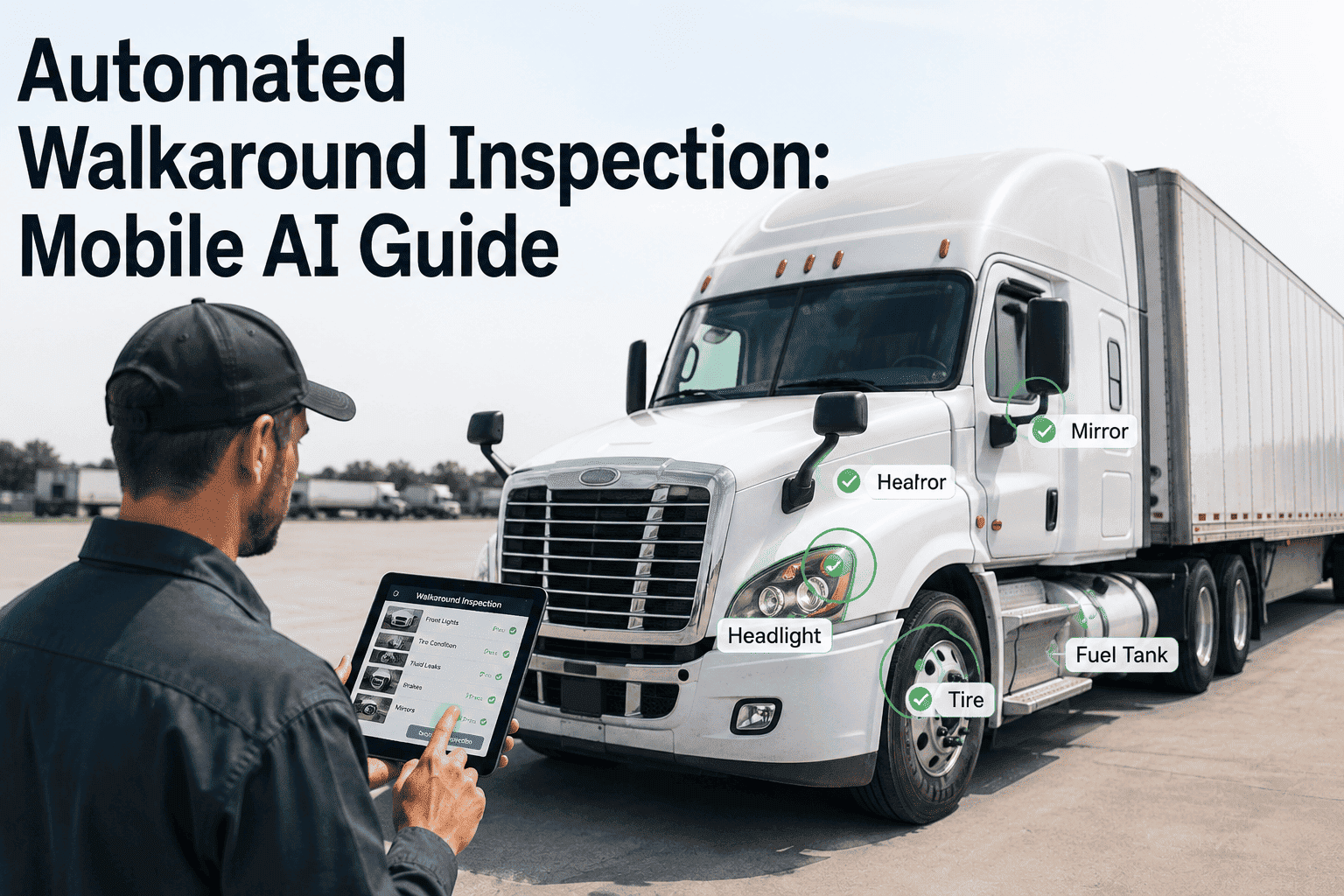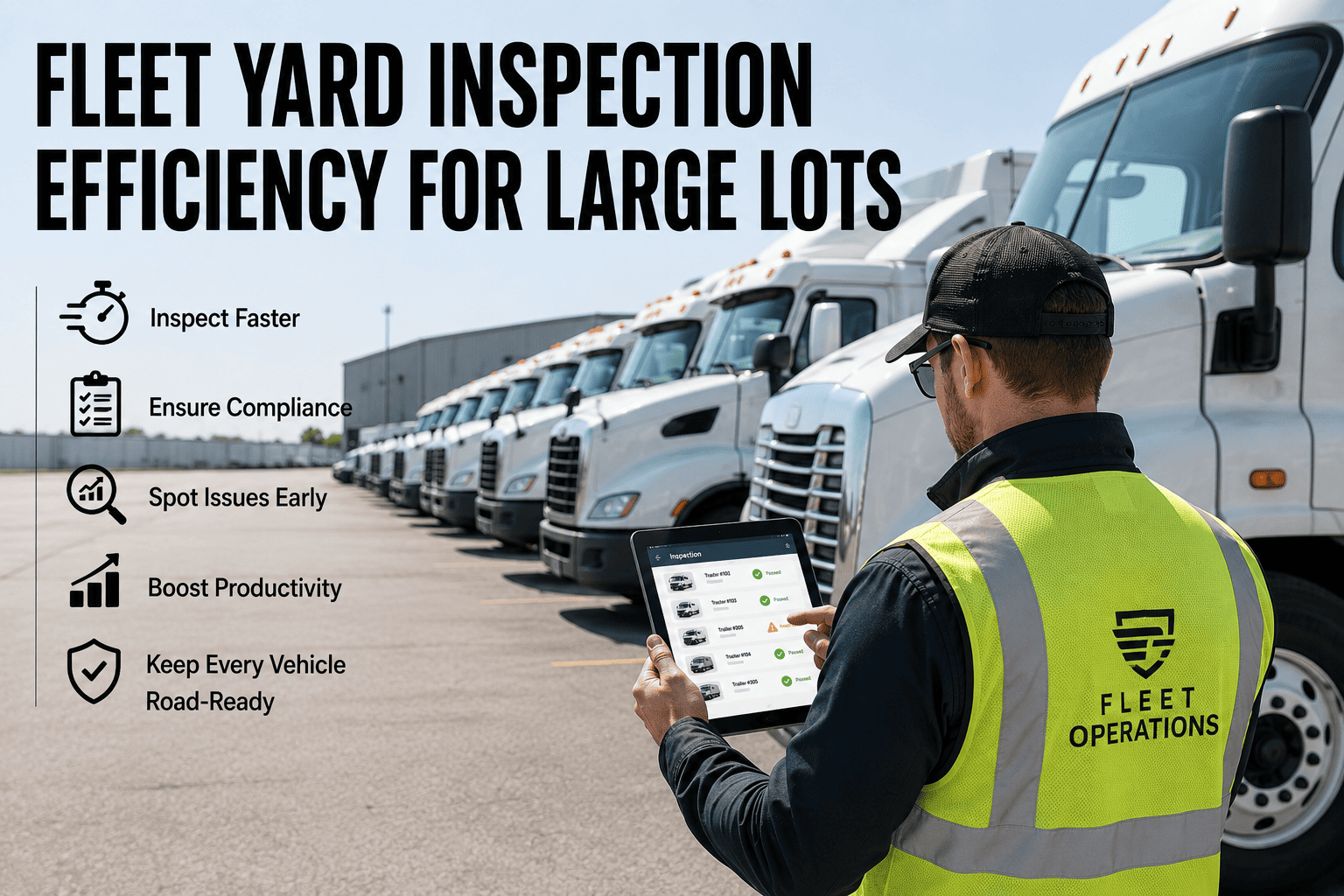
Fleet yard inspection efficiency on large lots comes down to one thing: covering every asset without letting the walk itself eat the shift. On a 40–100+ acre yard, a single thorough foot inspection can take 3–5 hours, which is why most large-lot fleets either skip zones or inspect on gut feel — and why missed defects turn into roadside breakdowns and FMCSA violations. The fix is not more inspectors; it is a smarter inspection system: mobile checklists, geo-verified asset tracking, exception-based routing and a CMMS that turns findings into work orders automatically. This guide breaks down exactly how to make fleet yard inspection efficient across large lots without missing assets, with real time benchmarks and a repeatable workflow. If you want to skip the theory and see it running on your own yard, Start Free Trial and digitize your first inspection route today.
How long does your yard walk really take — and what is it missing?
On large lots, inspection either scales with your fleet or becomes a bottleneck that burns hours per shift. Here is the system high-coverage fleets use to inspect 100% of assets in a fraction of the time.
- Mobile inspection workflow — no paper, no double entry
- Geo-verified tracking proves every zone was covered
- Exception-based routing skips healthy assets
- Findings auto-convert to work orders in the CMMS
Why large-lot yard inspection breaks down as fleets grow
A 60-asset yard is walkable. A 300-asset yard across 60 acres is not — at least not on foot, on paper, every shift. Here is where the time actually goes.
The math is brutal. An inspector walking a 50-acre lot at a realistic pace — locating each unit, checking tires, lights, fluid leaks, DVIR items, reefer temps and trailer landing gear — covers roughly 8–12 assets per hour once you factor in walking distance between rows. A 250-asset yard is a 25-hour week of pure walking. So teams triage: they inspect the front rows, the units due for dispatch, and hope the back lot is fine. It rarely is. Fleets that switch to a CMMS-driven yard inspection model report cutting inspection time 40–60% while increasing coverage to 100% — because the system, not the walk, does the prioritizing.
How to make fleet yard inspection efficient on a large lot
Efficient large-yard inspection is not about walking faster — it is about eliminating wasted steps, wasted checks and wasted paperwork. These five levers compound.
Zone the lot and assign routes, not acres
Divide the yard into named zones (A–F, or by row) and assign each inspector a route, not a vague area. A zoned 300-asset yard turns one 5-hour marathon into three 90-minute routes that can run in parallel or across shifts. OxMaint maps assets to zones so every unit has a home and every route has a defined asset list — nothing falls between inspectors.
Go mobile — kill the paper-and-retype cycle
Paper checklists on a large lot mean findings get retyped at the office 1–2 hours later, if they get entered at all. A mobile inspection app cuts per-asset time from ~5 minutes to ~2 minutes (tap, photo, voice note, next) and timestamps everything automatically. That alone reclaims 60–90 minutes per route per day.
Use exception-based routing to skip healthy assets
Not every unit needs the same scrutiny every day. Units inspected clean yesterday, under PM, or flagged low-risk can drop to a weekly cadence, while units with open defects, high hours or recent faults get daily eyes. Exception-based routing typically shrinks the daily inspection list 40–60% — the single biggest time lever on a large lot.
Geo-verify coverage so nothing is pencil-whipped
On a big lot, "did you check the back forty?" is unanswerable with paper. Geo-verified inspection tracking stamps each check with location and time, so supervisors see a live coverage map: which zones are done, which are pending, which assets were missed. Coverage becomes auditable — critical for FMCSA and internal compliance.
Auto-convert findings into work orders
An inspection that finds a defect but does not trigger a repair is wasted effort. In OxMaint, a failed check (low tire, inop light, active leak) instantly generates a prioritized work order, assigns a technician and reserves the part from inventory. The loop from "found in the yard" to "fixed before dispatch" closes in hours, not days.
Manual yard walk vs. CMMS-driven inspection on a large lot
Same 250-asset yard, same inspection standards — two very different outcomes. The difference is the system, not the crew.
| Metric | Paper / Foot Walk | OxMaint CMMS-Driven |
|---|---|---|
| Time to inspect full lot | 3–5 hours, often split across shifts | 60–120 minutes via exception routing |
| Asset coverage per round | 60–70% (back lot routinely skipped) | 100% — geo-verified, auditable |
| Time per asset | ~5 min incl. paper + walking | ~2 min mobile tap-and-photo |
| Finding → work order | 1–2 days (retyped at office) | Instant, auto-prioritized |
| Compliance / audit trail | Paper stacks, hard to produce | Time-stamped digital record, one click |
| Missed-defect breakdowns | Recurring, costly | Down 30–50% in first 6 months |
What efficient large-lot inspection is worth: a 280-asset yard
Run the numbers on a real operation and the payback is hard to ignore. Here is a conservative model for a mid-size fleet yard.
Where the savings come from
- Labor reclaimed: cutting the walk from 4 hrs to 1.5 hrs frees ~2.5 inspector-hours daily — roughly $24K/yr at a $32/hr loaded rate.
- Breakdowns avoided: catching 6 defects in the yard instead of on the road saves ~$51K in towing, emergency repair and missed deliveries.
- Fines avoided: a clean, time-stamped inspection trail prevents ~$16K in FMCSA documentation penalties.
Payback on OxMaint
- Setup: import assets, build zones and checklists in days — no IT project, no hardware.
- Payback window: most large-lot fleets recover the annual subscription inside the first 4–8 weeks from labor savings alone.
- ROI: $91K saved against a low-four-figure annual cost is a 10–20x first-year return.
How OxMaint makes large-lot fleet yard inspection efficient
OxMaint is an AI-powered CMMS + EAM built for exactly this: high-asset-count yards where coverage and speed both matter. Four capabilities do the heavy lifting.
Mobile Inspection Workflow
Inspectors run zone-based checklists on any phone or tablet — tap, photo, voice note, done. Cuts per-asset time ~60% and eliminates paper re-entry entirely.
Geo-Verified Coverage Tracking
Every check is location- and time-stamped, giving supervisors a live coverage map of the whole lot. Proves 100% inspection coverage for audits and FMCSA reviews.
Exception-Based Routing
AI flags high-risk and high-hour assets for daily checks and drops healthy units to a lower cadence — shrinking the daily list 40–60% without raising risk.
Auto Work Orders + Parts
Failed checks instantly become prioritized work orders with parts reserved from inventory. Defects get fixed before dispatch, cutting unplanned downtime 30–50%.
See OxMaint inspect your yard — book a 30-minute demo
We will map one of your zones live and show you the coverage dashboard, exception routing and auto work orders on your own asset list.
Fleet yard inspection efficiency — FAQs
How long should a fleet yard inspection take on a large lot?
On foot with paper, a full large-lot inspection takes 3–5 hours. With a mobile, exception-based CMMS workflow, the same coverage typically drops to 60–120 minutes because healthy assets are skipped and per-asset time falls to about 2 minutes.
How do you inspect a large yard without missing assets?
Zone the lot, assign defined routes, and use geo-verified mobile checklists so every asset is location- and time-stamped as inspected. A live coverage map shows supervisors exactly which zones and units are done — nothing gets skipped or pencil-whipped.
What is exception-based yard inspection?
Exception-based inspection routes daily attention only to high-risk, high-hour or recently faulted assets, while healthy units move to a weekly cadence. It typically shrinks the daily inspection list 40–60% — the biggest single time-saver on a large lot. You can Start Free Trial and set up exception rules in OxMaint in under an hour.
Does digital yard inspection help with FMCSA compliance?
Yes. Digital inspections create a time-stamped, auditable record of every DVIR and yard check, which is exactly what FMCSA auditors ask for. Producing a clean digital trail helps avoid documentation fines that can reach $16,000 per violation.
What is the ROI of a CMMS for large-lot yard inspection?
For a 280-asset yard, a conservative model shows roughly $91K/year in combined labor savings, avoided breakdowns and avoided fines — a 10–20x first-year return on a low-four-figure subscription. Most fleets hit payback in 4–8 weeks; Book a Demo and we will model it on your numbers.
Inspect 100% of your yard in a fraction of the time
Join the fleet and reliability teams using OxMaint to run efficient, fully-covered large-lot inspections — mobile, geo-verified and audit-ready from day one.
Free 14-day trial · No credit card · Set up your first zone in minutes