A heavy-duty diesel engine burns roughly 0.8 to 1 gallon of fuel every hour it sits idling, and the average long-haul truck idles about 1,800 hours a year — fuel that never shows up as a mile on the odometer. That works out to $4,000 to $6,000 in wasted diesel per truck, buried inside a fuel report that only shows miles per gallon, not hours per gallon. Across a fleet of 50 or 100 trucks, that hidden number quietly becomes one of the largest line items nobody is actually managing. Telematics-tracked idle data changes that by turning invisible engine-on time into a dollar figure per truck and per driver, paired with an idle policy that can actually be enforced. Fleets ready to see their own idle number can start a free trial or book a demo this week.
The Idle Time Bill Hiding Inside Every Fuel Report
Diesel engines burn 0.8 to 1 gallon an hour at idle, and long-haul trucks idle an average of 1,800 hours a year. That is $4,000 to $6,000 in fuel per truck that a mileage-based fuel report will never surface — until idle hours get tracked on their own.
Idle Time Is a Policy Problem, Not Just a Driver Problem
Fleets that actually cut idle-related fuel waste do not get there by lecturing drivers. They get there by giving dispatch and safety teams real idle numbers, automated policy alerts, and a way to tell rest-period idling apart from a reefer unit doing its job. Oxmaint's idle tracking module turns a raw telematics feed into a number every truck and every driver can be measured against.
4 Types of Idle Time Draining Your Fuel Budget
Not all idle time is the same, and treating it as one number is exactly why so much of it goes unmanaged. Each cause below has its own fuel burn pattern and its own fix — fleets that want to see their own breakdown can start a free trial or book a demo.
Drivers run the main engine overnight for heat, A/C, and electronics during mandatory rest, often because the truck has no bunk heater or APU. This single cause accounts for most of a truck's annual idle hours.
Engines left running while queued at a distribution center, weigh station, or loading dock — often habit rather than necessity, and easy to reduce once it is visible.
Extended engine warm-up in cold climates and post-trip cooldown before shutdown, frequently running well past the 3 to 5 minutes modern diesel engines actually need.
Reefer units, lift gates, and hydraulic power take-off equipment that legitimately need the engine running, but usually get counted as waste on a standard fuel report.
Idle Fuel Burn Rate by Vehicle Class
Idle burn rate varies significantly by vehicle class and load, which is why a single fleet-wide idle number is far less useful than per-vehicle tracking. The figures below reflect commonly cited industry benchmarks for idle fuel consumption.
| Vehicle Class | Idle Burn — No Load | Idle Burn — Loaded | Est. Annual Idle Fuel Cost |
|---|---|---|---|
| Tractor-Semitrailer (Class 8) | 0.64 gal/hr | 1.15 gal/hr | $4,000–$6,000 |
| Medium-Heavy Truck (Diesel) | 0.44 gal/hr | 0.60 gal/hr | $2,000–$3,000 |
| Medium-Heavy Truck (Gas) | 0.84 gal/hr | 1.05 gal/hr | $3,500–$5,000 |
| Delivery Truck | 0.84 gal/hr | 1.10 gal/hr | $3,000–$4,500 |
Based on an average of 1,800 idle hours per truck per year at typical diesel pricing. Actual cost varies by region, season, and duty cycle.
Why Idle Waste Keeps Slipping Past the Fuel Report
Fuel reports show gallons per mile, not gallons per idle hour, so idle waste hides inside a perfectly normal-looking MPG number.
There is no dividing line between idling that has to happen — reefer units, lift gates — and idling that could have been shut down.
Idle policies exist on paper but go unenforced because nobody is measuring individual truck or driver idle hours in practice.
Drivers idle for real comfort and safety reasons during required rest, and no fleet wants to solve fuel waste by cutting into rest.
Seasonal idle spikes in winter and summer get written off as normal instead of being benchmarked against what a truck actually needs.
How Oxmaint Turns Idle Time Into a Number You Can Manage
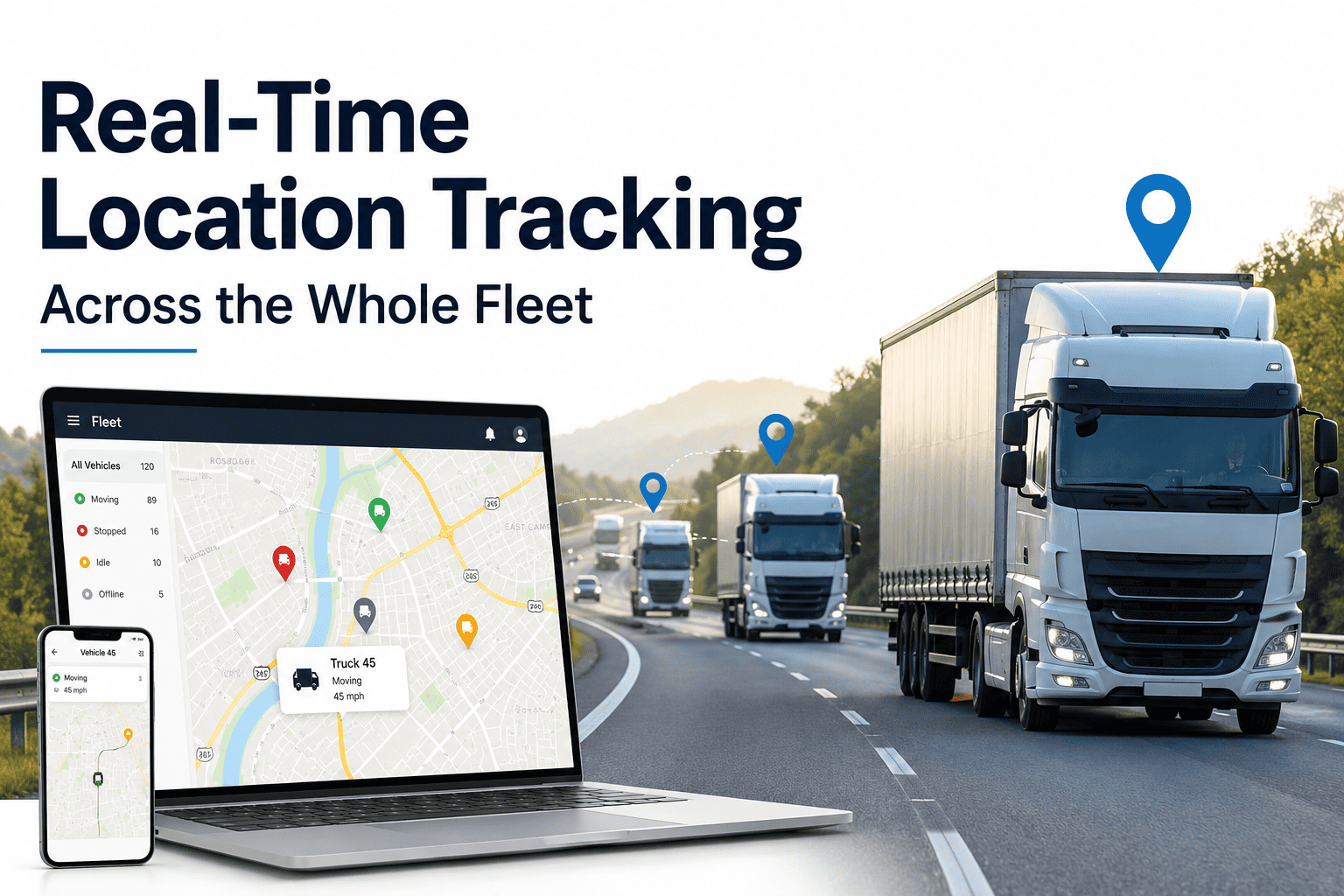
Oxmaint's idle tracking module reads the same telematics feed your fleet already has and turns it into per-vehicle idle hours, idle fuel cost, and policy alerts — without new hardware. Fleets ready to see the module in action can start a free trial or book a demo.
Engine-on, wheels-stationary time is captured per vehicle continuously, so idle hours are visible the same day they happen instead of at month-end fuel reconciliation.
Auxiliary equipment run time — reefer, lift gate, hydraulics — is flagged separately from discretionary engine idling, so legitimate PTO use stops counting against a truck's waste score.
Configurable idle-duration thresholds trigger an alert to dispatch the moment a truck exceeds a policy limit, turning a written idle policy into one that is actually enforced.
Idle hours and idle fuel cost roll up per driver and per truck, ranked against the fleet average, so coaching conversations start with a number instead of a guess.
Cold-weather and heat-index exceptions widen idle thresholds automatically in winter and summer, so enforcement reflects real driver safety needs, not a flat rule.
One view shows total idle hours, idle fuel cost, and the highest idle vehicles across the fleet, updating continuously as telematics data comes in.
Reactive Fuel Reporting vs. Idle-Tracked Fleet Management
What Fleets See After Tracking Idle Time
Bringing avoidable idle hours down toward benchmark levels recovers a meaningful share of fuel that idling burns without moving a mile
Continuous tracking gives fleets a real per-truck idle baseline instead of an estimate buried inside overall fleet MPG
Every truck's idle hours are visible on one dashboard, so enforcement stops depending on manual fuel report review
Reefer, lift gate, and hydraulic run time is excluded from waste scoring once auxiliary equipment is properly flagged
Frequently Asked Questions
How much fuel does idle time actually waste in a fleet?+
What counts as idle time versus necessary engine-on time?+
How does telematics idle tracking work without extra hardware?+
Can an idle policy account for winter and summer exceptions?+
How quickly can a fleet see its real idle cost after setup?+
Stop Guessing What Idle Time Is Costing You
Idle time is one of the few fuel costs a fleet can cut without buying new trucks, new routes, or new equipment — it just has to be visible first. Oxmaint's idle tracking module turns the telematics feed you already have into a per-truck, per-driver number your team can act on this week.