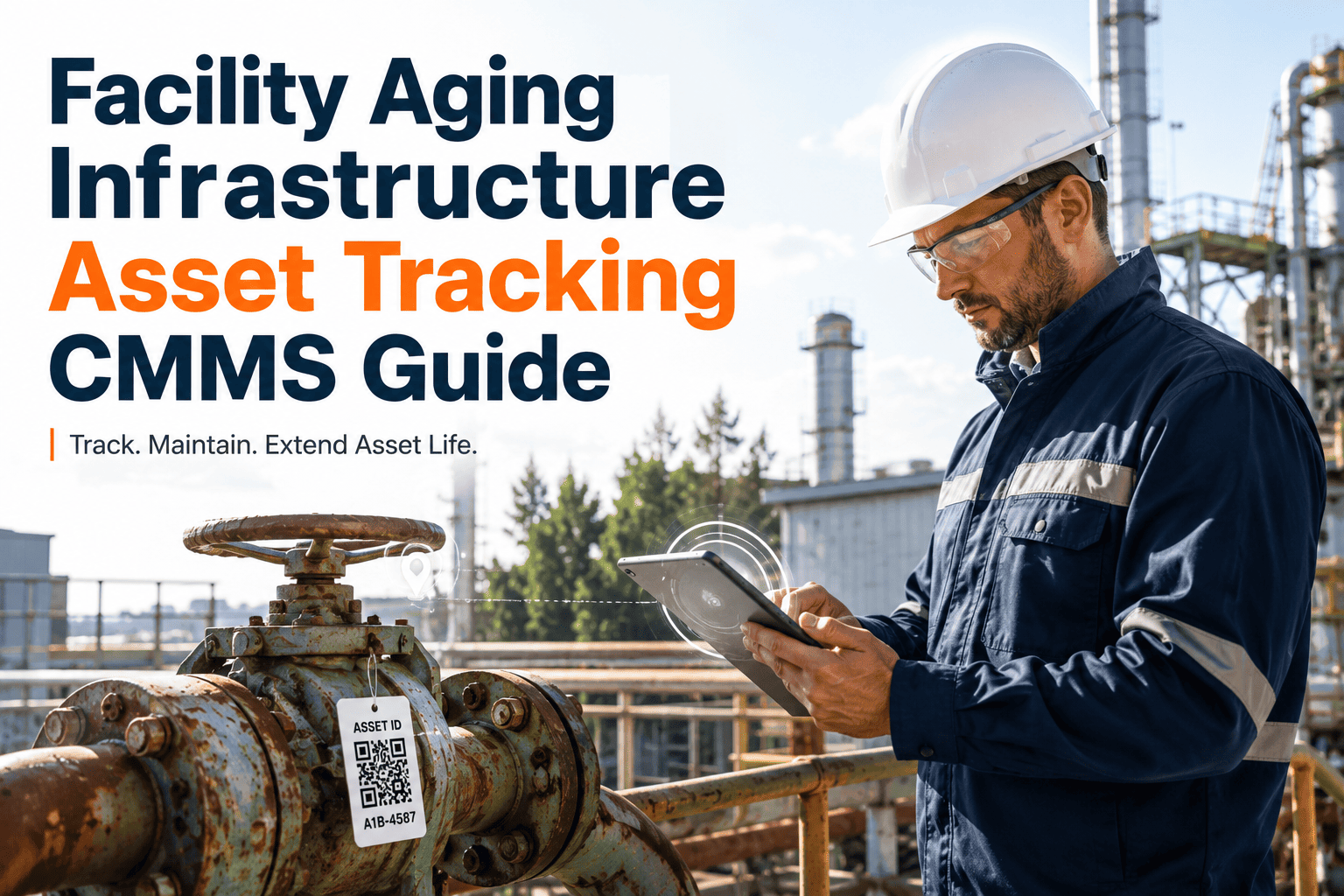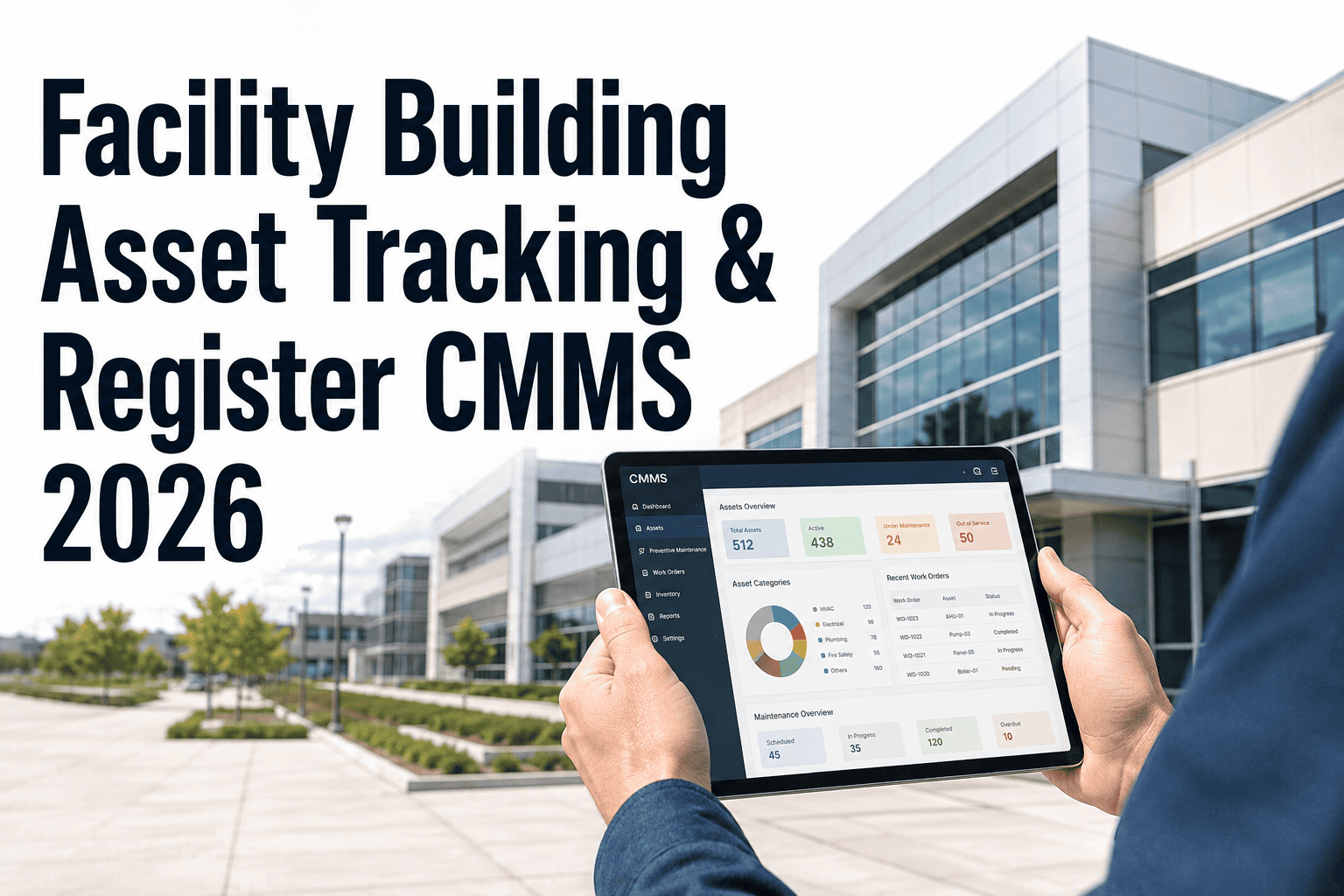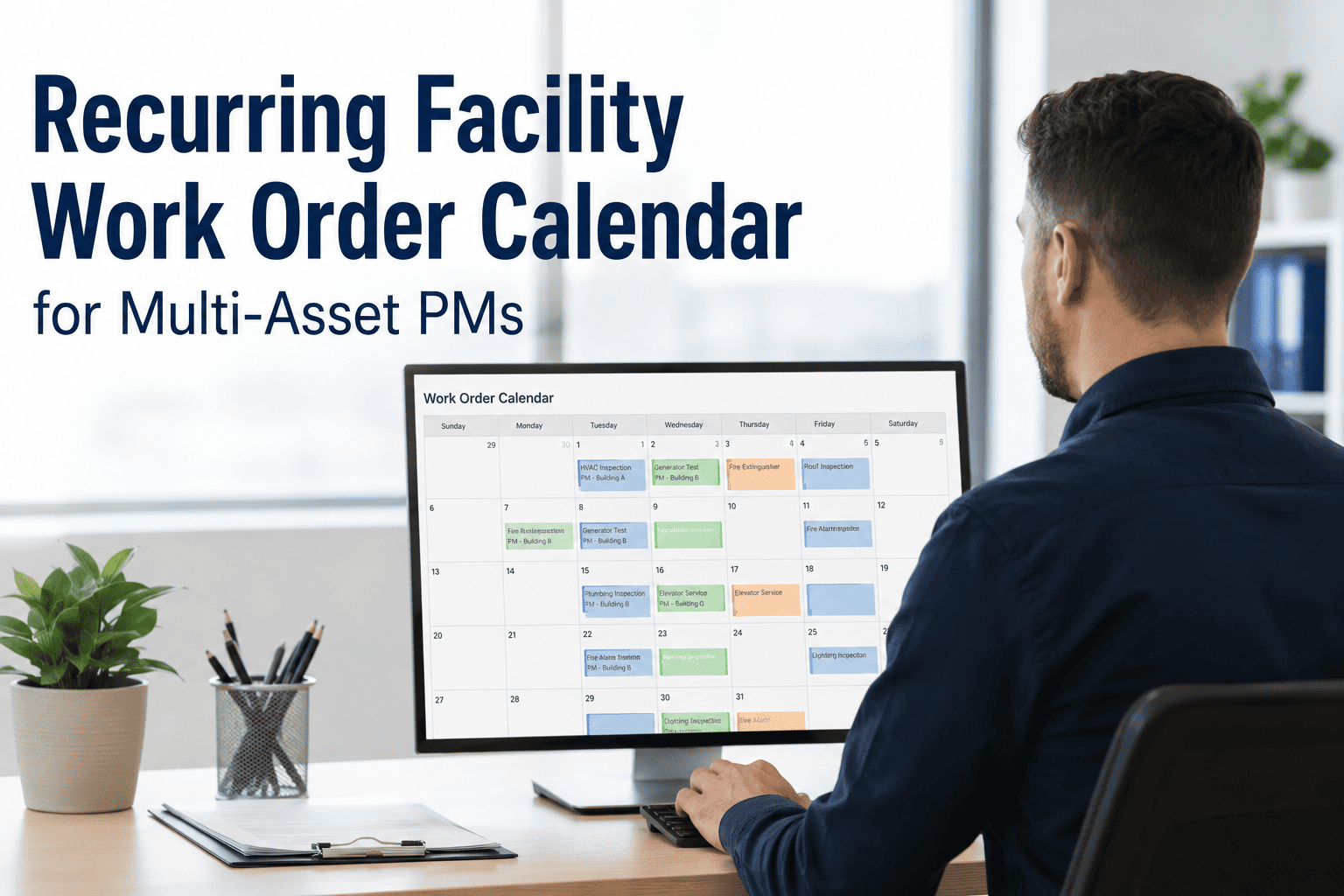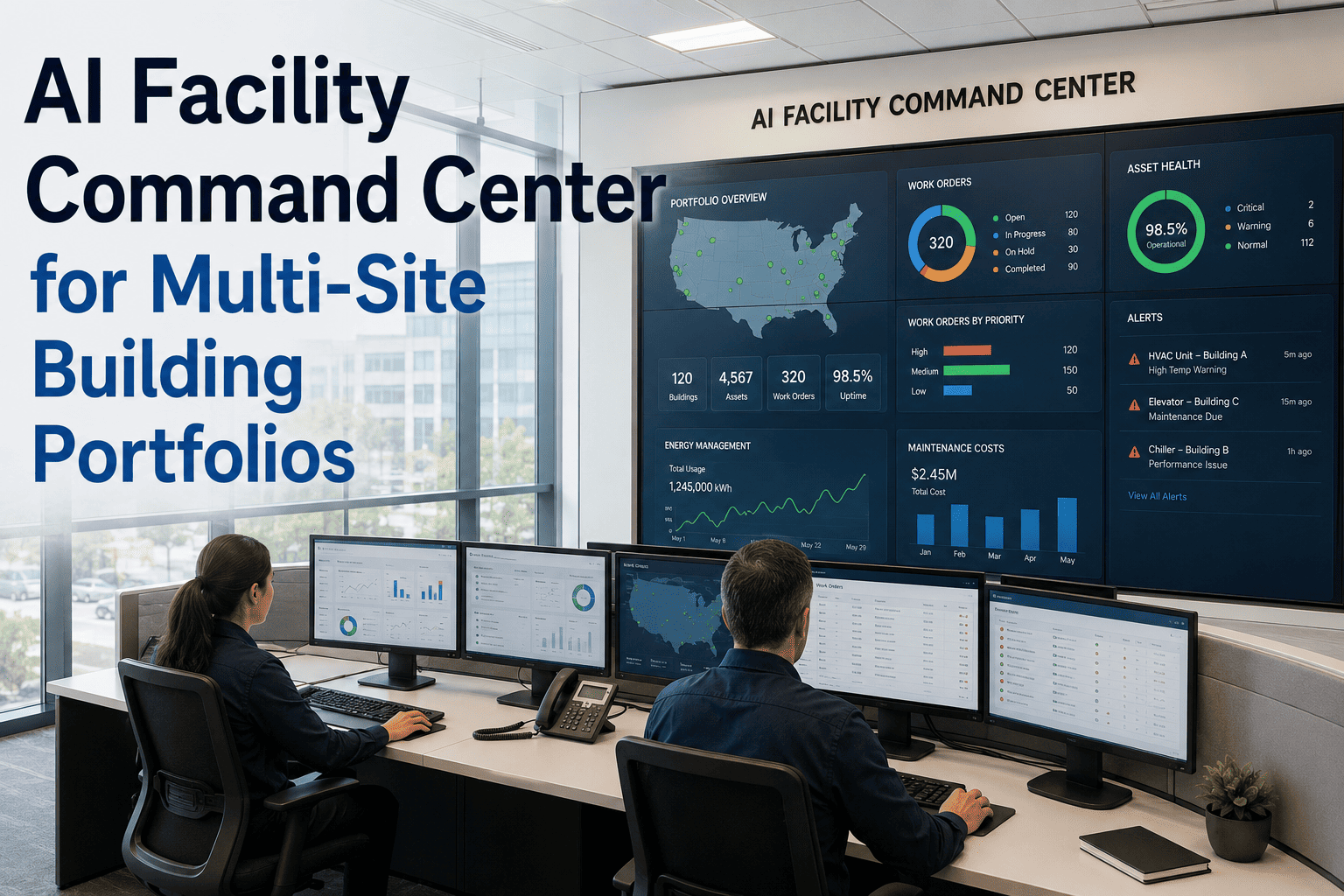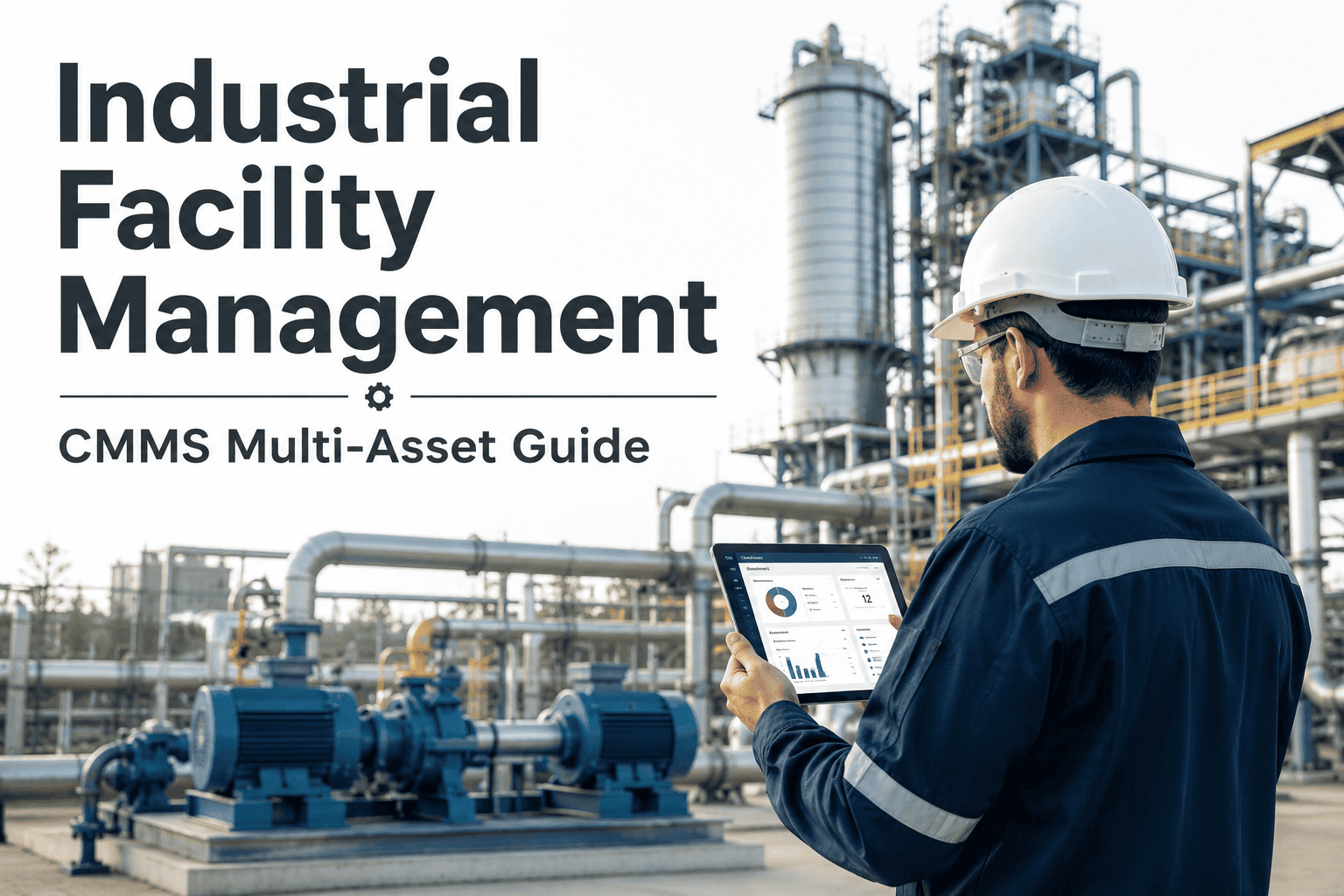
Industrial facility management demands a CMMS that can handle multi-asset classes — conveyors, HVAC, dock doors, racking, forklifts and production machinery — under one system, yet most plants still lose 15–20% of annual maintenance spend to reactive breakdowns, paper work orders and siloed spreadsheets. This industrial facility CMMS guide breaks down how warehouse, distribution center and manufacturing-adjacent facilities track assets, schedule preventive maintenance and control spare-parts inventory in 2026. Whether you operate a single distribution center or a multi-site network, the right platform eliminates downtime surprises and audit headaches. You can Start Free Trial of OxMaint today or read on for the full framework.
Industrial Facility CMMS Guide 2026
Still managing 5,000+ assets across spreadsheets and clipboards?
Multi-asset industrial facilities lose an average of $50B annually to unplanned downtime. OxMaint consolidates every asset class — warehouse, distribution, production — into one AI-powered CMMS so your team stops firefighting and starts preventing failure.
Multi-Asset Complexity
Why industrial facilities need a multi-asset CMMS in 2026
A modern warehouse or distribution center operates 200–2,000 distinct assets across at least eight equipment classes — yet 62% still rely on reactive maintenance or disjointed spreadsheet logs.
Material Handling
Conveyors, AGVs, forklifts, automated sortation — high-cycle assets where a single bearing failure can halt a 12-hour pick window.
40–60% of downtimeHVAC & Environmental
Rooftop units, chillers and climate controls protecting temperature-sensitive inventory — a 2°C drift can spoil a $200K pharma shipment.
Compliance-criticalDock & Doors
Levelers, overhead doors and seals — each failed dock door idles one truck for 45 minutes on average, costing $180–$400 per incident.
High-frequency wearProduction Machinery
CNC machines, compressors, hydraulic presses — production-adjacent equipment where OEE drops 3% for every hour of unscheduled downtime.
Highest repair costBuilding & Fire Systems
Sprinklers, alarms, emergency lighting — NFPA and OSHA-mandated inspections that carry fines up to $15,625 per violation when missed.
Audit-mandatedUtilities & Compressed Air
Air compressors, generators, transformers — backbone utilities where a 10-PSI leak wastes $2,000–$8,000/year per circuit in energy alone.
Silent energy drainReal-World Scenario
The cost of reactive maintenance: a 180-asset distribution center
Consider a Midwest distribution center running 180 critical assets on spreadsheets and paper work orders — a profile common to 70% of mid-size operations evaluating industrial CMMS software.
- Technicians spend 6+ hrs/week searching for manuals and part numbers
- Audit preparation takes 3 days of manual log compilation
- Critical spares stockout rate: 18%
- AI predictive alerts flag 8 bearing failures before breakdown
- Mobile work orders cut documentation time by 70%
- Auto-reorder drops stockouts below 2%
ROI Framework
How to calculate CMMS ROI for an industrial facility
Industrial facility maintenance teams evaluating CMMS software should model ROI across three cost buckets: downtime avoided, labor reallocation and inventory optimization.
Example: 370 hrs saved/yr × $850/hr revenue throughput = $314,500 recovered
Example: 8 hrs/week × 52 weeks × $48/hr = $19,968 reallocated to PM
Example: $85K dead stock × 22% carrying = $18,700 freed annually
| Facility Size | Annual Downtime Cost | Est. Annual Savings | Payback Period | 3-Year ROI |
|---|---|---|---|---|
| Small (<100 assets) | $45K–$90K | $18K–$36K | 3–5 months | 280–410% |
| Medium (100–500 assets) | $90K–$480K | $42K–$210K | 2–4 months | 340–520% |
| Large (500–2,000 assets) | $480K–$2.4M | $210K–$1.1M | 1–3 months | 410–680% |
| Enterprise (2,000+ assets) | $2.4M+ | $1.1M+ | 1–2 months | 480–750% |
See OxMaint on your assets
Stop reacting. Start predicting. Book a 30-minute demo.
See how OxMaint's AI-powered multi-asset CMMS maps to your warehouse, distribution center or production facility — live on your equipment data.
OxMaint Platform
How OxMaint solves multi-asset industrial facility management
OxMaint unifies work orders, preventive and predictive maintenance, asset tracking, spare-parts inventory and analytics into one AI-powered platform built for maintenance and reliability teams managing diverse asset classes.
AI Predictive Maintenance
Vibration, temperature and runtime data feed ML models that flag bearing failures, motor degradation and compressor leaks 7–21 days before breakdown — cutting unplanned downtime 30–50%.
Mobile Work Orders
Technicians receive, complete and close work orders from any Android or iOS device — with photo capture, barcode scanning and digital signatures. Eliminates paper trails and lost documentation entirely.
Smart Spare-Parts Inventory
Auto-reorder triggers tied to min/max levels and consumption history ensure the right part is always in stock — reducing carrying costs 15–25% while dropping stockout rates below 2%.
Compliance & Audit Readiness
Every work order, inspection and meter reading is timestamped and stored immutably. Generate OSHA, NFPA, ISO 55000 and FMCSA compliance reports in one click — audit prep drops from days to minutes.
Implementation Timeline
CMMS implementation timeline for industrial facilities
A well-executed industrial CMMS deployment takes 4–8 weeks — not months — when asset hierarchy, PM schedules and spare-parts data are structured correctly from day one.
Asset Hierarchy & Data Import
OxMaint onboarding team maps your asset tree — locations, parent-child relationships, criticality ratings — and imports existing data from spreadsheets, ERP or legacy CMMS. Typical: 500 assets live in 3 days.
PM Schedules & Work Order Templates
Build preventive maintenance triggers based on runtime hours, calendar intervals or condition thresholds. Digitize 80% of recurring PM checklists with photo and signature capture.
Spare-Parts & Inventory Sync
Link parts to assets, set min/max levels and enable auto-reorder. Barcoding and cycle-count workflows go live — technicians pull parts via mobile scan, no more paper requisitions.
AI Predictive Layer Activation
Connect IoT sensors, PLC data or manual condition readings. OxMaint's ML models begin baselining asset health and issuing early-warning alerts — first predictive catch typically within 14 days.
Dashboard & KPI Go-Live
Reliability dashboards go live: OEE, MTBF, MTTR, PM compliance and wrench-time tracking. Team training completes and full handoff to facility maintenance staff with ongoing OxMaint support.
Warehouse & Distribution
Warehouse and distribution center CMMS: what to track
Warehouse and distribution facilities face unique maintenance pressures — 24/7 operations, high-cycle automated equipment and tight delivery SLAs that punish every minute of unplanned downtime.
Conveyor Systems
- Belt tension and tracking inspection — weekly
- Roller bearing condition monitoring — monthly
- Motor amperage baseline and trend — continuous
- Emergency stop chain test — quarterly
Material Handling Equipment
- Forklift battery and hydraulic check — daily pre-shift
- AGV navigation sensor calibration — monthly
- Load wheel and caster wear measurement — biweekly
- OSHA-powered industrial truck certification — annual
Building & Dock Systems
- Dock leveler hydraulic cycle test — monthly
- Overhead door spring and cable inspection — quarterly
- Fire suppression flow test — semi-annual (NFPA 25)
- Emergency lighting battery load test — monthly
FAQ
Industrial facility CMMS: frequently asked questions
What is an industrial facility CMMS?
An industrial facility CMMS is a software platform that manages work orders, preventive and predictive maintenance, asset tracking, spare-parts inventory and maintenance analytics across all equipment classes in a warehouse, distribution center or manufacturing-adjacent facility. It replaces spreadsheets and paper logs with a centralized, mobile-accessible system that reduces unplanned downtime 30–50% and improves PM compliance above 90%.
How much does industrial facility CMMS software cost?
Industrial CMMS pricing typically ranges from $35–$75 per user per month for mid-market facilities, with enterprise multi-site deployments running $50,000–$150,000 annually including implementation. Most facilities achieve full payback in 2–4 months through downtime reduction, labor savings and inventory optimization. You can Start Free Trial of OxMaint to evaluate the platform on your assets before committing.
How long does it take to implement a CMMS in a warehouse or distribution center?
A properly structured CMMS implementation for a warehouse or distribution center takes 4–8 weeks. Week 1 covers asset hierarchy import, weeks 2–4 build PM schedules and inventory sync, weeks 5–6 activate the AI predictive layer, and weeks 7–8 deliver dashboard go-live and team training. Facilities under 500 assets often go live in 3–4 weeks with OxMaint's guided onboarding.
Can a single CMMS manage both warehouse and production equipment?
Yes — a multi-asset industrial CMMS like OxMaint is designed to manage diverse asset classes including conveyors, forklifts, HVAC, dock doors, fire systems and production machinery under one platform. Each asset class gets its own PM templates, criticality rating and compliance requirements while sharing a unified work-order, inventory and analytics layer — eliminating the need for separate maintenance systems.
What compliance standards does an industrial CMMS support?
A robust industrial CMMS supports OSHA workplace safety logs, NFPA 25 fire suppression inspection records, ISO 55000 asset management frameworks, FMCSA fleet maintenance documentation and EPA environmental compliance reporting. OxMaint timestamps and stores every work order, inspection and meter reading immutably, letting you generate audit-ready compliance reports in one click. Book a Demo to see compliance workflows on your specific requirements.
Start your transformation
Your industrial facility deserves better than spreadsheets
Join maintenance and reliability teams using OxMaint to cut downtime 30–50%, achieve 96% PM compliance and eliminate paper work orders — across every asset class in one AI-powered platform.
Free 14-day trial · No credit card