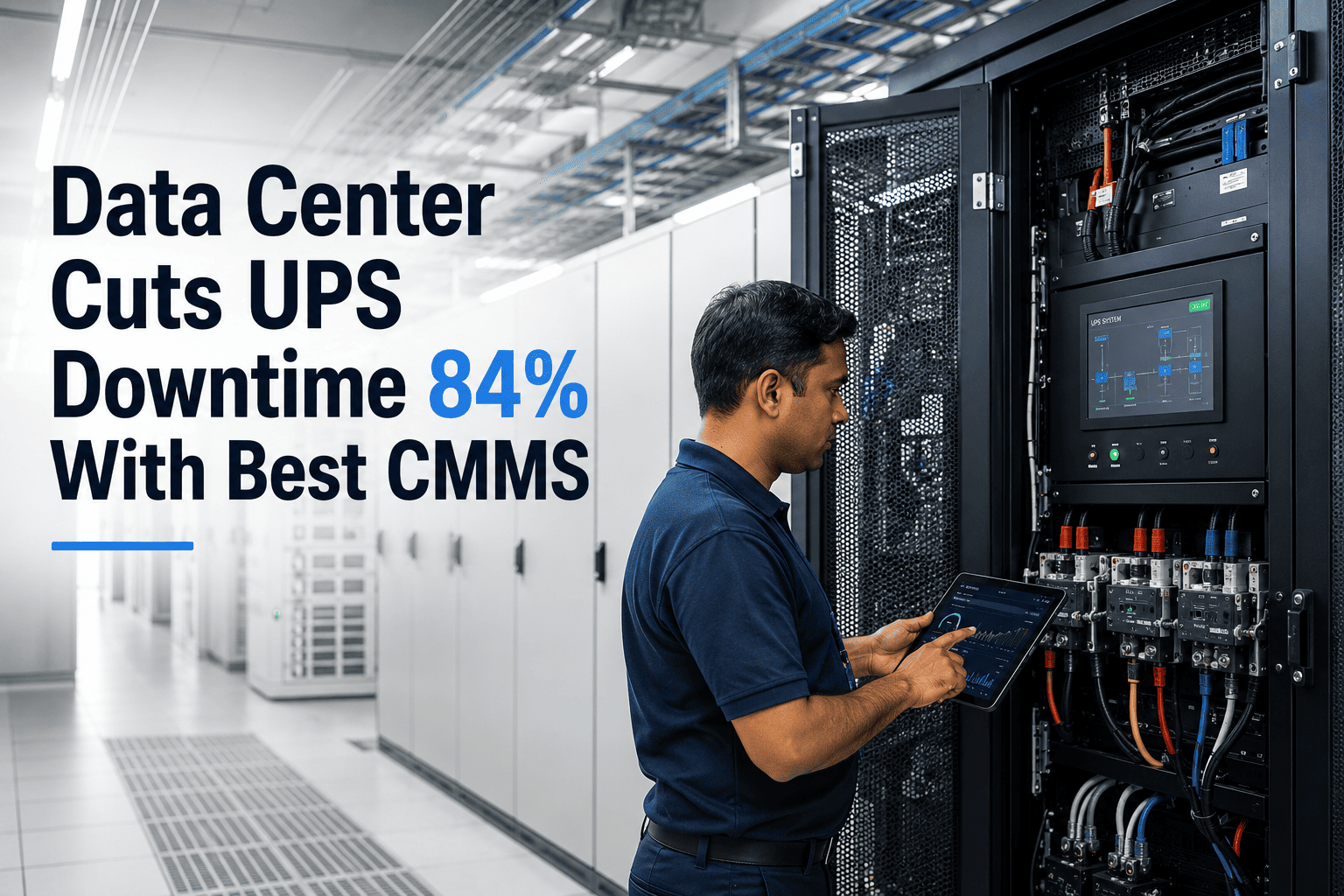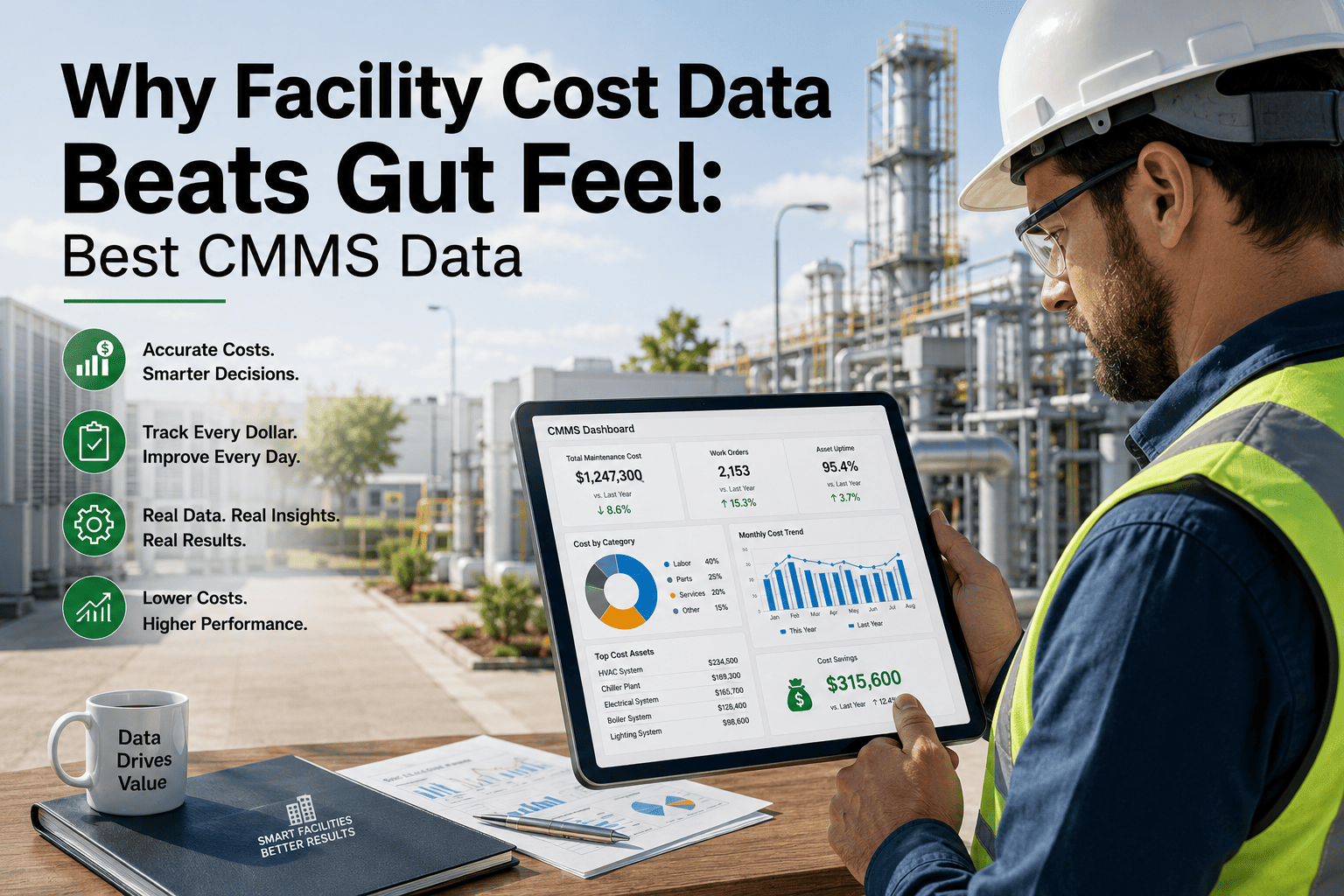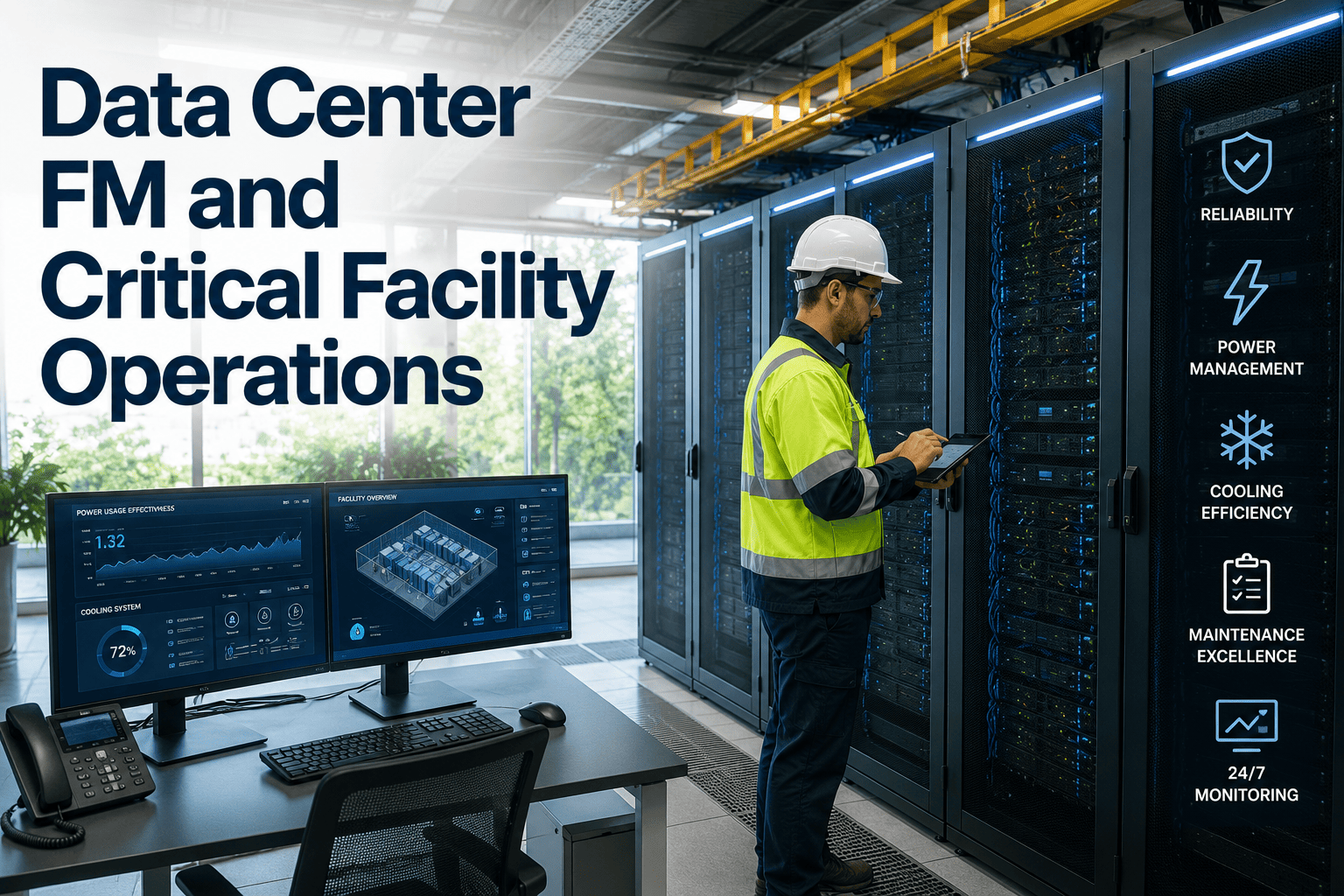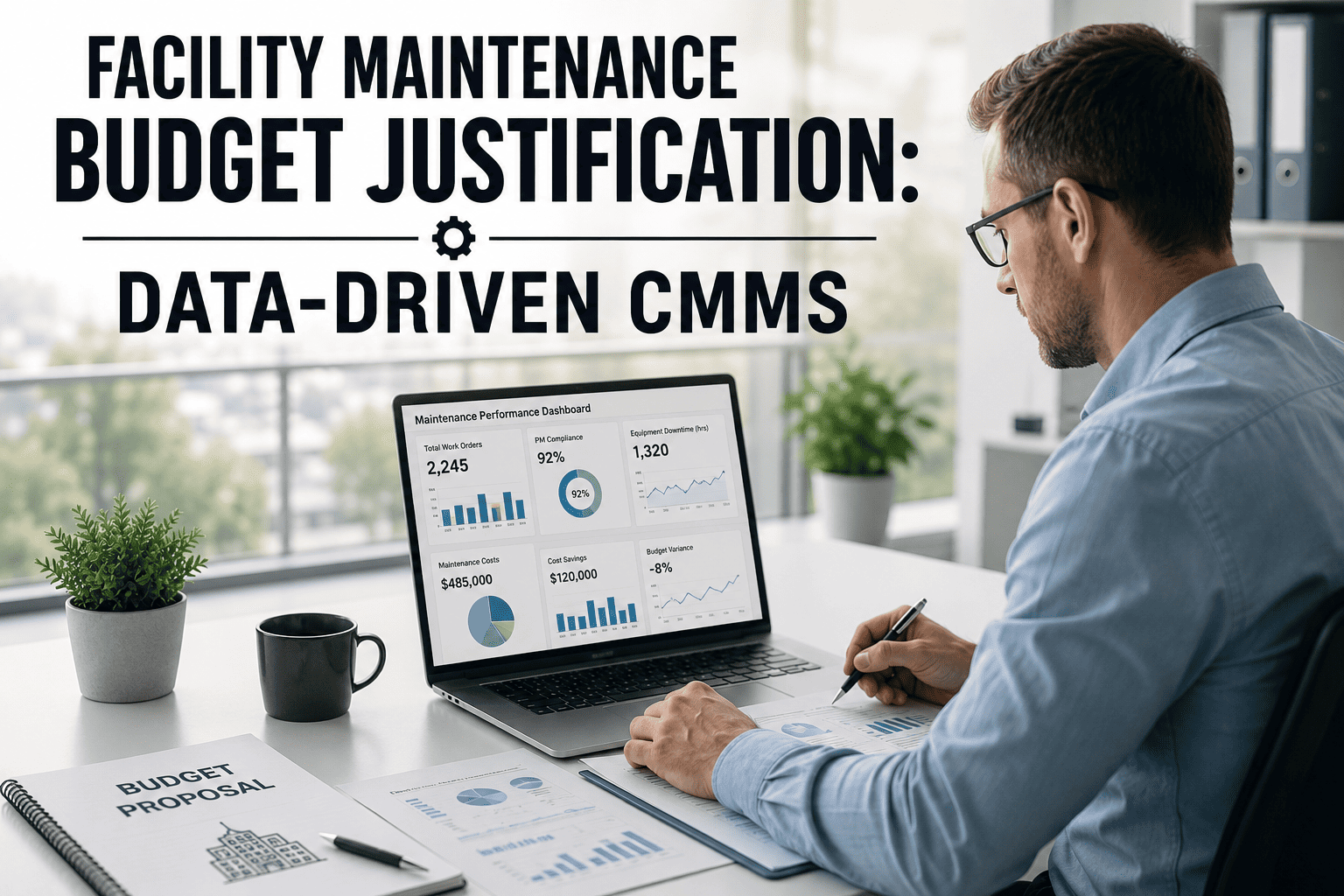
Data center facility CMMS platforms are the operational backbone that keeps mission-critical infrastructure—cooling systems, UPS arrays, generators, and PDUs—running at 99.999% uptime. This data center maintenance guide breaks down how modern reliability teams use CMMS software to automate preventive maintenance, verify redundancy, and eliminate the spreadsheet chaos that causes unplanned outages. Whether you manage a 5 MW hyperscale campus or a 200-rack colocation site, the right system turns reactive firefighting into predictive, audit-ready operations. You can explore the full platform with a Start Free Trial or book a tailored walkthrough to see it on your own asset hierarchy.
Can your facility survive a cooling failure at 3 AM without a CMMS?
A single thermal event in a high-density rack can destroy $2M+ in hardware in under five minutes. Yet most data centers still manage mission-critical maintenance on spreadsheets, clipboards, and tribal knowledge—leaving uptime to luck. OxMaint replaces that risk with AI-driven work orders, predictive failure alerts, and full audit trails for every asset in your white space.
What a data center CMMS must track for mission-critical uptime
A facility data center guide that ignores subsystem interdependencies is incomplete. Below are the four infrastructure pillars where a CMMS delivers measurable uptime gains, compliance evidence, and cost avoidance.
Cooling & HVAC Systems
CRAC/CRAH units, chillers, cooling towers, and fluid pumps represent 40–50% of facility energy spend. OxMaint schedules filter changes, refrigerant top-offs, and belt inspections on runtime or calendar triggers—preventing the thermal runaway events that cause 30% of hardware failures.
UPS & Battery Strings
VRLA battery strings degrade unpredictably; IEEE 1188 recommends impedance testing every 6–12 months. OxMaint auto-generates battery test work orders, tracks cell-by-cell readings, and flags impedance drift so you replace failing strings before they take your bus offline.
Backup Generators
Diesel gensets must carry full load within 10 seconds of a utility transfer. OxMaint manages weekly no-load tests, monthly load-bank runs, fuel-polishing schedules, and ASTM D975 fuel sampling—ensuring NFPA 110 Level 1 compliance and zero fail-to-start events.
PDUs & Power Distribution
Rack PDUs, busways, STS units, and switchgear carry the lifeblood of your IT load. OxMaint tracks thermal scans, breaker inspections, and phase-load balancing, sending predictive alerts when a PDU approaches 80% nameplate capacity—giving you time to rebalance before a trip.
Data center maintenance CMMS checklist: from PM trigger to closed work order
A data center CMMS guide is only useful if it maps to how reliability teams actually work. Here is the five-step PM workflow OxMaint automates—replacing whiteboards and email chains with a traceable, audit-ready digital thread.
PM Trigger & Work Order Auto-Generation
OxMaint generates work orders from calendar intervals (e.g., quarterly UPS inspection), runtime meters (e.g., generator every 250 hours), or condition sensors (e.g., chiller vibration above 4.5 mm/s ISO 10816). No manual reminders, no missed PMs.
Technician Dispatch & Mobile Execution
Work orders route to the right technician by skill, clearance level, and location. The OxMaint mobile app delivers procedures, safety lockout/tagout steps, and photo capture—so evidence is collected in real time, not transcribed from paper at end of shift.
Parts & Inventory Reservation
Before a tech opens a CRAC unit, OxMaint checks spare-parts inventory, reserves filters and belts, and auto-reorders when stock falls below par. No more PMs delayed because a $14 belt is out of stock.
Condition Data & Predictive Analysis
Inspection readings—bearing temperature, battery impedance, fuel level—flow into OxMaint's AI engine. The system compares trends against asset baselines and alerts reliability engineers when a failure pattern emerges, often 2–6 weeks before breakdown.
Closure, Compliance & Audit Trail
Every work order closes with a timestamped, digitally signed record—procedures followed, parts consumed, photos attached, time-on-task logged. That record is instantly retrievable for Uptime Institute, SOC 2, or customer compliance audits.
The cost of spreadsheet-based facility maintenance vs. a data center CMMS
If your facility critical infrastructure CMMS is still Excel, you are absorbing avoidable downtime, labor waste, and audit risk. Here is what the numbers look like for a mid-size 1 MW data center managing 350 critical assets.
Typical reactive facility with no predictive maintenance or automated PM scheduling.
Predictive alerts and automated PMs cut outage frequency 87% and duration 55%.
| Metric | Spreadsheet / Reactive | OxMaint CMMS | Improvement |
|---|---|---|---|
| Unplanned downtime hours/yr | 6.0 hrs | 0.3 hrs | 95% reduction |
| PM compliance rate | 62% | 98% | +36 pts |
| Mean time to repair (MTTR) | 4.2 hrs | 1.6 hrs | 62% faster |
| Audit prep time (SOC 2 / Uptime) | 120 hrs/yr | 8 hrs/yr | 93% saved |
| Spare-parts stockouts | 14/yr | 1/yr | 93% reduction |
| Annual downtime cost (1 MW site) | $3.24M | $180K | $3.06M saved |
"A 1 MW colocation facility migrated 350 critical assets to OxMaint and eliminated three recurring CRAC failures within the first quarter—saving an estimated $810K in avoided downtime and emergency repair costs."
— Worked example based on aggregate OxMaint deployment dataHow OxMaint solves data center critical infrastructure maintenance
OxMaint is built for the maintenance and reliability teams who keep the lights on 24/7. Here is how specific platform capabilities map directly to data center facility pain points—and the measurable outcomes they deliver.
AI-Driven Predictive Maintenance
OxMaint's AI engine analyzes vibration, temperature, and impedance trends across your CRAHs, generators, and UPS strings—flagging degradation patterns 2–6 weeks before failure so you can schedule repairs during planned maintenance windows.
Automated PM Scheduling & Work Orders
Trigger preventive maintenance by calendar, runtime meter, or condition threshold. OxMaint auto-generates work orders, assigns technicians, and escalates overdue PMs—so no inspection slips through the cracks.
Full Asset Hierarchy & Redundancy Tracking
Model your N+1, 2N, or Tier IV topology with parent-child asset relationships. OxMaint tracks which assets are on which bus, which CRAC feeds which zone, and verifies that redundancy is maintained after every maintenance event.
Compliance-Ready Audit Trails
Every work order, inspection reading, LOTO sequence, and parts transaction is timestamped and digitally signed. Generate Uptime Institute, SOC 2, and customer audit reports in one click—not three days of spreadsheet archaeology.
Facility critical infrastructure CMMS: verifying N+1 and Tier III/IV compliance
Redundancy is only theoretical if you cannot prove every maintenance event preserved it. A data center maintenance CMMS must do more than schedule oil changes—it must verify that taking a CRAC offline for service did not leave a hot aisle without cooling backup.
Redundancy Verification Checklist
- Confirm N+1 capacity before taking any cooling unit offline
- Verify UPS battery string health before generator load-bank test
- Validate STS transfer path before PDU maintenance window
- Lock out/tag out feeders and document in work order
- Post-maintenance: confirm all redundant units returned to service
- Log thermal readings 30 min after return to normal operation
Compliance Standards Tracked
- Uptime Institute Tier III/IV evidence packages
- NFPA 110 generator testing records (weekly/monthly)
- IEEE 1188 battery impedance test logs
- ASHRAE TC 9.9 thermal environment compliance
- SOC 2 / ISO 27001 maintenance control evidence
- ISO 55000 asset management alignment
See OxMaint on your critical assets — book a 30-minute demo
We will load your asset hierarchy, map your N+1 topology, and show you exactly how predictive maintenance and automated PMs will lift your uptime. No slides—just the platform on your real-world scenario.
Data center facility CMMS: top questions answered
What is a data center facility CMMS and why is it critical?
A data center facility CMMS is maintenance management software designed to manage the unique demands of mission-critical infrastructure—cooling, power, and fire suppression systems that cannot fail. Unlike a generic CMMS, a data center-specific platform tracks redundancy topology (N+1, 2N), schedules compliance-driven PMs (NFPA 110, IEEE 1188), and provides the audit evidence required for Uptime Institute and SOC 2 certifications. Without one, teams rely on spreadsheets that miss PMs, lose inspection records, and leave uptime to chance.
How often should data center UPS batteries be tested?
IEEE standard 1188 recommends impedance or conductance testing of VRLA battery strings every 6–12 months, with more frequent quarterly monitoring for high-criticality loads. A CMMS like OxMaint auto-generates these test work orders on schedule, records cell-by-cell readings, and uses trend analysis to flag individual cells degrading faster than the string—so you replace the weak cell before it compromises the entire battery backup. You can Book a Demo to see automated IEEE 1188 scheduling in action.
How does a CMMS improve data center PUE and energy efficiency?
Cooling systems account for 40–50% of total facility energy use. A CMMS improves PUE by ensuring CRAC/CRAH units, chillers, and cooling towers receive timely filter changes, coil cleanings, and refrigerant top-offs—preventing the efficiency degradation that adds 5–15% to cooling energy spend. OxMaint also tracks runtime hours and vibration data, so you can identify and replace inefficient units before they quietly inflate your PUE month over month.
Can OxMaint track redundancy and prevent single points of failure?
Yes. OxMaint models your full asset hierarchy with parent-child relationships, so you can see which CRAC feeds which hot aisle, which PDU is on which bus, and whether removing an asset for maintenance will breach your N+1 or 2N redundancy. Before any work order is released, the system can flag if the planned maintenance will leave a zone without backup cooling or power—preventing the single-point-of-failure incidents that cause catastrophic outages.
How long does it take to implement a data center CMMS?
Most data center facilities are live on OxMaint within 2–4 weeks. The process starts with importing your asset hierarchy and PM schedules (from spreadsheets or an existing system), then configuring work order templates, spare-parts minimums, and compliance triggers. Because OxMaint is cloud-based, there is no server installation—your team can access it from day one on desktop and mobile. You can start a Start Free Trial in minutes or book a demo for a guided onboarding plan.
Stop managing mission-critical assets on spreadsheets
Join the reliability teams using OxMaint to predict failures, automate PMs, and prove compliance—every hour, every asset, every audit. Your 99.999% uptime depends on it.
Free 14-day trial · No credit card