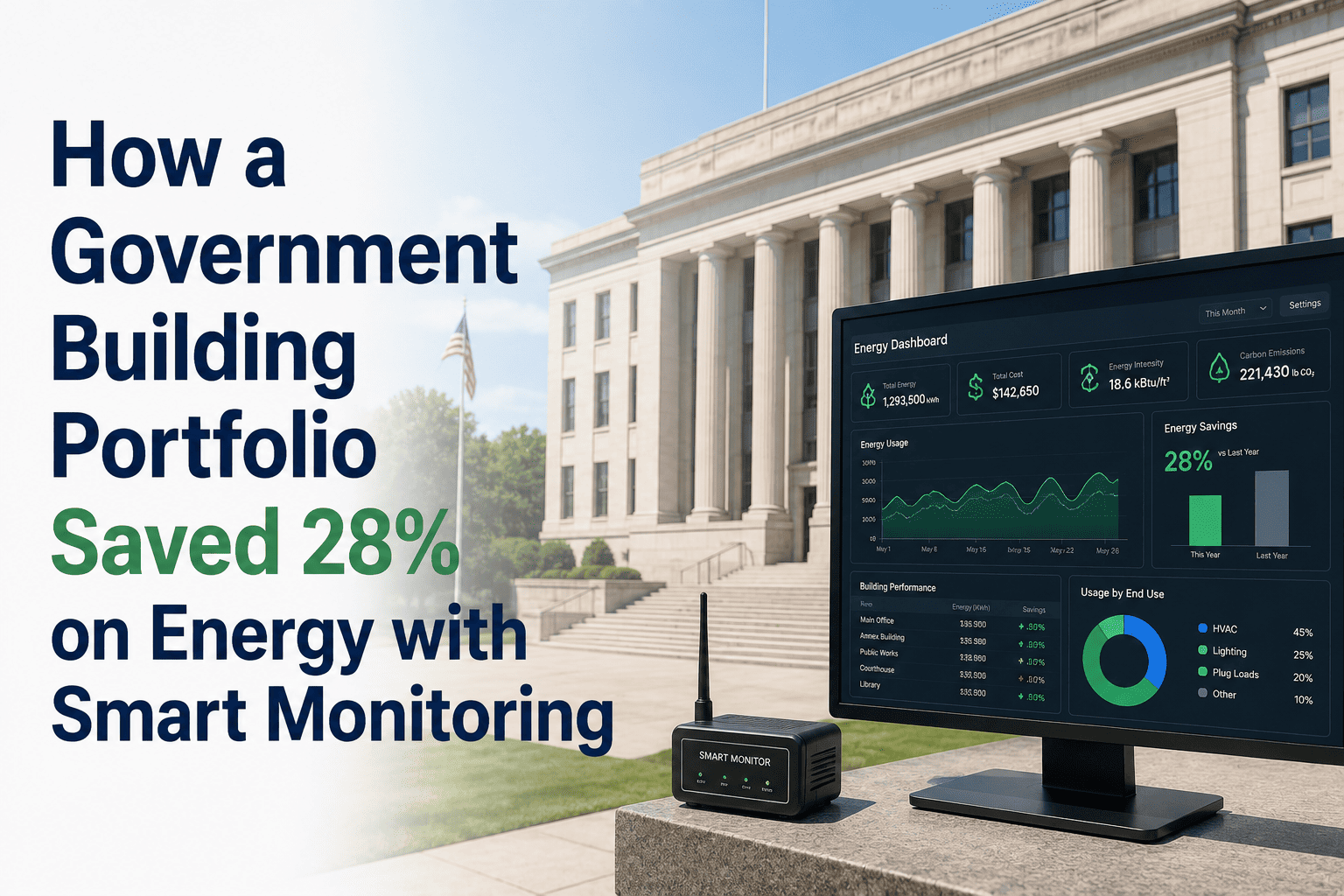
A municipal government managing a portfolio of 45 public buildings — including city hall, public libraries, recreation centers, courts, and public works facilities — had no centralized system for monitoring building energy consumption, tracking equipment runtime, or connecting maintenance events to energy performance. Annual energy spend across the portfolio was $3.28 million. After deploying Oxmaint's IoT-integrated facility management platform, the municipality reduced energy spend by 28% — $920,000 per year in savings — while achieving full ASHRAE 90.1 compliance across all 45 buildings for the first time. Book a session to see how Oxmaint's IoT monitoring works for multi-building government portfolios.
45 Buildings. No Visibility. $3.28M in Annual Energy Spend.
The city's facilities department had historically managed energy through monthly utility bill review — a reactive, backward-looking process that could identify that a building was consuming more energy than the previous year but could never explain why, or what maintenance action was connected to the increase. HVAC systems running after building hours, chillers operating at degraded efficiency due to deferred maintenance, and lighting controls that had been bypassed during a previous renovation were collectively responsible for hundreds of thousands of dollars in unnecessary energy spend. Without real-time monitoring, the facilities team had no mechanism to detect these conditions until the utility bill arrived.
IoT Monitoring + CMMS: From Blind Spots to Real-Time Intelligence
Oxmaint integrated IoT energy and equipment sensors into all 45 buildings over an 18-month phased deployment, beginning with the 12 highest-energy-consuming facilities. Sensor data feeds into the Oxmaint platform alongside work order and PM records, creating a single dashboard that connects maintenance events directly to energy performance. When a chiller's energy consumption deviates more than 8% from its baseline, a maintenance work order is automatically generated — not after the next utility bill, but at the moment the anomaly is detected.
Where the $920,000 Annual Savings Came From
| Savings Category | Root Cause Identified | Oxmaint Action | Annual Savings |
|---|---|---|---|
| After-Hours HVAC Operation | 23 buildings running HVAC during unoccupied periods | IoT scheduling alerts + automated shutdown work orders | $312,000 |
| Chiller Degradation | Deferred PM caused 14–22% efficiency loss in 8 units | PM compliance raised to 96% for all chiller assets | $228,000 |
| Lighting Control Bypass | Occupancy sensors bypassed in 11 buildings | Sensor restoration work orders; digital commissioning log | $141,000 |
| Steam Trap Failures | 17 steam traps failed-open, identified by temperature anomaly | Anomaly-triggered inspection and repair work orders | $156,000 |
| Boiler Optimization | Boilers operating above setpoint outside design conditions | Sensor-based setpoint monitoring with alert thresholds | $83,000 |
Public Buildings Are Wasting Energy That Isn't Visible Without Monitoring
Oxmaint's IoT integration gives municipal facility teams the real-time energy intelligence, automated maintenance triggers, and ASHRAE compliance tracking needed to reduce energy spend without capital-intensive retrofits. See how 45 public buildings cut costs by 28% in 18 months.
What Public Sector Facility and Energy Experts Say
Government Building Energy Management with Oxmaint IoT
$920,000 Saved Annually. Funded by Energy Waste That Was Already Happening.
The 45-building municipality in this case study did not install new equipment or undertake capital projects to achieve 28% energy savings. They installed IoT monitoring, connected it to their CMMS, and acted on what the data showed. Oxmaint makes that same approach available to any government facility portfolio today.