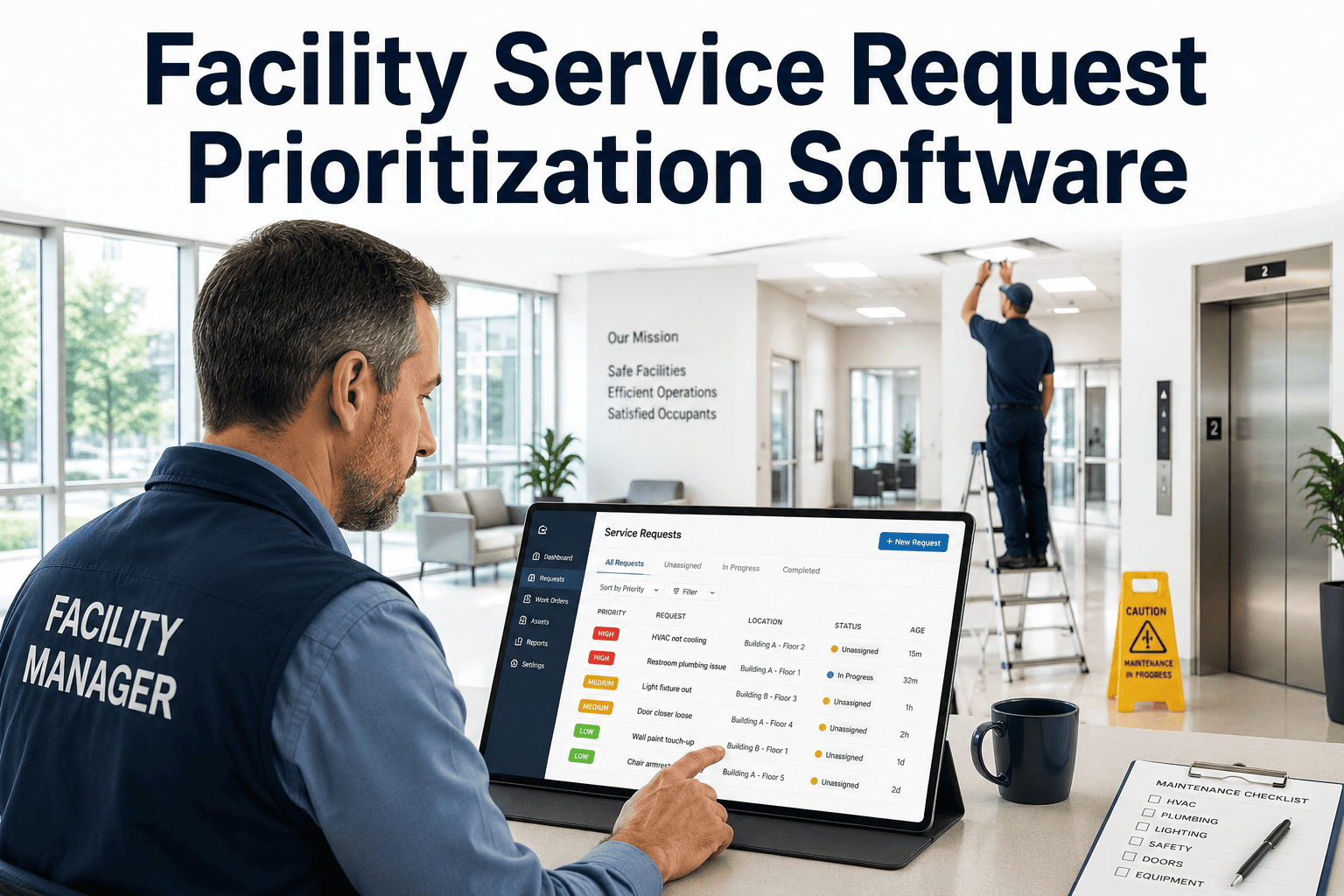
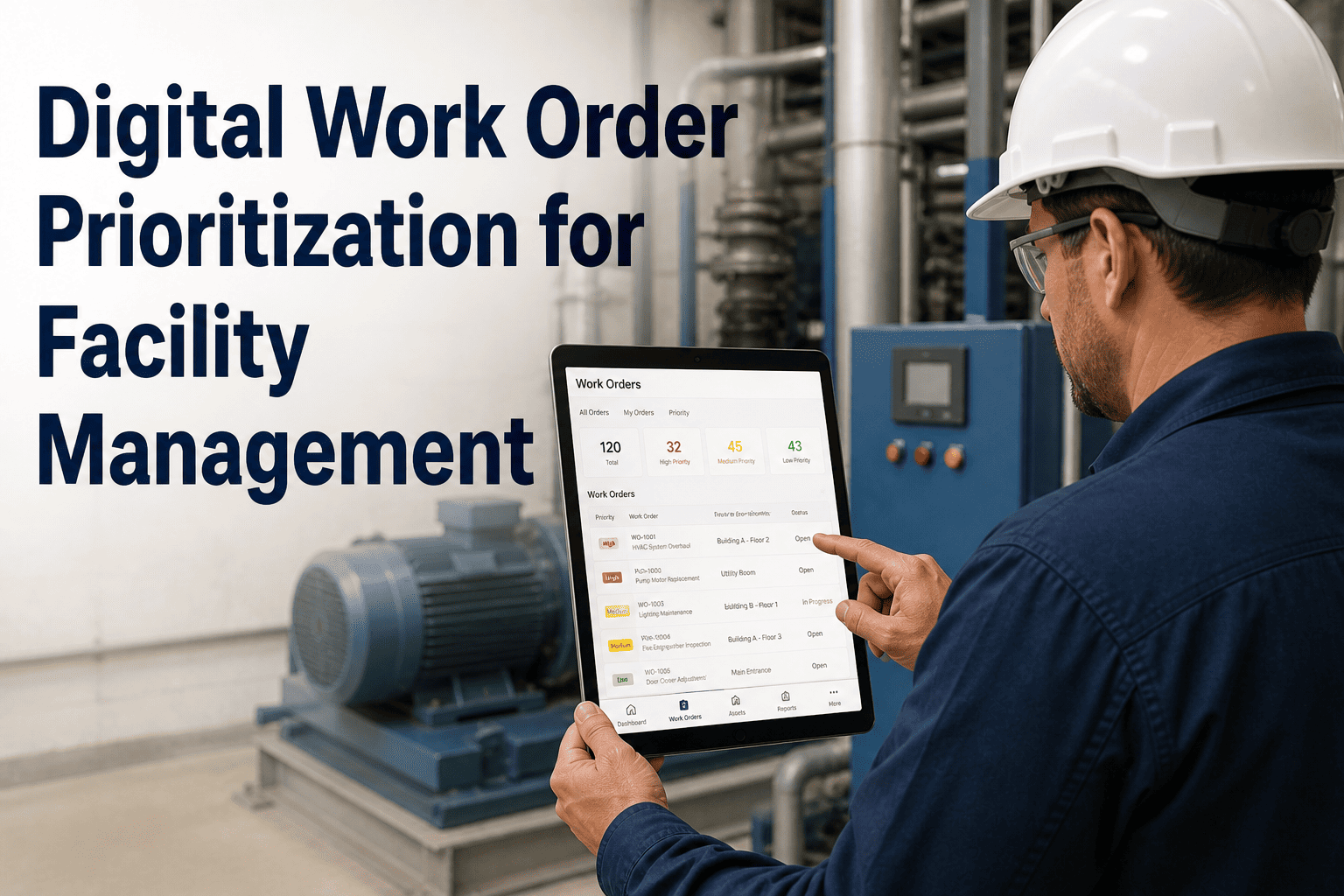
Every facility maintenance team faces the same daily dilemma: forty open repair requests, twelve technicians, and no objective method for deciding what gets done first. Priority is often assigned by whoever complained loudest or which manager called last — a system that consistently lets critical safety risks sit open while cosmetic issues get fixed. AI repair priority scoring changes this by evaluating every incoming request against five weighted factors simultaneously: safety risk, asset criticality, tenant impact, SLA deadline proximity, and historical failure frequency. The result is an objective score that tells your team exactly where to dispatch first — every time. Start free on Oxmaint and replace gut-feel prioritization with data-driven repair scoring.
AI Work Order Automation · Repair Prioritization · Risk Management
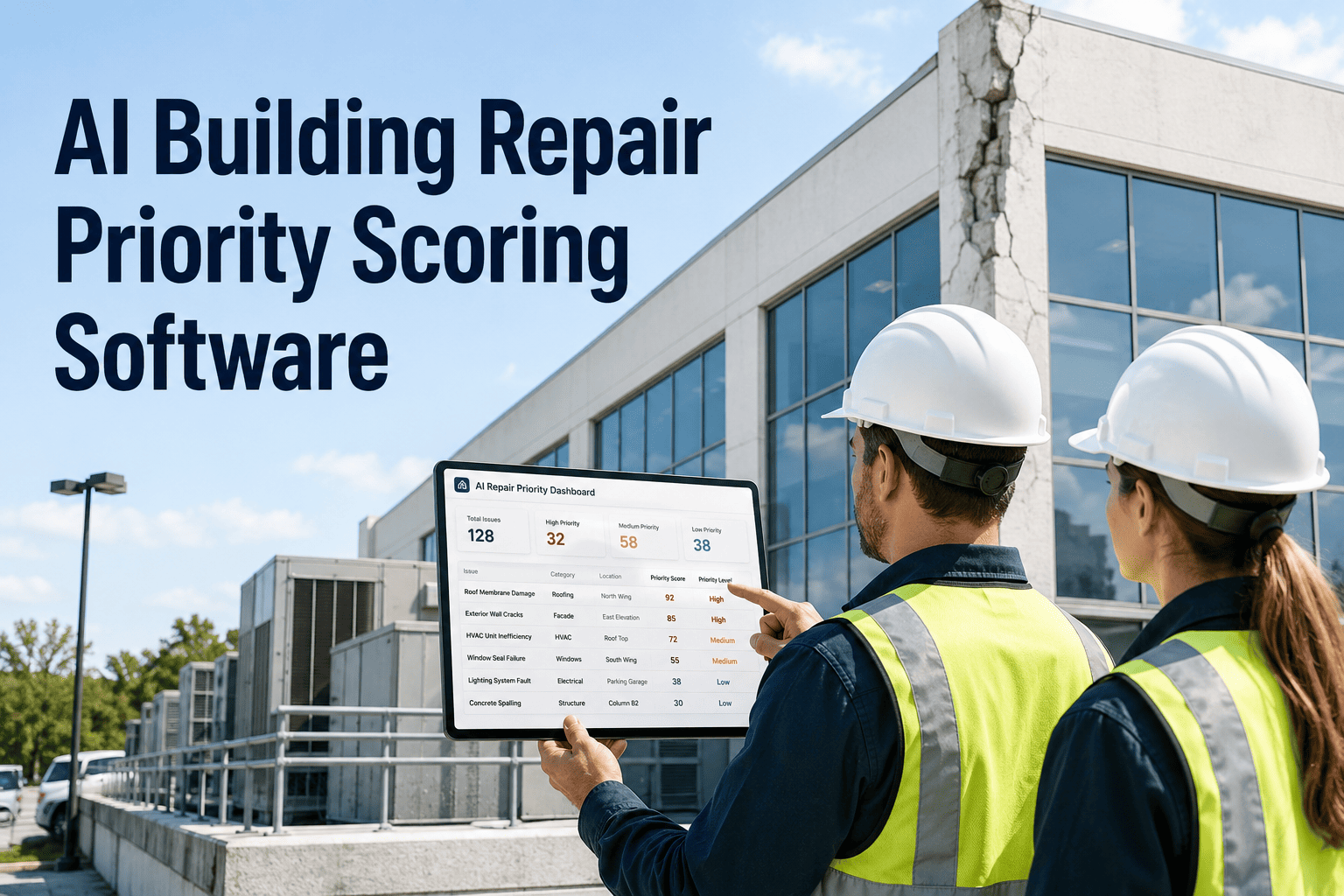
AI Building Repair Priority Scoring Software
Not every repair is equally urgent. AI priority scoring evaluates safety risk, asset criticality, tenant impact, SLA exposure, and failure history — and ranks every open request so your team always works the right job first.
Live Priority Score Example
94
Chiller Unit B — Cooling Failure
Critical · SLA: 2hrs remaining
67
Lobby Entry Door — Slow Close
Moderate · Tenant Impact: High
31
Breakroom Light — Flickering
Low · No SLA · 1 Occupant
The 5 Scoring Dimensions Oxmaint AI Uses
Each repair request is evaluated across five weighted dimensions. The composite score determines queue position — and updates in real time as conditions change.
01
Safety Risk
Weight: 35%
Life-safety systems (fire suppression, egress lighting, elevator, electrical panels) and OSHA-reportable hazards automatically score in the top tier. No override allowed without manager authorization.
02
Asset Criticality
Weight: 25%
Critical assets — chillers, boilers, generators, main distribution panels — score higher than non-critical infrastructure. Asset criticality is configured in your asset registry and applied automatically to all linked work orders.
03
Tenant / Occupant Impact
Weight: 20%
Repairs affecting common areas, primary tenant zones, or high-occupancy spaces score above single-office or back-of-house issues. Occupant count data from your floor plan drives this dimension automatically.
04
SLA Deadline Proximity
Weight: 12%
Priority scores escalate as SLA deadlines approach. A ticket with 4 hours remaining scores higher than the same ticket with 48 hours remaining — ensuring SLA compliance without manual tracking.
05
Failure History
Weight: 8%
Assets with a documented history of rapid failure progression receive a recurrence multiplier. A compressor that failed twice in 60 days scores higher on the next ticket than a first-time failure on the same asset class.
Priority Scoring vs. Manual Prioritization
| Factor |
Manual Prioritization |
AI Priority Scoring |
| Consistency |
Varies by shift, manager, and who calls first |
Same scoring logic applied to every ticket, every time |
| Speed |
Manual review adds 15–30 min per ticket batch |
Score assigned at ticket creation, instantly |
| SLA Awareness |
Depends on manager remembering deadlines |
SLA countdown dynamically updates each ticket's score |
| Safety Bias |
Safety issues can be buried under volume |
Safety dimension always overweighted — cannot be missed |
| Audit Trail |
No record of why a ticket was prioritized |
Score components logged with every priority decision |
| Bias Elimination |
High-status requestors get faster response |
Score blind to requestor — driven by facility data only |
Every day without AI priority scoring, your team is making 40+ manual prioritization decisions — decisions that carry SLA risk, safety liability, and tenant satisfaction consequences.
Real-World Impact by Facility Type
Corporate Campus
SLA compliance improved from 71% → 94%
Priority scoring eliminated "loudest-complainant" bias. Critical infrastructure repairs moved to front of queue automatically, regardless of which tenant submitted the ticket first.
Healthcare Facility
Critical-asset response time cut by 38%
Life-safety and patient-area repairs are now flagged at the highest priority tier the moment a ticket opens. No manual triage required during night shifts or peak clinical hours.
Municipal Building
Zero SLA breaches in 6 months post-deployment
Escalating SLA scores alerted supervisors 4 hours before any deadline breach. Previously, the team had averaged 12 SLA breaches per quarter from missed deadlines in high-volume periods.
Expert Review
AI
Maintenance Operations Expert
Facilities Risk & Compliance Review
Priority scoring is the single most impactful AI application in facility operations — because it affects every work order, every day. The ROI is immediate and measurable: SLA compliance rates typically increase 15–25 percentage points within the first quarter, and critical asset response times fall by 30–40%. Beyond the metrics, priority scoring eliminates a significant source of liability: the safety issue that sat in the queue because someone marked it 'medium' based on a phone call. AI scoring removes human inconsistency from the equation entirely and creates an audit-ready log of every prioritization decision made — which is increasingly important as facility operators face regulatory scrutiny and insurance reviews tied to maintenance practices.
Frequently Asked Questions
Can facility managers override AI priority scores when needed?
Yes — Oxmaint allows authorized managers to manually override AI scores when operational context requires it, such as a VIP event or emergency situation not captured by standard scoring factors. All overrides are logged with the reason and user ID, creating a full audit trail of manual priority decisions.
Book a demo to see how the override and audit system works in practice.
How does priority scoring handle competing critical repairs?
When multiple repairs score in the critical tier simultaneously, Oxmaint applies a secondary ranking by SLA deadline proximity and then occupant count affected. The system also flags multi-critical situations to supervisors for manual resource allocation decisions — so high-stakes conflicts are never left to automated logic alone.
Try Oxmaint free to see how the scoring dashboard handles high-volume critical periods.
Does the scoring model adapt to our facility's specific asset classes?
Oxmaint's priority scoring is configurable per asset registry. You define which assets are classified as critical for your operation, and those classifications are applied automatically across all linked work orders. Score weights can also be adjusted to reflect your facility's specific regulatory environment — for example, a healthcare facility may weight safety risk higher than a standard commercial property.
Book a demo to walk through configuration for your building type.
Is priority scoring available for mobile technicians in the field?
Yes — every technician sees the current priority score for each assigned work order in the Oxmaint mobile app. The score is visible alongside the asset details, location, and SLA deadline — giving field technicians full context for every job without needing to call the office. Priority updates in real time as conditions change.
Start free on Oxmaint and see the mobile priority dashboard.
Stop Guessing Which Repair Matters Most
Oxmaint's AI priority scoring gives your team a clear, objective, data-driven queue — so every technician dispatch is defensible, SLA-safe, and driven by real facility risk.