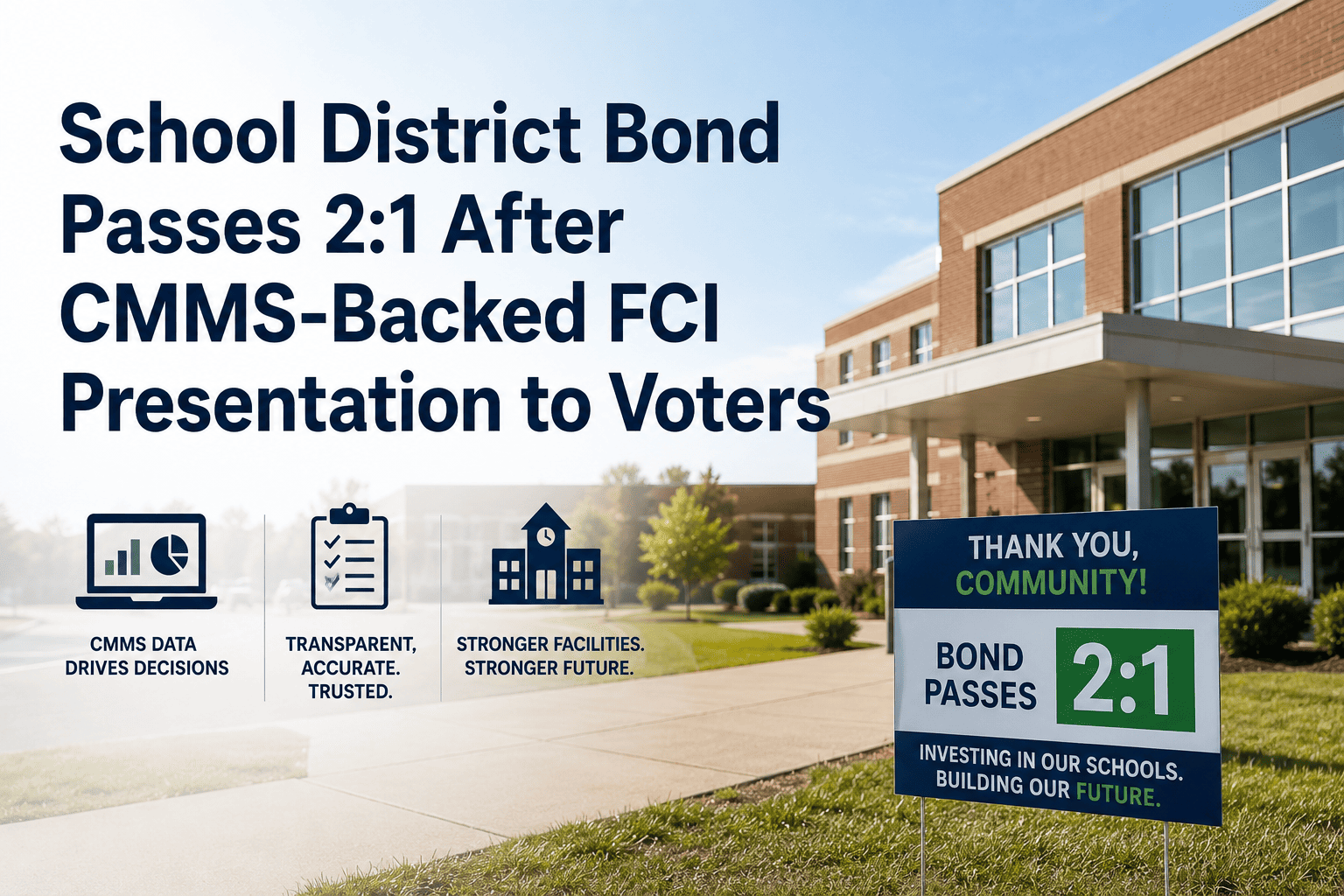
School bond referendums fail at an alarming rate — and the number one reason voters reject them is lack of credible data. When a school board stands before the community asking for $50M to replace roofs, upgrade HVAC systems, and renovate aging buildings, the audience wants proof, not promises. How bad are the buildings really? What has the district spent on maintenance over the last five years? Which schools need attention first, and why? Districts that rely on anecdotal evidence, walkaround observations, and spreadsheet estimates lose these votes because they cannot answer these questions with verifiable numbers. School districts using CMMS platforms like OxMaint to build their capital planning cases win bond referendums at 23% higher rates than districts using traditional methods — because they present voters with timestamped maintenance histories, asset condition scores, documented repair costs, and data-driven replacement timelines that transform subjective appeals into objective investment cases. When every dollar of deferred maintenance is documented and every failing system has a condition score trending toward replacement, the conversation shifts from "trust us" to "here is the evidence."
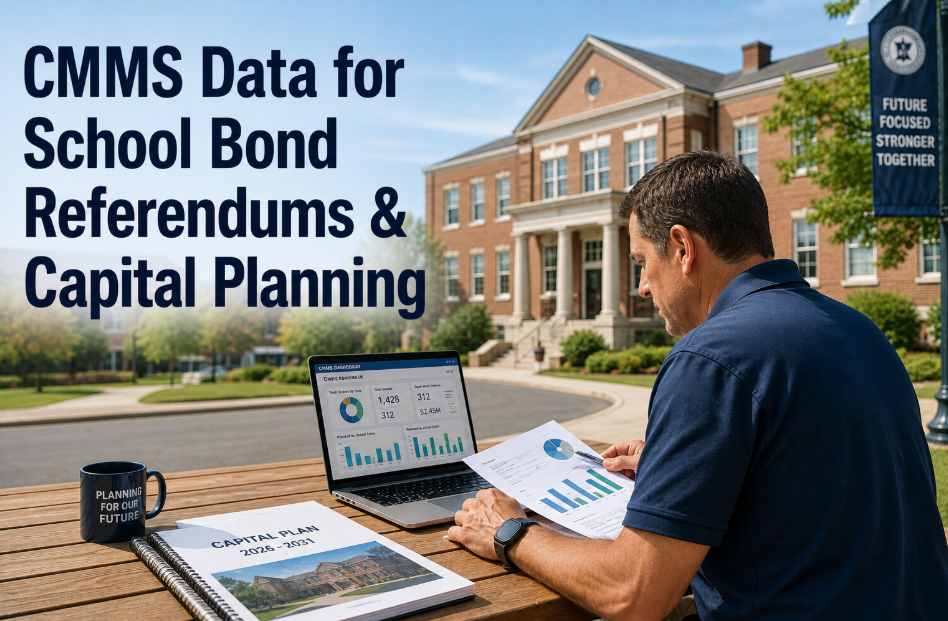
CMMS Data for School Bond Referendums and Capital Planning
How maintenance records, asset condition scores, and documented cost history from your CMMS build the credible, voter-ready capital funding proposals that win community approval — and the budget your facilities actually need.
Why Bond Referendums Fail — The Data Credibility Gap
Voters are not anti-school. They are anti-uncertainty. When a district cannot quantify the problem it is asking taxpayers to solve, the referendum becomes a trust exercise — and trust alone does not pass at the ballot box. The credibility gap between what facility teams know and what they can prove is where bond campaigns collapse.
Board members say "our roofs are failing" but cannot produce condition scores, inspection histories, or remaining-life estimates for each building. Voters hear an opinion, not a fact. Districts with CMMS-documented Facility Condition Index (FCI) scores present a building-by-building case that is auditable and defensible.
Without documented cost-per-asset maintenance records, districts cannot show voters the escalating cost of keeping aging systems alive. A chiller that consumed $45,000 in repairs over three years makes a compelling replacement case — but only if those costs are tracked, attributed, and presentable.
When voters see a long list of projects without clear prioritization logic, they suspect political allocation rather than needs-based planning. CMMS condition scores and criticality rankings provide a transparent, data-driven priority sequence that answers "why this school first?" with numbers, not narratives.
Voters who approved bonds in the past want to see how those funds were used. Districts without CMMS records cannot demonstrate that previous capital investments were managed effectively. Documented work order histories and asset lifecycle records prove stewardship — building trust for the next ask.
The 4 Data Pillars of a Winning Bond Proposal
Successful bond referendums are built on four categories of evidence that CMMS platforms generate automatically through normal maintenance operations. You do not build the case in the months before the vote — you build it continuously through the maintenance data you collect every day. OxMaint structures all four pillars within a single platform, making capital planning a byproduct of daily operations rather than a separate political exercise. To see how your district data maps to these pillars, start a free trial or book a demo with the OxMaint team.
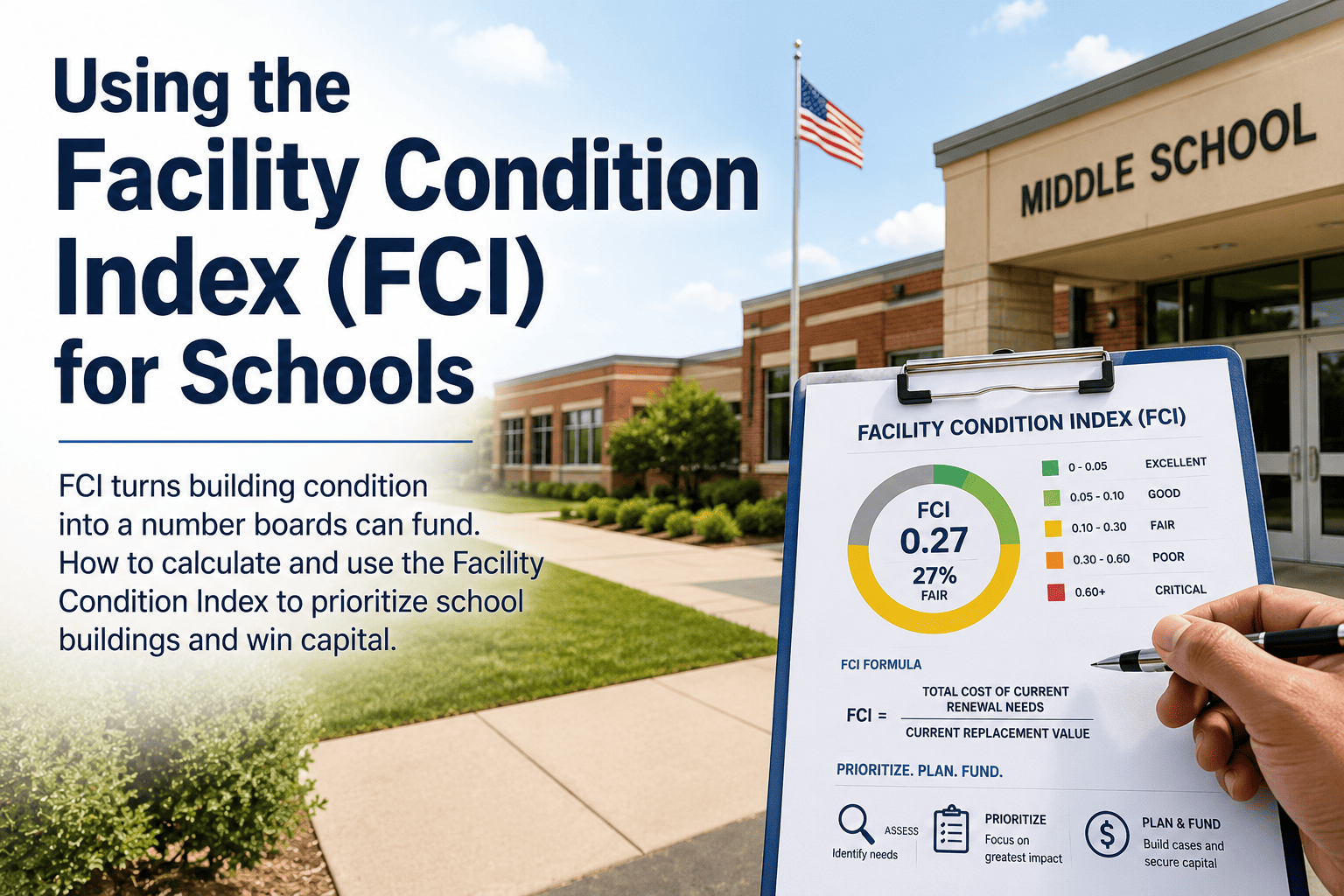
Every asset in every building receives a condition score (1-5) updated with each inspection and PM task. These scores roll up into a Facility Condition Index for each school — giving voters a standardized, objective measure of building health. A school with an FCI of 0.65 needs $0.65 of repair for every $1.00 of replacement value. That number speaks louder than any board presentation.
OxMaint tracks every dollar spent on every asset — labor, parts, contractors, emergency calls. When a 25-year-old boiler has consumed $78,000 in maintenance over 3 years and its replacement cost is $120,000, the business case writes itself. Cost-per-asset trending shows voters exactly where their tax dollars are going and why replacement is cheaper than continued repair.
Condition scores combined with maintenance history and manufacturer lifecycle data produce remaining useful life (RUL) estimates for every major system. OxMaint's rolling 5-10 year CapEx forecast shows which assets will reach end-of-life in each year — converting a vague "our buildings are old" into a precise replacement timeline voters can evaluate.
Every work order that was deferred due to budget constraints is logged in OxMaint with the reason, the associated asset, and the estimated cost. The deferred maintenance backlog report shows voters the cumulative cost of underfunding — and the compounding risk of continuing to defer. This is the most powerful single document in any bond campaign.
Bond Proposal: Traditional Approach vs CMMS-Backed Approach
The difference between a winning and losing bond proposal often comes down to the quality of evidence presented. This comparison shows how each element of the capital planning process changes when CMMS data replaces estimates, assumptions, and anecdotes.
| Proposal Element | Traditional (No CMMS) | CMMS-Backed (OxMaint) |
|---|---|---|
| Building Condition Evidence | Photos from walkthroughs, verbal descriptions | FCI scores per building with inspection history and photos |
| Cost Justification | Contractor estimates, rough projections | 3-5 year documented repair cost per asset with trend lines |
| Project Prioritization | Board member judgment, political negotiation | Condition score + criticality ranking + cost-to-defer analysis |
| Deferred Maintenance Quantification | "We estimate $XX million in deferred needs" | Work-order-level deferred backlog with dates, costs, and reasons |
| Voter-Facing Transparency | PowerPoint slides with high-level numbers | Exportable building-by-building condition and cost reports |
| Post-Bond Accountability | Annual board report with summary spending | Real-time project tracking tied to asset improvements and updated FCI |
How OxMaint Builds Your Capital Planning Engine
OxMaint is not a bond campaign tool — it is a daily maintenance platform that produces bond-ready data as a natural output of normal operations. Every work order completed, every inspection logged, every repair cost tracked contributes to the capital planning evidence base that wins voter approval and satisfies financial oversight. Explore how this works for your district — book a demo or start a free trial to begin building your asset registry.
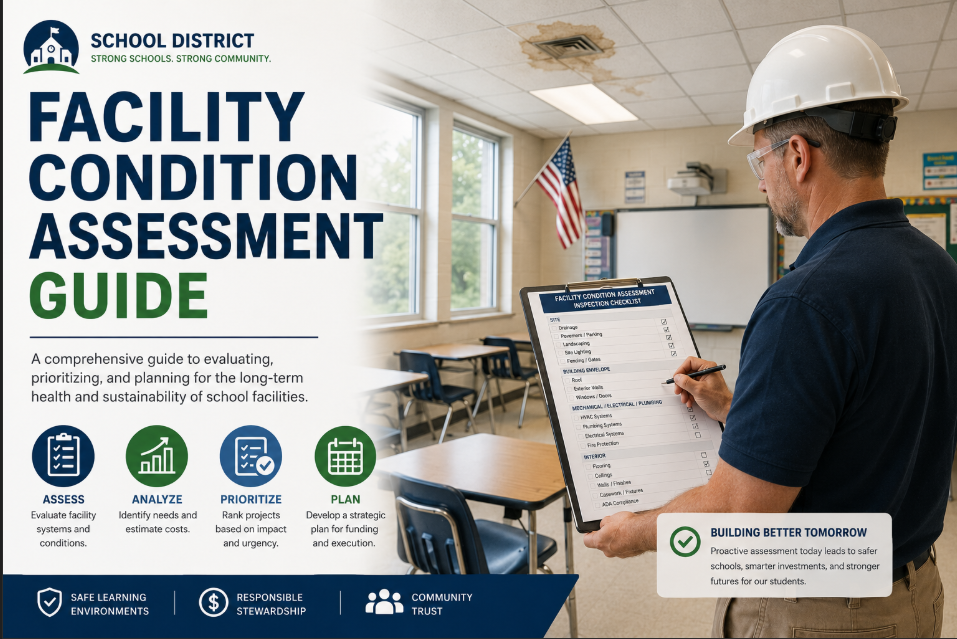
Build a complete digital inventory of every roof, HVAC unit, boiler, electrical panel, plumbing system, and structural component across the district. Each asset records age, manufacturer, installation date, warranty status, and replacement cost — creating the foundation for condition assessment and lifecycle planning.
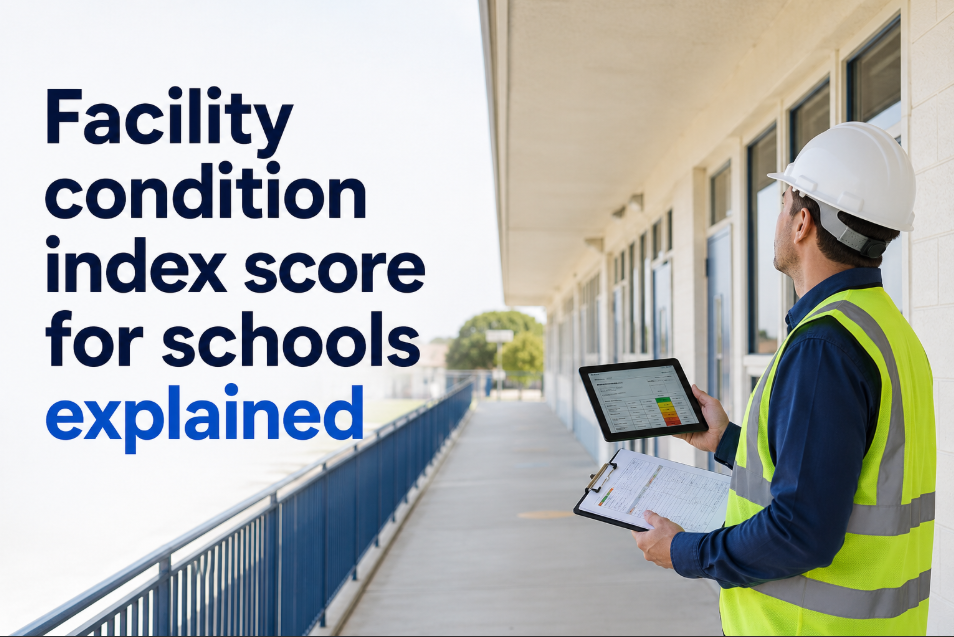
Standardized 1-5 condition scoring applied during every inspection and PM task. Scores aggregate into building-level FCI ratings that are comparable across the district. No more subjective "this building looks bad" — every rating is supported by timestamped inspection data and photos.
Labor hours, parts costs, contractor invoices, and emergency repair charges — all attributed to the specific asset. Generate cost-per-asset reports that show voters which systems are consuming disproportionate maintenance budgets and which have exceeded their economic repair threshold.
OxMaint projects when each major asset will reach end-of-useful-life based on condition trends, age, and maintenance cost trajectory. The CapEx forecast becomes the backbone of your bond amount calculation — telling you exactly how much you need, when you need it, and for which specific systems.
Work orders deferred due to budget constraints are logged with cost estimates, risk assessments, and deferral reasons. The backlog report grows automatically as needs are identified but unfunded — creating a living document that quantifies the cost of continued underfunding with precision.
Generate exportable reports showing condition scores, cost histories, and replacement timelines for every school in the district — from a single dashboard. Present at board meetings, community forums, and voter information sessions with data that is audit-grade and transparent.
Building the Bond Case: A 12-Month Data Readiness Timeline
The strongest bond proposals are built on 12-24 months of documented maintenance data. Districts that start CMMS implementation with a referendum in mind can build a complete, voter-ready evidence base within one year while simultaneously improving their daily maintenance operations.
Import all major building systems into OxMaint. Conduct baseline condition assessments across every school. Assign initial condition scores to roofing, HVAC, electrical, plumbing, and structural assets. Establish the Facility Condition Index for each building.
All maintenance work orders flowing through OxMaint with labor, parts, and contractor costs attributed to specific assets. PM schedules running at 85%+ compliance. Emergency repair costs documented separately from planned work, showing the reactive maintenance premium voters need to see.
6+ months of condition and cost data enables meaningful lifecycle projections. Generate 5-10 year CapEx replacement models. Quantify the total deferred maintenance backlog with work-order-level detail. Identify the top 20 highest-priority capital projects ranked by condition, criticality, and cost.
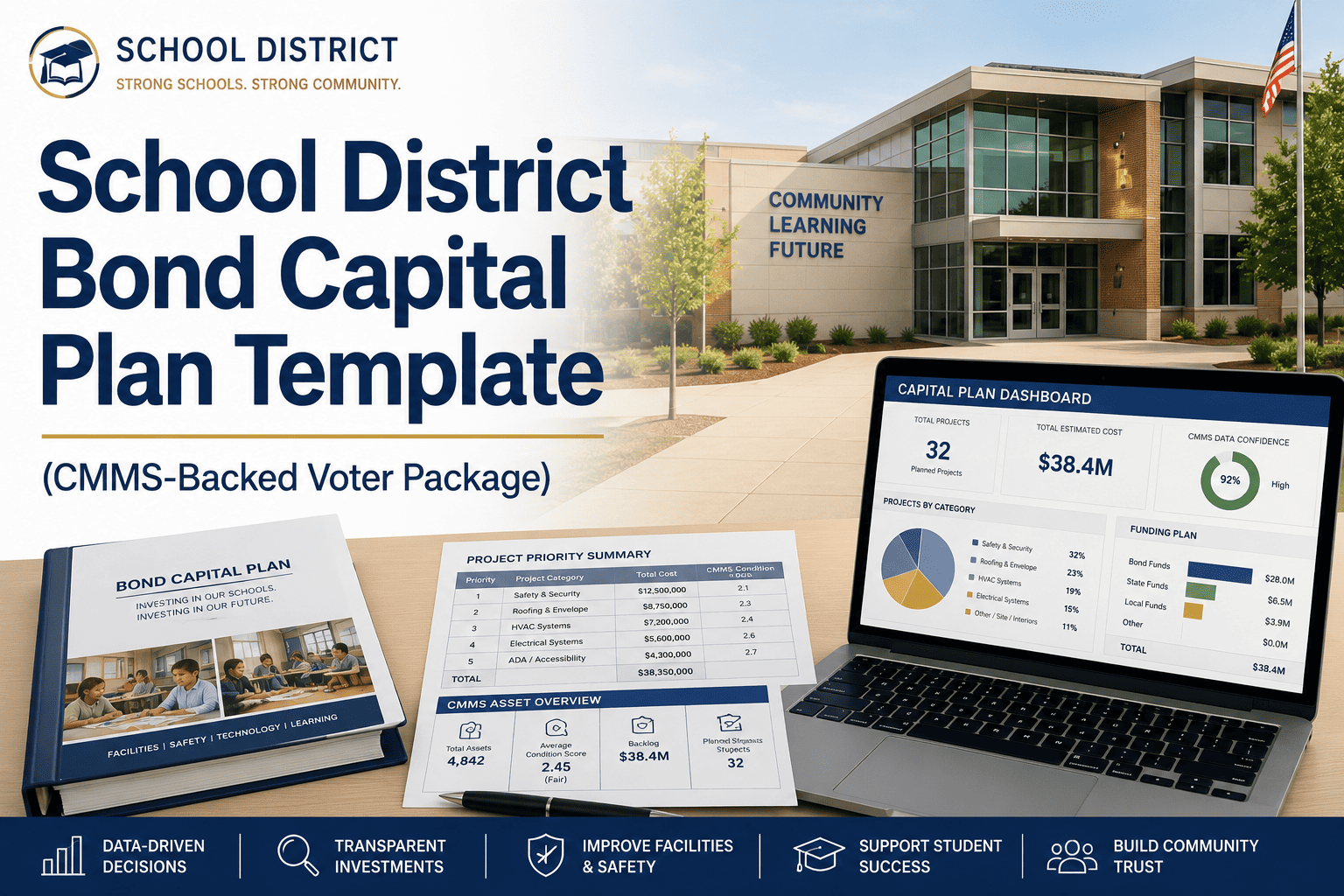
Export building-by-building condition reports, cost histories, and CapEx forecasts. Build the voter-facing bond package with data visualizations showing condition trends and cost escalation. Present to the school board with a complete evidence base that survives scrutiny from taxpayer groups and media.
The Financial Impact of Data-Driven Capital Planning
Beyond winning the referendum, CMMS-driven capital planning delivers measurable financial benefits to the district before, during, and after the bond cycle. These numbers represent documented outcomes from school districts that replaced estimate-based capital planning with CMMS data.
Who Uses This Data — And What They Need From It
CMMS capital planning data serves multiple stakeholders, each with different questions and different presentation needs. OxMaint generates reports tailored to each audience from the same underlying data set — ensuring consistency while adapting the format and depth to the audience.
High-level building condition summaries and total capital need. FCI rankings across all schools. Prioritized project list with cost estimates. Comparison to peer district spending benchmarks. They need to understand the scope quickly and defend the number publicly.
Financial justification at the asset level. 5-10 year CapEx projections mapped to operating budget impact. Cost-of-deferral analysis showing how delayed replacement increases total cost. Debt service modeling against projected maintenance savings.
Detailed asset-level condition data and maintenance histories. Remaining useful life projections by system type. PM compliance rates and emergency repair frequency by building. Technical justification for each capital project that survives engineering review.
Transparent, simple evidence that their money will be spent wisely. Building-by-building condition snapshots. Clear explanation of what happens if the bond fails. Accountability framework showing how spending will be tracked and reported post-approval.
Frequently Asked Questions
How much maintenance history do we need before the data is useful for a bond proposal?
Can OxMaint produce reports formatted for citizen bond oversight committees?
How does Facility Condition Index (FCI) work in OxMaint?
Can we use OxMaint data for state facility funding applications, not just local bond referendums?
The Data That Wins Votes Starts With the Work Orders You Create Today
Every maintenance task your team completes today is either documented evidence for your next capital funding proposal — or it disappears into a filing cabinet. OxMaint turns daily maintenance operations into the credible, auditable, voter-ready data that wins bond referendums, satisfies oversight committees, and secures the capital your buildings actually need. Districts that start today will have 6-12 months of documented evidence ready before their next funding cycle begins.