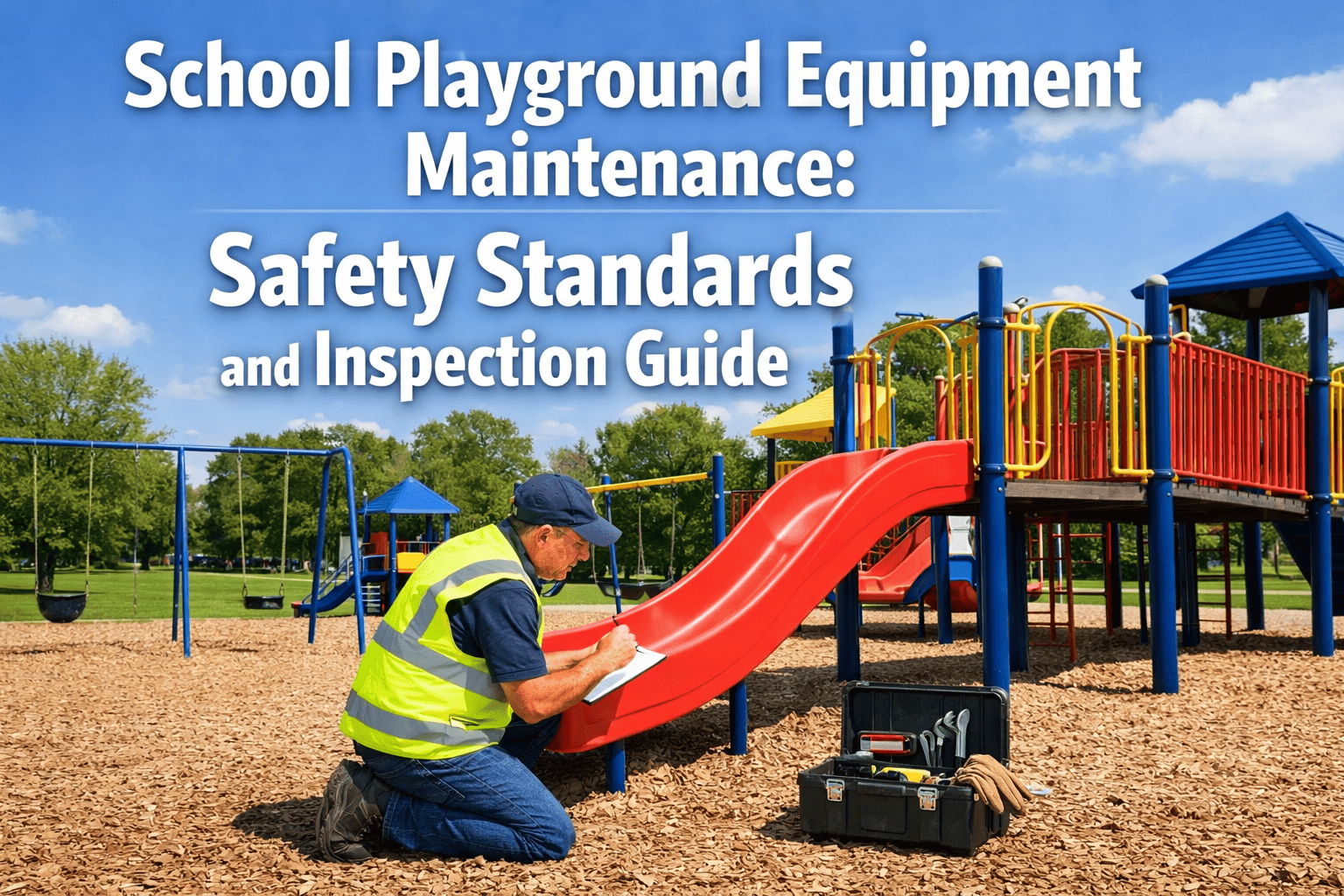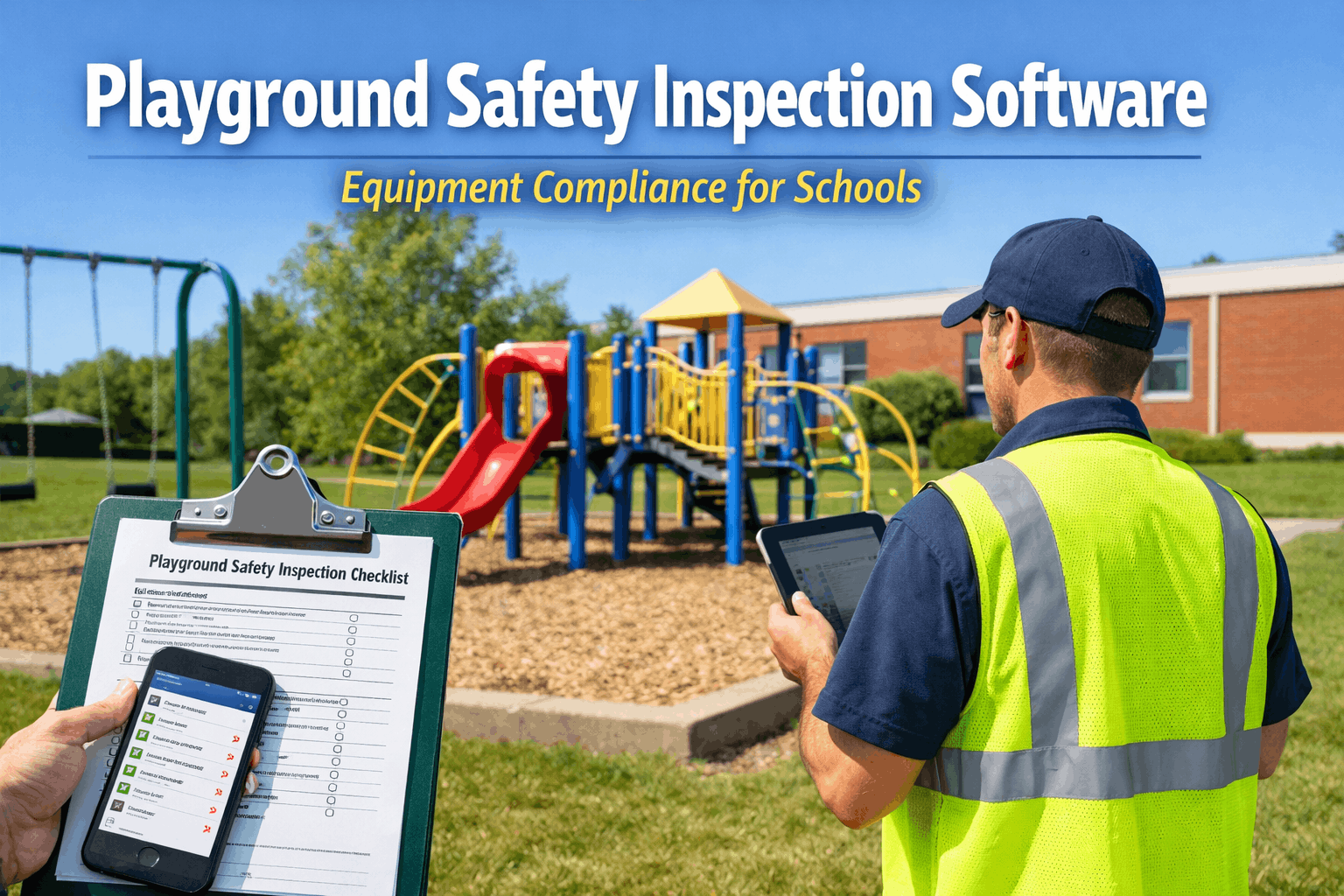
School playgrounds are where childhood memories are made — but they are also where 200,000+ emergency room visits originate every year in the United States alone. For K-12 facility managers, playground safety is not optional. It is a legal mandate, an insurance requirement, and a moral obligation. Yet most school districts still rely on paper clipboards, inconsistent walk-throughs, and reactive fixes after injuries happen. The gap between what playground safety requires and what manual processes deliver is where liability grows unchecked. Districts using automated CMMS inspection systems like OxMaint report 74% fewer inspection gaps, 60% faster deficiency resolution, and documented compliance records that have successfully defended against litigation. When a child is injured on a swing set that should have been flagged three months ago, "we forgot to check" is not a defense any school board wants to hear in court.
Campus Playground Safety Inspection Software
How automated CMMS inspection checklists, photo documentation, and condition scoring protect students from preventable injuries — and shield school districts from costly litigation.
What Is Playground Safety Inspection in a CMMS?
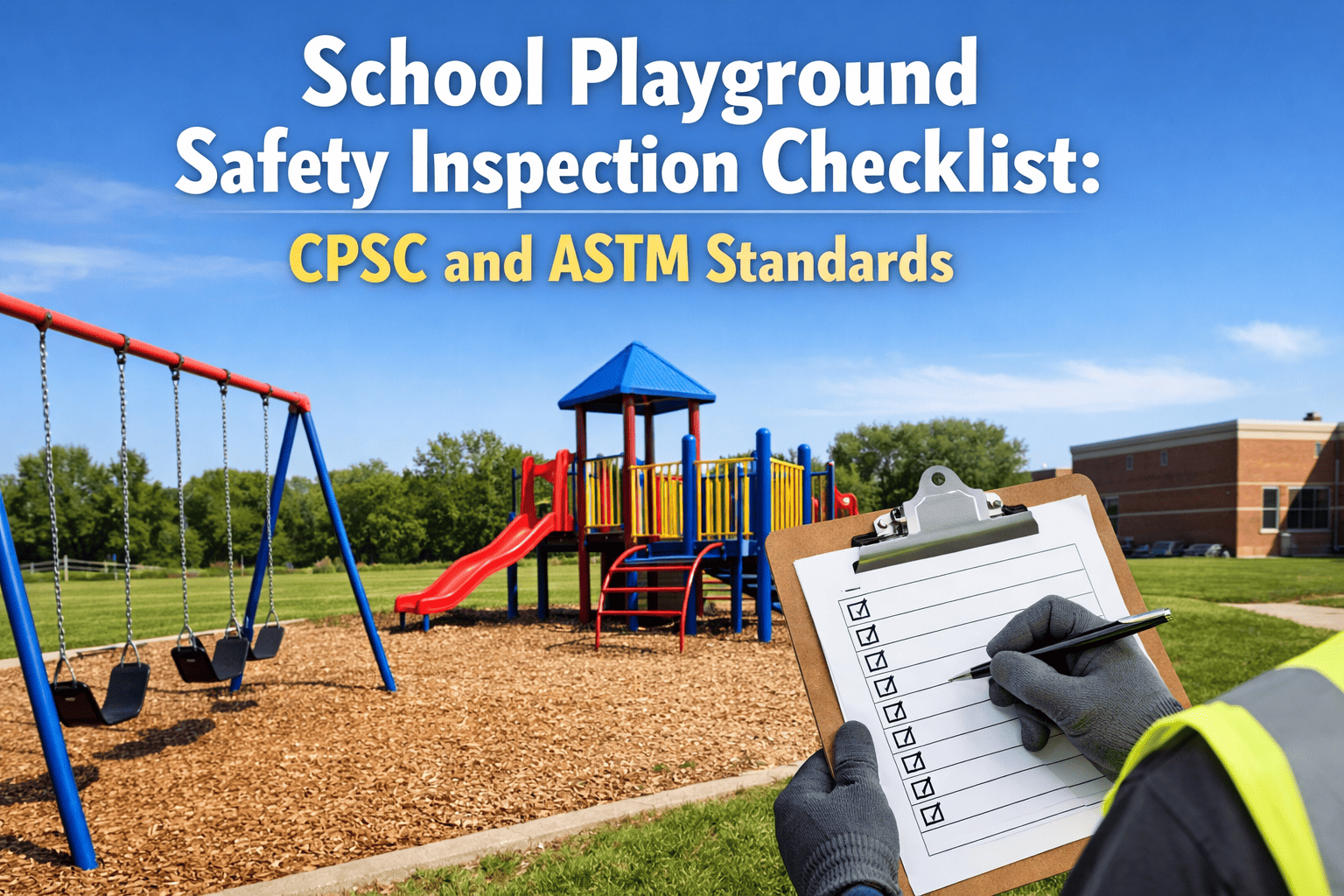
Playground safety inspection through a CMMS means replacing inconsistent paper walk-throughs with structured, recurring digital checklists tied to every piece of playground equipment — swings, slides, climbing structures, surfacing, fencing, and hardware. Each inspection generates a timestamped, photo-documented record linked to the specific asset, creating an unbroken compliance trail that stands up to legal scrutiny, insurance audits, and ASTM F1487 / CPSC guidelines.
Unlike generic inspection forms, a CMMS-driven approach assigns condition scores to each component, auto-triggers work orders when deficiencies are found, and escalates unresolved hazards before they become injuries. The result is a system where nothing falls through the cracks — not because someone remembered, but because the platform enforces it. Districts across the US, Canada, and Australia are moving to this model to reduce both risk and the 4.8x cost premium of emergency repairs versus planned fixes. Want to see how this works for your district? Start a free trial or book a demo to see the inspection workflow in action.
The 3-Tier Playground Inspection Framework
CPSC and ASTM standards define three levels of playground inspection. Most school districts only do the first one inconsistently. A CMMS automates all three and ensures nothing is missed at any tier — covering 100% of required inspection types without adding staff workload.
Quick visual scan for obvious hazards — broken chains, exposed bolts, foreign objects, vandalism, standing water. Takes 5-10 minutes per playground. In OxMaint, this is a mobile checklist completed by custodial staff during morning rounds.
Hands-on assessment of structural integrity, hardware tightness, surfacing depth, entrapment gaps, and wear patterns. Requires measuring tools and 30-45 minutes per site. OxMaint schedules these as preventive maintenance tasks with photo-upload requirements.
Full CPSC/ASTM compliance audit covering all 12 safety categories — fall zones, head entrapment, protrusion hazards, age-appropriateness, ADA accessibility, and surfacing impact attenuation. OxMaint generates the complete audit package with historical data attached.
Why Paper Inspections Fail Schools
Paper-based playground inspections are not just inefficient — they create the exact liability gaps that plaintiff attorneys exploit. Each failure mode below represents a real legal exposure that digital CMMS eliminates entirely.
Paper checklists get lost, misfiled, or lack timestamps. In litigation, undocumented inspections are treated as inspections that never occurred. 62% of school injury lawsuits cite missing or incomplete inspection records as evidence of negligence.
A custodian notes a cracked swing seat on a paper form. The form sits in an office tray. No work order is created. The swing breaks 6 weeks later. This disconnect between finding and fixing is the single most common failure mode — and the most legally damaging.
Each school interprets "safe" differently. One custodian checks 8 items, another checks 3. Surfacing depth that fails ASTM standards at one school passes at another because nobody is measuring consistently. 45% of multi-site districts have no standardized inspection protocol.
UV degradation, frost heaving, and moisture damage accumulate slowly. Without condition-scored inspections that track deterioration trends over time, gradual failures are invisible until a component breaks under a child. Paper cannot trend — CMMS can.
How OxMaint Solves Playground Safety Compliance
OxMaint transforms playground safety from a hope-based system into an enforcement-based system. Every inspection is structured, every deficiency triggers action, and every record is litigation-ready — automatically. Here is how each capability maps to the real problems facility managers face daily. See the full platform in a live demo walkthrough or start a free trial to build your first playground checklist today.
Pre-built inspection templates covering all 12 CPSC safety categories. Custodial staff complete inspections on their phone in under 10 minutes. Every item is scored, timestamped, and GPS-tagged.
Inspectors snap photos of deficiencies directly within the checklist. Images are permanently linked to the asset record — creating visual proof that holds up in court and insurance claims.
When an inspection item fails, OxMaint automatically generates a prioritized work order assigned to the correct maintenance team. No paper trails to lose. No verbal requests to forget. The gap between finding and fixing closes to zero.
Each playground asset receives a condition score updated with every inspection. Scores trending downward trigger replacement planning before catastrophic failure — supporting CapEx budget requests with data, not guesswork.
Generate complete inspection histories by site, equipment type, date range, or inspector. Export in PDF or spreadsheet format for insurance renewals, board presentations, or legal defense — in minutes, not weeks.
Portfolio-level view shows which schools are current on inspections and which are overdue. District facility directors see compliance status across 5 schools or 500 from a single dashboard — with drill-down to individual swing sets.
Before vs After: Playground Safety Operations
The contrast between paper-based and CMMS-driven playground safety is not incremental — it is transformational. Every row below represents a real operational scenario that changes fundamentally when OxMaint is deployed.
| Operational Area | Paper-Based Process | With OxMaint CMMS |
|---|---|---|
| Inspection Consistency | Varies by person and day — 40-60% completion rate | Enforced schedules with overdue alerts — 95%+ completion |
| Deficiency Response Time | Days to weeks (if the form is found) | Auto work order within seconds of finding |
| Legal Documentation | Missing, incomplete, or illegible records | Timestamped, photo-attached, digitally signed |
| Multi-Site Oversight | Requires phone calls and site visits | Real-time dashboard across all campuses |
| CapEx Planning for Replacements | Based on age estimates and complaints | Data-driven from condition score trends |
| Insurance Audit Preparation | 2-3 weeks of manual record compilation | One-click export in under 5 minutes |
ROI of Automated Playground Inspections
The financial case for CMMS-driven playground safety goes far beyond avoiding lawsuits. Districts that implement structured inspection programs see measurable returns across insurance costs, maintenance efficiency, equipment lifespan, and staff productivity within the first year.
Frequently Asked Questions
Can custodial staff really complete playground inspections on a mobile app?
How does OxMaint help with CPSC and ASTM F1487 compliance specifically?
What happens when an inspection finds a serious safety hazard?
Can we use OxMaint across all schools in our district from one dashboard?
Every Day Without Documented Inspections Is a Day of Unmanaged Risk
Playground injuries are preventable. Lawsuits from undocumented safety gaps are preventable. Insurance premium spikes from missing compliance records are preventable. OxMaint gives your district the structured inspection system, photo documentation, and automated work order workflow that turns playground safety from a liability into a documented strength. Most districts are running their first digital inspections within one week of signing up.