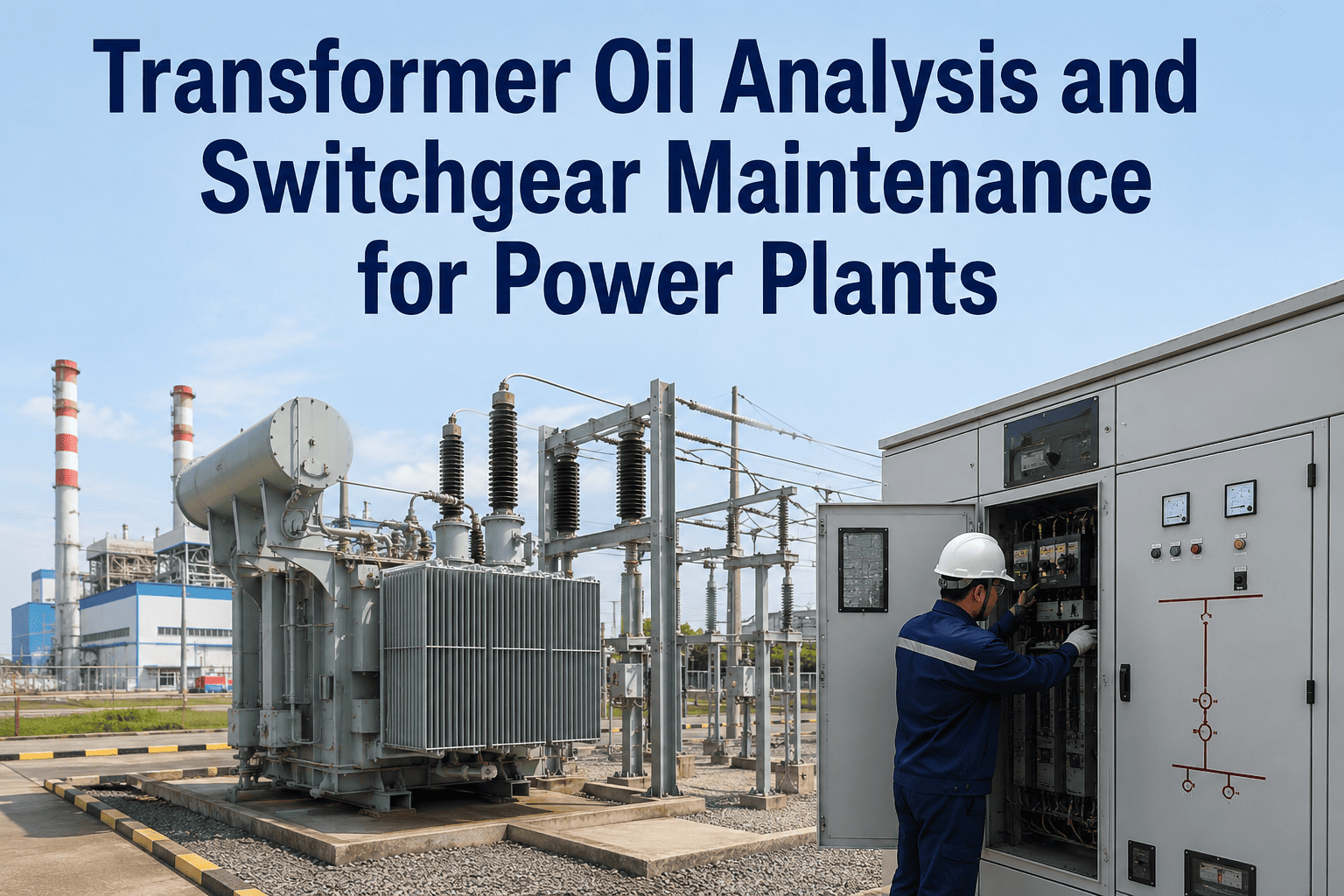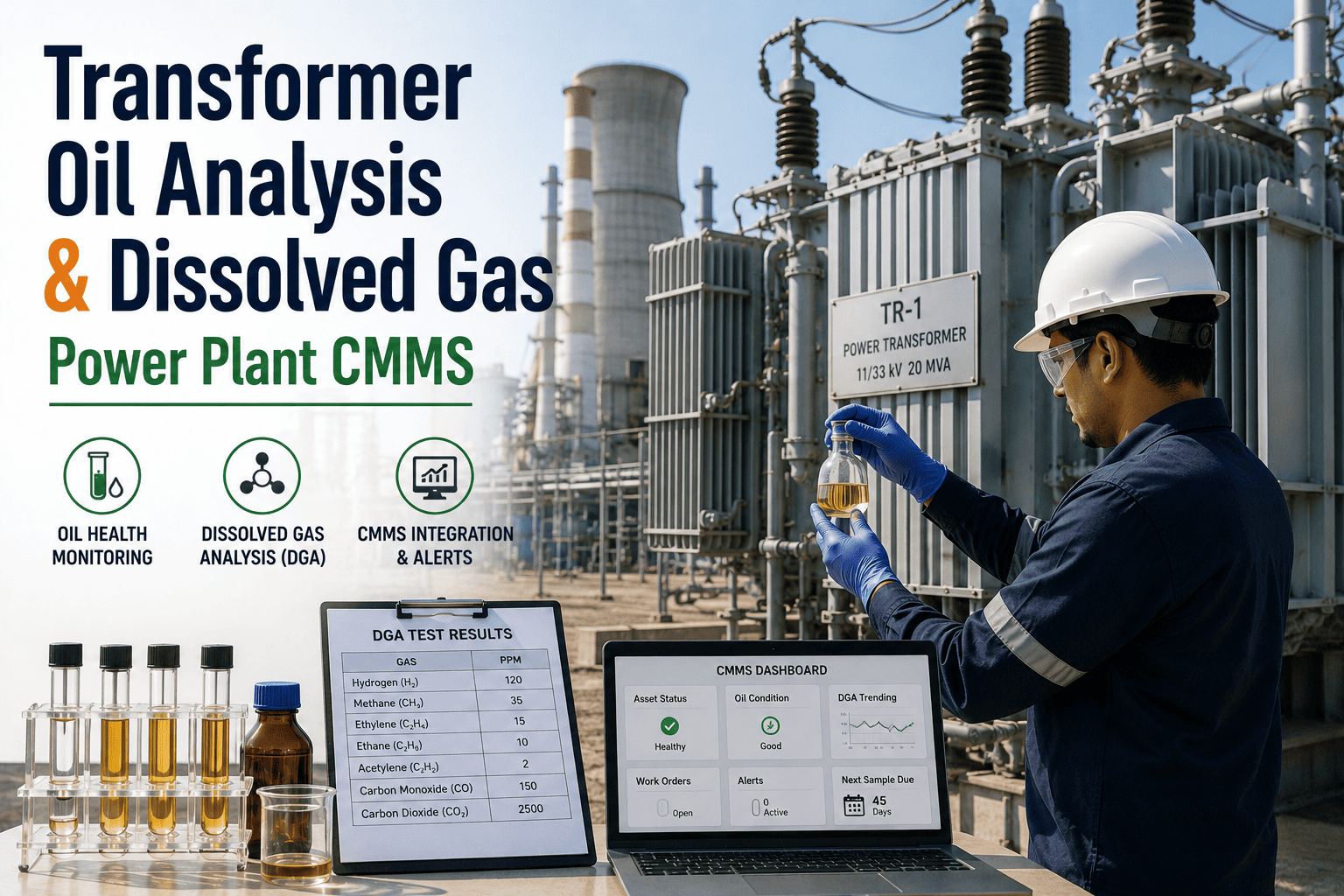
Transformer oil analysis is the single most cost-effective diagnostic a power plant can run on a large oil-filled unit — a $300 dissolved gas analysis (DGA) test can flag an incipient fault weeks before a $2M forced outage. Whether you manage a fleet of 20 step-up transformers or a single 500 MVA generator transformer, tracking key gases like acetylene, ethylene and hydrogen against IEEE C57.104 limits is what separates a predictable maintenance program from a reactive one. This guide breaks down DGA intervals, fault-gas interpretation, oil dielectric strength testing and how a transformer oil CMMS like OxMaint turns lab results into automatic work orders — so nothing falls through the cracks. Ready to modernize your oil analysis workflow? Start Free Trial or keep reading to build your 2026 strategy.
Catch Transformer Faults Weeks Before They Become Forced Outages
75% of transformer failures show dissolved gas warning signs 30–90 days in advance. OxMaint converts DGA lab reports into prioritized work orders automatically — no spreadsheets, no missed intervals.
Transformer DGA Guide: Key Gases and What They Tell You
Dissolved gas analysis detects thermal and electrical faults inside a transformer by measuring the concentration of fault gases dissolved in the insulating oil. Each gas points to a specific temperature range and fault type — here is the reference used by IEEE C57.104 and IEC 60599.
| Key Gas | Fault Temperature | Typical Fault Type | Action Threshold (ppm) |
|---|---|---|---|
| Hydrogen (H₂) | < 150°C – partial discharge | Corona, partial discharge, arcing | > 100 ppm — investigate |
| Methane (CH₄) | 150°C – 300°C | Low-temperature thermal | > 120 ppm — trend rising |
| Ethylene (C₂H₄) | 300°C – 700°C | Hot spot in winding or core | > 50 ppm — urgent review |
| Ethane (C₂H₆) | 250°C – 450°C | Moderate thermal degradation | > 65 ppm — monitor |
| Acetylene (C₂H₂) | > 700°C | High-energy arcing — critical | > 5 ppm — immediate action |
| Carbon Monoxide (CO) | 300°C – 800°C | Cellulose / paper insulation aging | > 500 ppm — assess solid insulation |
Source: IEEE C57.104-2019 Condition 2/3 thresholds (simplified). A rising rate of gas generation is more diagnostic than a single absolute value — always trend the data.
How Often Should a Power Plant Test Transformer Oil?
DGA frequency depends on transformer size, age, criticality and prior condition rating. Most power plants follow a risk-based interval — below is the schedule recommended for generating-station transformers in 2026.
Generator & Step-Up Transformers
Every 6 months
≥ 100 MVA or black-start critical. Online DGA monitors recommended for units feeding the grid directly. Increase to quarterly if Condition 2+.
Station Service & Aux Transformers
Every 12 months
10–100 MVA auxiliary units powering plant loads. Annual DGA plus dielectric breakdown and moisture (Karl Fischer) at every sample.
Aged or Flagged Units
Every 3 months
Any unit in IEEE Condition 3, over 25 years old, or with a rising gas trend. Pair with furan analysis and degree of polymerization testing.
Worked example: A 5-unit peaker plant running 320 MW GE 7FA turbines tested generator transformers annually. After trending a 15 ppm/month acetylene rise flagged by OxMaint, the team shortened intervals to quarterly, caught a tap-changer arcing fault at week 6, and re-routed load during a planned 8-hour offline repair — avoiding an estimated $1.4M in forced-outage penalties and scrap core damage.
Beyond DGA: Full Transformer Oil Testing Checklist
DGA tells you what is happening inside the tank; oil quality tests tell you whether the insulating fluid itself can still do its job. A complete transformer oil maintenance program pairs both — here is what every sample should cover.
Dielectric Breakdown Strength
ASTM D1816 — must exceed 30 kV/min for in-service mineral oil. Below 25 kV indicates moisture or particulate contamination; schedule reclamation or hot oil flush.
Moisture Content (Karl Fischer)
ASTM D1533 — target < 20 ppm for < 69 kV, < 10 ppm for ≥ 230 kV. High moisture halves dielectric strength and accelerates cellulose aging.
Acid Number (Neutralization)
ASTM D974 — keep below 0.10 mg KOH/g. Above 0.20, sludge formation begins coating windings and blocking cooling ducts; oil reclamation needed.
Interfacial Tension
ASTM D971 — fresh oil reads 40–50 mN/m. Below 25 mN/m signals polar oxidation byproducts; pair with acid number to confirm oil degradation.
Color & Visual Examination
ASTM D1500 — darkening from 1.0 to 3.0+ indicates oxidation or contamination. Free water, sediment or cloudiness require immediate investigation.
Furan Analysis (2-FAL)
ASTM D5837 — measures cellulose paper degradation. Above 100 ppb 2-FAL signals significant solid insulation aging; estimate remaining life via degree of polymerization.
The Cost of Skipping Transformer Oil Analysis
A single unplanned transformer failure at a mid-size power plant averages $2–4M in repair, replacement power and lost revenue. Against an annual oil testing budget of $8K–15K for a 20-unit fleet, the risk-to-reward ratio is enormous.
How OxMaint Turns Oil Analysis Into Action
Most power plants collect DGA results in spreadsheets and act on them weeks late — or not at all. OxMaint's AI-powered CMMS closes the loop: lab results flow in, thresholds trigger work orders, and reliability teams see fleet-wide risk on one dashboard.
Automatic DGA Work Order Triggers
Upload a lab report or connect your online DGA monitor — OxMaint auto-checks every gas against IEEE C57.104 limits and generates a prioritized work order the moment a threshold is crossed. No manual review, no missed alerts.
Outcome: Cut response time from days to hours; eliminate 100% of missed review cycles.
Gas Trend Dashboards & Predictive AI
Every DGA result since day one is trended on an interactive chart per asset. OxMaint's AI detects accelerating gas generation rates — the true precursor to failure — and flags at-risk transformers before absolute limits are breached.
Outcome: Predict failures 30–60 days earlier; reduce unplanned downtime 30–50%.
Risk-Based Sampling Schedules
OxMaint auto-adjusts DGA intervals based on IEEE condition rating, age and trend velocity. A Condition 1 transformer stays on annual testing; a unit trending toward Condition 3 automatically shifts to quarterly — no manual calendar edits.
Outcome: Right-size testing spend; never over-test healthy units or under-test risky ones.
Audit-Ready Compliance Records
Every DGA result, work order, oil sample and repair is time-stamped and linked to the asset record. NERC PRC-104 and IEEE C57.104 audits become a one-click export — no more scrambling through email threads and binders.
Outcome: Zero prep time for audits; full traceability from sample to resolution.
Transformer Oil Management: Spreadsheet vs. OxMaint CMMS
| Capability | Spreadsheet / Manual | OxMaint CMMS |
|---|---|---|
| DGA threshold alerts | Manual formula review — days late | Instant auto-trigger on lab upload |
| Gas trending & prediction | Static charts, no rate-of-change | AI-driven trend velocity & forecast |
| Sampling interval management | Fixed calendar, manual updates | Dynamic risk-based auto-adjustment |
| Work order creation | Email + paper, 40% follow-up gap | Auto-generated, prioritized, tracked |
| Audit trail | Email threads & shared drives | One-click NERC-ready export |
| Fleet-wide risk view | Not feasible at scale | Live dashboard across all assets |
See OxMaint Manage Your Transformer DGA Program — Live
Book a 30-minute demo and we will show you exactly how your fleet's oil analysis data looks inside OxMaint — from auto-triggered work orders to AI-predicted fault trends.
Transformer Oil Analysis & DGA — Frequently Asked Questions
What is dissolved gas analysis (DGA) and why is it important for power plant transformers?
DGA is a laboratory test that measures the concentration of fault gases — hydrogen, methane, ethane, ethylene, acetylene and carbon oxides — dissolved in a transformer's insulating oil. It is important because these gases are generated by specific thermal and electrical faults inside the tank, and detecting them early lets you plan repairs before a catastrophic failure. IEEE C57.104 estimates that 70–80% of incipient transformer faults are detectable by DGA weeks to months before failure. Managing this data in a transformer oil CMMS like OxMaint ensures no result goes unreviewed — you can Start Free Trial to see how automatic threshold alerts work.
How often should DGA testing be performed on power plant transformers?
Critical generator and step-up transformers (≥ 100 MVA) should be tested every 6 months at minimum; station service and auxiliary units (10–100 MVA) annually. Any transformer flagged as IEEE Condition 2 or higher, over 25 years old, or showing a rising gas trend should move to quarterly testing. Online DGA monitors provide continuous data for the most critical units, reducing the need for manual sampling.
What do high acetylene levels in transformer oil mean?
Acetylene (C₂H₂) is produced by high-energy electrical arcing at temperatures above 700°C. Any detectable acetylene — even 5 ppm — is a serious warning sign that requires immediate investigation, as arcing inside an oil-filled transformer can lead to explosive failure. IEEE C57.104 places any unit with rising acetylene in Condition 3 or 4, which mandates load reduction, internal inspection or removal from service.
What is the difference between DGA and oil quality testing?
DGA detects fault gases generated by internal transformer problems (arcing, overheating, partial discharge), while oil quality testing assesses the physical and chemical condition of the insulating fluid itself — dielectric strength, moisture, acid number, interfacial tension and color. Both are needed: DGA tells you what is wrong inside the transformer; oil quality tests tell you whether the oil can still insulate and cool. A complete program runs both on every sample.
Can a CMMS automate transformer oil analysis scheduling and alerts?
Yes — an AI-powered CMMS like OxMaint automates the entire DGA workflow: it schedules sampling based on transformer criticality and condition, auto-checks lab results against IEEE C57.104 thresholds, generates prioritized work orders when limits are exceeded, and trends gas data to predict failures before absolute thresholds are reached. To see it configured for your fleet, Book a Demo with our reliability team.
Stop Reacting to Transformer Failures. Start Predicting Them.
Join the power plants using OxMaint to turn DGA data into automatic work orders, AI-predicted fault trends and zero-miss compliance audits. Your first transformer is live in under 10 minutes.
Free 14-day trial · No credit card