At a utility-scale PV plant, every inverter fault that gets acknowledged in SCADA and then lost — no work order, no assigned technician, no tracked resolution — is a revenue event, not just a notification. A 500 kW inverter offline for 48 hours at $0.05/kWh loses $1,200 in generation. Multiply that across a 100 MW portfolio with a dozen faults per month left unresolved past 24 hours, and unstructured fault triage is costing your plant more than any component failure. The problem is rarely the fault — it's the gap between SCADA alert and field action. OxMaint's solar work order management platform closes that gap with automatic fault-to-work-order routing, priority-based technician dispatch, and closed-loop resolution tracking — from SCADA alert to signed work order closure in a single workflow.
The Fault Triage Problem at Utility PV Scale
A 100 MW solar plant running without a structured fault triage workflow generates 40–80 SCADA alerts per week across inverters, string combiner boxes, and tracker systems. Operations teams acknowledge most of them. A fraction get dispatched. Fewer still get documented with root cause, parts used, and repair time. The result: repeated faults on the same inverter that nobody tracks, warranty claims that fail because repair records don't exist, and a performance ratio that declines silently while the SCADA dashboard shows only active alarms.
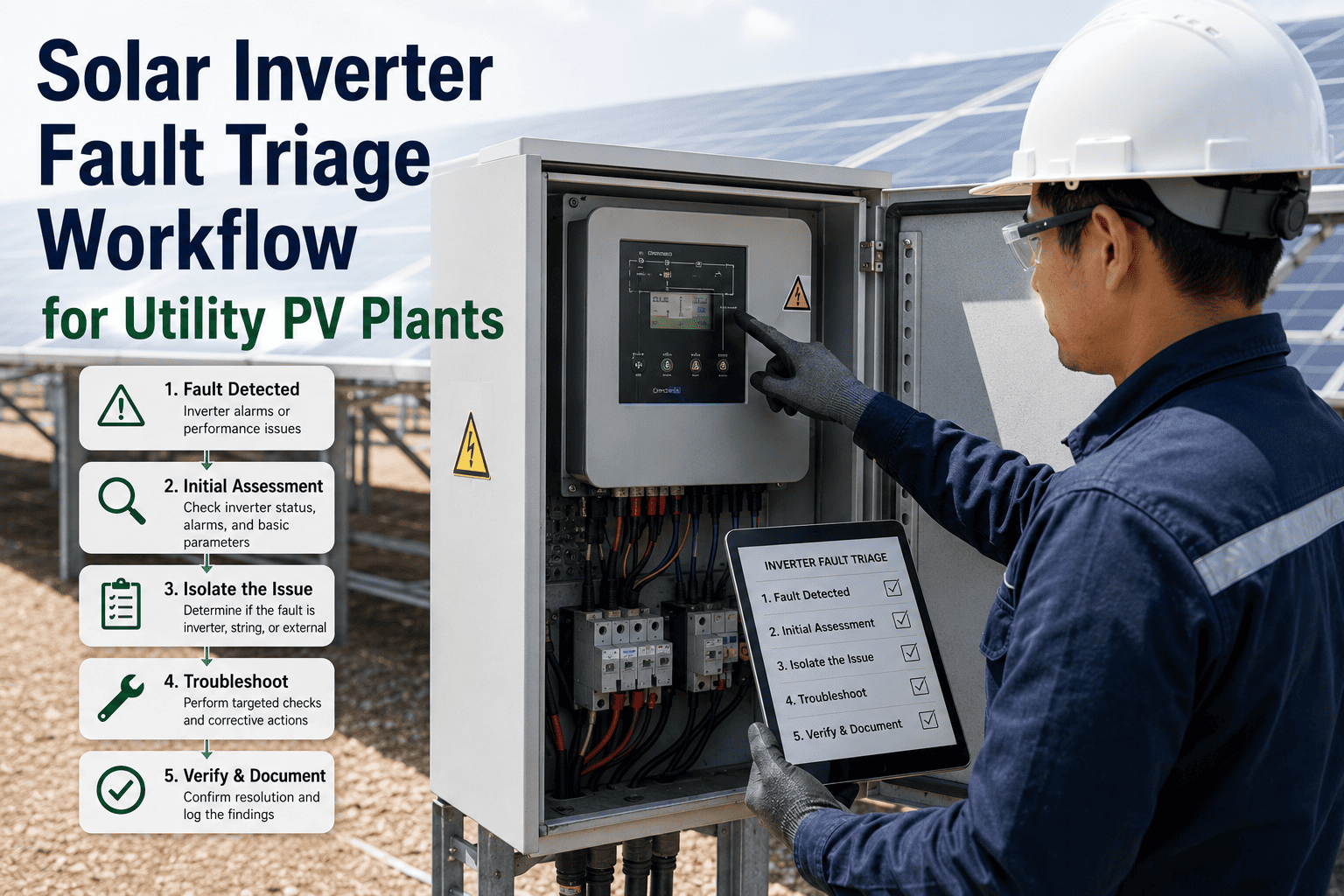
The OxMaint Inverter Fault Triage Workflow: Step by Step
Close the Gap Between SCADA Alert and Field Resolution
OxMaint routes every inverter fault from detection to work order to closure — automatically, with full documentation captured at the point of work. No alerts lost. No repairs undocumented.
Common Inverter Fault Codes: Triage Priority and Field Response
| Fault Category | Common Fault Codes | Triage Priority | First Field Check | Production Impact |
|---|---|---|---|---|
| DC Arc Fault | AFCI Trip, Arc Detect | Critical — Immediate | DC wiring isolation, connector inspection, thermal scan | Full inverter output lost + fire risk if unresolved |
| Ground Fault | GFDI, Insulation Low | Critical — Same Day | String isolation, megger test per string, connector torque check | Inverter trips to protect personnel and equipment |
| MPPT Efficiency Deviation | Low MPP, Tracking Fault | High — 24–48 hrs | DC input voltage check, soiling assessment, shade analysis | 5–15% output reduction per MPPT channel |
| Over Temperature | OT Shutdown, Fan Fault | High — 24 hrs | Vent filter cleaning, fan operation test, ambient temp check | Inverter derates or trips in high-irradiance periods |
| Grid Fault / Disconnect | VAC Out of Range, Grid Lost | Medium — Coordinate with utility | AC voltage and frequency verification, relay check | Full output lost — may be utility-side event |
| Communication Loss | Comms Fault, No Data | Low — Monitor 24 hrs | Network connectivity, modem reset, firmware version check | Inverter may still produce — blind monitoring risk |
Frequently Asked Questions
How does OxMaint automatically create work orders from SCADA inverter faults?
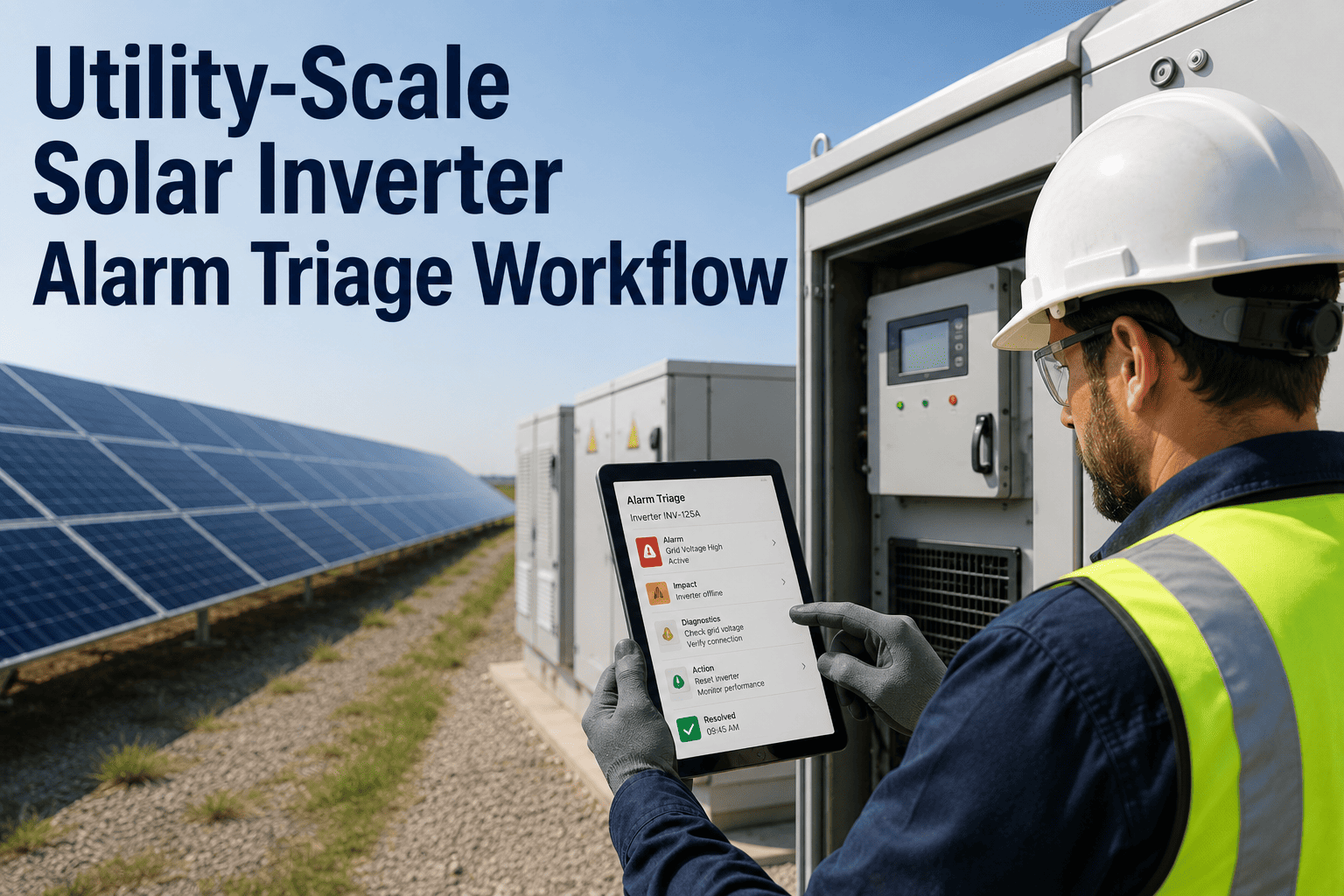
OxMaint connects to plant SCADA and monitoring platforms via Modbus, SunSpec, or REST API. When an inverter fault event is received, OxMaint's classification engine evaluates the fault code against the asset's prior history and current plant status, then creates a prioritized work order with the inverter ID, fault description, affected strings, and recommended first-check steps pre-populated. The work order reaches the assigned technician's mobile device within minutes of the fault event. Start a free trial to connect your SCADA system and see automatic work order creation live.
Can OxMaint track inverter fault history to identify repeat failure patterns?
Yes. Every closed work order is permanently linked to the inverter asset record — building a complete repair history per unit. OxMaint's analytics module identifies inverters with repeated fault codes across a rolling period, surfacing repeat failure patterns that indicate a developing hardware issue, wiring defect, or component end-of-life condition. Repeat fault analytics trigger preventive maintenance work orders before the next failure, not after. Book a demo to see repeat fault tracking applied to a utility-scale PV portfolio.
How does OxMaint support warranty claim documentation for failed inverter components?
OxMaint maintains a complete work order history per inverter — including fault onset timestamps, technician dispatch records, root cause documentation, parts replaced, and resolution photos — linked to the inverter's warranty record. When a component failure occurs within the warranty period, the full repair history is exportable in a structured format that meets manufacturer warranty claim requirements. Many warranty claim rejections result from missing maintenance records; OxMaint eliminates that gap from day one.
Does OxMaint work for multi-site solar portfolios with inverters from different manufacturers?
Yes. OxMaint supports all major inverter manufacturers — SMA, Huawei, Sungrow, ABB, Fronius, and others — through manufacturer-specific fault code libraries and SCADA integration templates. A portfolio dashboard aggregates active fault count, open work orders, and performance status across all sites and all inverter brands on a single screen, with drill-through to individual inverter work order history from the portfolio view.
How long does OxMaint take to integrate with an existing solar SCADA or monitoring platform?
Most SCADA integrations are live within 1–2 weeks of deployment, using standard Modbus, SunSpec, or REST API connections to the plant monitoring system. For sites with proprietary SCADA configurations, OxMaint's technical team works directly with the plant's SCADA vendor to establish the data feed. Automatic work order creation begins the day the integration goes live — no manual configuration of fault codes or asset mapping required after initial setup.
Connect Your Plant's Inverter Faults to Automatic Work Orders Today
OxMaint integrates with your SCADA system and routes every fault to a structured work order — with field resolution tracked and documented automatically. Most plants are live within 2 weeks.