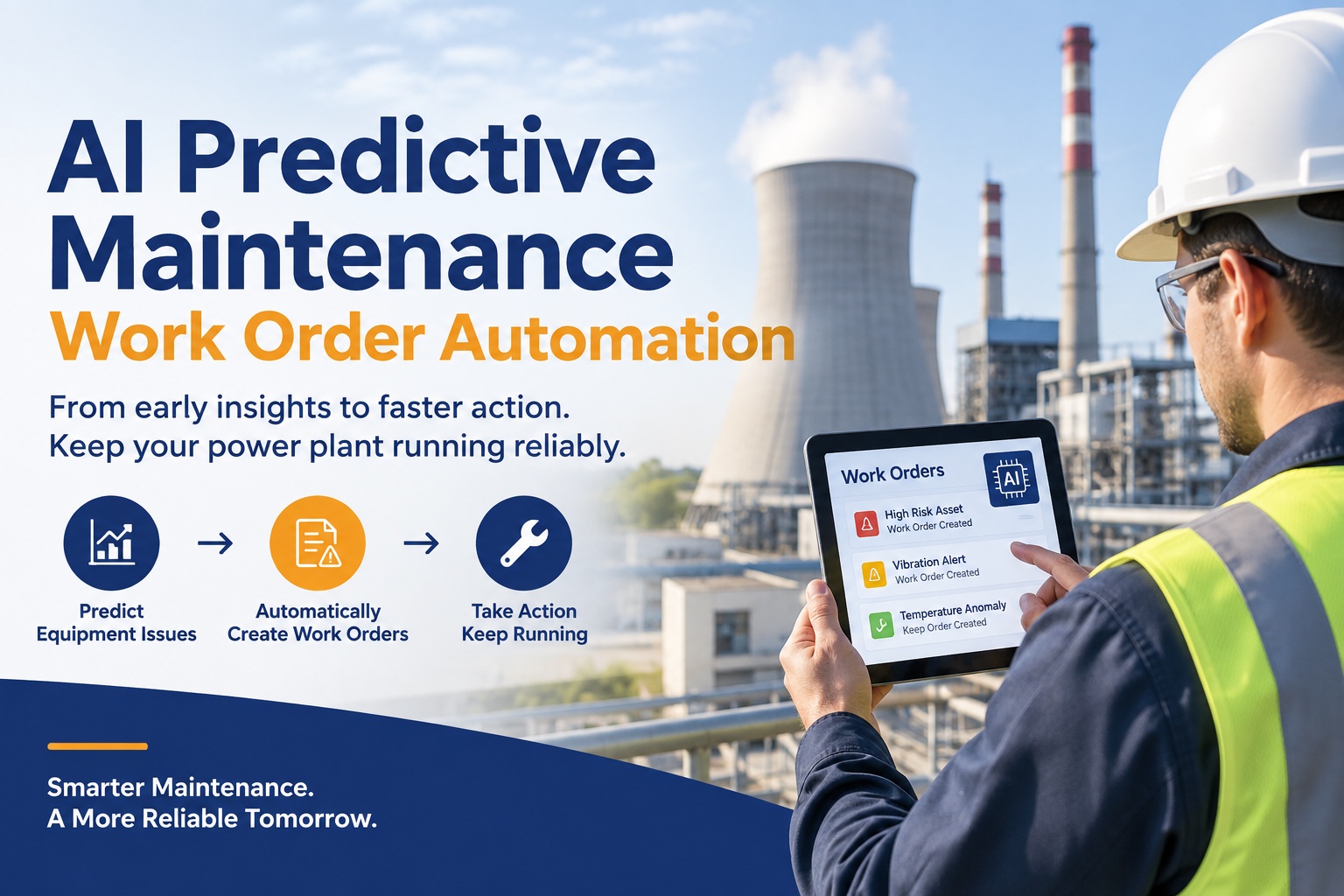
Power plant control rooms generate hundreds of DCS fault codes every shift — but fewer than 15% of those codes require immediate corrective action, while the rest are transient alerts, nuisance alarms, or cascading secondary faults from a single upstream failure. The cost of treating every fault code as equal is well documented: alarm fatigue dulls operator response, genuine priority faults get buried under noise, and work orders are either duplicated or never created at all. Oxmaint's AI Work Order Automation routes each DCS fault code through a triage logic engine that classifies severity, matches the fault to the correct maintenance discipline, and generates a structured work order — all before a technician is dispatched.
AI Work Order Automation
Power Plant CMMS
Operations Maintenance
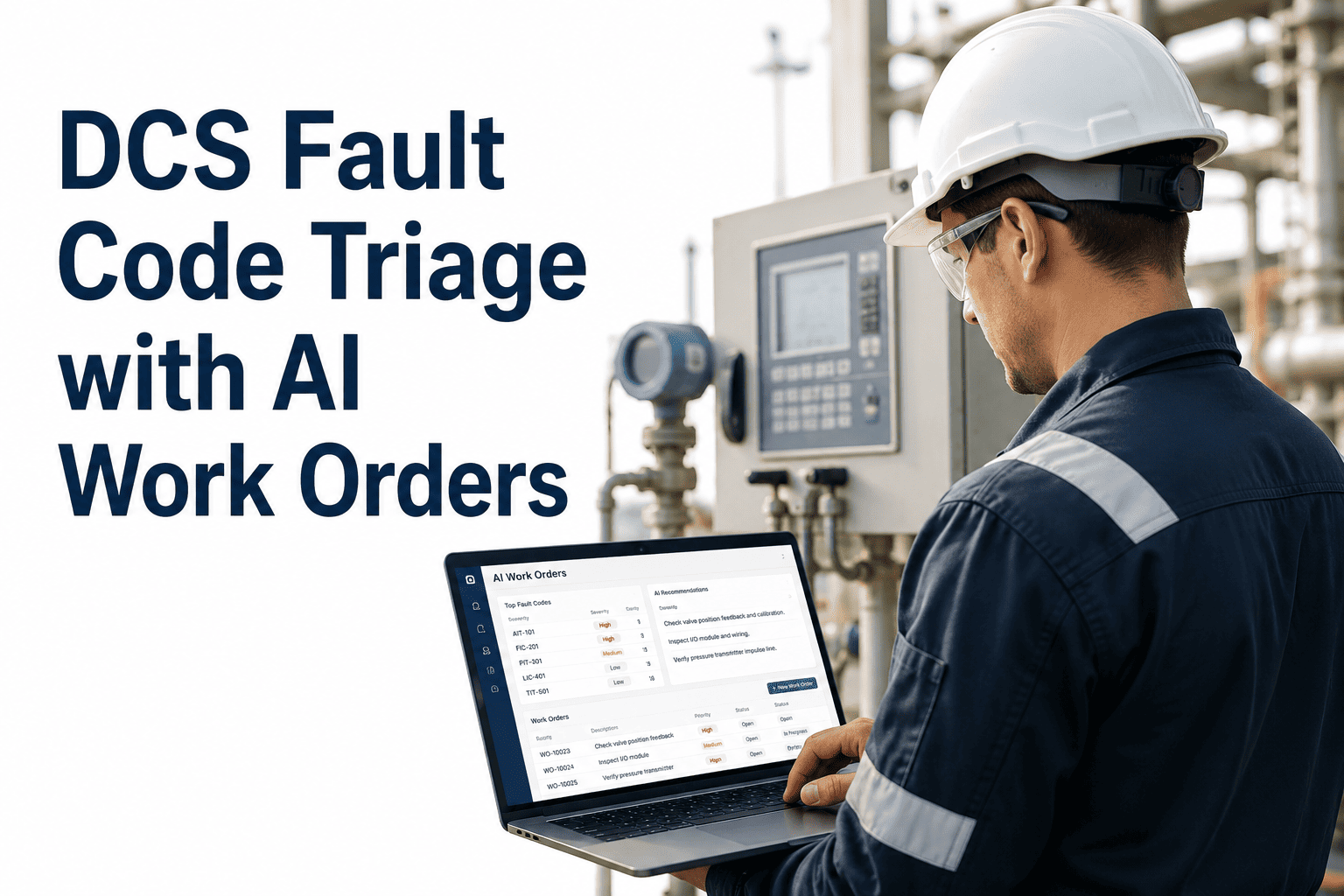
DCS Fault Code Triage with AI Work Orders
Stop treating every alarm as equal. AI-driven triage classifies, routes, and converts DCS fault codes into prioritized work orders — in seconds, not hours.
85%
of DCS alarms require no immediate corrective work order
12 min
Average delay from fault code to dispatched technician without AI triage
3x
Faster mean time to resolve priority faults with structured AI routing
40%
Reduction in duplicate work orders from cascading alarm storms
The Problem
Why Manual DCS Fault Triage Fails at Scale
A 500 MW combined-cycle plant running at full load can generate 400 to 600 DCS alarm activations per day. Without automated triage, each of these lands on a shift operator's screen as an undifferentiated alert requiring manual judgment. Three failure modes result from this structure.
01
Alarm Fatigue
When every alert looks the same, operators normalize suppression. Studies in power generation operations report that up to 80% of alarms during high-load periods are acknowledged and cleared without any follow-up action — including faults that warranted a work order.
02
Cascade Misclassification
A single upstream fault — say, a feedwater pump bearing failure — can trigger 30 to 50 downstream DCS alarms within minutes. Manual triage creates 30 work orders when one is needed. AI triage identifies the root fault, consolidates downstream alarms, and generates a single structured work order.
03
Wrong Discipline Dispatch
A vibration alarm on a turbine bearing gets sent to the instrument team because the fault code prefix is shared across both mechanical and I&C equipment in many legacy DCS configurations. Wrong discipline dispatch adds 45 to 90 minutes to every affected fault resolution cycle.
AI Triage Architecture
How Oxmaint Classifies Every DCS Fault Code
Oxmaint's AI triage engine applies a four-layer classification to every incoming DCS fault signal before generating a work order. The classification happens in under 3 seconds from signal receipt.
L1
Severity Classification
The AI engine maps each fault code against the plant's alarm rationalization matrix — distinguishing Safety Instrumented System (SIS) trips, operational limits alarms, advisory alarms, and nuisance/transient alerts. Only SIS trips and operational limit alarms generate immediate high-priority work orders.
L2
Cascade Root Cause Detection
Within a configurable time window (default: 90 seconds), the engine identifies correlated fault codes from the same equipment hierarchy. Cascading downstream alarms are grouped under the upstream root fault. A single parent work order is created; downstream faults are logged as related observations — not separate work orders.
L3
Maintenance Discipline Routing
Each fault code carries a maintenance discipline tag derived from the asset hierarchy — Mechanical, Electrical, I&C, or Civil. The AI confirms this tag against historical work order data for that fault code: if past work orders for this fault were completed by a different discipline than the default tag, the AI flags for supervisor review before dispatch.
L4
Historical Pattern Match
The AI compares the incoming fault against the asset's last 24 months of work order history. If the fault code has appeared 3 or more times in the past 6 months with the same resolution, the work order is pre-populated with that resolution procedure and flagged for repeat fault review — triggering an RCA recommendation in Oxmaint's reliability module.
Fault Classification Data
DCS Fault Code Distribution — What the Data Shows
Based on alarm rationalization studies conducted across combined-cycle, coal, and hydro plants, the distribution of DCS fault codes by required response type follows a consistent pattern that AI triage is built to exploit.
| Fault Category |
Share of Total Alarms |
Work Order Required |
AI Triage Action |
Typical Resolution Time |
| SIS / Safety Trip |
2–4% |
Always — P1 Immediate |
Auto-generate P1 work order, page on-call crew |
Under 30 min dispatch |
| Operational Limit Alarm |
8–12% |
Yes — P2 Urgent |
Generate P2 work order, assign to shift supervisor |
2–4 hours |
| Advisory / Warning |
20–28% |
Conditional — monitor first |
Log observation, schedule review WO if sustained |
Next shift or planned PM |
| Cascade Secondary |
25–35% |
No — linked to root fault |
Attach to parent work order as observation |
Resolved with root fault |
| Nuisance / Transient |
25–40% |
No |
Log, flag for alarm rationalization review |
No action required |
See AI triage working on your DCS fault data
Connect your DCS alarm feed to Oxmaint and watch the AI triage engine classify, route, and generate work orders — live, in a 30-minute demo with your actual fault code list.
Work Order Output
What an AI-Generated Work Order Contains
Unlike a manually created work order, an AI-generated DCS fault work order in Oxmaint arrives at the technician's mobile device pre-loaded with the context needed to start the job — not just the fault code and a blank form.
Fault Context
DCS fault code, tag ID, system, and current measured value vs. alarm setpoint — pulled directly from the DCS historian at work order creation time
Asset History
Last 5 work orders on this asset, last PM date, and any open observations — so the technician knows whether this is a first occurrence or a recurring pattern before touching the equipment
Resolution Procedure
Pre-populated from Oxmaint's procedure library or from the most common resolution recorded in historical work orders for this fault code — editable by the technician before or during the job
Parts & Tools
Suggested spare parts from the asset's BOM based on historical resolution data, with current stock level from Oxmaint inventory — so the technician knows before walking to the storeroom whether parts are on hand
Isolation Requirements
LOTO or permit-to-work requirements flagged from the equipment's safety procedure library, with the permit request pre-drafted for supervisor approval — reducing permit cycle time by removing the blank-form start
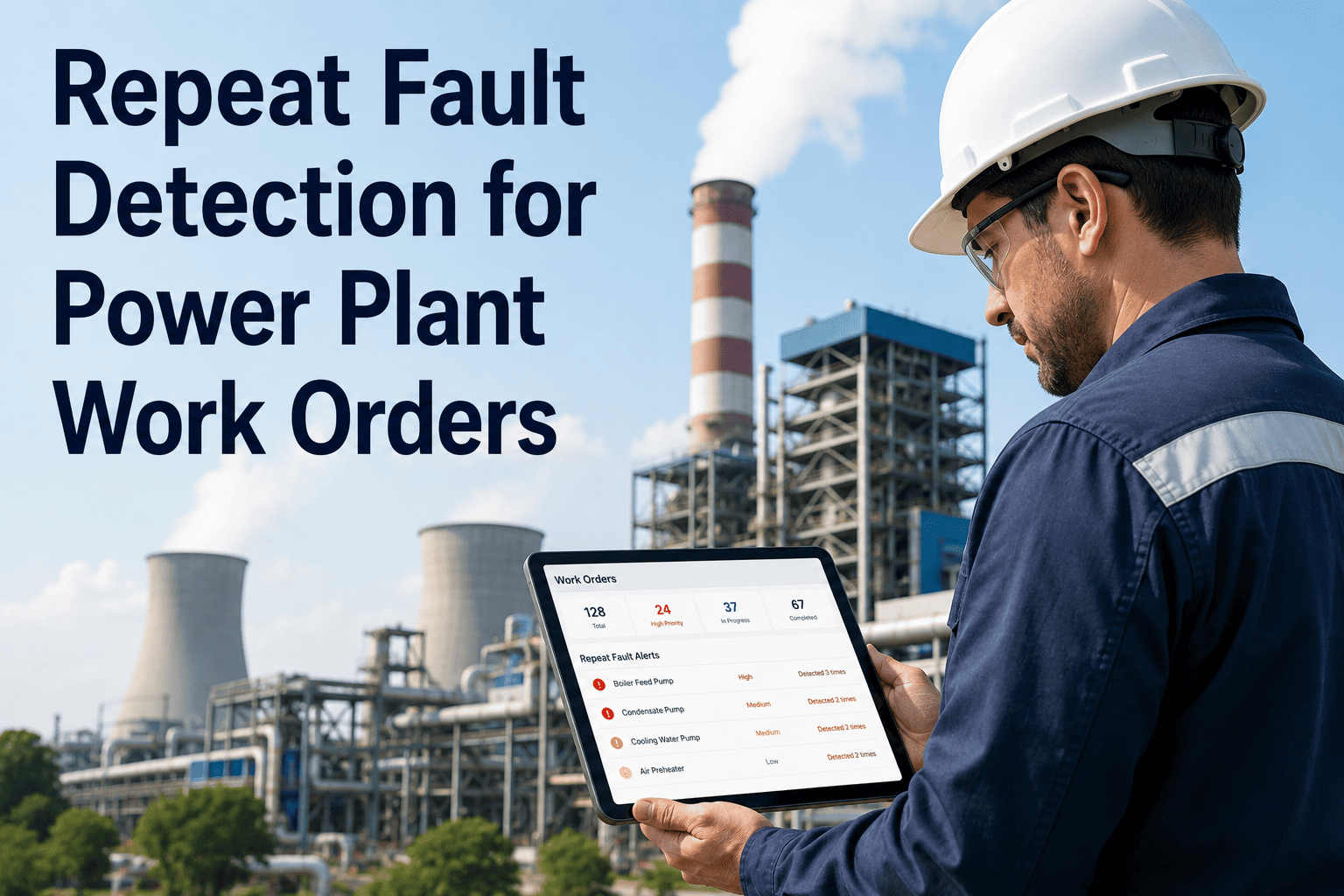
Repeat Fault Flag
If this fault has recurred 3 or more times in 6 months, the work order carries a repeat fault indicator with a one-click RCA request routed to the reliability engineer on duty
Expert Review
What Reliability Engineers Say About AI-Driven Fault Triage
The single biggest source of wasted maintenance labor in a power plant is not the repairs themselves — it is the time between a fault appearing on the DCS and a technician arriving at the right piece of equipment with the right procedure. Manual triage adds 10 to 25 minutes to every fault event. At a plant generating 400 alarms per day, that is 60 to 170 hours of potential labor waste per week before a single wrench is turned. AI-driven triage that classifies, routes, and pre-populates work orders in under 3 seconds from signal receipt is not an efficiency improvement — it is the baseline that modern power plant operations require.
67%
of power plants report alarm flooding as a top 3 operational challenge (EPRI 2023 Operations Survey)
2.4x
Higher first-time fix rate on faults with AI-pre-populated work orders vs. blank-form work orders
INR 8–22L
Estimated annual labor savings per 100 MW unit from eliminating manual triage delay
FAQ
Frequently Asked Questions
Does Oxmaint AI triage require replacing the existing DCS or historian?
No. Oxmaint connects to existing DCS and historian systems via OPC-UA, REST API, or CSV export — depending on the platform. The AI triage engine sits as a layer above the DCS, consuming alarm data without modifying any control system logic. Integration is typically complete within 2 to 4 days for standard DCS platforms including Yokogawa, Honeywell, and ABB.
Book a demo to see the integration architecture for your specific DCS platform.
How does the AI handle fault codes it has not seen before — new equipment or first-time faults?
For fault codes with no historical work order data, Oxmaint falls back to the plant's alarm rationalization matrix and the asset hierarchy's default maintenance discipline tag. The work order is flagged as a first-occurrence event and routed to the shift supervisor for manual triage confirmation before dispatch. As work orders are completed and recorded, the AI builds its pattern library for that fault code automatically — no manual training required.
Start free and import your existing fault code library to pre-seed the triage engine.
Can the AI triage engine suppress nuisance alarms automatically?
Oxmaint does not suppress DCS alarms — that is a control system function that must be managed through the plant's alarm rationalization program. What the triage engine does is classify incoming alarms as nuisance-likely based on historical non-action rate, and route them to an alarm rationalization review queue rather than generating work orders. This creates a documented basis for the plant's instrumentation team to formally rationalize those alarms in the DCS.
Book a demo to see the alarm rationalization reporting module in Oxmaint.
What happens when the AI triage classification is wrong — how is it corrected?
Every AI-generated work order carries a one-tap classification override for the assigned technician or supervisor. When a classification is overridden, the override is logged with the corrected classification and feeds back into the triage model for that fault code. After 3 or more overrides of the same classification on the same fault code, Oxmaint flags the fault code for alarm rationalization review — because a systematic misclassification usually indicates an issue with the underlying alarm setpoint or tag configuration, not just the AI logic.
Explore the platform to see how feedback loops improve triage accuracy over time.
Is mobile access supported for AI-generated work orders in field conditions with poor connectivity?
Yes. Oxmaint's mobile CMMS supports full offline operation — work orders, checklists, asset history, and procedure documents sync to the device before the technician enters the field. All data entry, photo capture, and readings recording work without connectivity and sync automatically when signal is restored. This is critical for power plant environments where control rooms and field equipment may be in separate buildings with poor indoor cellular coverage.
Book a demo to see the mobile app in a simulated field environment.
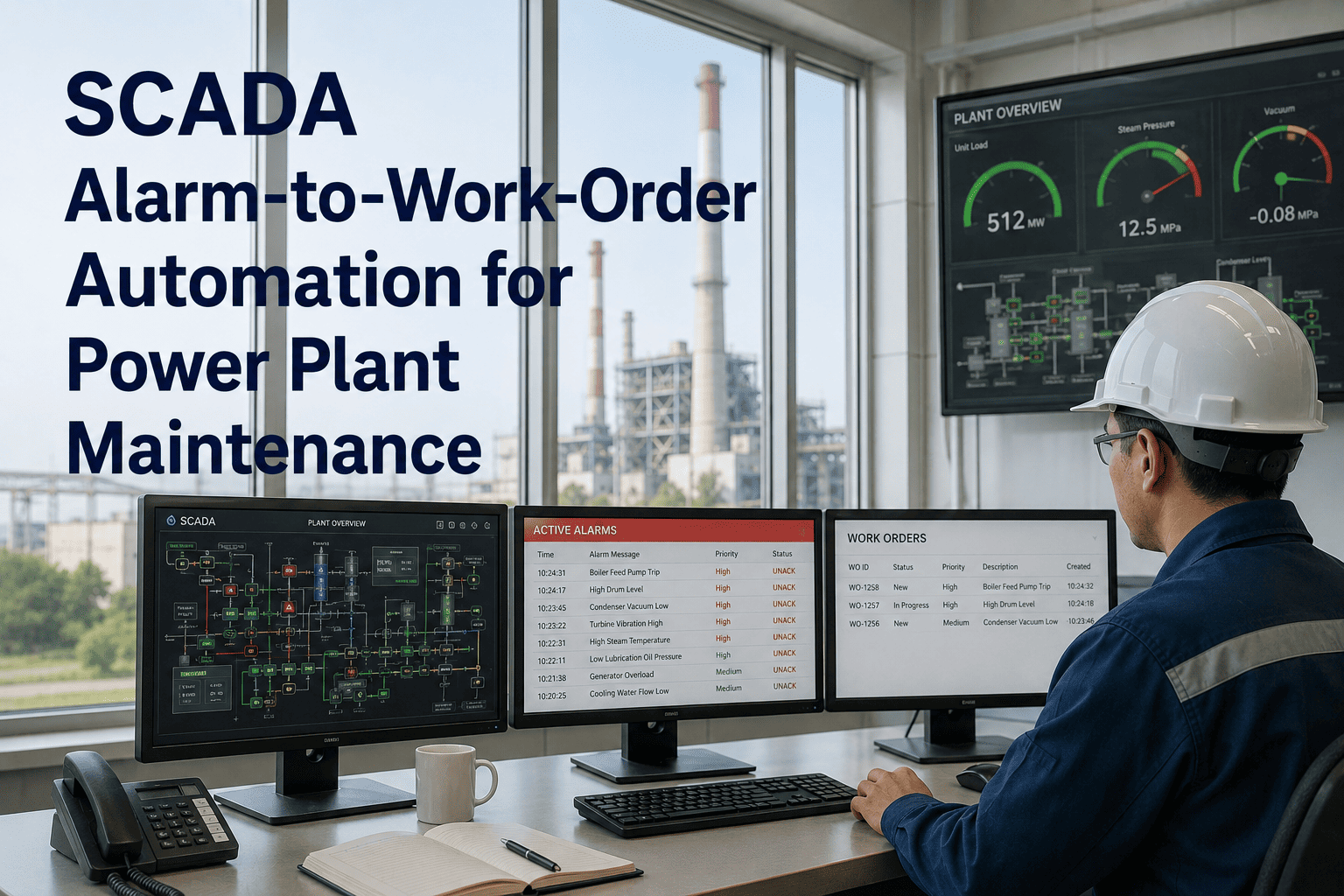
From DCS alarm to dispatched technician in under 3 minutes.
Oxmaint AI Work Order Automation classifies every fault code, eliminates cascade duplicates, and delivers a pre-populated work order to the right technician's mobile device — automatically, every time.