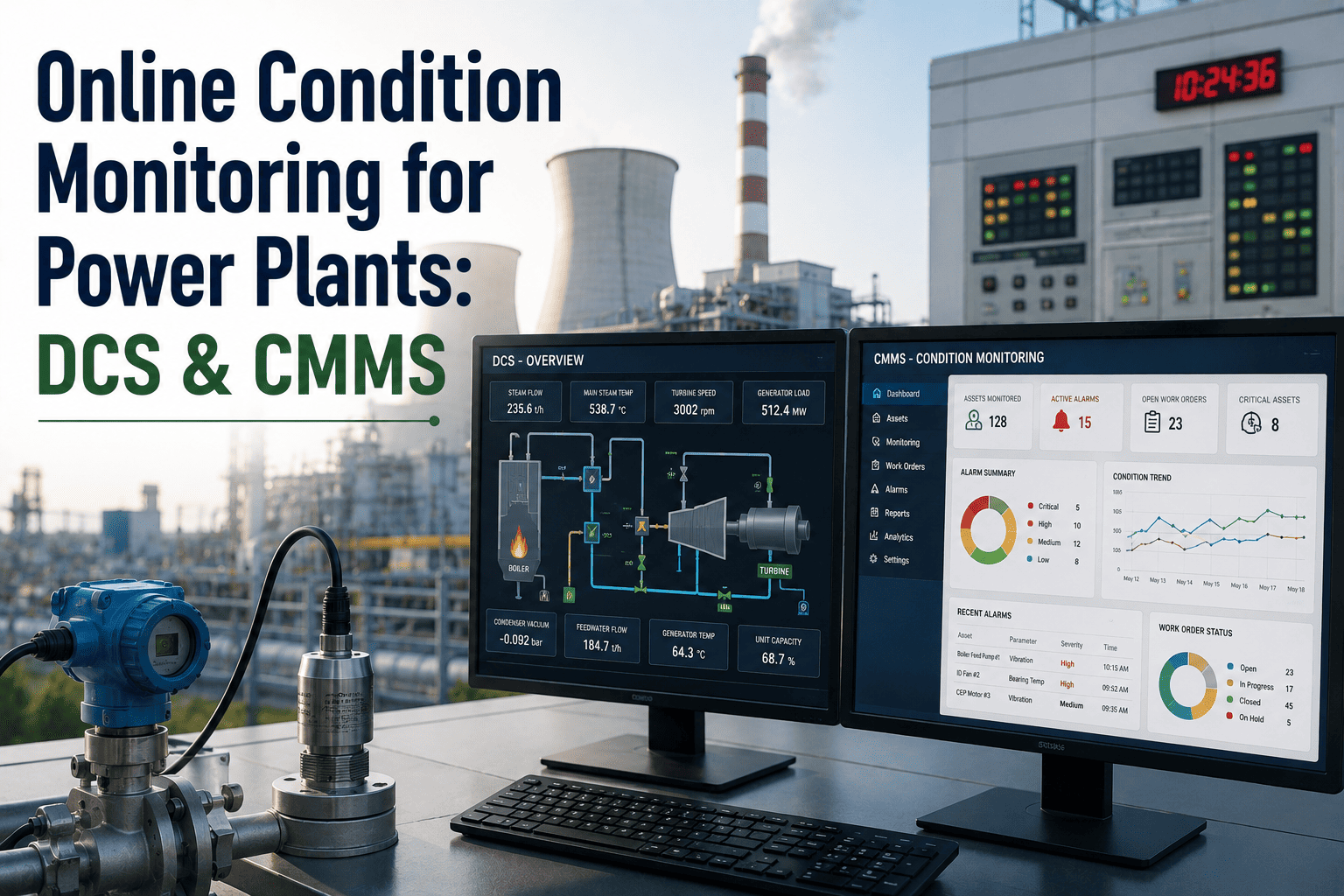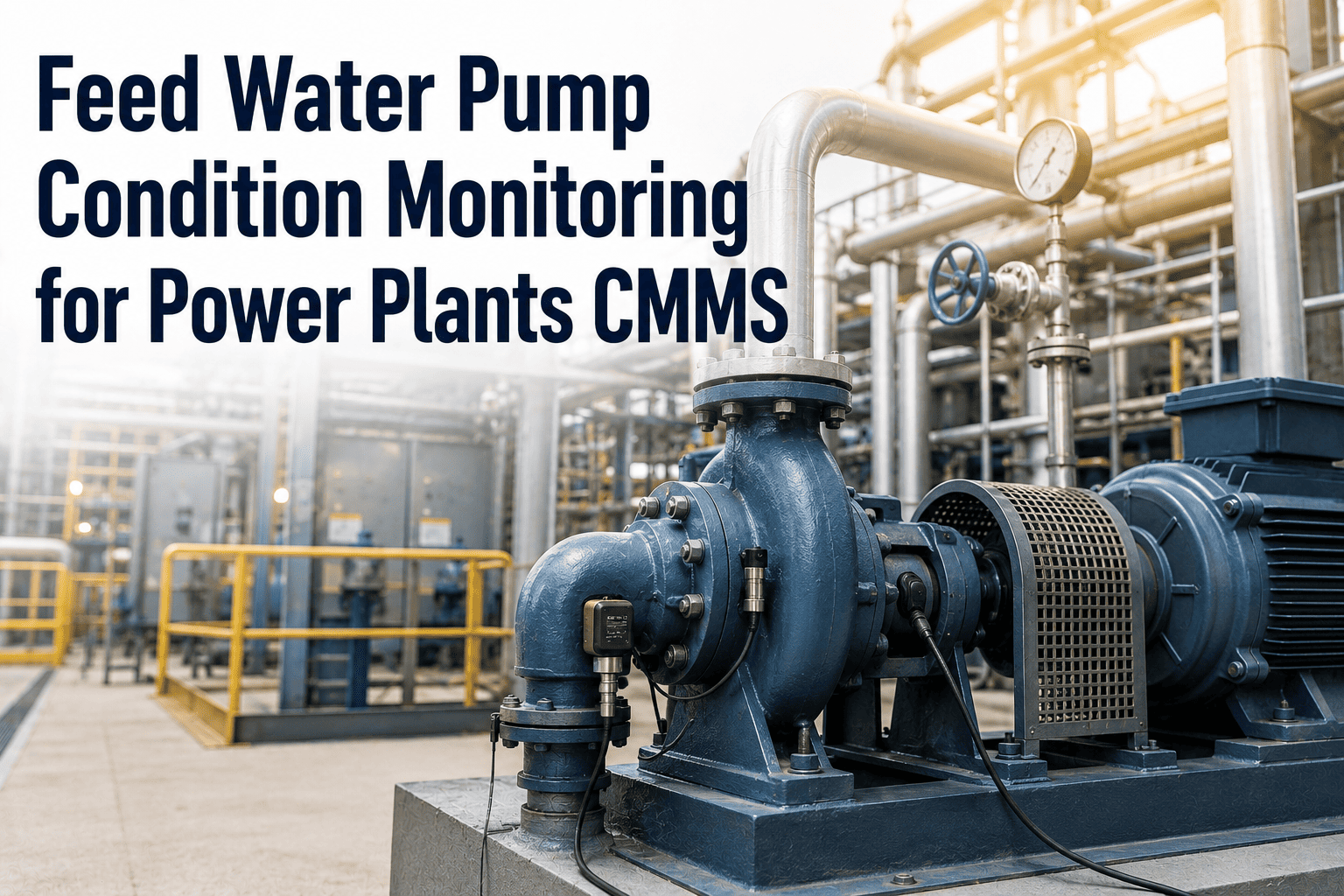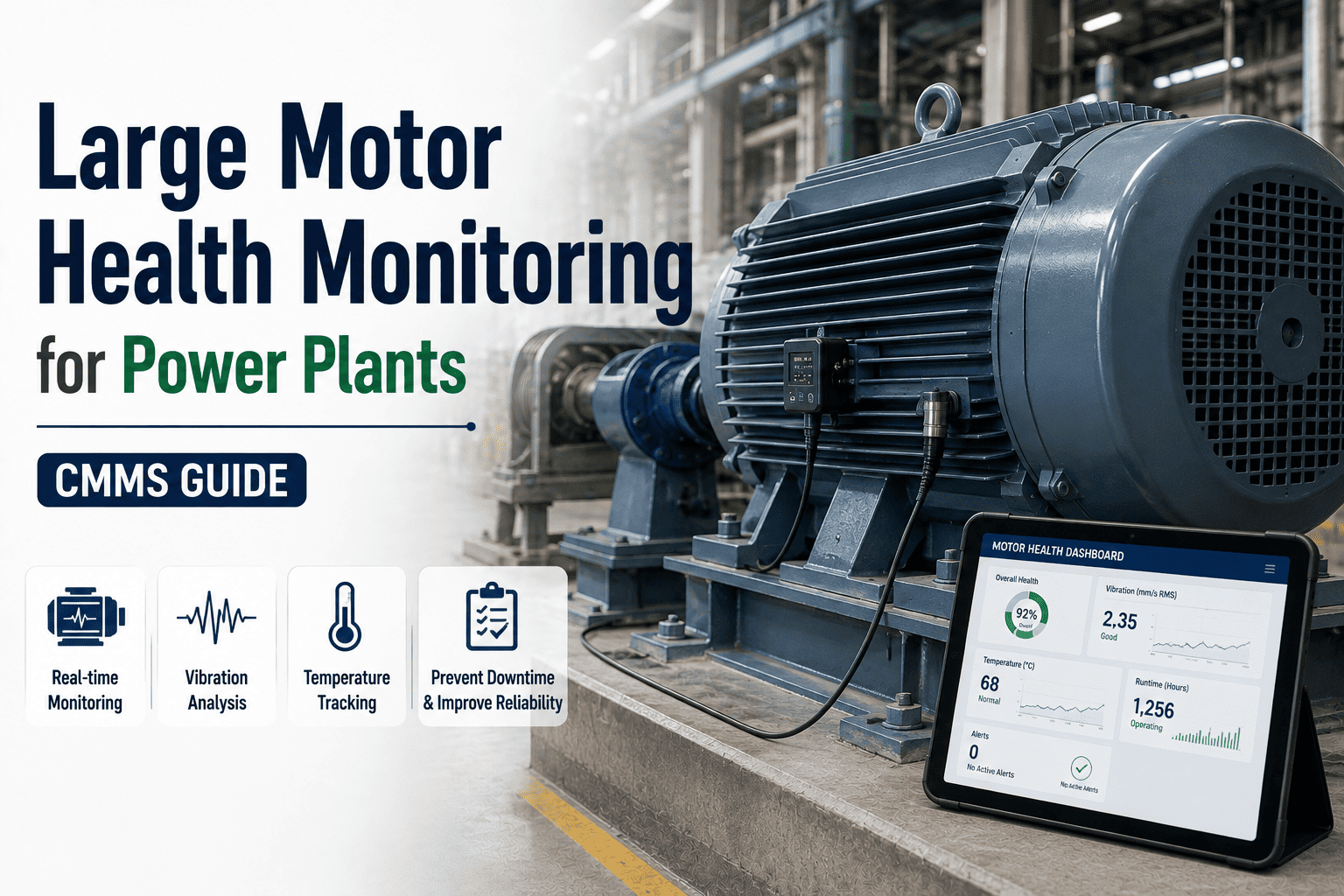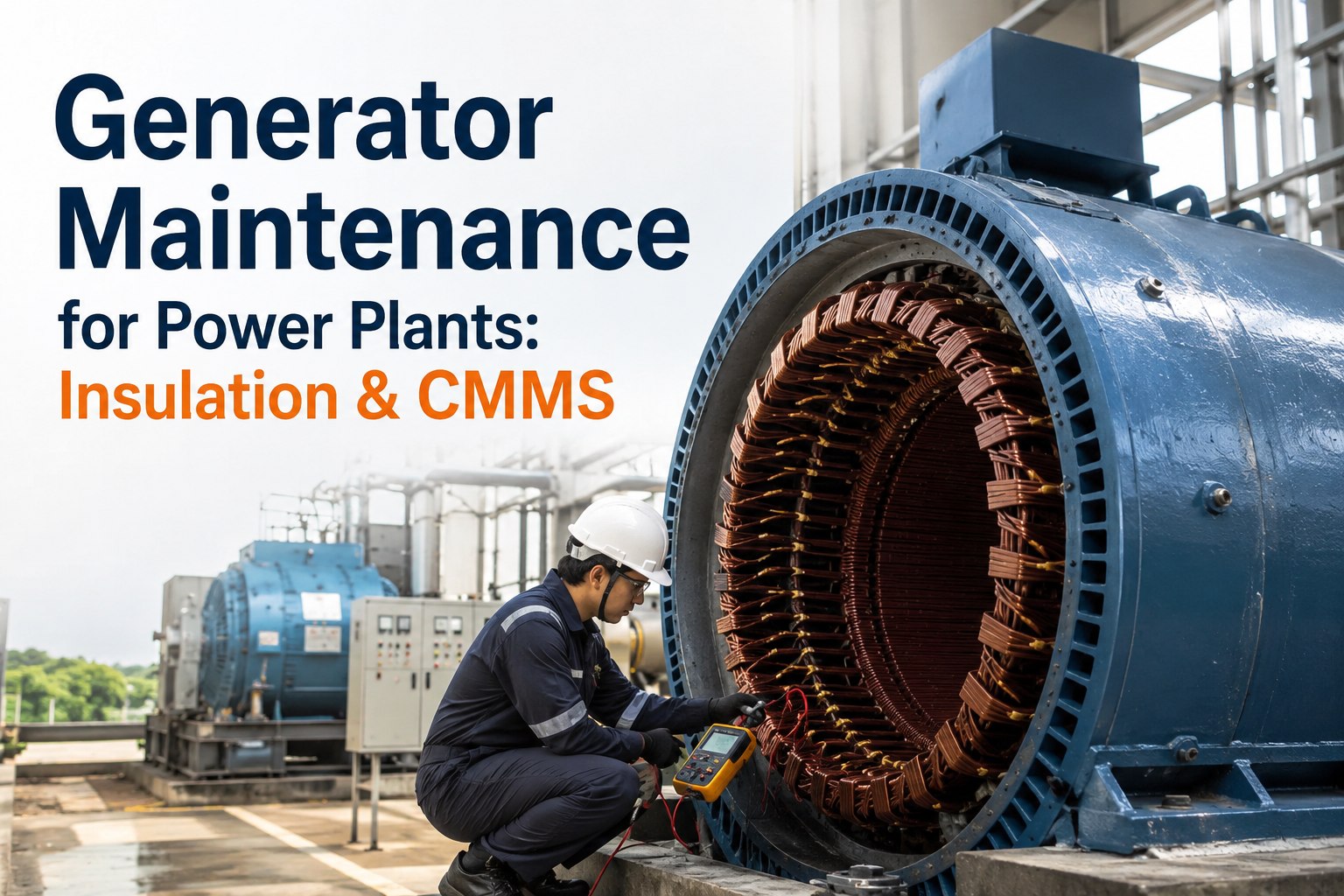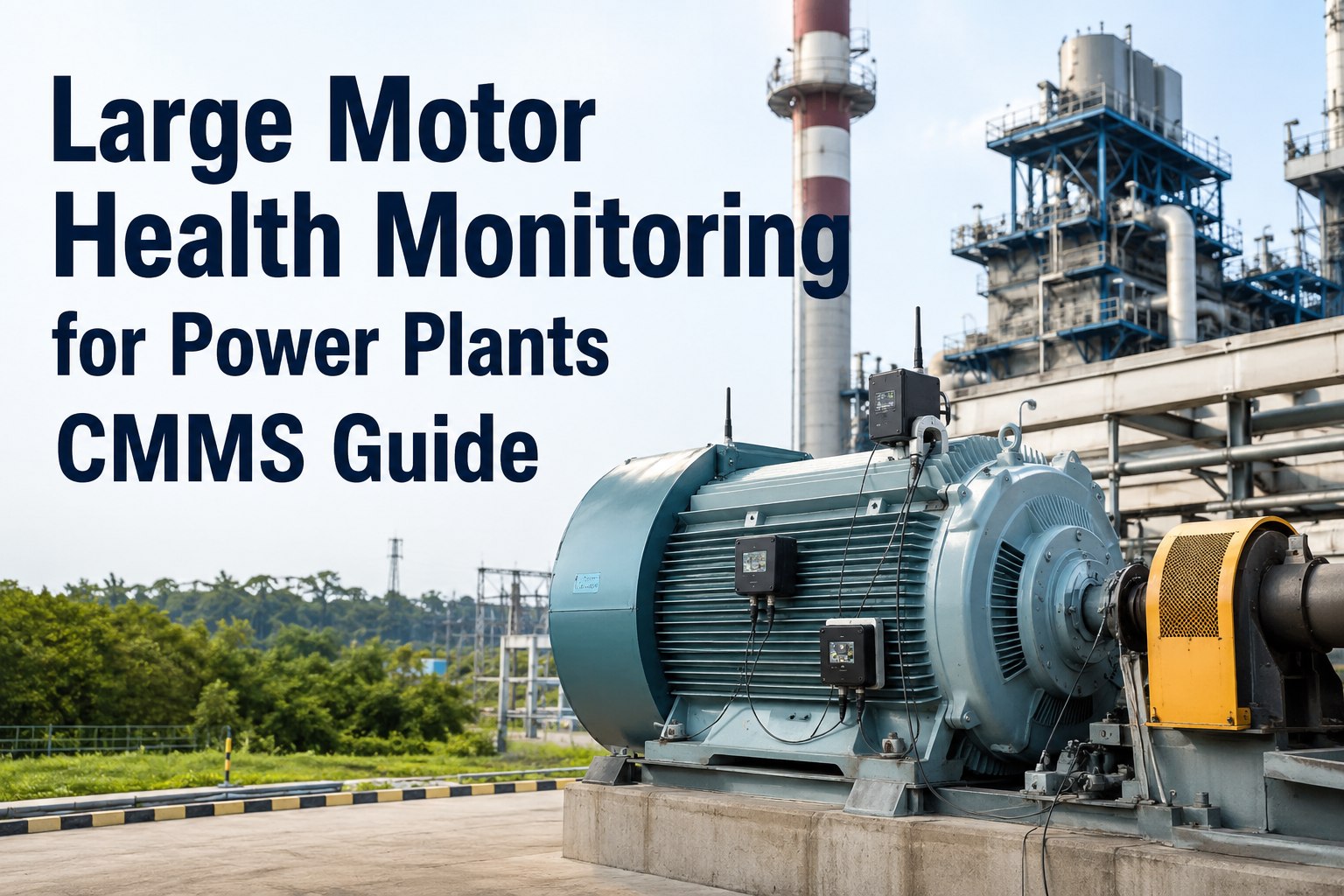
Large motor health monitoring in a power plant is the difference between a predictable 5-year overhaul and a catastrophic 12-hour forced outage that costs $500K–$2M in lost generation alone. For maintenance and reliability teams, tracking motor insulation resistance, vibration signatures, winding temperature and partial discharge trends is the core of any motor condition monitoring program. When these indicators are centralized inside a CMMS built for power plant motor monitoring, you shift from reactive firefighting to predictive asset management — extending large motor life by 30–50% and cutting unplanned downtime dramatically. This guide breaks down the exact tests, thresholds and data workflows that make a motor health program work. Ready to modernize your maintenance stack? Start Free Trial with OxMaint today.
Large Motor Health Monitoring
Are Your Critical Motors One Overheating Event Away from a Forced Outage?
A single 4,000 hp induced-draft fan motor failure can take a 500 MW unit offline for 3–7 days. Most of these failures are preventable when insulation resistance, vibration, winding temperature and partial discharge are trended together inside a CMMS built for power plant motor monitoring.
The Four Pillars of Motor Condition Monitoring
How to Build a Large Motor Monitoring Program for Power Plants
A robust motor health monitoring program hinges on four diagnostic pillars. Combined, they give reliability engineers a 360° view of motor condition — from electrical insulation integrity to mechanical bearing health. Here's what each pillar measures and the warning thresholds that trigger action.
Insulation Resistance Trending
Megger testing at 500V–5,000V tracks the health of winding insulation. IEEE 43 recommends a minimum Polarization Index (PI) of 2.0 and IR values ≥100 MΩ. A 50% drop from baseline demands investigation; values below 5 MΩ indicate imminent failure.
Motor Vibration Analysis
ISO 10816 sets velocity alarms for frame-mounted readings: 3.5 mm/s RMS (warning) and 7.1 mm/s RMS (danger) for large rigid-mounted motors. Trending axial, radial and horizontal readings detects misalignment, imbalance, looseness and bearing defect frequencies.
Winding Temperature Monitoring
NEMA Class F insulation is rated for 155°C, with a recommended 80°C rise over a 40°C ambient. Exceeding the thermal limit by just 10°C halves insulation life. RTDs and thermocouples on stator windings catch blocked ventilation, overloading and cooling-system fouling early.
Partial Discharge Detection
PD activity in motors rated 6 kV and above is the leading indicator of stator winding deterioration. Trending pulse magnitude (pC) and repetition rate under operating voltage pinpoints slot discharge, end-winding corona and delamination long before insulation resistance drops.
ROI & Cost of Inaction
What Does Unplanned Large Motor Failure Actually Cost a Power Plant?
When a critical motor fails unexpectedly, the invoice extends far beyond the repair shop. For a mid-sized coal or gas-fired plant, a single forced outage on a boiler feed pump or ID fan can eclipse the annual cost of an entire CMMS subscription — in a matter of hours.
The Downtime Cost Formula
| Failure Scenario | Downtime | Lost Generation Revenue | Repair & Parts Cost | Total Estimated Impact |
|---|---|---|---|---|
| Boiler Feed Pump Motor (3,500 hp) | 3 days | $840,000 | $120,000 | $960,000 |
| Induced Draft Fan Motor (4,000 hp) | 5 days | $1,800,000 | $185,000 | $1,985,000 |
| Condensate Pump Motor (1,500 hp) | 2 days | $360,000 | $55,000 | $415,000 |
| PA Fan Motor (2,500 hp) | 4 days | $1,200,000 | $95,000 | $1,295,000 |
A 500 MW coal-fired plant operating 12 critical motors above 1,000 hp was spending $48,000/year on manual vibration routes and spreadsheet-based insulation testing. After implementing a CMMS-integrated motor monitoring program, they caught bearing degradation on a forced-draft fan motor 18 days before failure. The planned repair cost $32,000 during a scheduled weekend window — avoiding an estimated $1.2M in lost generation. Payback on the software was achieved in under 60 days.
Implementation Roadmap
How to Deploy a Motor Health CMMS in 6 Months
Transitioning from clipboard-based rounds to a predictive motor condition monitoring program requires structure. This 6-month timeline maps the standard path from asset criticality ranking to fully integrated predictive analytics.
Asset Criticality Ranking & Data Migration
Identify all motors ≥100 hp. Rank by criticality (safety, redundancy, production impact). Import nameplate data, maintenance history and spare-parts BOMs into the CMMS. Establish baseline operating conditions for the top 20% of assets.
Baseline Testing & Sensor Selection
Conduct initial Megger, PI and polarization tests on all critical motors. Install permanent vibration sensors (accelerometers) on bearings of Tier-1 assets. Configure RTD inputs for winding temperature on motors exceeding Class B limits.
CMMS Workflow Configuration
Build automated work-order triggers based on ISO 10816 vibration thresholds, IR values and temperature limits. Set up inspection checklists, route-based data collection schedules and escalation rules for out-of-range readings.
Team Training & Standardization
Train reliability technicians on the CMMS mobile app for route-based rounds. Standardize test procedures, data entry formats and alarm acknowledgment protocols. Eliminate paper forms and consolidate all motor health data into a single dashboard.
PD Integration for MV/HV Motors
Deploy online or offline partial discharge monitoring on motors rated 6 kV and above. Correlate PD activity with winding temperature and load cycles to identify slot discharge and end-winding degradation patterns.
Predictive Analytics Activation
Enable AI-driven trend analysis on 6 months of baseline data. The system now auto-generates failure predictions, remaining useful life (RUL) estimates and recommended interventions — completing the shift from reactive to predictive maintenance.
How OxMaint Helps
OxMaint: The Motor Health CMMS Built for Power Plant Reliability Teams
OxMaint is an AI-powered CMMS and EAM platform that centralizes work orders, preventive and predictive maintenance, asset tracking, spare-parts inventory and maintenance analytics. For power plant motor monitoring, it turns disconnected test data into automated, revenue-protecting action.
Automated Condition-Based Work Orders
OxMaint ingests vibration, temperature, IR and PD data and auto-generates work orders the moment a reading crosses your configured ISO 10816 or IEEE 43 threshold. No manual entry, no missed alarms.
AI-Driven Failure Prediction
Machine learning models analyze multi-variable trends — combining thermal rise rates with vibration spectrum shifts — to predict bearing and winding failures weeks before they occur, with confidence scores and RUL estimates.
Digital Motor Health Records & Audit Trail
Every Megger test, thermography scan and bearing replacement is permanently attached to the asset record. Generate full compliance reports for NERC, ISO 55000 and internal audits in seconds — no paper, no spreadsheets.
Spare-Parts Inventory Sync
When a motor condition alert fires, OxMaint checks real-time stock levels for bearings, windings and couplings — and auto-creates purchase requisitions if parts are below safety stock, so the right spares are ready when the planned window opens.
See It On Your Assets
Book a 30-Minute Demo Tailored to Your Motor Fleet
See how OxMaint centralizes your motor insulation testing, vibration routes and winding temperature data into one predictive dashboard — and how fast your team can switch from spreadsheets to a real CMMS.
Frequently Asked Questions
Large Motor Health Monitoring for Power Plants: FAQs
What is large motor health monitoring in a power plant?
Large motor health monitoring is the continuous or route-based tracking of insulation resistance, vibration, winding temperature and partial discharge on motors typically rated 100 hp and above. In a power plant CMMS, these data points are trended over time to detect degradation early, trigger condition-based work orders and prevent forced outages. The goal is to shift from time-based maintenance to predictive intervention based on actual asset condition.
How often should motor insulation testing be performed?
For large critical motors, insulation resistance (Megger) and Polarization Index testing should be performed at least annually, with more frequent testing — quarterly or semi-annually — on motors in severe duty cycles or harsh environments. Online partial discharge monitoring on motors rated 6 kV and above runs continuously. All results should be trended inside your CMMS; Start Free Trial with OxMaint to automate these test schedules and trend the data digitally.
What vibration level indicates a motor failure risk?
Under ISO 10816, a velocity reading of 3.5 mm/s RMS triggers a warning for rigid-mounted large motors, while 7.1 mm/s RMS indicates a danger condition requiring immediate shutdown. However, the trend matters as much as the absolute value — a sudden 2x increase from baseline is a critical red flag even if the reading remains below the danger threshold.
How does a CMMS improve motor condition monitoring?
A CMMS centralizes all motor health data — test results, vibration spectra, temperature logs, repair history and spare-parts inventory — into a single asset record. It automates work-order generation when readings cross thresholds, eliminates paper-based inspection forms and provides predictive analytics that identify failure patterns humans miss. This reduces unplanned downtime 30–50% and cuts manual data-entry time significantly.
Can OxMaint integrate with existing motor sensors and IoT devices?
Yes. OxMaint integrates with common vibration sensors, RTDs, thermocouples and online PD monitoring systems via standard protocols. Sensor data flows directly into the asset record, where AI models analyze trends and auto-trigger work orders. To see how this works with your specific sensor stack, Book a Demo and we'll walk you through a live configuration.
Start Your Motor Health Journey
Stop Reacting to Motor Failures. Start Predicting Them.
Join the power plant reliability teams using OxMaint to trend insulation, vibration and temperature data in one AI-powered CMMS — and prevent the next forced outage before it happens.
Free 14-day trial · No credit card