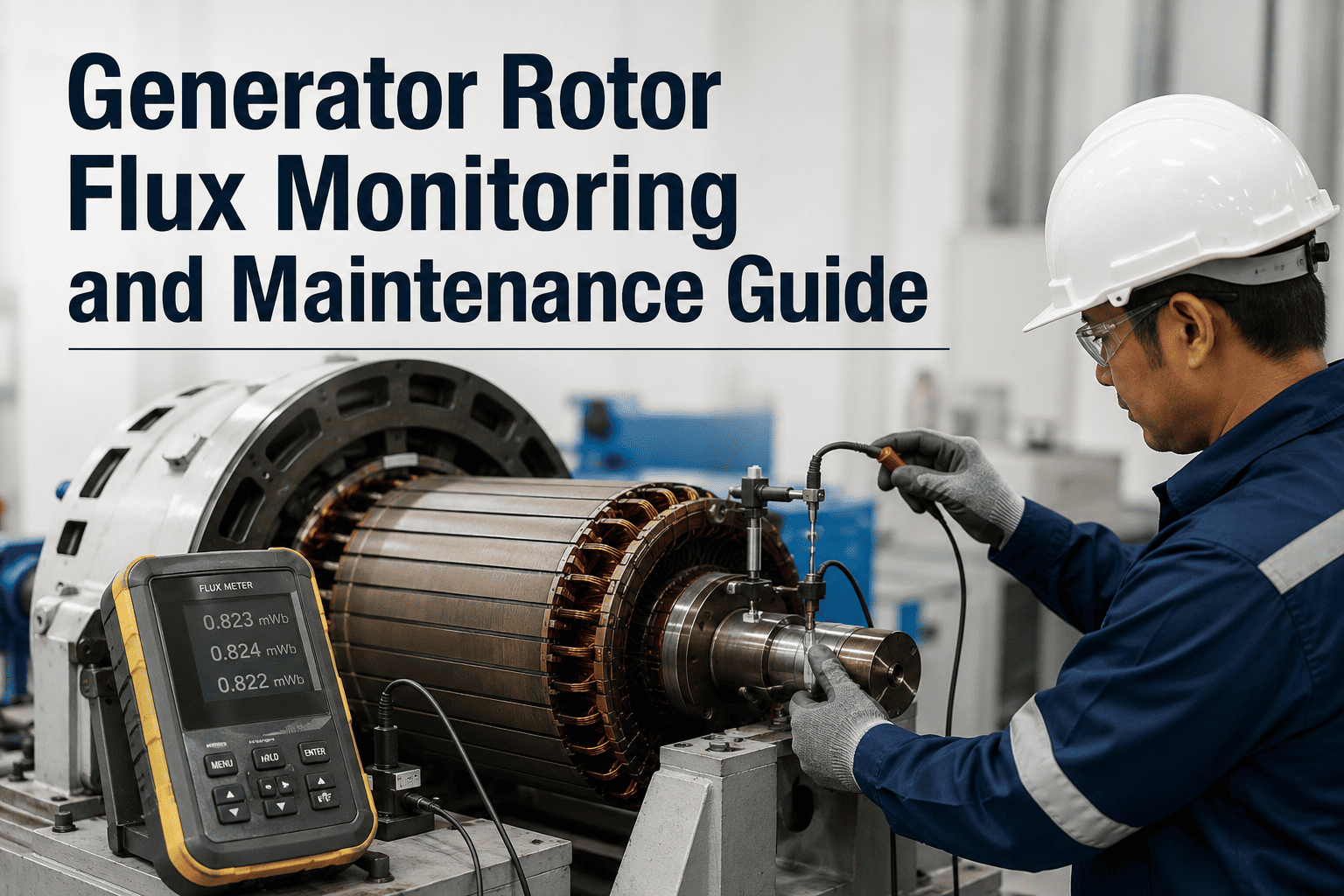
A shorted rotor turn doesn't announce itself with a dramatic alarm — it shows up as a tiny asymmetry in the magnetic flux pattern around the generator shaft, invisible to a technician walking the floor with a clipboard. Left unmonitored for months, that asymmetry grows into localized heating, then insulation breakdown, then a forced outage that costs more in a single weekend than three years of monitoring would have. Rotor flux monitoring turns that invisible signal into a number maintenance teams can actually act on inside OxMaint, well before the fault becomes electrical damage.
Electrical Reliability
Generator Rotor Flux Monitoring and Maintenance Guide
Shorted turns, rotor winding faults, and inter-turn insulation degradation all leave a flux signature. Continuous monitoring catches the signature weeks before the fault progresses into a winding failure that takes the unit offline for repair.
How a rotor flux fault actually progresses
Stage 1
Minor Asymmetry
A small flux imbalance appears between rotor poles, undetectable by ear or visual inspection, only visible in flux probe data.
Stage 2
Localized Heating
Circulating currents in the shorted turn generate concentrated heat, accelerating insulation aging in that specific winding section.
Stage 3
Winding Failure
Insulation breaks down fully, causing a ground fault or major short that forces an unplanned shutdown and rotor rewind.
What rotor flux monitoring tracks continuously
Flux probe asymmetry
Pole-to-pole comparison against design baseline
Air gap flux density
Measured across full rotor rotation, logged per shift
Harmonic content
Frequency analysis flags shorted-turn signatures early
Rotor temperature delta
Cross-referenced against flux readings for correlation
Trend over operating cycles
Long-term drift compared against the unit's own history
Walk through a flux monitoring setup on your generator fleet
Bring last year's electrical test data and we'll show what a continuous flux baseline would reveal.
Why annual electrical testing alone isn't enough
Most plants test rotor winding insulation resistance and flux during planned annual outages, which means a fault developing in month three of the cycle runs undetected for nine months before the next test catches it. Continuous monitoring closes that window from months to days.
Annual Testing Only
Detection window: up to 12 months
Fault stage at detection: often advanced
Repair scope: frequently full rewind
Continuous Flux Monitoring
Detection window: days to weeks
Fault stage at detection: early asymmetry
Repair scope: often targeted, planned
Industries where rotor flux monitoring matters most
Thermal & combined-cycle plants
High duty-cycle generators with frequent load ramping stress windings
Hydro generating stations
Slow-speed rotors with large pole counts benefit from per-pole baselining
Nuclear generating units
Strict outage scheduling makes early, planned detection especially valuable
Renewable & grid-balancing assets
Frequent start-stop cycles accelerate winding fatigue versus steady baseload units
What teams typically see after adopting flux monitoring
Month 1-2
Baseline Established
Unit-specific flux pattern recorded across multiple operating conditions and load points.
Month 3-6
First Early Catches
Maintenance teams report catching their first early-stage asymmetry that planned testing alone would have missed.
Ongoing
Outage Planning Shift
Rotor work increasingly scheduled around flux trends rather than fixed annual calendars alone.
Frequently asked questions
What sensors are needed to monitor rotor flux continuously?
Most large generators already have flux probes installed in the air gap as part of original equipment protection schemes, and OxMaint connects directly to that existing instrumentation. Where no probe exists, a retrofit flux coil can be installed during a planned outage without major rotor disassembly. The monitoring software handles the signal processing and baseline comparison regardless of probe vintage. See setup options inside
OxMaint.
Can this distinguish a real shorted turn from normal manufacturing asymmetry?
Every rotor has a small inherent asymmetry from manufacturing tolerances, which is why the model builds a unit-specific baseline rather than comparing against a generic threshold. A genuine developing fault shows as a trend that moves away from that baseline over time, not a one-time reading. This distinction is what keeps the alerts specific instead of triggering false work orders on healthy units.
Discuss baseline setup with the team.
How does flux data correlate with rotor temperature readings?
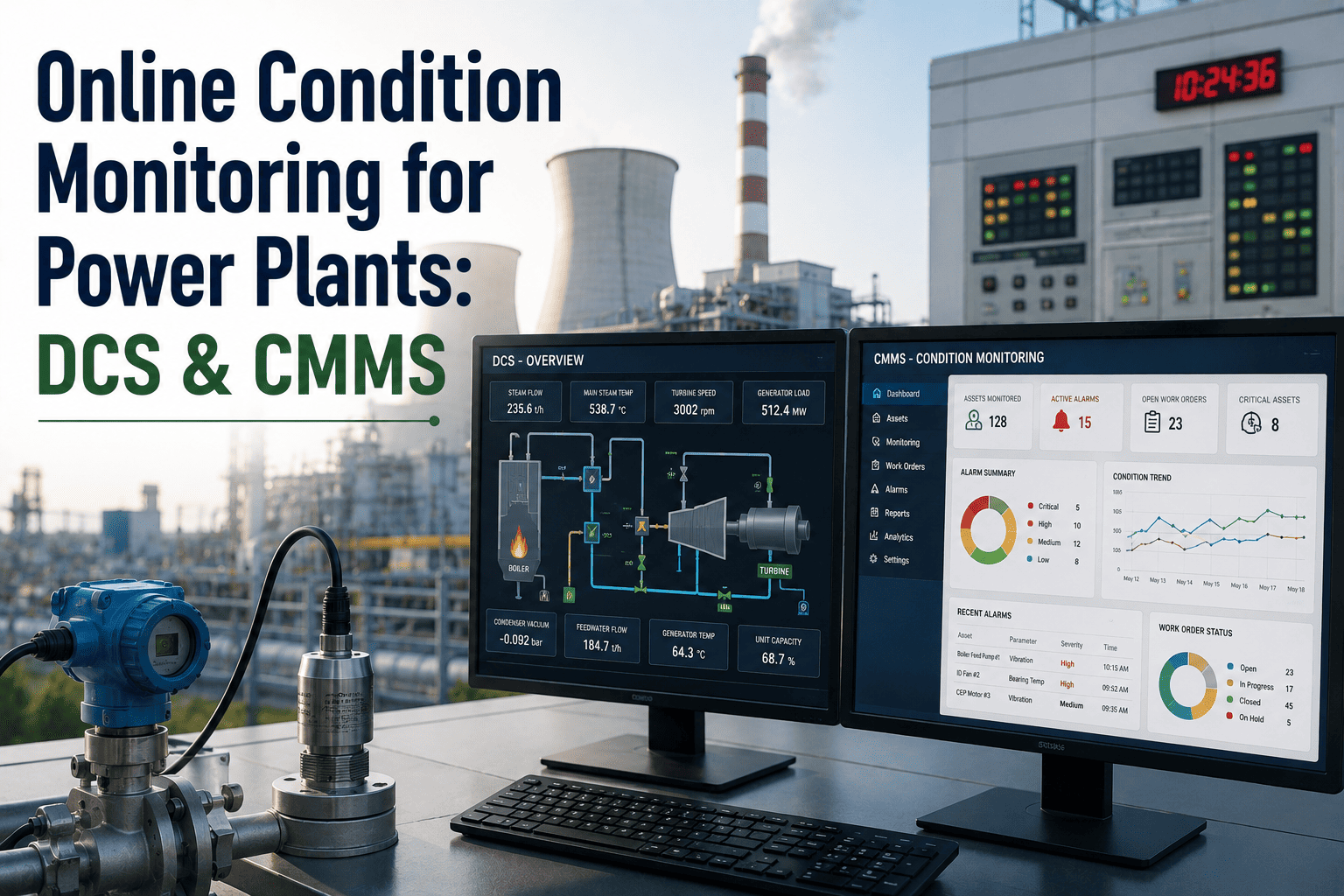
A shorted turn typically produces both a flux asymmetry and a localized temperature rise in the same winding section, and cross-referencing the two signals reduces false positives significantly. OxMaint overlays both data streams on one timeline so a maintenance engineer can confirm a developing fault rather than chasing isolated noise. This correlation is part of why early-stage detection is reliable rather than speculative. Explore the dashboard inside
OxMaint.
What happens operationally once an early-stage fault is flagged?
The system generates a work order with the specific pole or winding section flagged, along with the trend data supporting the alert, so the electrical team can plan a targeted inspection rather than a full teardown. Many early-stage faults can be monitored through to the next planned outage rather than forcing an immediate shutdown, depending on severity. That flexibility is often what saves the most cost versus reactive failure.
Walk through this workflow on a call.
Does rotor flux monitoring work across different generator manufacturers?
Yes — flux behavior and harmonic signatures follow electrical principles common across major generator OEMs, though baseline values are calibrated per unit rather than per manufacturer. This means a mixed fleet of generators from different vendors can be monitored on one consistent dashboard without separate tools per brand. Setup typically takes a few weeks per unit to establish a reliable baseline. Get started with
OxMaint today.
Catch the asymmetry before it becomes a rewind
Move rotor monitoring from an annual test to a continuous baseline across your generator fleet.