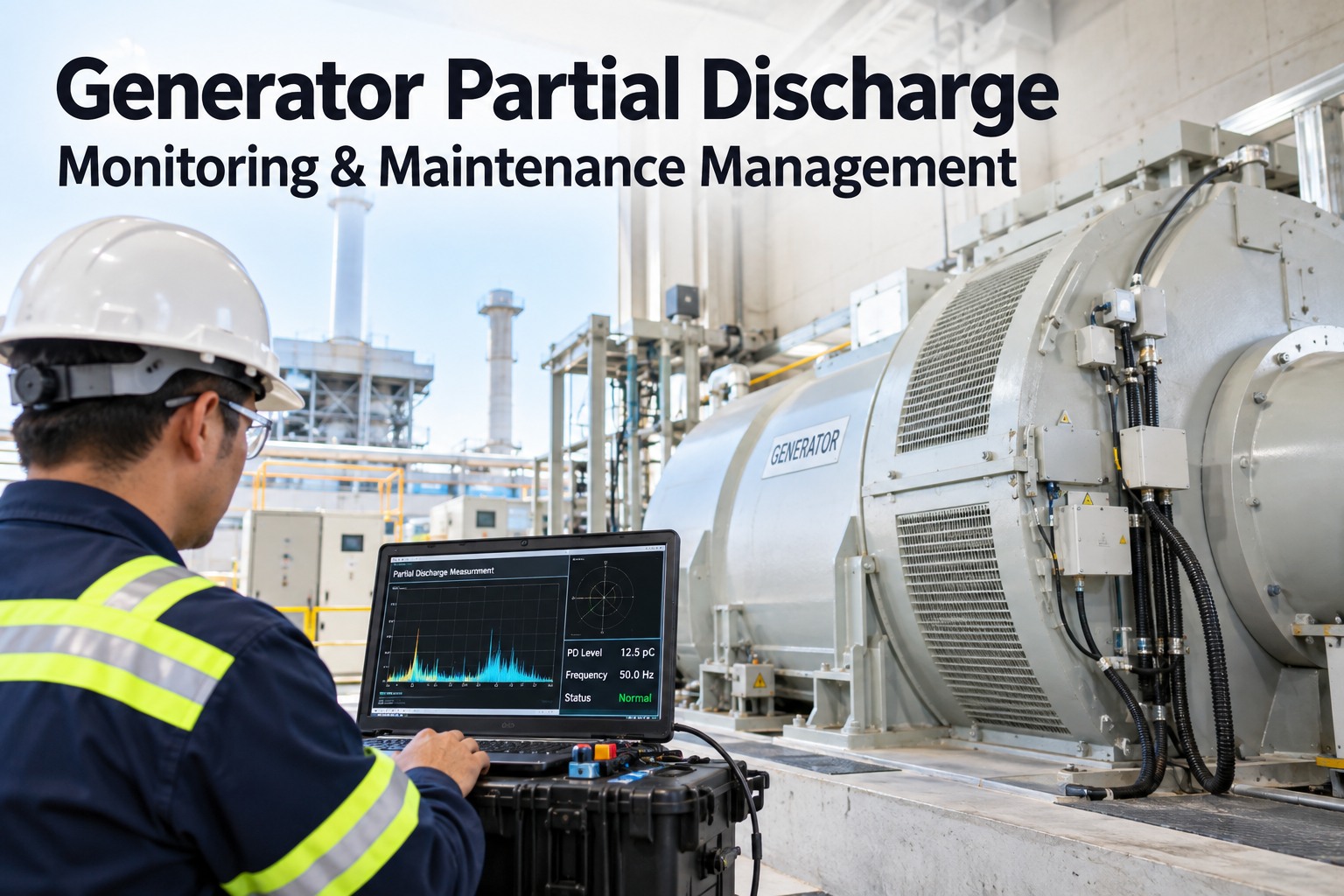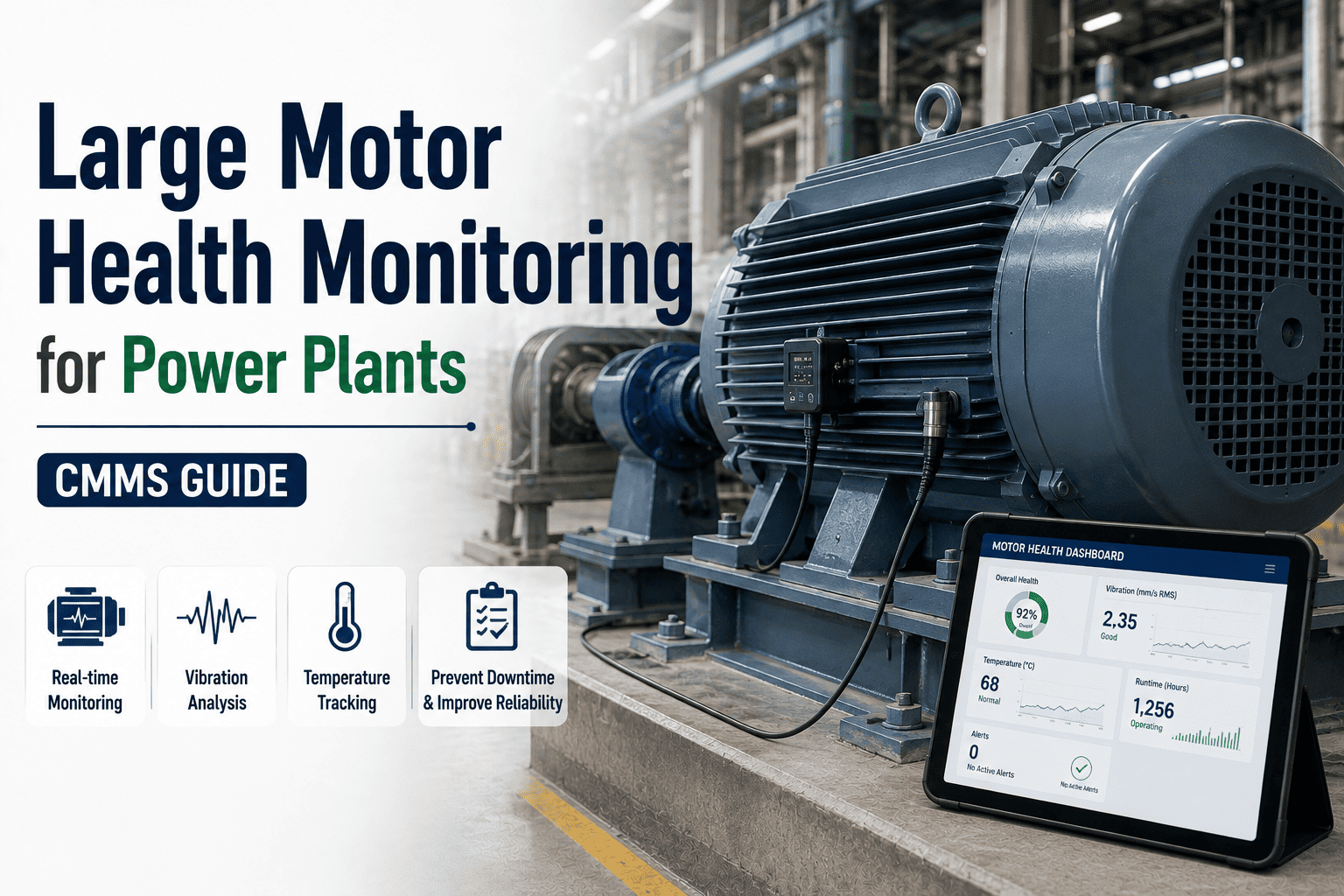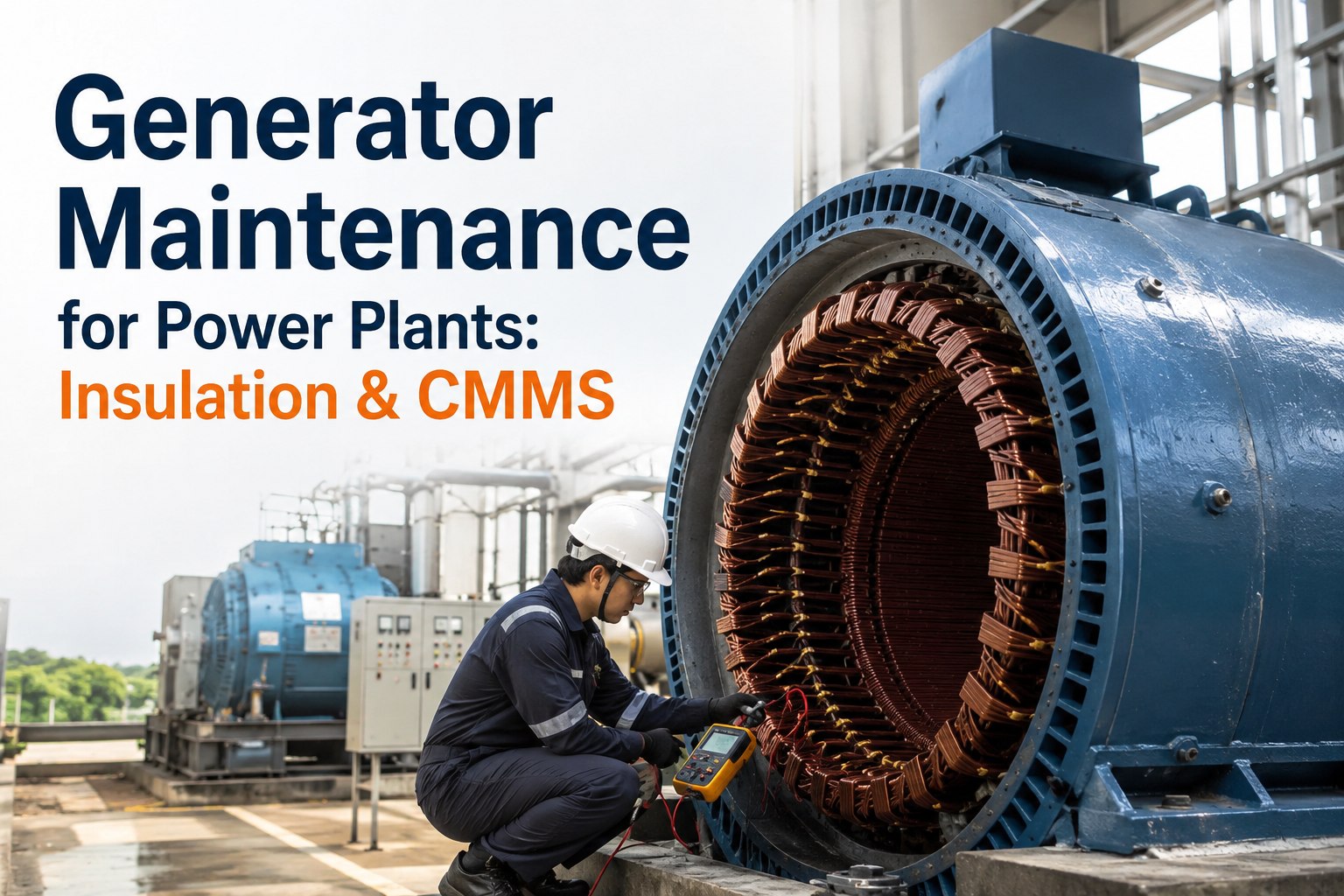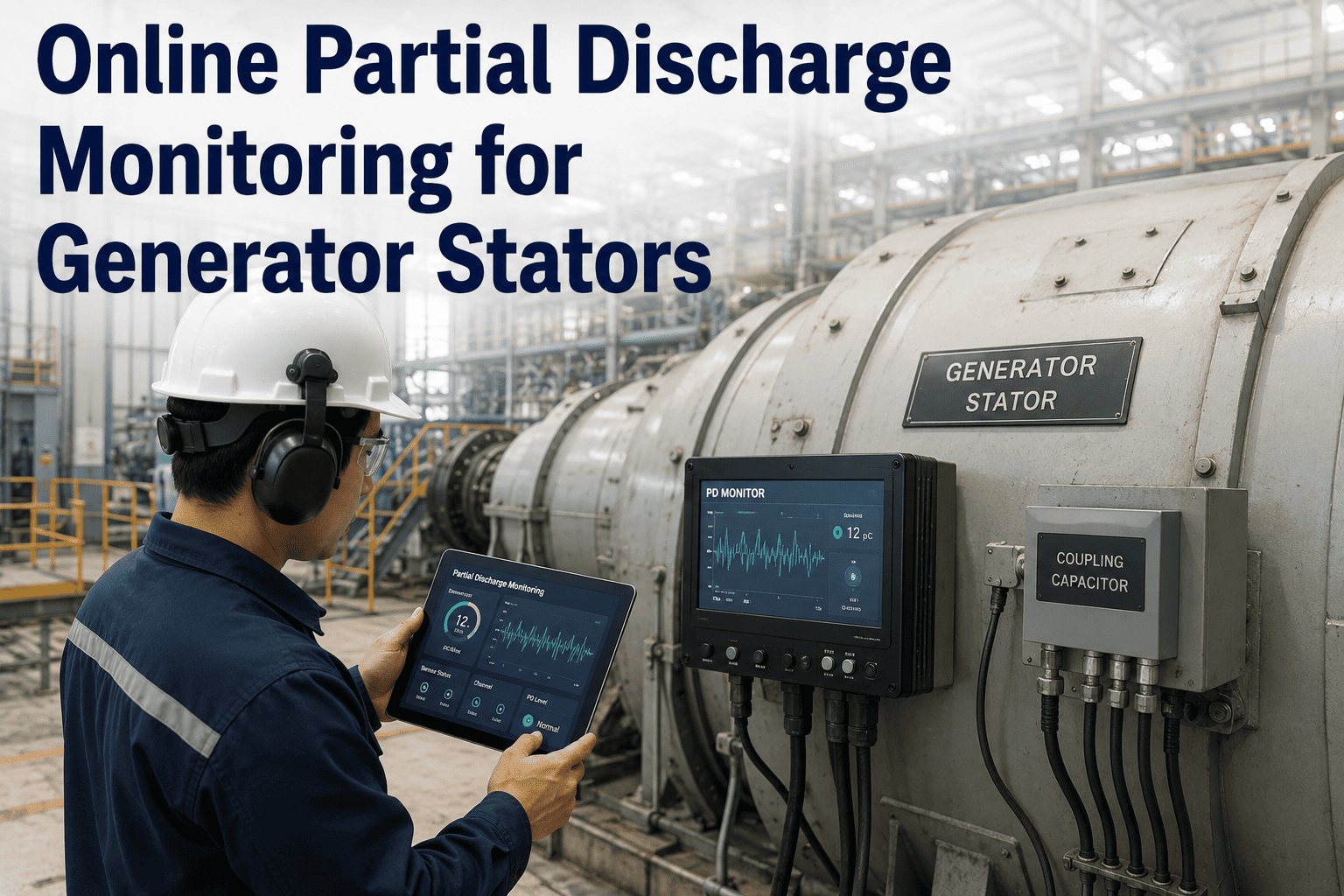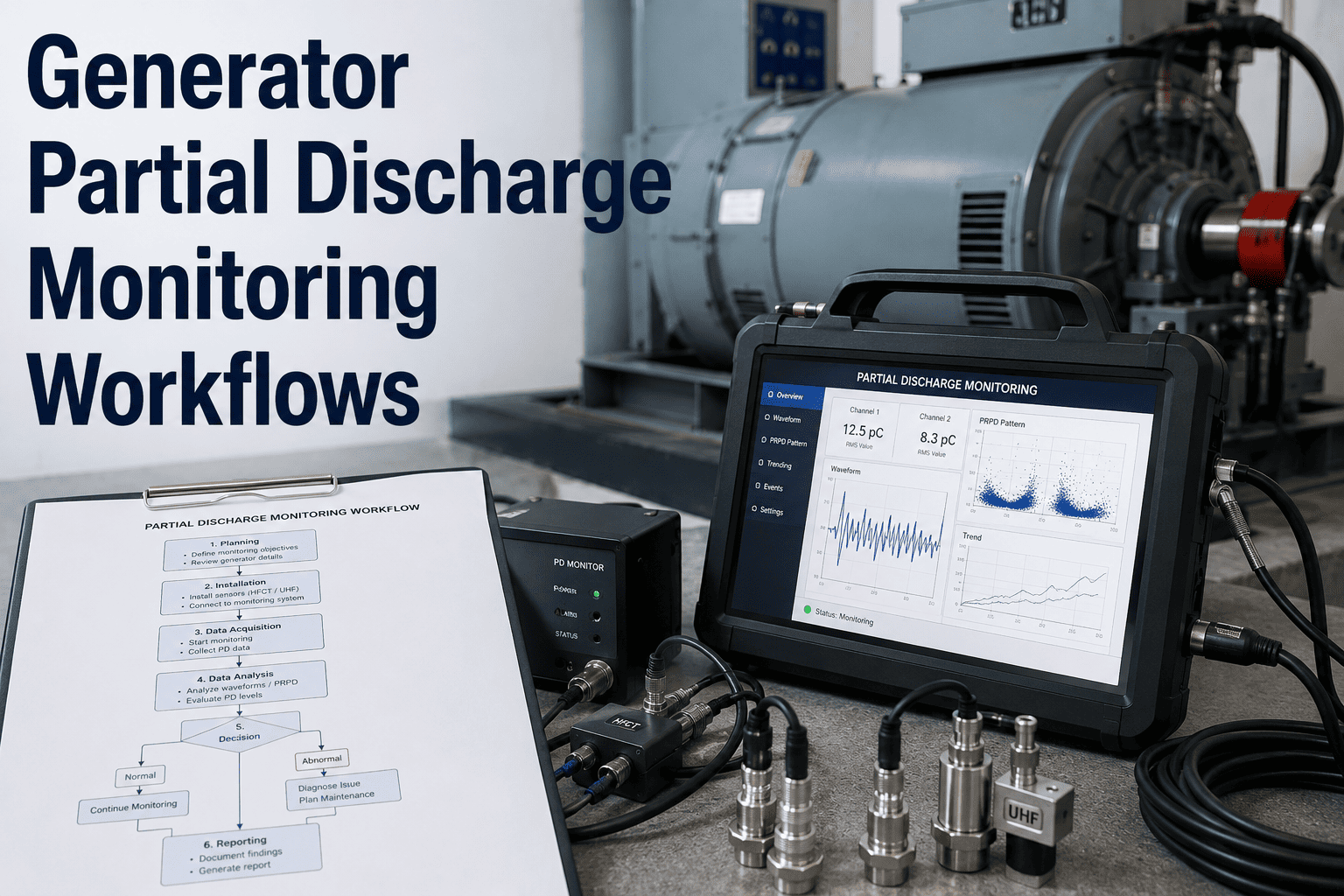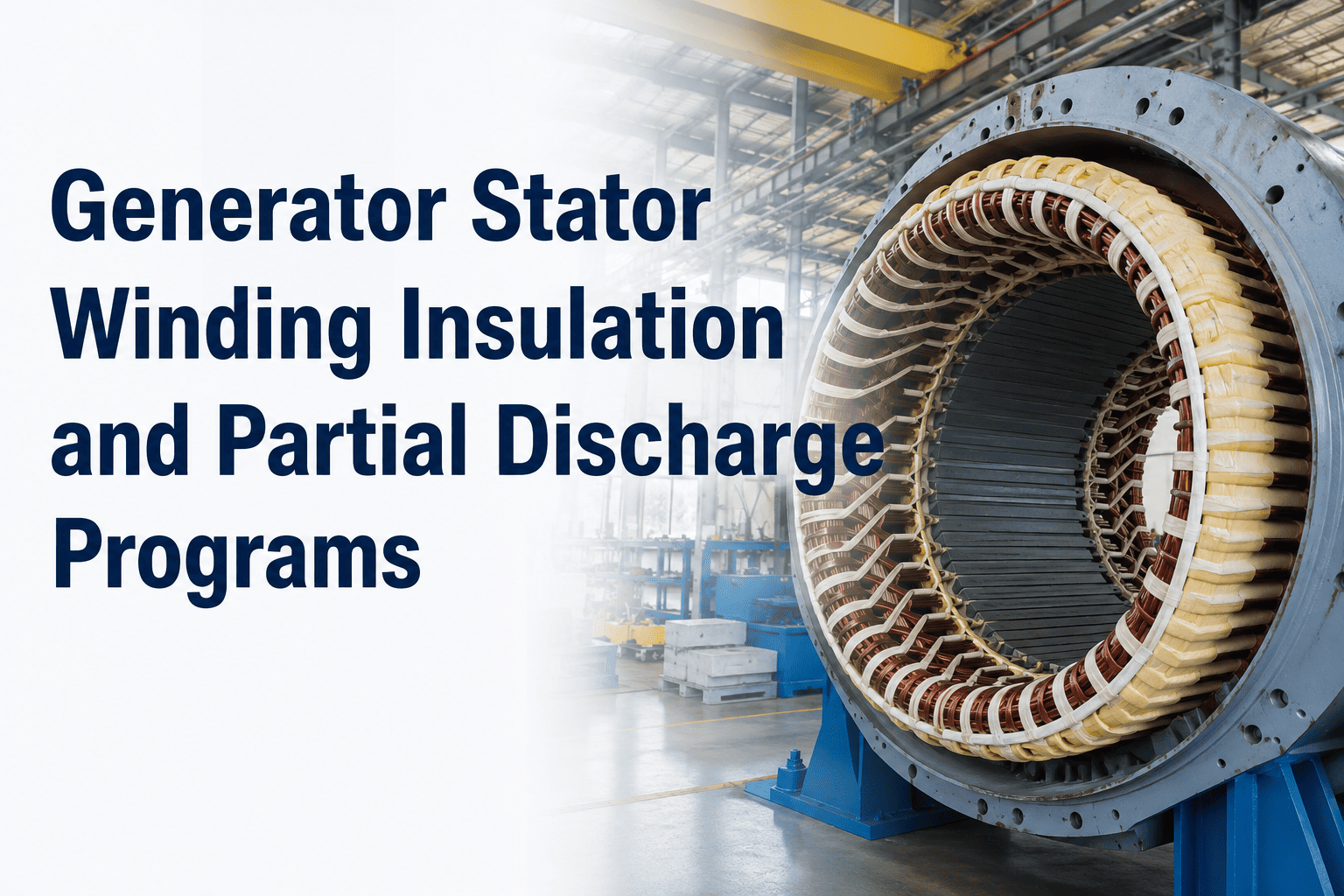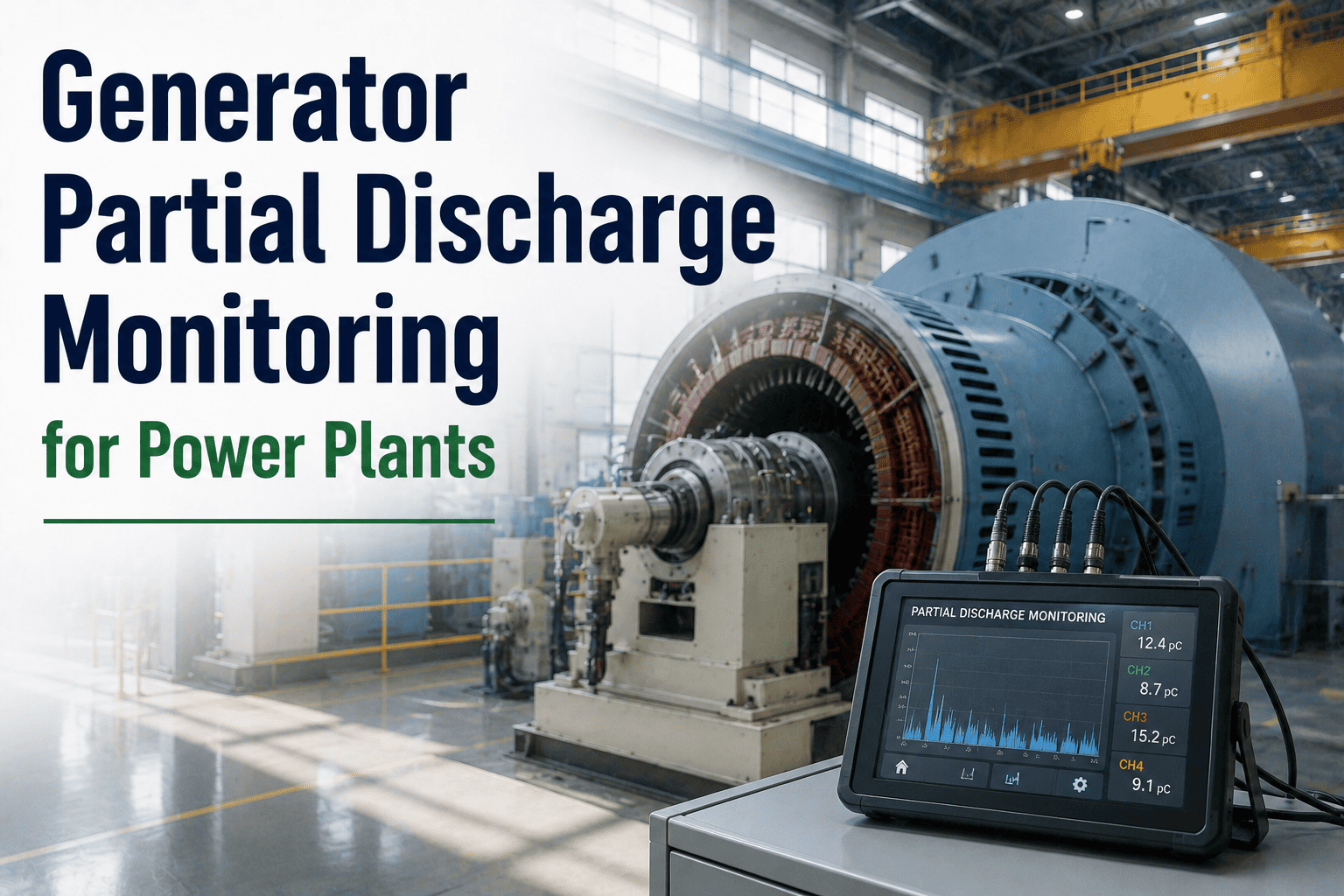
Generator partial discharge monitoring is the single most reliable early-warning method for detecting winding insulation degradation in power plant generators before it escalates into catastrophic failure. By continuously measuring PD activity — tiny electrical sparks inside or on the surface of stator winding insulation — maintenance and reliability teams can identify developing voids, delamination and slot discharge months ahead of a forced outage. Implementing a structured generator PD testing program, integrated with a modern CMMS, typically reduces unplanned generator downtime by 30–50% and extends winding life by 5–10 years. This guide covers measurement intervals, severity assessment, trending best practices and how OxMaint turns PD data into automated work orders — so you can move from reactive firefighting to predictive asset management. Start Free Trial to see it on your assets today.
Is Your Generator One Partial Discharge Away From a Forced Outage?
A single stator winding failure can cost a 500 MW plant over $1.2M per day in lost generation. Continuous generator partial discharge monitoring catches insulation degradation 3–6 months before failure — giving your reliability team the lead time to plan, schedule and repair during a planned window instead of an emergency.
What Partial Discharge Reveals About Generator Winding Health
Over 80% of stator winding failures in generators rated above 6 kV are preceded by measurable partial discharge activity that worsens over months or years.
Partial discharge is a localized electrical breakdown that does not completely bridge the insulation between conductors. In generator stator windings, PD originates from voids in the epoxy-mica insulation, delamination from thermal cycling, loose bars in the slot, or contamination from oil, moisture and conductive dust. Each PD pulse erodes insulation — slowly at first, then accelerating as voids grow and connect. The key insight for reliability teams: PD magnitude and pulse count are trending indicators, not pass/fail values. A generator showing 200 pC today is not alarming — but if that same unit was 80 pC six months ago, it demands investigation.
How to Build a Generator PD Monitoring Program: A Step-by-Step Timeline
A mature generator health monitoring program rolls out in five phases over 6–12 months, moving from baseline measurement to fully automated, CMMS-integrated predictive maintenance.
Baseline PD Measurement
Install permanent PD sensors (epoxy mica capacitors or RTD-mounted coupling antennas) on each phase. Conduct offline PD tests at 1.5× rated voltage and online PD surveys at full load. Record baseline Qmax (peak discharge magnitude), NQN (pulse count) and phase-resolved partial discharge (PRPD) patterns.
Severity Assessment & Categorization
Compare baseline values against IEEE 1434 guidelines and OEM acceptance criteria. Categorize each generator as Normal, Watch, Alarm or Critical. Flag units with PD > 2× baseline or trending upward over 3 consecutive readings for enhanced monitoring frequency.
Continuous Online Monitoring Deployment
For Alarm-tier generators, install continuous online PD monitors with data logging at 15-minute intervals. Feed PD data streams into your CMMS via API or OPC-UA so that threshold breaches automatically trigger work order generation — no manual data export required.
PRPD Pattern Analysis
Train reliability engineers to interpret phase-resolved PD patterns. Internal voids show symmetric patterns in both half-cycles; slot discharge shows asymmetry; surface discharge shifts with humidity. Pattern analysis distinguishes a true defect from a noise artifact — preventing unnecessary outages.
Predictive Maintenance Integration
Correlate PD trends with load, temperature, humidity and hydrogen pressure data. Set dynamic alarm thresholds that adjust for operating conditions. The CMMS auto-generates preventive work orders for wedge tightening, re-wedging or visual inspection when PD crosses severity bands — closing the loop from detection to action.
Generator PD Severity Levels & Action Thresholds
Use these severity bands — aligned with IEEE 1434 and EPRI guidelines — to standardize your team's response to PD trends and trigger the right CMMS work order automatically.
| Severity Level | PD Trend vs. Baseline | Monitoring Frequency | CMMS Action |
|---|---|---|---|
| Normal | < 1× baseline, stable | Quarterly online survey | Log reading, no work order |
| Watch | 1–2× baseline or slight upward trend | Monthly online survey | Auto-create inspection task |
| Alarm | 2–5× baseline, sustained increase | Continuous online monitoring | Generate priority work order + notify reliability engineer |
| Critical | > 5× baseline or pattern shift indicating slot/void discharge | Continuous + PRPD pattern analysis weekly | Plan outage within 30 days; auto-escalate to plant manager |
Where Qmax is peak discharge magnitude, NQN is pulse repetition rate, and K factors normalize for operating temperature and humidity. SI > 4.0 triggers Alarm; SI > 10.0 triggers Critical. Trend SI monthly in your CMMS to spot acceleration early.
CMMS Integration: From PD Data to Automated Work Orders
OxMaint connects generator PD monitors directly to your maintenance workflow — turning raw sensor data into prioritized, auto-generated work orders with parts, labor estimates and safety procedures attached.
Real-Time PD Threshold Alerts
API integration with major PD monitors (Iris Power, Doble, Megger) ingests Qmax and NQN every 15 minutes. When readings cross your severity bands, OxMaint auto-generates a work order with the correct priority, assigned technician and checklist — cutting response time from days to minutes.
Winding Health Trend Dashboards
Every PD reading is stored against the generator asset record and visualized on a trend chart with temperature, load and humidity overlays. Reliability engineers see 3-year trends in one click — no Excel exports, no manual data entry. Spot accelerating trends before they become alarms.
Auto-Generated Inspection Work Orders
When a generator moves from Watch to Alarm, OxMaint creates a wedge-tightening or visual inspection work order with parts (resin, fillers, wedges) pulled from inventory, estimated labor hours and lockout/tagout procedures attached. Your team walks to the job with everything ready.
Audit-Ready Compliance Records
Every PD reading, trend annotation, work order and completed task is timestamped and immutably stored. Generate NERC PRC-005 or IEEE 1434 compliance reports in one click. Auditors see the full chain from detection to corrective action — no scrambling through spreadsheets.
Worked Example: 180-Asset Power Plant Cuts Generator Downtime 40%
A 180-asset gas-fired power plant in the Midwest implemented continuous generator PD monitoring integrated with OxMaint CMMS. During month 8, the #2 generator's PD trend on phase B jumped from 180 pC to 640 pC over four weeks — a 3.5× increase. The OxMaint system auto-generated a Critical-priority work order and notified the reliability engineer, who confirmed slot discharge via PRPD pattern analysis. The team scheduled a planned 3-day outage for re-wedging and bar tightening during a low-demand period, avoiding what would have been a 14-day forced outage and a $1.1M emergency repair. Total cost of the planned intervention: $38K. Avoided cost: $860K in lost generation and emergency labor.
See OxMaint PD Monitoring on Your Generators
Book a 30-minute demo and we'll show you how to connect your PD sensors, automate work orders and trend winding health — on your actual asset list.
Generator Partial Discharge Monitoring: Frequently Asked Questions
How often should generator partial discharge monitoring be performed?
For generators rated above 6 kV, conduct an online PD survey at least quarterly under normal conditions, and monthly for units on Watch-level status. Generators in Alarm or Critical severity bands require continuous online monitoring with 15-minute data logging. Offline PD tests should be performed during every major planned outage (every 5–8 years) at 1.5× rated voltage to establish a clean baseline free from load-related noise. Integrate the schedule into your CMMS so readings auto-trigger based on asset condition, not just calendar dates.
What is an acceptable partial discharge level for a generator?
There is no universal pass/fail PD magnitude — it depends on generator voltage class, insulation type (asphalt, epoxy-mica, thermalastic) and operating conditions. IEEE 1434 recommends trending PD against each unit's own baseline rather than using absolute thresholds. As a general guide, a sustained Qmax above 2× baseline warrants investigation, and above 5× baseline typically requires a planned outage. PRPD pattern analysis is essential to distinguish true internal voids from surface contamination or electrical noise.
What causes partial discharge in generator stator windings?
The most common causes are voids within the epoxy-mica insulation from manufacturing defects or thermal aging, delamination from thermal cycling, loose stator bars in the slot causing vibration abrasion, and surface contamination from oil leaks, moisture or conductive dust. Operating stresses — voltage transients, load cycling, overheating — accelerate these mechanisms. Early-stage PD is often internal and slow-growing; slot discharge and surface PD tend to progress faster and require more urgent action.
Can a CMMS automate generator PD monitoring workflows?
Yes. A CMMS like OxMaint integrates with PD monitoring hardware via API or OPC-UA to ingest readings automatically, trend them against baseline thresholds and generate work orders when severity bands are crossed. This eliminates manual data logging, ensures consistent response protocols and creates an audit trail for NERC PRC-005 and IEEE 1434 compliance. Book a demo to see the integration on your generator fleet.
What is the difference between online and offline generator PD testing?
Online PD testing measures discharge activity while the generator is running at normal voltage and load, capturing real operating conditions but with more background noise. Offline PD testing is performed during an outage with an external voltage source applied at 1.5× rated voltage, providing a cleaner, more sensitive measurement that detects early-stage voids. Both methods are complementary: offline tests establish baselines every 5–8 years, while online surveys and continuous monitoring track trends under real operating stresses between outages.
Stop Guessing. Start Trending Winding Health.
Join power plants using OxMaint to detect generator insulation failures 3–6 months early and cut unplanned downtime up to 50%.
Free 14-day trial · No credit card