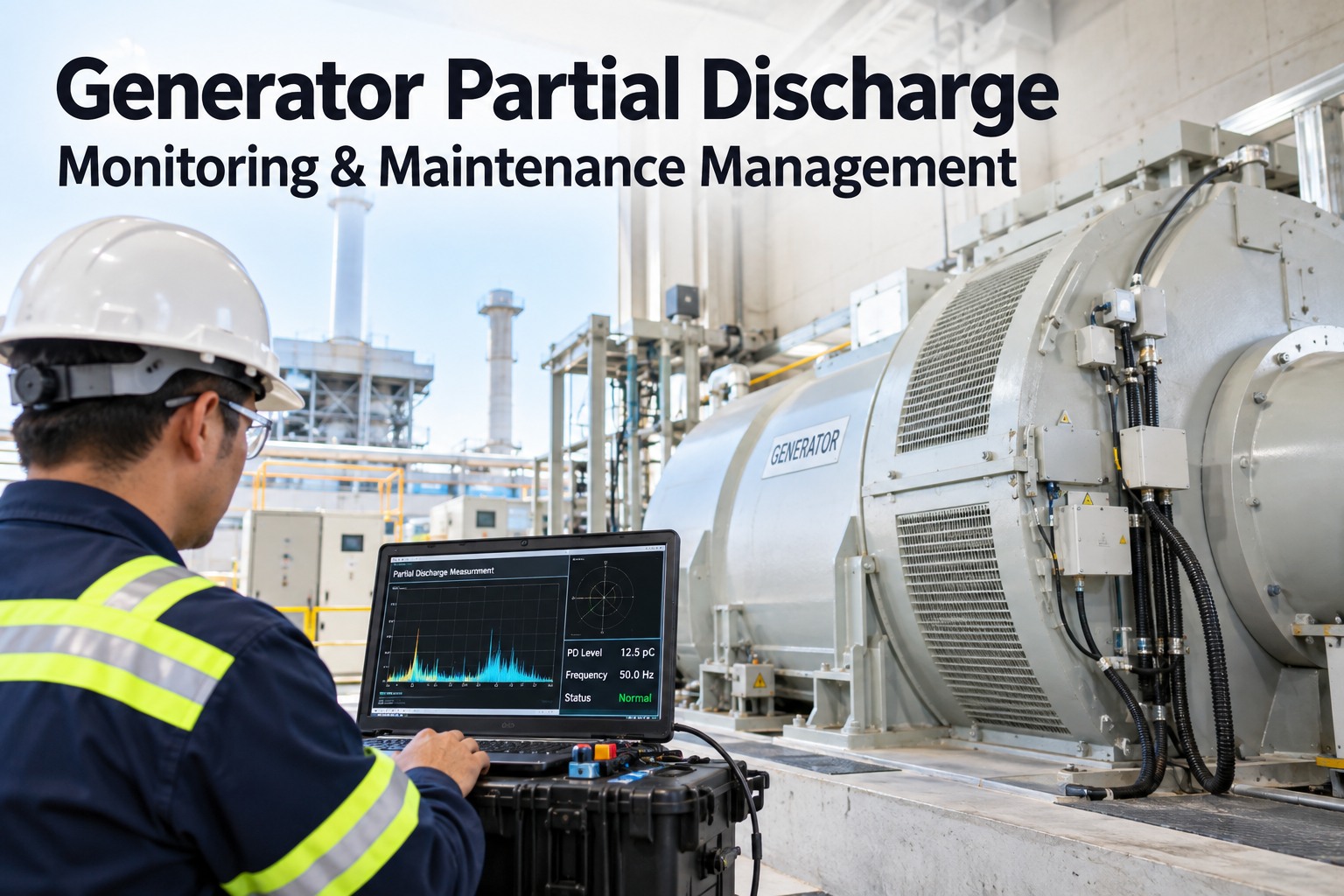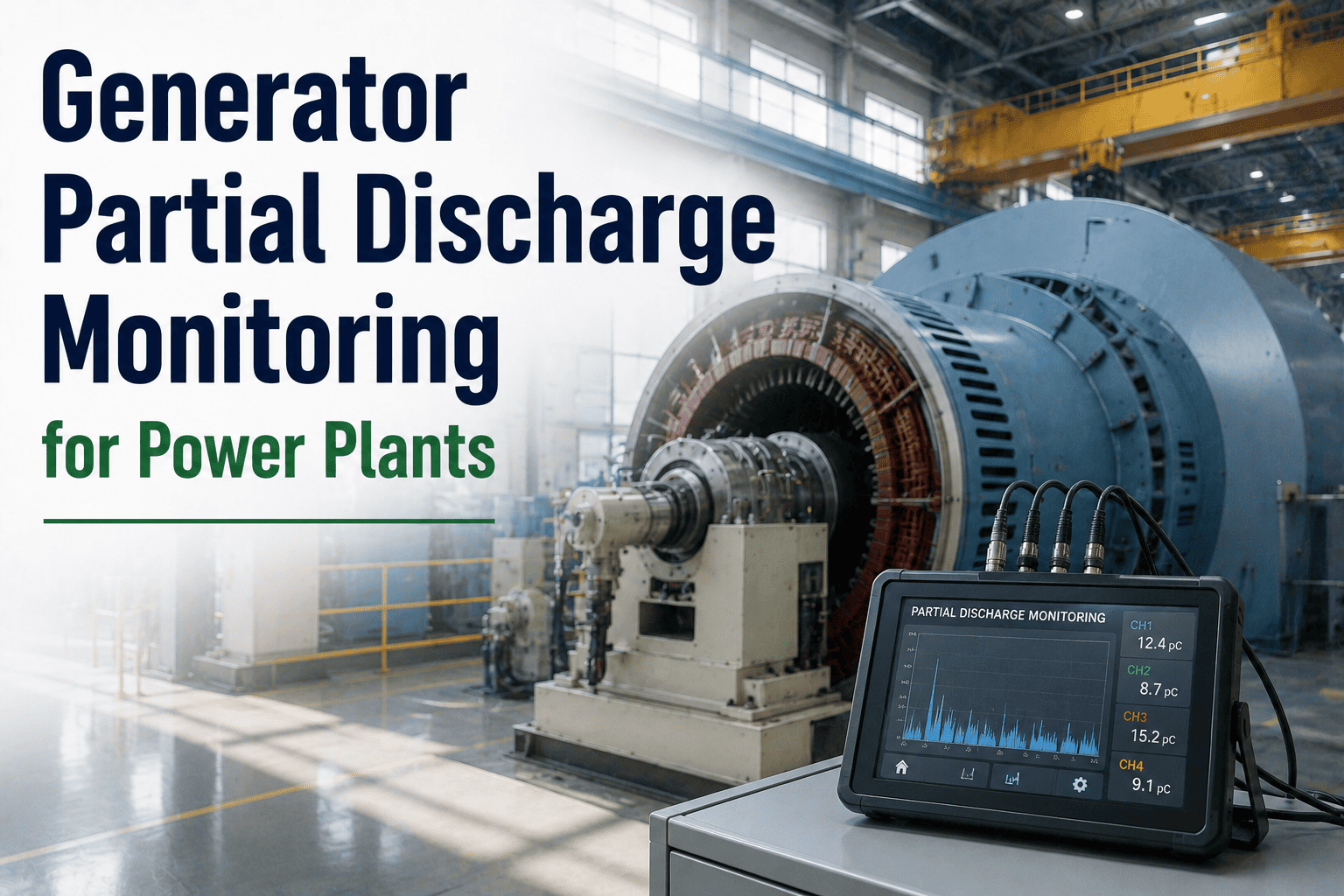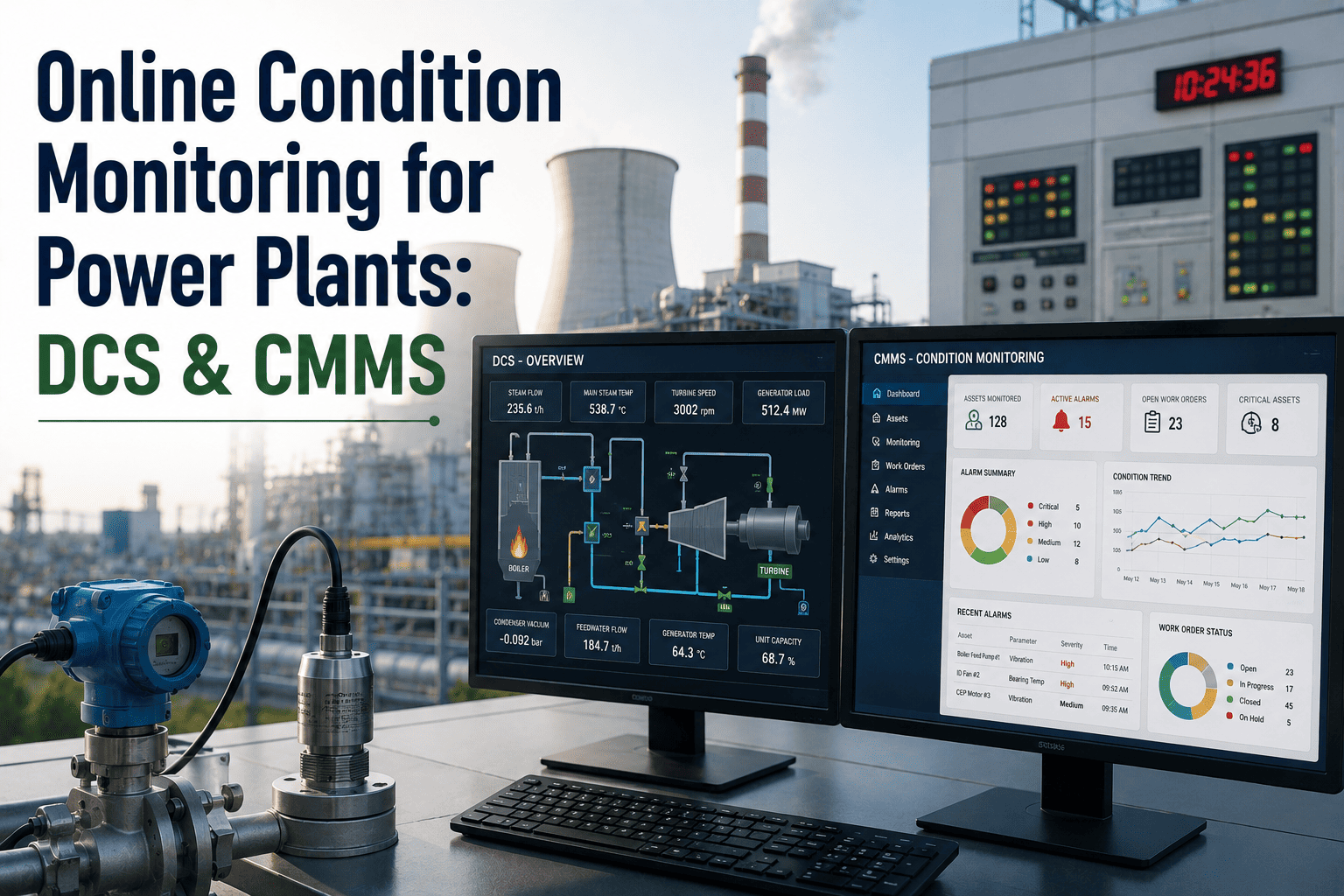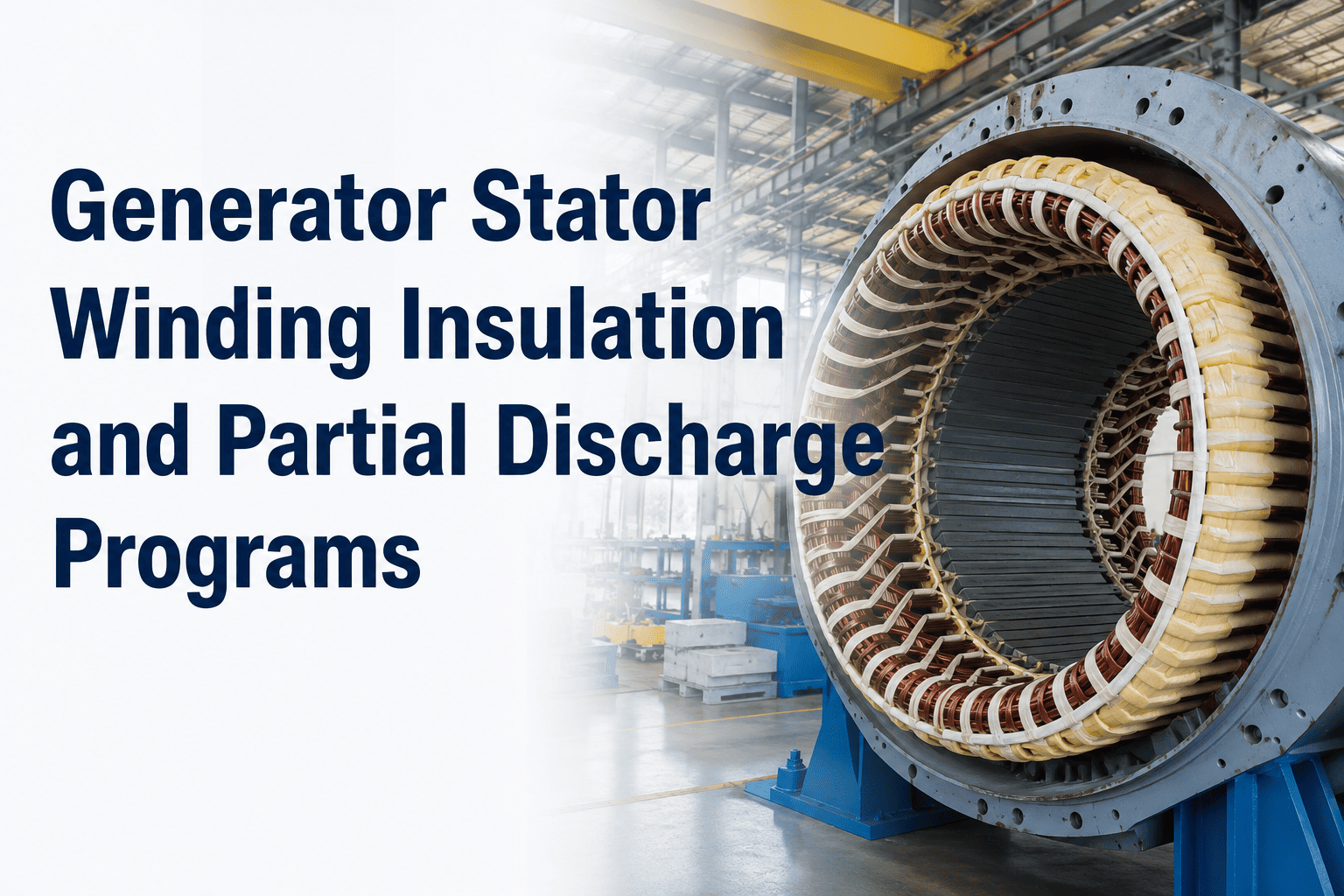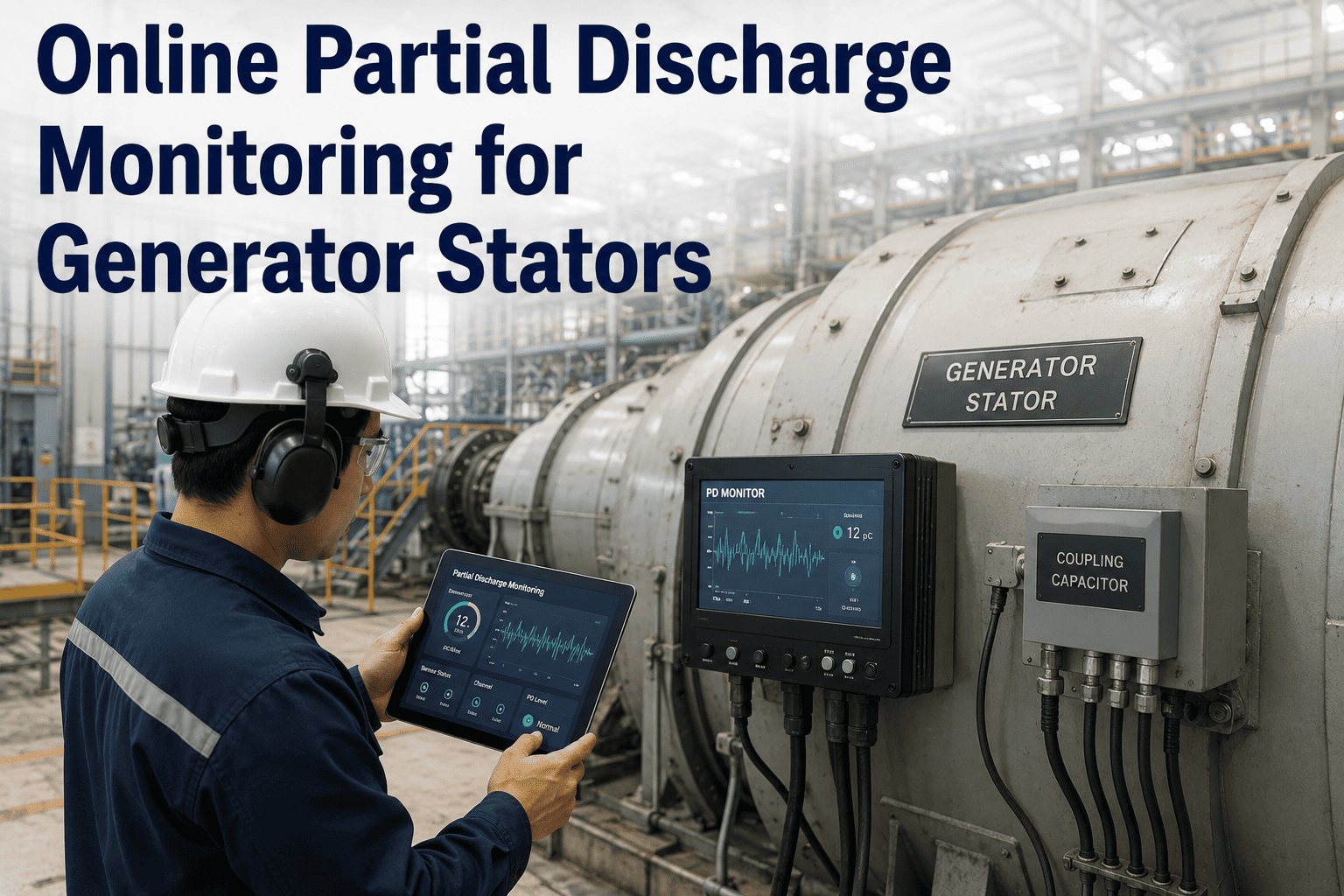
Generator stator insulation failures rank among the most expensive forced outages in thermal and hydro power plants — often running into crores of rupees in repair costs, replacement transformers, and lost generation revenue under CERC merit order dispatch. Yet the underlying insulation degradation that causes these failures develops over months, even years, as partial discharge (PD) activity silently erodes the winding insulation. Online partial discharge monitoring captures this deterioration in real time, without taking the generator offline, and feeds structured diagnostic data directly into a CMMS for predictive maintenance action. OxMaint closes the loop between PD sensor data, condition-based work orders, and asset health trending — giving power plant engineers the evidence they need to act before a stator failure pulls a unit off the grid. Book a demo to see how PD monitoring integrates with OxMaint predictive maintenance workflows.
Online Partial Discharge Monitoring for Generator Stators
Detect stator insulation deterioration in real time — without outages — and convert PD diagnostic data into predictive maintenance actions inside OxMaint before failure reaches your grid schedule.
What Partial Discharge Is — and Why It Destroys Stator Insulation
Partial discharge refers to localized electrical discharges within the insulation system of the stator winding that do not completely bridge the conductor gap. These discharges occur in voids, delaminations, and surface contamination sites within the epoxy-mica insulation. Left unchecked, PD activity erodes insulation material progressively — a process that accelerates under thermal cycling, moisture ingress, and vibration sparking common in Indian power plants operating under variable load conditions mandated by SLDC dispatch.
Gas-filled voids in epoxy-mica insulation become sites of repetitive micro-discharge. Each discharge oxidizes insulation material, expanding the void and accelerating the erosion cycle.
Thermal cycling separates bonded insulation layers. Air gaps at the delamination boundary produce slot discharge and surface tracking, particularly in stator bars near the slot exit.
Conductive deposits from oil, moisture, and airborne particulates on end-winding surfaces create leakage current paths, triggering corona and slot discharge visible in PD spectrum analysis.
Loose stator bars vibrating against the slot wall generate repetitive sparking discharge. This is a distinct PD pattern identifiable in online monitoring and correlates with bar looseness in slot inspection records.
How Online PD Monitoring Works on Operating Generators
PD Severity Levels and Maintenance Decision Framework
Not every PD signal requires immediate action. The value of online monitoring lies in calibrating response urgency to severity — so engineering teams can plan targeted interventions rather than reacting to every alarm. The framework below aligns PD severity with OxMaint work order priority and outage planning windows.
| Severity Level | Qmax / NQN Indication | PRPD Pattern | OxMaint Response | Outage Implication |
|---|---|---|---|---|
| Normal | Low, stable trend | No dominant pattern | Routine monitoring, trend logging | No change to outage schedule |
| Advisory | Moderate, slowly rising | Weak void or surface pattern | P3 work order, increased scan frequency | Flag for next planned outage review |
| Alert | High, rising trend or phase asymmetry | Clear void / slot discharge | P2 work order, engineering review within 30 days | Schedule targeted inspection at next opportunity |
| Urgent | Very high or rapid acceleration | Dominant delamination or vibration sparking | P1 work order, operations notification, RUL review | Consider early outage — coordinate with SLDC |
| Critical | Extreme, exponential rise | Multiple superimposed discharge types | Immediate escalation, forced outage planning | De-rate or plan forced outage to prevent failure |
How PD Data Flows Into OxMaint Predictive Maintenance
Each generator stator is registered in OxMaint with nameplate data, winding age, insulation class, and previous inspection history. PD alerts from the monitoring system link directly to the asset record — not a generic equipment category.
When PD levels cross configurable thresholds, OxMaint auto-generates a predictive maintenance work order with the PD trend report attached, priority assigned by severity level, and the responsible engineer notified on mobile.
OxMaint tracks remaining useful life estimates from PD trend data alongside the plant's planned outage calendar. Engineers can evaluate whether the degradation trajectory allows deferral to the next scheduled unit overhaul or requires a targeted borescope inspection window.
Findings from stator inspection during outages — bar looseness grades, delamination extent, surface contamination severity — are logged in OxMaint and correlated with the pre-outage PD record, improving diagnostic accuracy for the next monitoring cycle.
OxMaint maintains a complete audit trail of every PD alert, work order, inspection record, and closure — supporting CEA mandatory maintenance compliance under Indian Electricity Grid Code and CERC reliability reporting requirements.
Plant engineering leadership sees stator PD health across the entire fleet on a single OxMaint dashboard — NQN trend by unit, open predictive work orders by severity, planned vs. actual inspection completion, and historical MTBF by insulation class.
Industry Standards That Govern PD Monitoring for Generator Stators
What Power Plant Engineers Observe in PD Monitoring Programs
We used to rely entirely on offline PI and IR testing during annual overhauls. By the time the numbers showed serious degradation, we were already planning a rewind. Online PD monitoring gave us a 14-month window on one of our 210 MW units — we planned a targeted slot repair in a 10-day maintenance window rather than a 90-day forced rewind outage.
Senior Electrical Engineer · State GENCO · 500 MW Thermal Power StationThe phase asymmetry feature in PD trending identified a localized problem in Phase B on one of our hydro generators. The PRPD pattern was classic vibration sparking. We borescoped during a weekend shutdown, confirmed bar looseness in three slots, and packed them in two days. The alternative was a stator rewind that would have kept the unit offline through the monsoon peak.
Maintenance Manager · Central GENCO · Hydro Generation DivisionFrequently Asked Questions
Can online PD monitoring be installed on a generator without taking it offline?
Yes — capacitive couplers are installed at the generator terminal box during a brief outage window of 4–8 hours or, in some designs, with the machine energized using specialist high-voltage installation procedures. The monitoring system itself runs continuously once installed without further outages. OxMaint is configured in parallel so that the first PD alert triggers a properly structured work order from day one of monitoring.
How does OxMaint differentiate between a PD alarm and a routine monitoring record?
OxMaint applies configurable severity thresholds mapped to each generator asset. Below threshold, PD readings are logged as condition monitoring records against the asset history. When thresholds are crossed, the system auto-creates a maintenance work order with the appropriate priority, attaches the PD trend data, and routes the task to the assigned electrical maintenance team with mobile notification. Book a demo to review threshold configuration options for your generator fleet.
What is the typical PD monitoring sensor lifespan on a power plant generator?
Capacitive couplers installed at generator terminals typically have a service life of 15–25 years when rated appropriately for the machine voltage class (6.6 kV, 11 kV, or higher). Sensors do not require recalibration under normal service conditions, and their own health can be monitored through periodic signal injection tests. OxMaint maintains sensor PM schedules alongside generator maintenance tasks so that the monitoring infrastructure is inspected as part of scheduled outage work orders.
Can PD monitoring data from multiple generators be compared on a single platform?
Yes — OxMaint consolidates PD condition data across your entire generator fleet on a single dashboard. Plant engineers and maintenance managers can compare NQN index trends, open predictive work orders by severity, and historical inspection outcomes across units and stations. This fleet-level view is particularly valuable for multi-unit thermal stations where insulation age and operating history differ between units. Start free to configure your fleet generator health dashboard.
How does OxMaint support CEA compliance documentation from PD monitoring data?
Every PD alert, associated work order, inspection finding, and corrective maintenance record in OxMaint is timestamped and linked to the generator asset record. These records are exportable as structured compliance reports aligned with CEA Maintenance Regulations and CERC reliability reporting formats. The audit trail includes the original sensor data reference, the maintenance decision made, the technician who performed the work, and the post-maintenance condition assessment — providing complete documentation for regulatory inspection without manual compilation.
Stop Scheduling Stator Rewinds. Start Preventing Them.
OxMaint connects your online PD monitoring layer to condition-based work orders, remaining life tracking, and outage planning — so every degradation signal becomes a documented, actionable maintenance decision before a forced outage reaches your SLDC dispatch schedule.