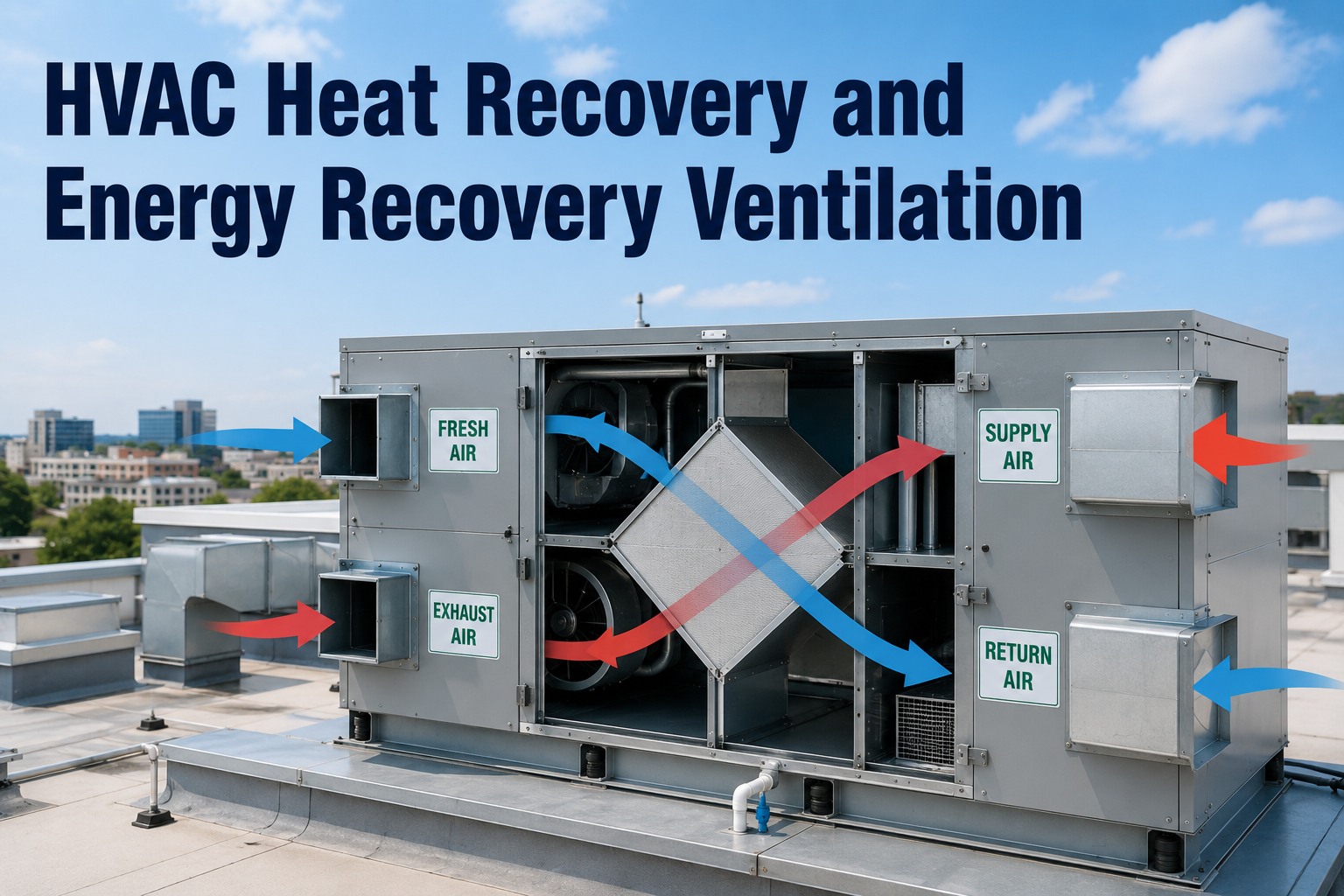
Every building code makes you bring in fresh outdoor air, and conditioning that air is one of the largest loads your HVAC system carries. Heat recovery and energy recovery ventilation exist to claw back the energy in the air you're already throwing out — a heat recovery ventilator (HRV) transfers heat, an energy recovery ventilator (ERV) transfers heat and moisture — recovering as much as 60–80% of it. But that recovery is not a fixed asset. A unit commissioned at 82% effectiveness quietly drifts to 68% as filters load, seals compress and cores foul — and nobody sees it until an energy audit or an inspection does. This guide covers keeping that recovery alive: wheel and plate care, seal integrity, defrost verification, and filter discipline. Start free or book a demo.
HVAC Heat Recovery & Energy Recovery Ventilation
You already paid for the energy in your exhaust air. Recovery ventilation captures 60–80% of it back — but only while the wheel spins true, the seals hold, and the filters stay clean. Here's how to keep the investment delivering.
How Recovery Works — and Where the Energy Goes Back
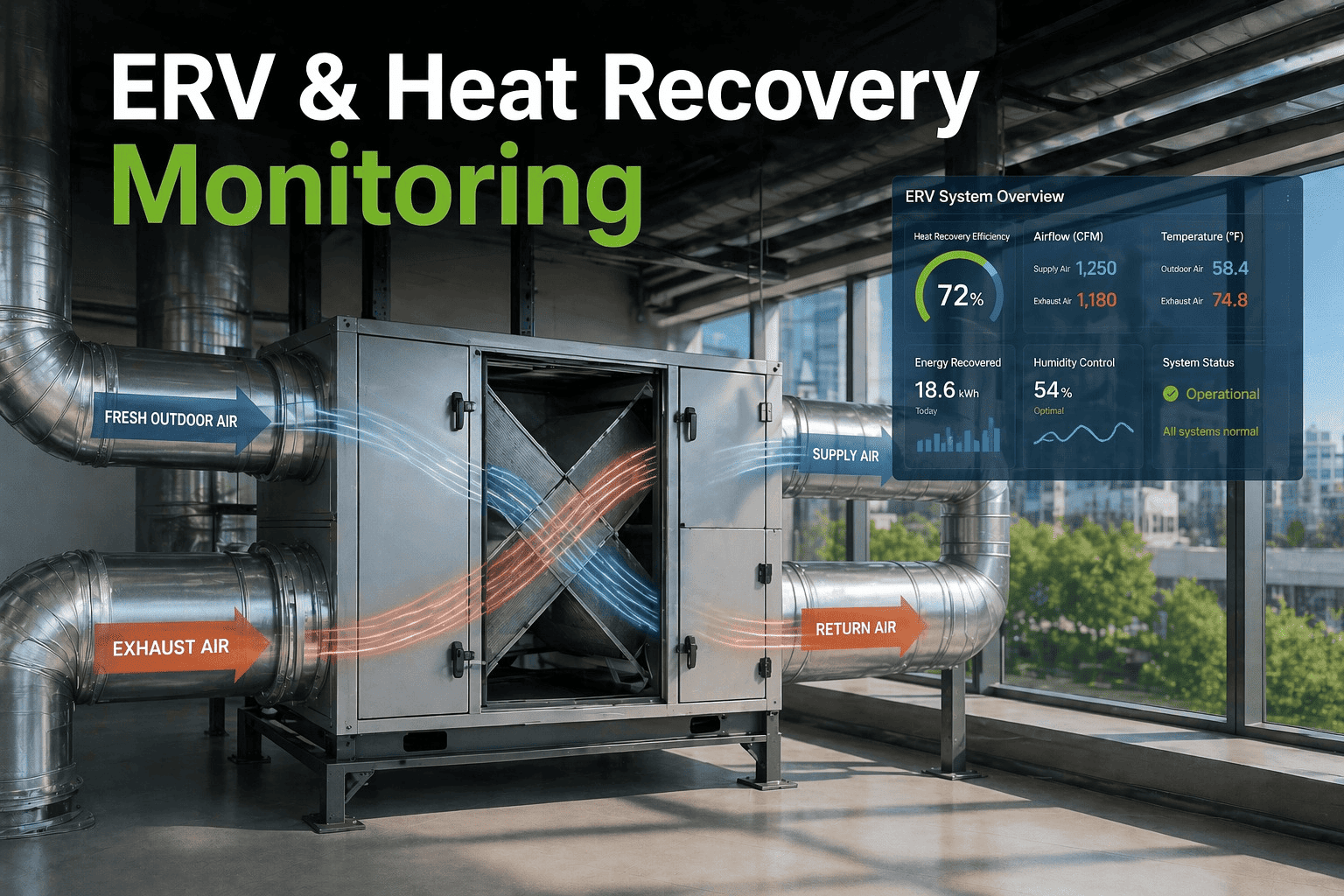
The principle is simple: outgoing stale air and incoming fresh air pass close enough to trade energy without mixing. In winter, warm exhaust pre-heats cold intake; in summer, cool exhaust pre-cools hot intake. An ERV also trades moisture, so it pre-dries humid summer intake and retains moisture in dry winter. Every degree and every grain of moisture transferred is load the chiller or furnace doesn't have to carry. The catch is that every part doing the transferring degrades — and each kind of degradation hands the energy straight back. Sign up free and OxMaint tracks each recovery unit as its own asset, so the wheel, seals, filters and defrost each carry their own schedule.
Know Your Exchanger: The Core Decides the Maintenance
Recovery comes in a few exchanger types, and the type drives everything about how you maintain it — what you can wash, what you must only vacuum, and what has moving parts to wear. Misidentify the core and you can destroy it: washing an ERV paper core with water ruins the moisture-transfer membrane permanently. Book a demo to see per-core maintenance procedures attached to each unit, so a tech never guesses whether this one washes or only vacuums.
The Four Ways Recovery Silently Leaks Away
A recovery unit rarely fails outright — it degrades. Effectiveness bleeds off through four channels, each invisible from the hallway and each quietly enlarging your HVAC bill. These are the four to stay ahead of. Sign up free and log each of these against the unit with its own interval, so degradation shows up as an overdue task instead of an audit finding.
A Unit Running at 68% Was Commissioned for 82%. Nobody Filed a Work Order — Because Nothing "Broke."
That 14-point gap is not a ventilation fault; it's an energy cost, a comfort complaint, and a compliance exposure sitting quietly on the roof. Recovery degradation never trips an alarm — it just shows up on the utility bill and, eventually, on an ASHRAE 90.1 inspection. OxMaint turns every filter change, core inspection, seal check and defrost verification into a scheduled task per unit, so the drift that used to hide until audit becomes a task someone closes on time.
The Maintenance Program That Protects the Investment
Keeping recovery alive is an interval discipline: filters often, cores and seals seasonally, effectiveness once a year against the commissioned baseline. Here's the rhythm that holds effectiveness where it was designed to be. Book a demo to see these auto-scheduled per unit with the right procedure — wash vs vacuum — attached to each core type.
- Inspect and replace filters on both airstreams
- Check filter fit — no bypass gaps around the frame
- Confirm airflow and static pressure look normal
- Verify condensate drain flows freely (plate cores)
- Clean the core — wash HRV plate, vacuum ERV paper
- Inspect seals, gaskets and bypass dampers
- Check wheel drive belt, motor and bearings (rotary)
- Inspect intake/exhaust ducts for blockage or leaks
- Verify the defrost strategy actually cycles
- Confirm frost threshold and controls respond
- Check core for prior frost damage
- Test bypass / preheat / tilt frost mechanism
- Verify effectiveness vs the commissioned baseline
- Assess EATR — no exhaust odor in supply
- Calibrate sensors and controllers
- Confirm the wheel purge section is set correctly
Reactive Servicing vs. Recovery Tracked in OxMaint
Most recovery units get attention only when a comfort complaint or a failed inspection forces it. By then the effectiveness has been leaking for a year and the energy is long gone. Here's what changes when the recovery program lives in a CMMS. Start free and put your first unit's schedule and baseline on record this week.
What OxMaint's Maintenance Software Does for Recovery Ventilation
A recovery program is a recurring schedule of filter, core, seal and defrost tasks whose entire payback depends on nothing being skipped and effectiveness being checked against a baseline. That's exactly what a CMMS holds together. Here's the concrete mapping. Book a demo to see it against your unit list.
OxMaint doesn't run your air handlers — it makes sure the recovery equipment bolted to them keeps delivering the savings it was specified to deliver. Sign up free and build your first recovery unit's program this week, or book a demo to walk it against your building.
We have 22 rooftop units with energy recovery across a campus, a mix of enthalpy wheels and plate cores, and our whole program was "change the filters when someone complains about a stuffy zone." An energy audit flagged three units running 12–15 points below their commissioned effectiveness — one had a wheel drive belt so worn it was barely turning, another had a compressed perimeter seal letting exhaust bleed into supply. We put every unit into OxMaint with its core type, the right cleaning procedure, and a defrost check before winter. The audit finding that started this is now a trend line we watch, filter changes happen on schedule, and last year's ASHRAE evidence was a single export. The savings we designed for are finally the savings we get.
Frequently Asked Questions
Stop Giving Back the Energy You Already Paid to Recover.
OxMaint schedules every filter, core, seal and defrost task per recovery unit, attaches the right procedure to each core type, trends effectiveness against the commissioned baseline, and keeps ASHRAE 90.1 evidence on record — so recovery stays where it was designed instead of drifting onto the utility bill. Start free — no credit card, unlimited users, forever. Or book a demo for a building-specific walkthrough.