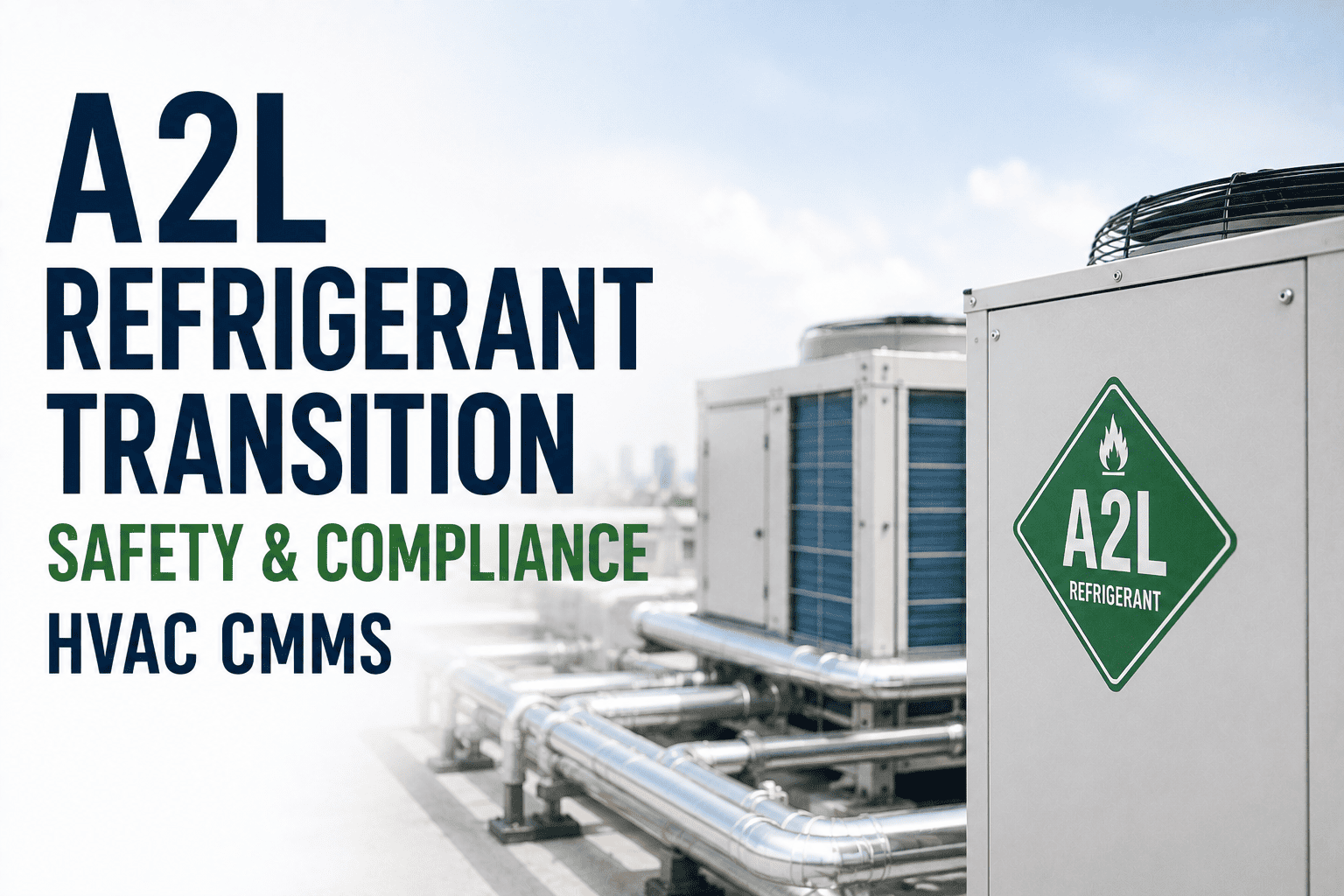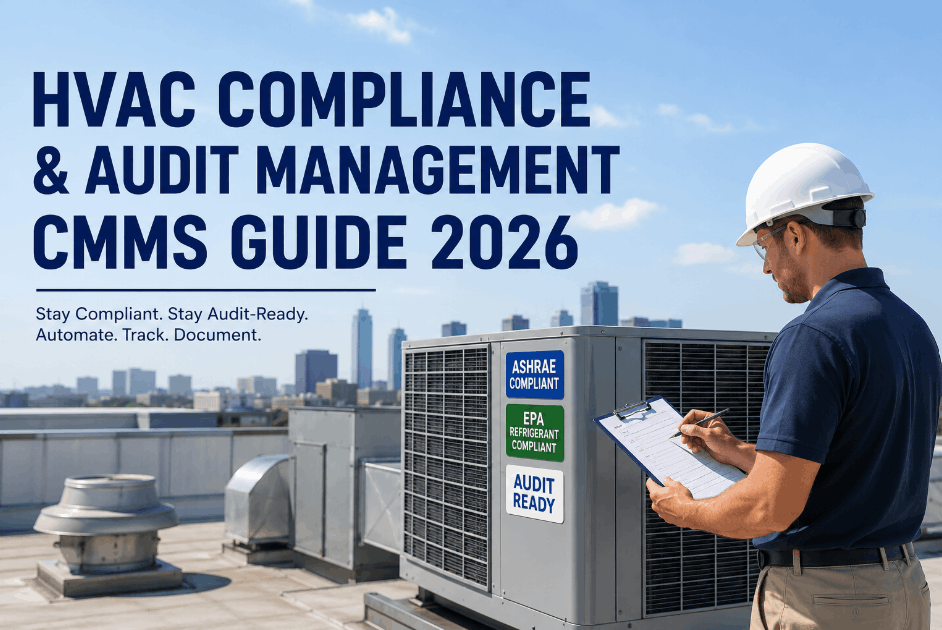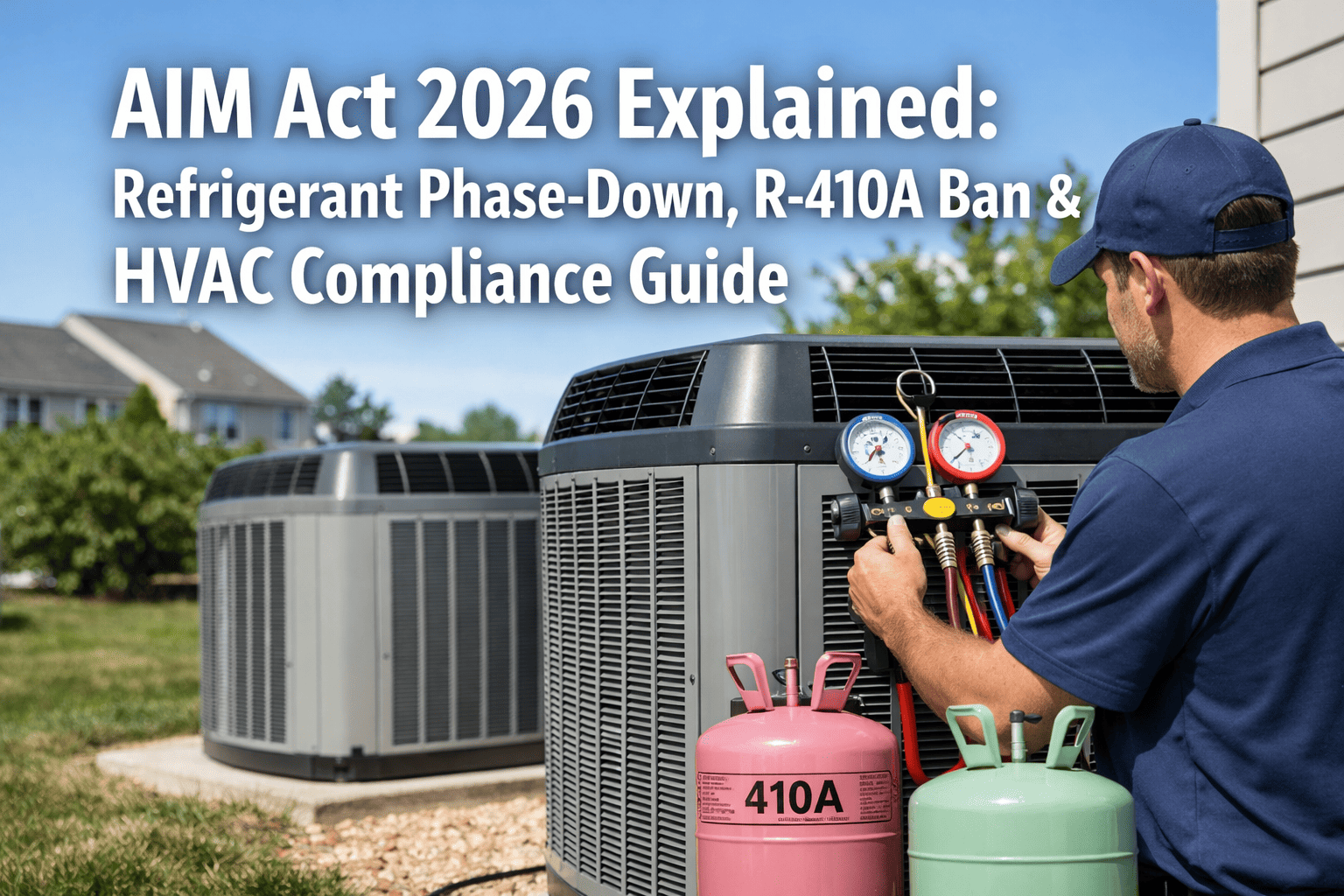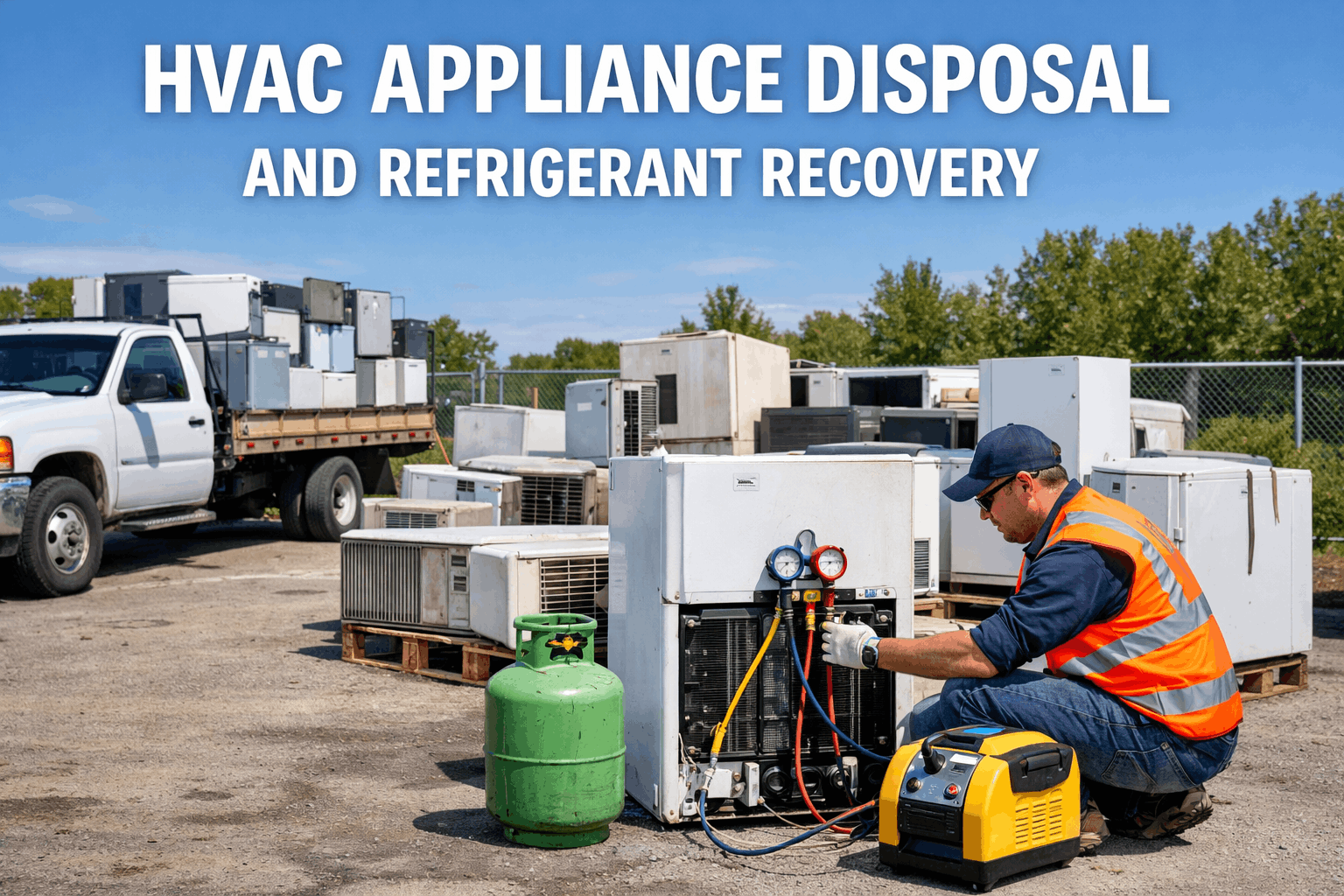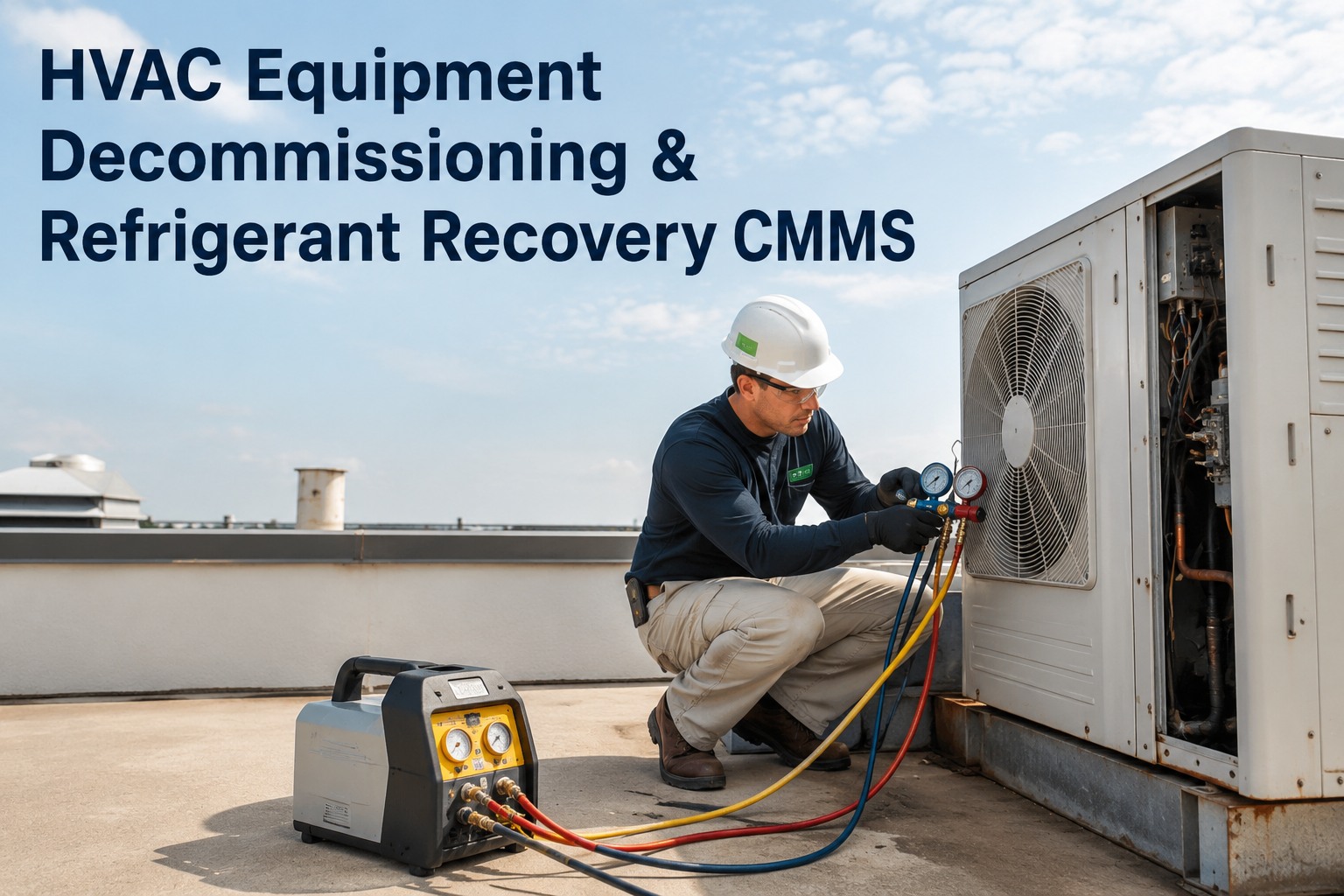
HVAC decommissioning is the controlled process of safely retiring cooling towers, chillers, split systems, and refrigerant-containing equipment at end-of-life — and it is one of the most compliance-heavy tasks a maintenance team faces. A single chiller can hold 100 to 1,000 pounds of refrigerant, and under EPA Section 608 and the AIM Act, venting or improper disposal can trigger fines reaching $60,000 per violation. This HVAC decommissioning guide covers the full refrigerant recovery workflow, asset retirement documentation, and disposal best practices, then shows how a decommissioning CMMS like OxMaint automates compliance tracking, work-order control, and audit-readiness so nothing slips through the cracks. If your team is still managing equipment disposal with spreadsheets and paper logs, it is time to Start Free Trial and modernize your retirement workflow before your next audit.
HVAC DECOMMISSION GUIDE 2026
Can your team prove every pound of refrigerant was recovered — and every asset was retired correctly?
EPA Section 608 penalties reach $60,000 per violation, and undocumented HVAC equipment disposal is the #1 audit failure for maintenance teams managing 50+ assets. OxMaint turns refrigerant recovery and asset retirement into a fully traceable, CMMS-driven workflow — no paper logs, no spreadsheet gaps, no compliance exposure.
STEP-BY-STEP WORKFLOW
The 5-stage HVAC decommissioning & refrigerant recovery timeline
A defensible HVAC retirement workflow spans 2 to 4 weeks per major asset and touches maintenance, compliance, procurement, and waste-hauler teams. Skip any stage and you risk EPA violations, lost refrigerant credits, and ghost assets bloating your CMMS register. Here is the stage-by-stage timeline a CMMS decommissioning module should orchestrate.
Pre-decommissioning assessment & compliance check
Tag the target asset in your CMMS, pull its full maintenance history, and identify refrigerant type and charge quantity from the equipment nameplate. Verify whether the refrigerant (R-410A, R-22, R-134a, ammonia) is subject to phase-down under the AIM Act or a mandatory reclaim requirement under Section 608.
Refrigerant recovery by certified technician
A Section 608-certified technician recovers refrigerant to the required vacuum level — typically 0 inches Hg for small appliances, 10 inches Hg for systems under 200 lbs, and 15 inches Hg for larger systems. Record recovery date, technician license number, pounds recovered, and cylinder serial number directly in a decommissioning work order.
Electrical lockout & mechanical dismantle
Execute LOTO, drain oils and fluids (some carry CFC contamination requiring hazardous-waste handling), cut and cap refrigerant lines, and section the unit for removal. Photograph the process at each step — these images become your disposal documentation if auditors question the retirement years later.
Scrap, recycle, or certified destruction
Ship metal to a recycler, send recovered refrigerant to an EPA-certified reclaimer, and dispose of contaminated oils as hazardous waste under RCRA. Capture weight tickets, bills of lading, and reclaimer receipts — all of which attach to the asset record in your CMMS for a complete, auditable chain of custody.
Asset retirement, documentation, and register update
Mark the asset as retired in the CMMS asset register, null-link its PM schedule, release spare parts back to inventory, and file the decommissioning documentation pack. Done right, this entire history stays searchable — proving to any auditor that the retirement followed EPA, state, and corporate ESG policy.
CHECKLIST
HVAC decommissioning checklist: 14 items your work order must capture
Missing documentation is the single biggest driver of EPA fines and failed insurance claims tied to equipment disposal. Every decommissioning CMMS work order should enforce these 14 checkpoint confirmations before the asset can be marked retired.
Pre-Removal Compliance
- Asset tagged in CMMS with retirement reason
- Refrigerant type and charge quantity verified
- Section 608 technician certification on file
- AIM Act phase-down status reviewed
Refrigerant Recovery
- Recovery cylinder serial number logged
- Net weight of refrigerant recovered recorded
- System pulled to required vacuum level
- Reclaimer receipt or cylinder transfer form attached
Dismantle & Disposal
- LOTO permit issued and signed off
- Contaminated oil drained and manifested as hazardous
- Scrap metal weight ticket captured
- Bill of lading filed in CMMS asset record
CMMS Closeout
- PM schedules null-linked to retired asset
- Spare parts released back to storeroom inventory
- Decommissioning documentation pack archived & searchable
COST & COMPLIANCE
What HVAC equipment decommissioning actually costs — and what poor documentation risks
A mid-sized facility retiring 10 HVAC units per year spends $18,000 to $45,000 on the decommissioning process itself — technician labor, refrigerant reclaim fees, hazardous waste hauling, and scrap. The real financial risk, however, is the compliance exposure layered on top of those direct costs.
Annual Decommissioning Cost Formula
(Units Retired × Avg Recovery & Labor Cost) + Refrigerant Reclaim Credits + Hazardous Waste Fees + Documentation Overhead
Worked example: A 180-asset plant retiring 12 units/yr at $1,800/unit in recovery labor, plus $2,400 in reclaim fees and $1,200 in waste hauling = $25,200/yr in direct decommissioning spend. Without a CMMS, add 40–60 hours of admin time chasing paper records — and a potential $180K+ in EPA fines if just three recoveries are undocumented.
| Cost & Risk Factor | Spreadsheet / Manual | OxMaint CMMS |
|---|---|---|
| EPA Section 608 audit prep time | 40–60 hrs / quarter | 2–4 hrs (auto-generated report) |
| Refrigerant recovery documentation | Paper logs, prone to loss | Digital, photo-attached, immutable |
| Ghost assets in register after retirement | 12–18% of register | 0% — auto-retired on work order close |
| Avg cost per undocumented disposal (fine exposure) | Up to $60,000 / violation | Eliminated — full chain of custody |
| Time to locate disposal records for audit | 2–5 days of searching | Instant search by asset ID |
| Spare parts stranded on retired assets | $2K–$8K / yr trapped | Auto-released to storeroom on retirement |
HOW OXMAINT HELPS
How OxMaint's decommissioning CMMS eliminates refrigerant recovery risk
OxMaint bakes HVAC decommissioning into a structured, AI-assisted work-order workflow — so every pound of refrigerant is tracked, every document is attached, and every retired asset disappears from your active register the moment it should. Here are four concrete capabilities and the measurable outcomes they deliver.
Decommissioning Work-Order Templates
Pre-built HVAC retirement work orders enforce the 14-point decommissioning checklist, require technician certification entry, and block close-out until refrigerant weight, cylinder serial, and reclaimer receipt are attached.
Cuts audit prep time by 85% — from 50 hours to under 4 hours per quarter.
Automated Asset Retirement
Closing a decommissioning work order automatically marks the asset as retired, null-links its PM schedules, and releases tied spare parts back to inventory — no manual register cleanup or stranded parts.
Eliminates the 12–18% ghost-asset bloat that inflates PM costs and skews reliability metrics.
Refrigerant Compliance Tracking
Track refrigerant type, charge quantity, recovery weight, and technician license number per asset. OxMaint flags units containing phased-out refrigerants (R-22, high-GWP HFCs) so you can prioritize retirement before AIM Act deadlines tighten.
Zero undocumented recoveries — removing up to $60K per-violation EPA fine exposure.
Audit-Ready Documentation Vault
Every photo, receipt, weight ticket, and bill of lading attaches to the asset's permanent record. Generate a complete decommissioning documentation pack in one click — searchable by asset ID, date, or refrigerant type for any inspector.
Turns a 5-day audit scramble into a 5-minute report export.
REAL-WORLD SCENARIO
A 180-asset plant: from spreadsheet chaos to zero-fine decommissioning
"
A food-processing facility running 180 HVAC and process-cooling assets was retiring 12 units per year using a shared spreadsheet and paper recovery logs. During a state environmental audit, they could not produce refrigerant recovery records for 4 of the previous year's retirements — triggering $45,000 in penalties and 80 hours of remediation paperwork. After implementing OxMaint, every decommissioning work order now enforces photo-verified recovery documentation, and the plant passed its next audit with zero findings. The compliance manager called it "the fastest software decision we ever made — it paid for itself in avoided fines before the first invoice."
SEE IT ON YOUR ASSETS
Stop risking $60K EPA fines on undocumented HVAC disposals
Book a 30-minute demo and see how OxMaint turns refrigerant recovery and asset retirement into a fully traceable, audit-ready workflow — built for maintenance teams managing 50+ HVAC assets.
FAQ
HVAC decommissioning & refrigerant recovery: frequently asked questions
What is HVAC equipment decommissioning?
HVAC equipment decommissioning is the controlled process of safely retiring and disposing of chillers, cooling towers, split systems, and other refrigerant-containing equipment at end of life. It includes refrigerant recovery, electrical and mechanical dismantling, hazardous waste handling, scrap recycling, and full documentation — all coordinated through a CMMS decommissioning workflow to ensure EPA and corporate compliance.
How much refrigerant must be recovered during HVAC decommissioning?
Under EPA Section 608, technicians must recover refrigerant to specific vacuum levels before disposing of any HVAC equipment: 0 inches Hg for small appliances, 10 inches Hg for systems holding less than 200 lbs, and 15 inches Hg for larger systems. The recovered refrigerant must be sent to an EPA-certified reclaimer or recycled for reuse, with quantities logged in your decommissioning documentation.
What documentation is required for HVAC disposal compliance?
You need the technician's Section 608 certification number, refrigerant type and quantity recovered, recovery cylinder serial number, reclaimer receipt or transfer form, scrap metal weight tickets, hazardous waste manifests for contaminated oils, and bills of lading. A CMMS like OxMaint attaches all of these to the asset's permanent record — you can Start Free Trial and generate a complete documentation pack in one click.
How does a CMMS handle asset retirement for HVAC equipment?
A decommissioning CMMS uses structured retirement work orders that enforce the full checklist — refrigerant recovery, LOTO, dismantling, disposal, and documentation — before allowing the asset to be marked retired. Upon close-out, the system automatically null-links PM schedules, releases spare parts back to inventory, and archives the complete history so the asset disappears from the active register but remains searchable for audits.
What are the EPA penalties for improper HVAC refrigerant disposal?
EPA Section 608 violations for knowingly venting refrigerant or failing to document recovery can result in fines up to $60,000 per violation, with separate penalties under the AIM Act for high-GWP refrigerant mishandling. For a facility retiring multiple units without proper documentation, cumulative exposure can reach hundreds of thousands of dollars — making a CMMS-driven decommissioning workflow one of the highest-ROI compliance investments a maintenance team can make. Book a Demo to see the workflow in action.
READY TO MODERNIZE?
Make HVAC decommissioning the most compliant thing your team does this year
OxMaint gives you the CMMS decommissioning workflow, refrigerant tracking, and audit-ready documentation that spreadsheets and paper logs never could. Start your free trial or book a demo — see it on your assets in 30 minutes.
Free 14-day trial · No credit card