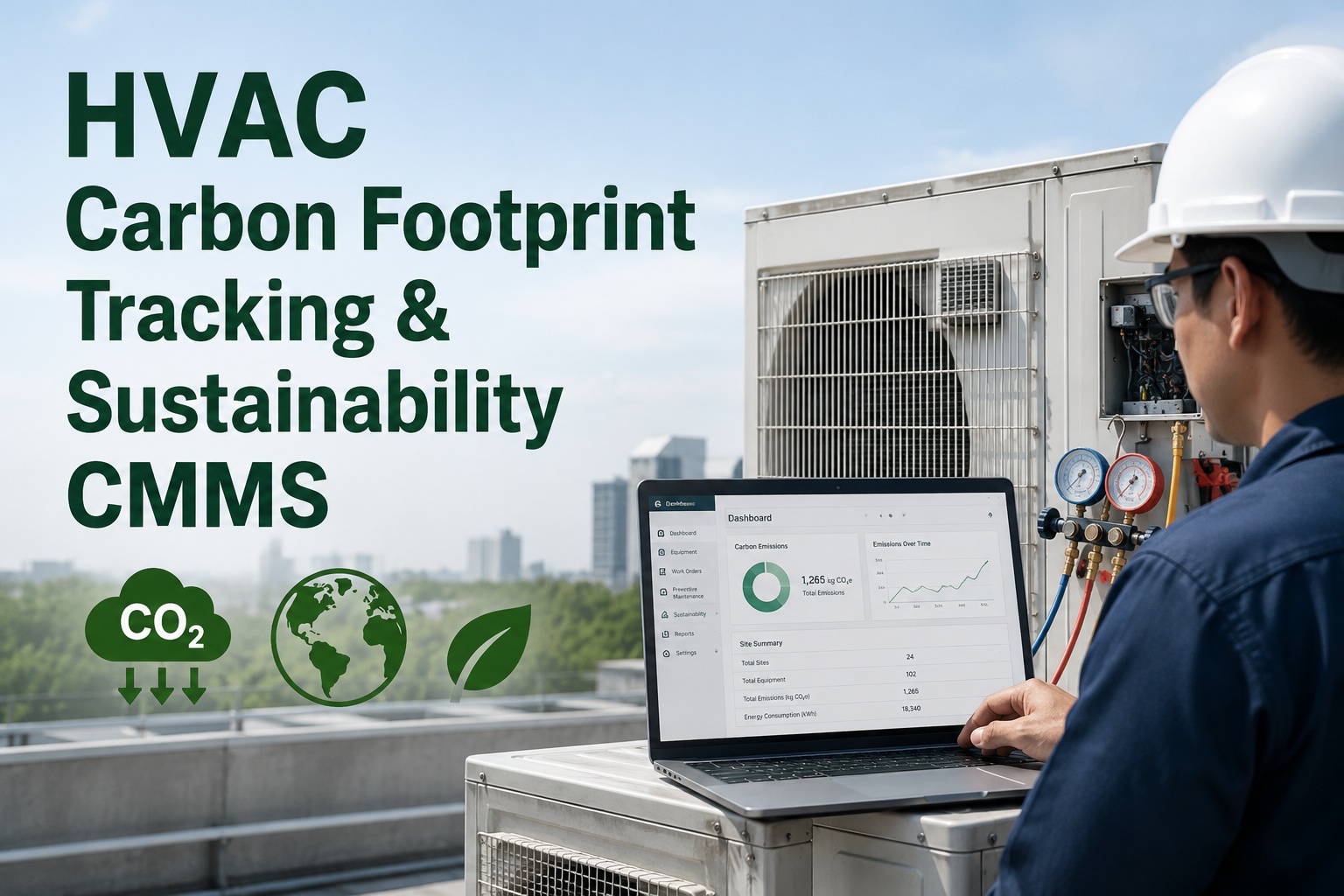
HVAC carbon footprint tracking is the process of measuring, documenting, and reducing greenhouse gas emissions generated by heating, ventilation, and air conditioning equipment. As building owners and facility managers face tightening ESG reporting standards and energy efficiency mandates, a CMMS sustainability HVAC strategy bridges the gap between maintenance operations and corporate climate goals. By translating energy consumption and refrigerant leaks into quantifiable carbon metrics, maintenance teams can directly impact Scope 1 and Scope 2 emissions. Learn how OxMaint automates HVAC emissions tracking and schedule a session when you Start Free Trial today.
Hvac ESG Tracking & Carbon Accounting
Turn Maintenance Data Into Verifiable Carbon Reductions
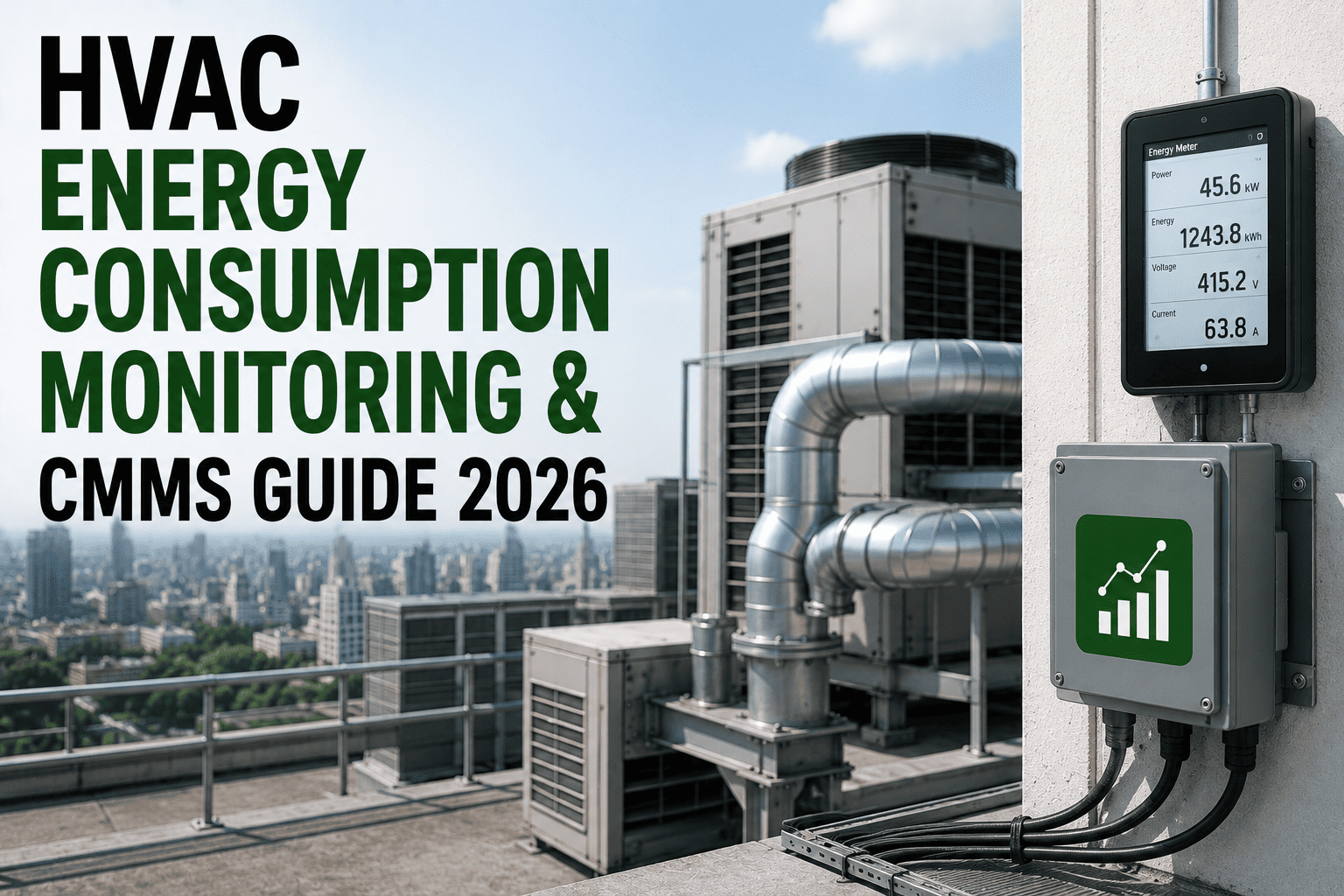
Commercial HVAC systems account for up to 40% of a building's total energy consumption. Without a sustainability CMMS, emissions data is trapped in disconnected spreadsheets and paper logs. OxMaint bridges operational maintenance and ESG reporting so every work order contributes to a measurable carbon footprint reduction.
Baseline Calculation
How to Calculate HVAC Carbon Footprint from Energy Consumption
To build an accurate HVAC carbon guide for 2026, maintenance teams must convert raw energy usage and refrigerant losses into standard CO₂ equivalent (CO₂e) metrics. Energy consumption dominates the carbon footprint of HVAC systems, but fugitive refrigerant emissions—which have Global Warming Potentials (GWPs) thousands of times higher than CO₂—are often ignored until an audit reveals a massive compliance gap.
HVAC Carbon Footprint (CO₂e) Formula
Emissions = (kWh × Grid Emission Factor) + (Refrigerant Lost in kg × GWP)
Grid emission factors vary by region and season. OxMaint automatically applies local eGRID factors to asset-level energy meter readings for accurate Scope 2 accounting.
| Emission Source | Scope | Tracking Method | Typical Impact |
|---|---|---|---|
| Electricity (Chillers, RTUs) | Scope 2 | kWh consumption × regional grid factor | High |
| Natural Gas (Boilers, Furnaces) | Scope 1 | Therms × fuel emission factor | Medium-High |
| Fugitive Refrigerant Leaks | Scope 1 | Top-up mass (kg) × refrigerant GWP | Very High (R-410A GWP = 2,088) |
| Standby / Parasitic Loads | Scope 2 | Continuous baseline kW monitoring | Low-Medium |
Step-by-Step ESG Guide
CMMS Sustainability HVAC Guide: From Data to ESG Reporting
Establishing a robust HVAC ESG tracking pipeline requires moving from fragmented reactive logs to a centralized, time-stamped database. Here is how maintenance teams build an audit-ready sustainability dashboard for HVAC emissions reporting in five phases.
Asset Energy Baseline Mapping
Tag every chiller, boiler, and air handler with its rated kW, refrigerant type, and charge capacity in the CMMS. OxMaint stores these specs against the asset record so you always know the maximum potential emission footprint.
Automated Meter Integration
Connect BAS/BMS energy meter data directly to asset work orders. This eliminates manual spreadsheet entry and ensures that runtime hours logged during preventive maintenance match actual energy draw.
Refrigerant Leak Detection
When technicians log a refrigerant top-up during a work order, OxMaint automatically converts the added mass (kg) into CO₂e using the specific refrigerant's GWP, instantly flagging high-emission leaks for ESG reporting.
Predictive Maintenance Optimization
Dirty coils and clogged filters can increase HVAC energy consumption by 15–25%. OxMaint's predictive analytics trigger cleanings based on pressure drop data, restoring efficiency before energy waste compounds.
Audit-Ready ESG Export
Generate a defensible sustainability dashboard HVAC report detailing asset-level CO₂e, energy savings from PM compliance, and refrigerant loss trends—ready for GRESB, LEED, and corporate ESG filings.
Real-World Worked Example
The Hidden Cost of Ignoring HVAC Emissions Tracking
Consider a 180-asset commercial facility spending $42,000 annually on HVAC energy and reactive repairs. Without a carbon footprint CMMS, the maintenance team relies on quarterly manual meter readings and ignores gradual refrigerant leaks. Over a year, two RTUs develop slow R-410A leaks, losing 12 kg of refrigerant total. Because R-410A has a GWP of 2,088, that unseen leak represents 25 metric tons of CO₂e—equivalent to driving 100,000 miles in a standard passenger car.
By deploying OxMaint for carbon tracking HVAC management, that same facility automates refrigerant top-up logging, triggers filter changes based on runtime analytics, and reduces total HVAC energy consumption by 18%—cutting both operational costs and reported carbon emissions in a single quarter.
OxMaint Capabilities
How OxMaint CMMS Solves HVAC Carbon Tracking & Sustainability
OxMaint is an AI-powered CMMS and Enterprise Asset Management platform built to make maintenance operations the engine of corporate sustainability. By unifying work order execution with real-time asset data, OxMaint transforms routine maintenance into quantifiable carbon reductions.
Automated Emissions Calculations
Every refrigerant top-up and energy meter reading logged in a work order is automatically converted to CO₂e. Eliminate manual math and ensure your HVAC ESG reporting is 100% accurate and audit-ready.
Predictive Energy Optimization
AI-driven predictive maintenance identifies performance drifts—like fouled condensers or degrading belts—before they spike energy usage, typically cutting HVAC energy waste by 15–20%.
Sustainability Dashboards
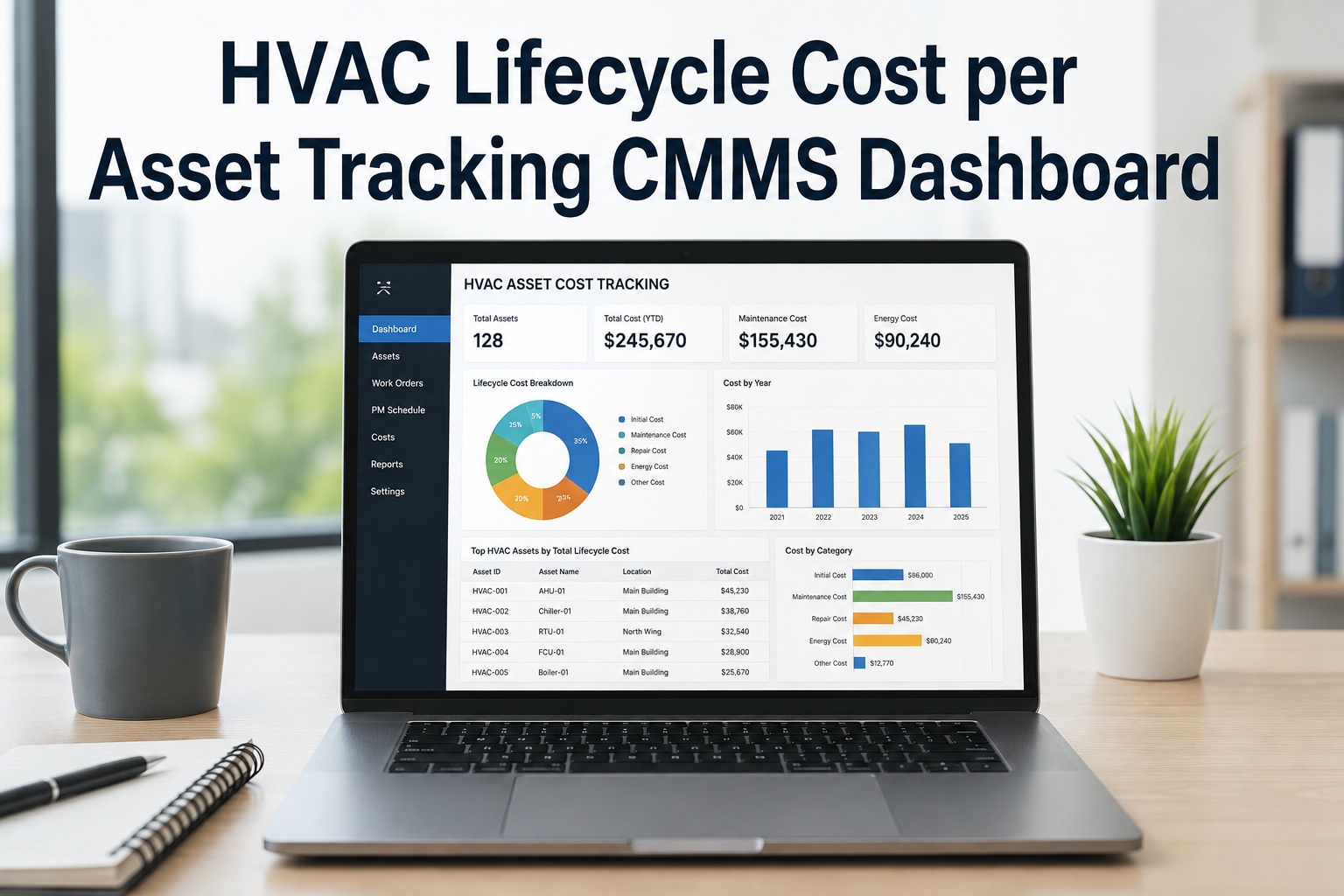
Live, exportable dashboards visualize asset-level carbon output, energy trends, and refrigerant loss. Provide executives and auditors with instant visibility into maintenance-driven ESG progress.
Mobile CMMS Refrigerant Logging
Technicians log refrigerant recovery and charging data via mobile devices in the field. OxMaint stores precise mass measurements against the asset history, streamlining EPA Section 608 compliance.
See OxMaint on Your Assets — Book a 30-min Demo
Discover how easy it is to transition from reactive maintenance to a proactive, sustainability-driven operation. Our specialists will map your HVAC equipment to automated carbon tracking in real time.
Frequently Asked Questions
HVAC Carbon Footprint Tracking & Sustainability CMMS FAQs
How does a CMMS track HVAC carbon footprint?
A CMMS tracks HVAC carbon footprint by logging asset energy consumption (kWh) and refrigerant top-ups (kg) during work orders, then multiplying those values by standard emission factors and Global Warming Potentials. OxMaint automates this calculation, instantly converting maintenance data into Scope 1 and Scope 2 CO₂e metrics for ESG reporting. You can see this workflow live when you Book a Demo.
What is the difference between Scope 1 and Scope 2 HVAC emissions?
Scope 1 emissions are direct emissions from sources you own or control, such as natural gas burned in boilers or fugitive refrigerant leaks from your chillers. Scope 2 emissions are indirect emissions from the generation of purchased electricity consumed by your HVAC equipment, like RTUs and air handlers.
Why is refrigerant leak tracking important for HVAC ESG reporting?
Refrigerants like R-410A and R-134a have Global Warming Potentials thousands of times higher than CO₂. A slow leak of just a few kilograms can drastically inflate a building's carbon footprint. Tracking top-ups in a sustainability CMMS ensures these invisible emissions are accurately captured and reported.
How does preventive maintenance reduce HVAC carbon emissions?
Preventive maintenance reduces emissions by keeping equipment operating at optimal efficiency. Dirty coils, clogged filters, and degrading belts force HVAC systems to consume 15–25% more energy. By scheduling timely PMs through OxMaint, equipment uses less electricity and fuel, directly lowering Scope 1 and Scope 2 carbon output.
Can I use OxMaint to generate ESG and sustainability reports?
Yes. OxMaint features built-in sustainability dashboards that aggregate energy usage, refrigerant loss, and PM compliance data into exportable reports. These reports provide the defensible, time-stamped audit trails required for LEED certifications, GRESB submissions, and corporate ESG disclosures.
Start Reducing Your HVAC Carbon Footprint Today
Join the maintenance teams using OxMaint to cut energy waste, eliminate paper work orders, and prove their sustainability impact with real data.
Free 14-day trial · No credit card