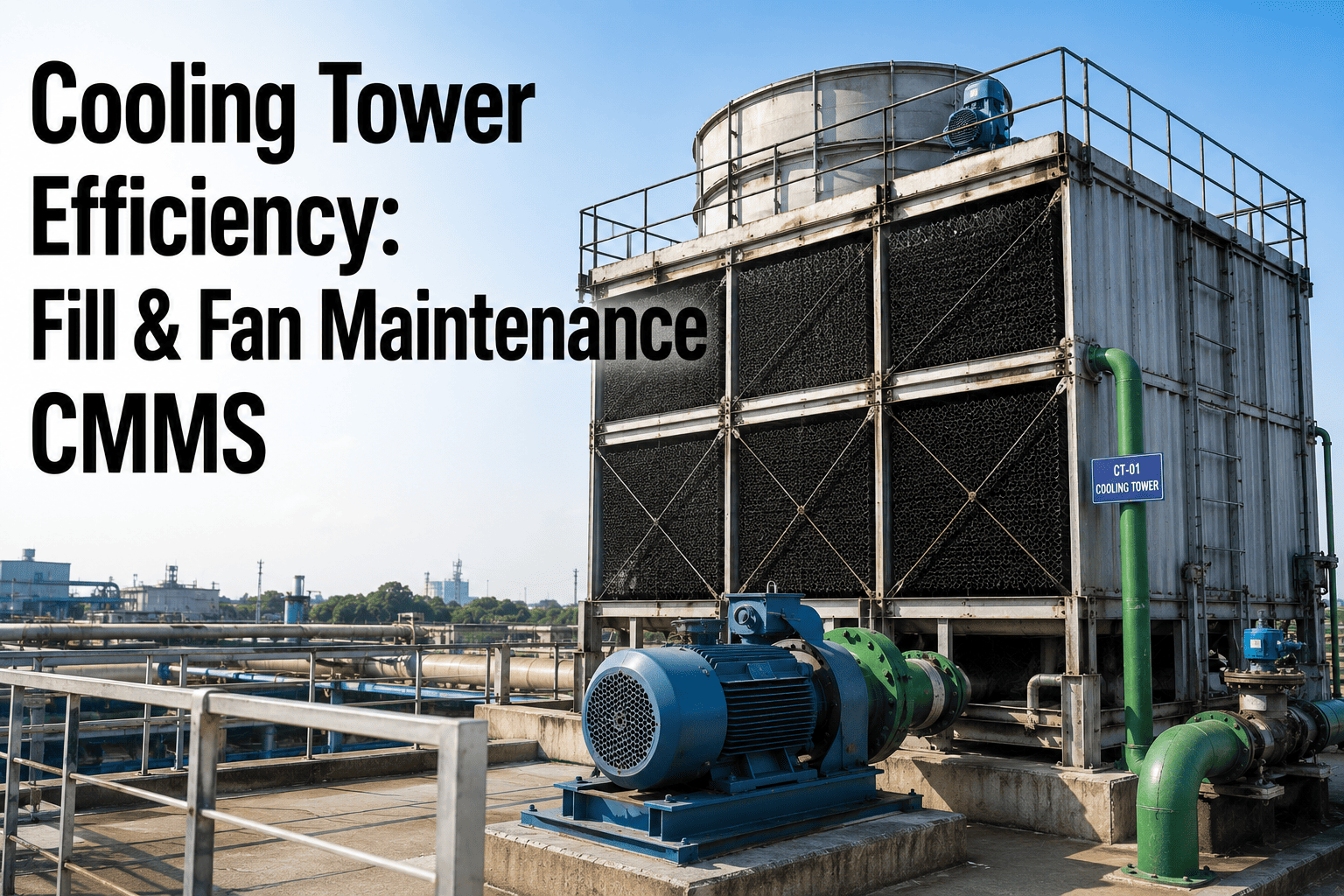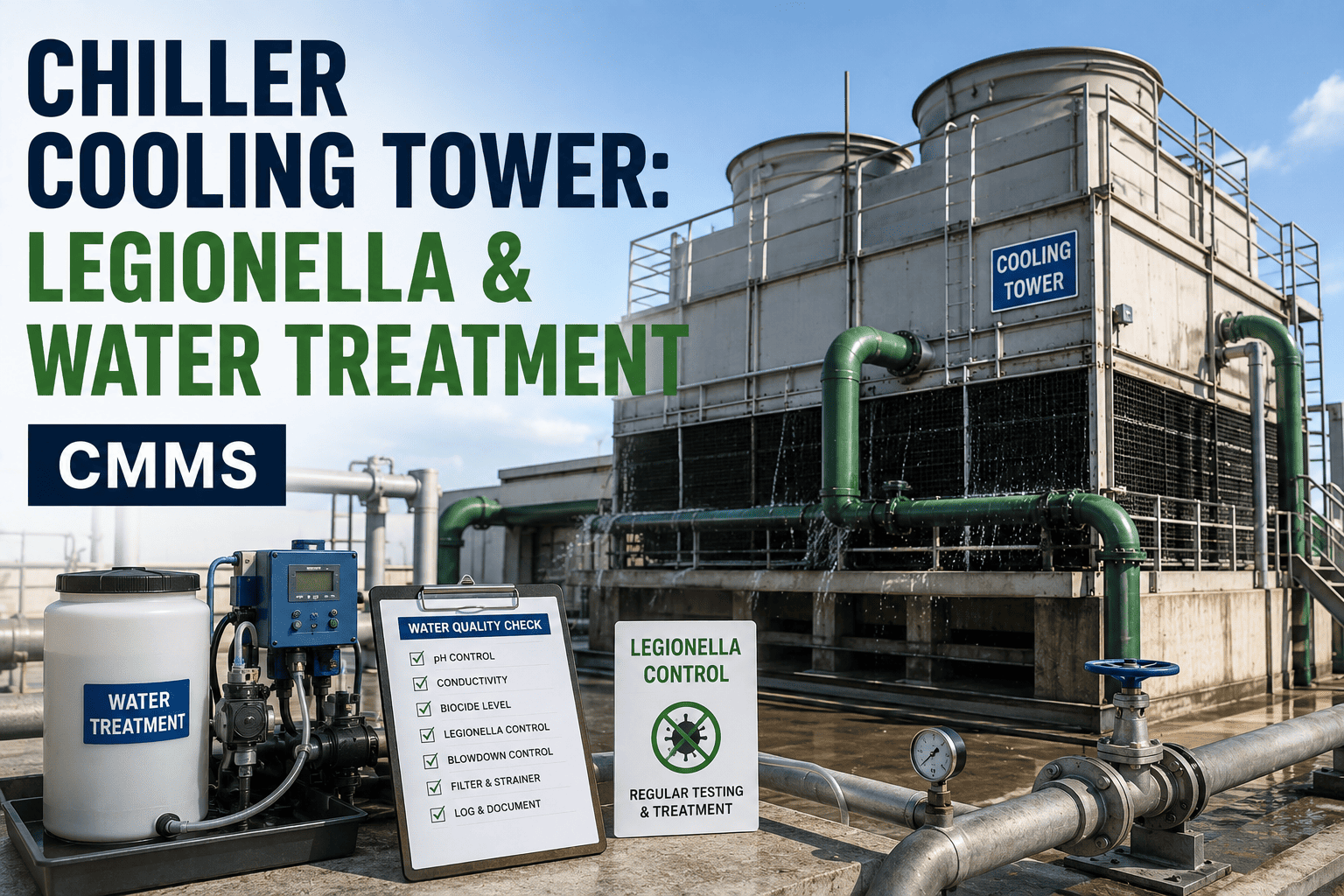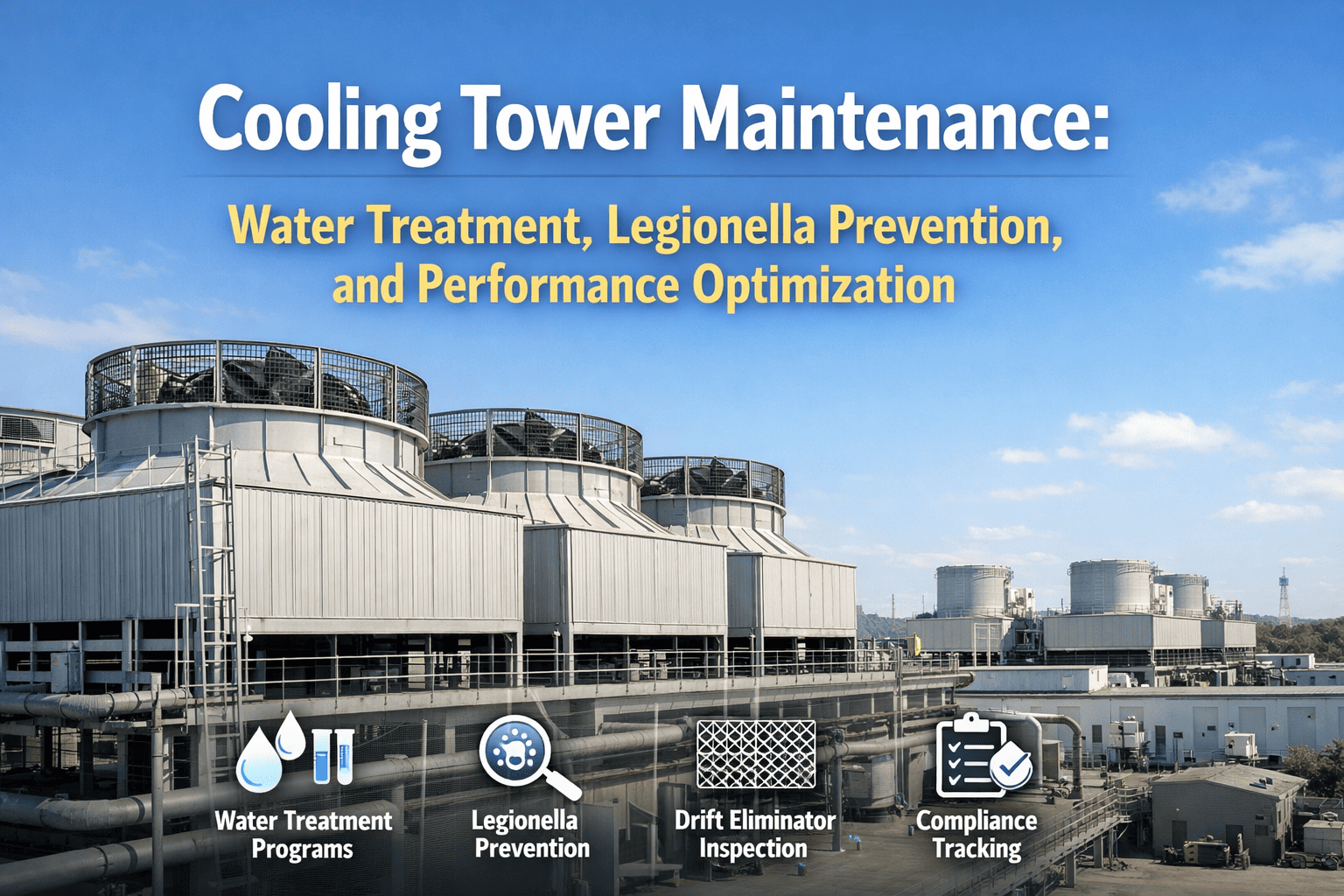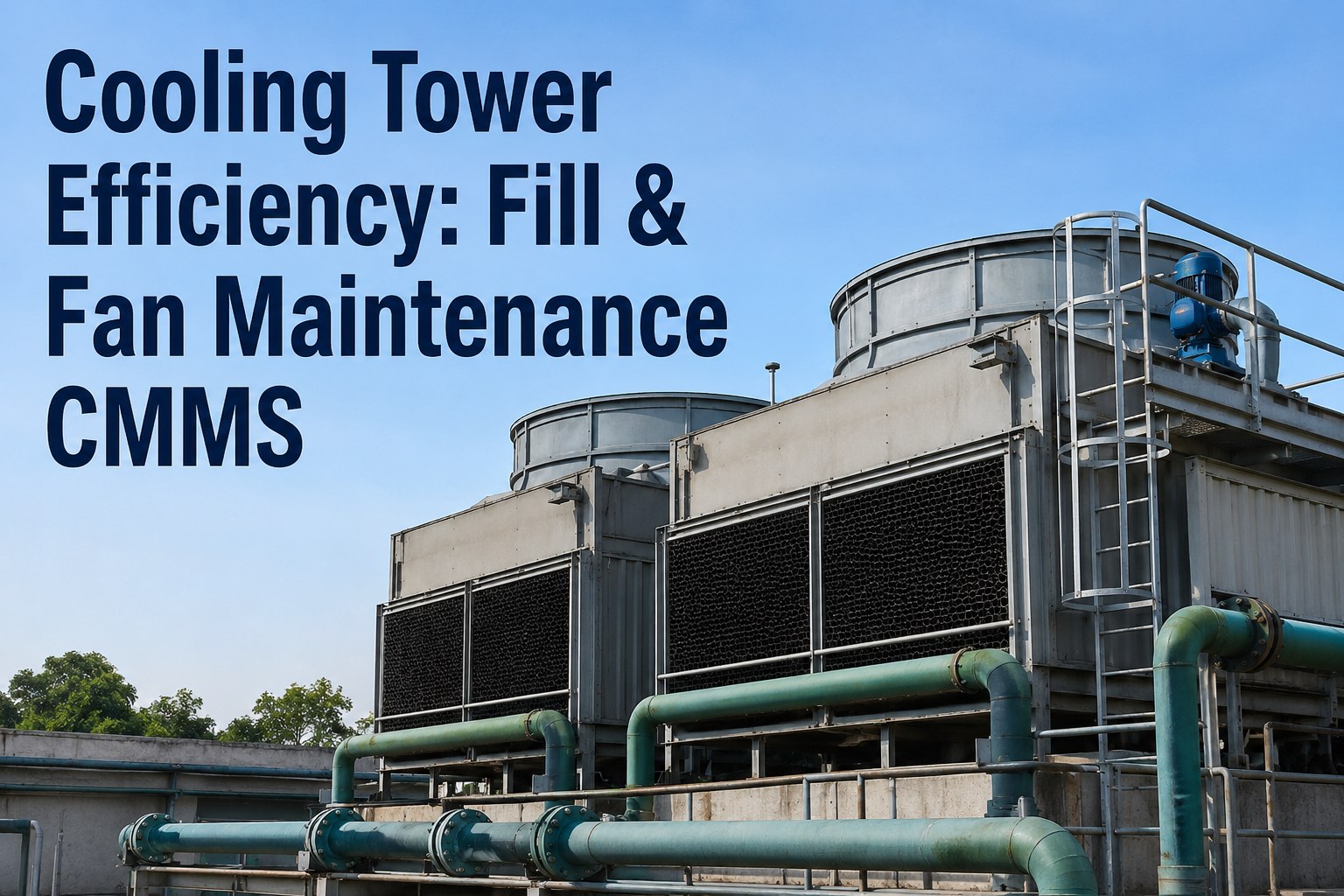
Cooling tower efficiency drops by 20–40% when fill media fouls, fan motors lose alignment, and drift eliminators go uninspected — yet most plants still track this critical equipment on spreadsheets and clipboards. A dedicated cooling tower CMMS replaces reactive chaos with preventive and predictive maintenance schedules tied to asset condition, water-treatment logs, and real KPIs so your approach temperature, range, and approach stay within spec. This cooling tower maintenance guide breaks down fill-media condition checks, fan motor efficiency, drift eliminator inspection, and water-treatment integration into a repeatable workflow you can deploy in days. See how OxMaint automates work orders, parts inventory, and compliance reporting — Start Free Trial or read on to build your 2026 cooling tower optimization roadmap.
Is your cooling tower quietly wasting 30% of its energy budget?
Fouled fill media, misaligned fan motors, and clogged drift eliminators erode cooling tower efficiency month after month — most plants don't notice until approach temperature climbs 5°F and energy bills spike. OxMaint's CMMS catches the drift early with condition-based PM triggers, automated water-treatment logs, and predictive analytics on every fan motor and pump.
What kills cooling tower performance — and what it costs you
Cooling tower performance is a function of four interconnected systems: fill media, fan assembly, drift eliminators, and water treatment. When any one degrades, the others compensate — drawing more kW, consuming more makeup water, and shortening asset life. Here's where the losses hide and what they cost a typical 3-cell, 4,000-ton installation running 8,400 hours per year.
Cooling tower fill maintenance & fan efficiency checklist
Use this tiered checklist to build preventive maintenance work orders in your CMMS. Each item maps to a recommended frequency, the performance indicator to watch, and the threshold that should auto-trigger a corrective work order.
| Component | Inspection Frequency | KPI Threshold | Auto-Trigger Action |
|---|---|---|---|
| Fill media (PVC film) | Monthly visual / quarterly deep | Approach > 7°F or 1/16" scale | Chemical clean or fill replacement WO |
| Fan motor & bearings | Monthly / vibration quarterly | Velocity > 3.5 mm/s or +10% current | Alignment, lubrication, or bearing WO |
| Drift eliminators | Quarterly | Drift > 0.005% recirc. flow | Blade cleaning or replacement WO |
| Water treatment (conductivity) | Continuous / daily log | > 2,400 µS/cm | Blowdown + biocide dosing WO |
| Makeup water meter | Weekly | +15% above baseline | Leak investigation WO |
| Legionella compliance | Quarterly lab test | > 10 CFU/mL | Emergency disinfection + reporting |
How OxMaint's CMMS optimizes cooling tower performance
OxMaint turns the checklist above into an automated, audit-ready workflow. Every inspection reading, vibration trace, and water-treatment log becomes a data point that triggers the next work order — so nothing falls through the cracks and every cell stays at peak efficiency.
Condition-based preventive maintenance
Attach approach-temperature, vibration, and conductivity thresholds to each cooling tower asset. When readings breach limits, OxMaint auto-generates a corrective work order with the right technician, parts, and checklist — cutting unplanned downtime 30–50%.
Predictive analytics on fan motors & pumps
OxMaint's AI engine analyzes vibration, amperage, and temperature trends to predict bearing failures and motor degradation 2–6 weeks before they happen — giving you time to schedule repairs during planned outages instead of emergency calls.
Water treatment & compliance logging
Digital log sheets for conductivity, pH, biocide dosing, and Legionella tests are stored per asset with time-stamped audit trails. Auto-reminders ensure ASHRAE 188 and CTI testing never slip — pass any audit in minutes, not days.
Spare-parts inventory for fill, bearings & nozzles
Track min/max stock levels for PVC fill sheets, fan bearings, drift blades, and dosing pumps. OxMaint auto-creates purchase requisitions when stock drops — so the part you need is always on the shelf, cutting repair lead time by 40–60%.
Cooling tower optimization: a worked cost-savings example
A 180-asset chemical processing plant in Texas ran three 4,000-ton counterflow cooling towers on spreadsheets and reactive maintenance. After deploying OxMaint as their cooling tower CMMS, the reliability team tracked savings across energy, water, labor, and avoided capital over 12 months. Here's the breakdown.
| Savings Category | Before OxMaint (Annual) | After OxMaint (Annual) | Net Savings |
|---|---|---|---|
| Fan motor energy (3 cells) | $214,000 | $168,000 | $46,000 |
| Makeup water & chemical treatment | $78,000 | $61,000 | $17,000 |
| Emergency repair labor & overtime | $42,000 | $16,500 | $25,500 |
| Fill media replacement (deferred) | $35,000 | $8,000 | $27,000 |
| Compliance fines (Legionella reporting gap) | $12,000 | $0 | $12,000 |
| Total annual cost | $381,000 | $253,500 | $127,500 |
See OxMaint on your cooling tower assets — book a 30-min demo
Walk through a live CMMS build for a multi-cell cooling tower: PM schedules, condition triggers, water-treatment logs, and predictive fan-motor analytics configured for your plant.
Cooling tower efficiency & CMMS — frequently asked questions
How often should cooling tower fill media be inspected and cleaned?
Inspect fill media visually every month and perform a deep inspection quarterly. Clean or replace fill when scale deposit thickness exceeds 1/16 inch, biological fouling covers more than 10% of the surface, or approach temperature rises above 7°F. In hard-water regions or high-cycle-of-concentration systems, quarterly cleaning is common. A CMMS like OxMaint auto-schedules these inspections and triggers corrective work orders when readings breach thresholds.
What is the ideal cooling tower efficiency range and how is it measured?
Cooling tower efficiency is measured by approach temperature (cold water temperature minus ambient wet-bulb temperature) and range (hot water in minus cold water out). A well-maintained tower operates at 5–7°F approach; anything above 10°F indicates fill fouling, airflow issues, or water-distribution problems. Tracking range and approach in a CMMS dashboard lets you spot efficiency drift before it impacts process cooling or energy costs.
Can a CMMS improve cooling tower fan motor efficiency?
Yes — a CMMS improves fan motor efficiency by scheduling regular vibration analysis, bearing lubrication, VFD calibration, and blade-pitch inspection. OxMaint's predictive analytics go further by trending motor amperage and vibration data to detect bearing wear or misalignment 2–6 weeks before failure, so repairs happen during planned downtime. Plants using OxMaint typically cut fan motor energy waste 10–15% and reduce unplanned fan shutdowns by 50–60%. Book a demo to see the predictive module on a live cooling tower asset.
How does a CMMS support cooling tower water treatment and Legionella compliance?
A CMMS digitizes daily water-treatment logs (conductivity, pH, biocide residuals) and stores them against the cooling tower asset record with time-stamped audit trails. OxMaint auto-reminds teams to perform quarterly Legionella testing per ASHRAE 188, generates blowdown work orders when conductivity exceeds setpoint, and links dosing records to each PM — so you pass compliance audits in minutes instead of digging through paper binders.
What should a cooling tower maintenance plan include in 2026?
A 2026-ready plan includes monthly fill and drift eliminator inspections, quarterly vibration analysis on fan motors, continuous water-treatment monitoring with automated blowdown triggers, predictive analytics on motor bearings, and a digital compliance trail for ASHRAE 188 and CTI standards. It should be managed in a CMMS that auto-generates work orders, tracks spare-parts inventory, and provides real-time KPI dashboards — replacing spreadsheets and clipboard-based PMs entirely. Start a free OxMaint trial to deploy this plan in days.
Stop losing efficiency to reactive cooling tower maintenance
Deploy OxMaint as your cooling tower CMMS and get condition-based PMs, predictive fan-motor analytics, water-treatment logging, and audit-ready compliance — all in one platform. Your fill, fans, and drift eliminators stay at peak performance, and your energy bills drop.
Free 14-day trial · No credit card