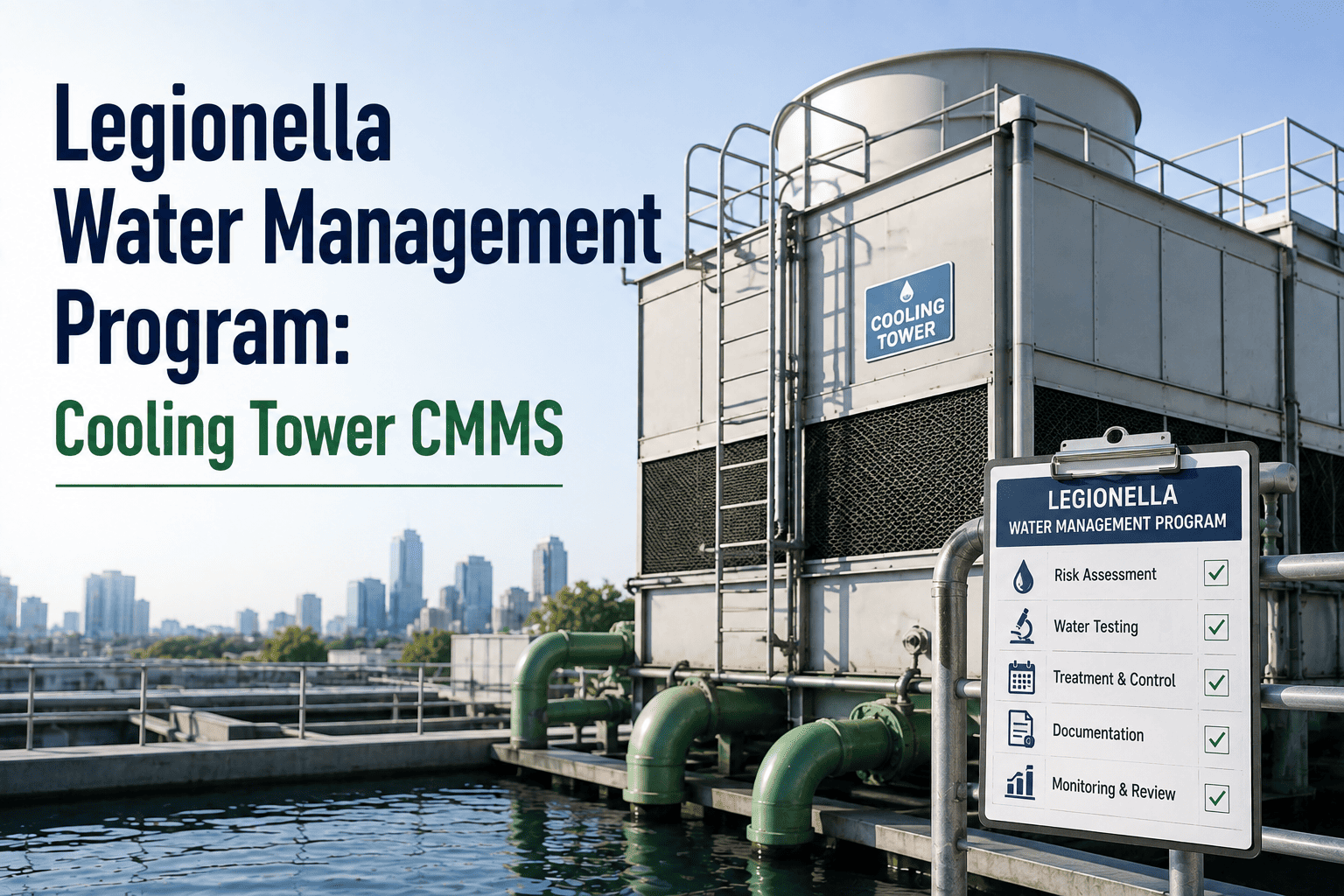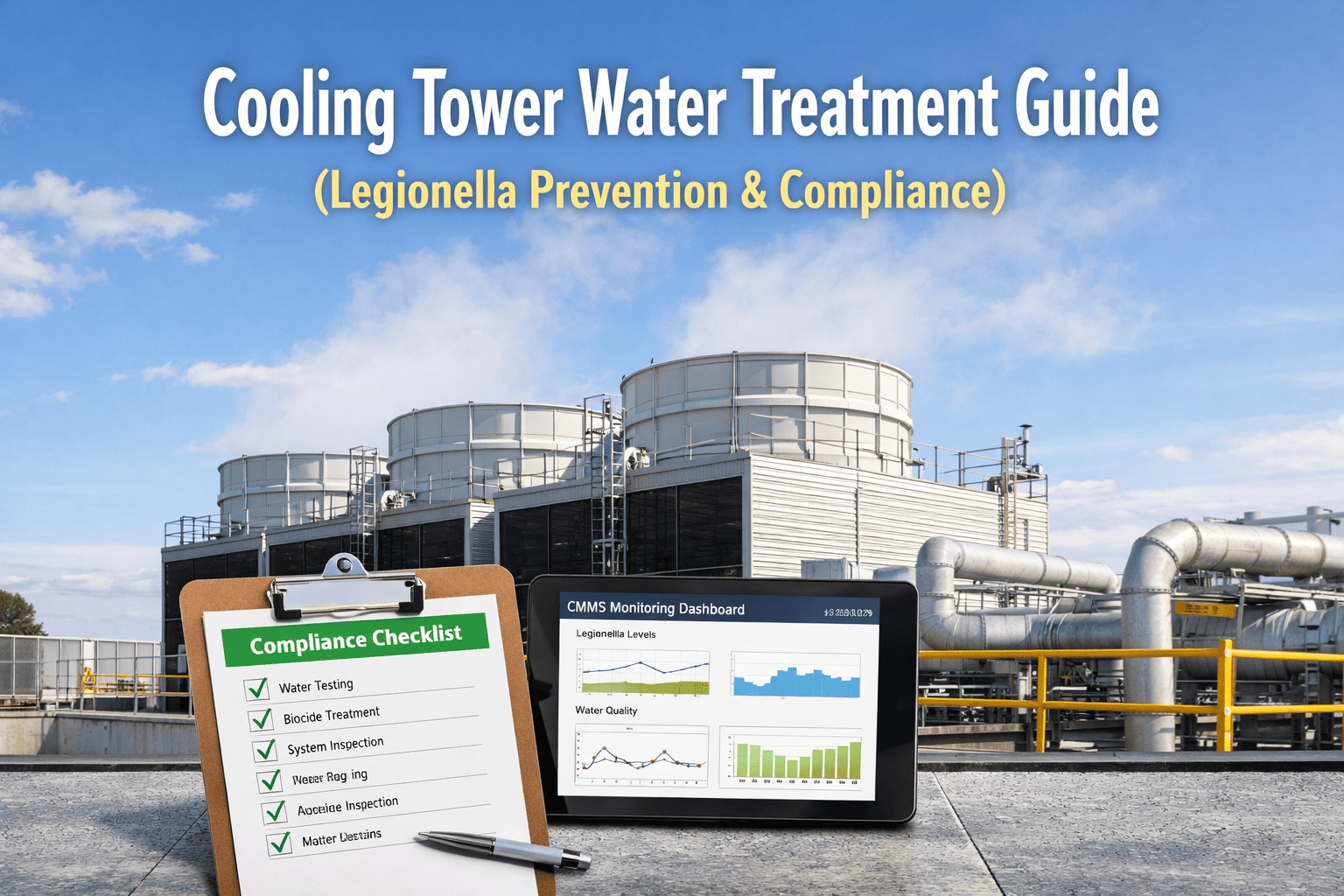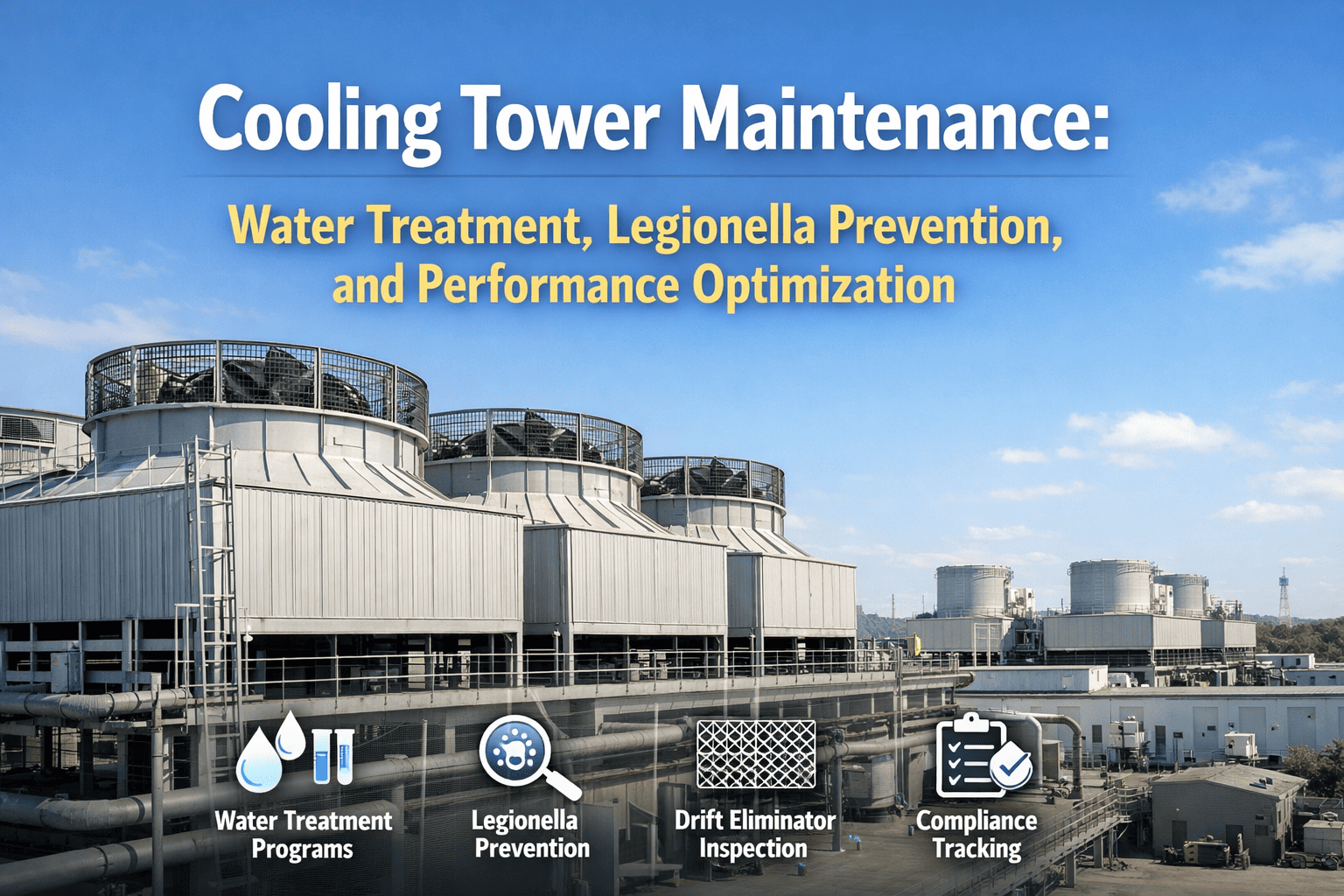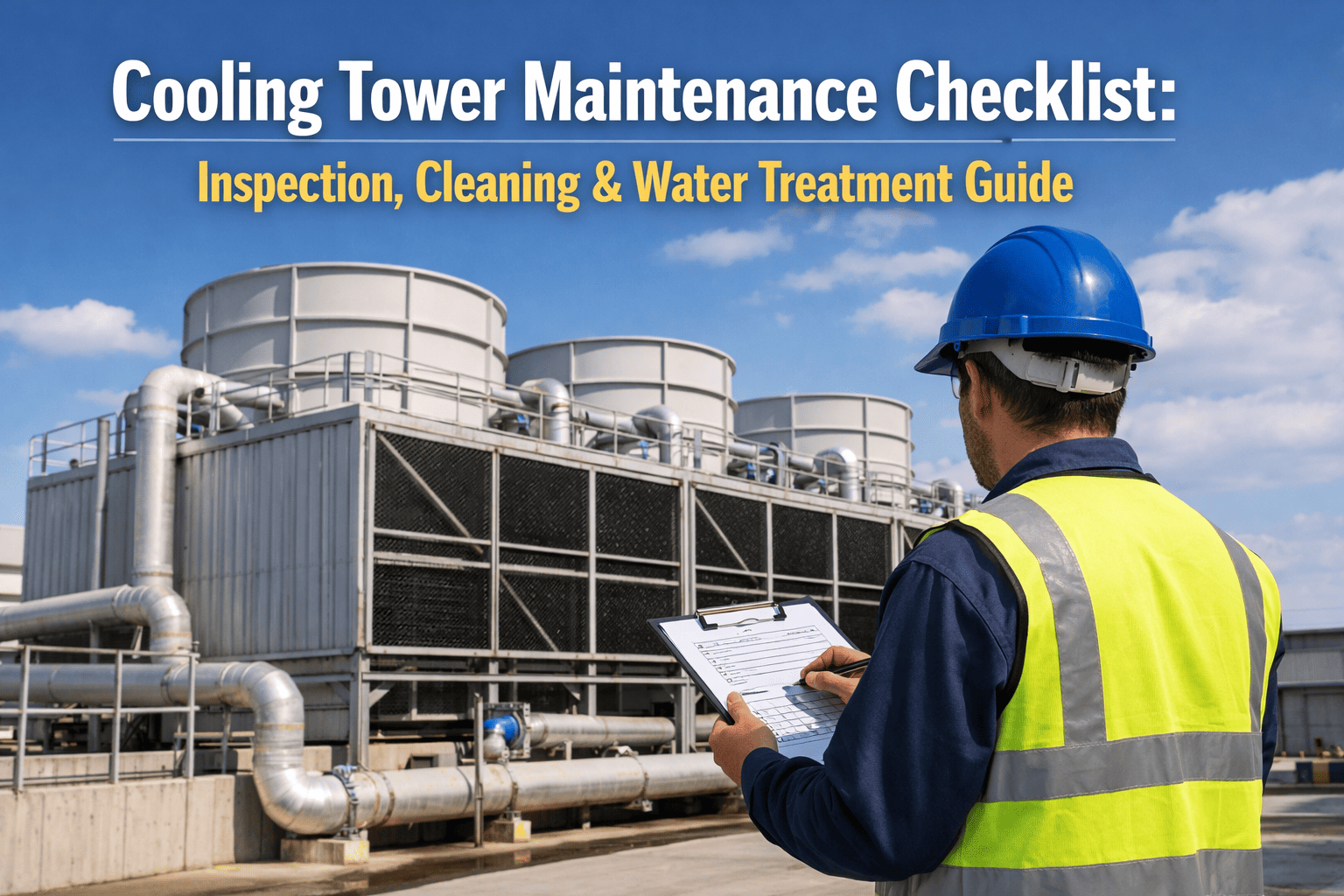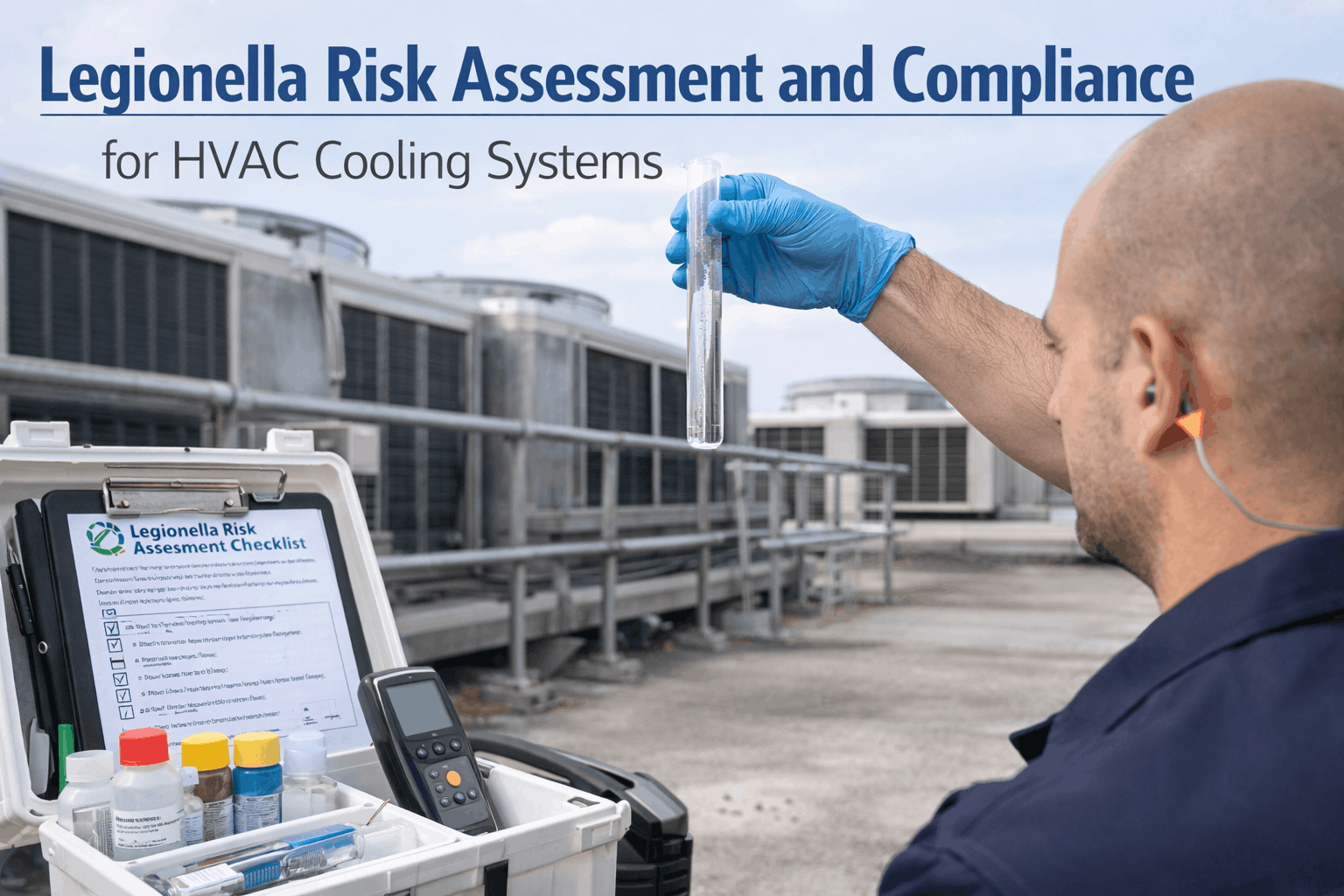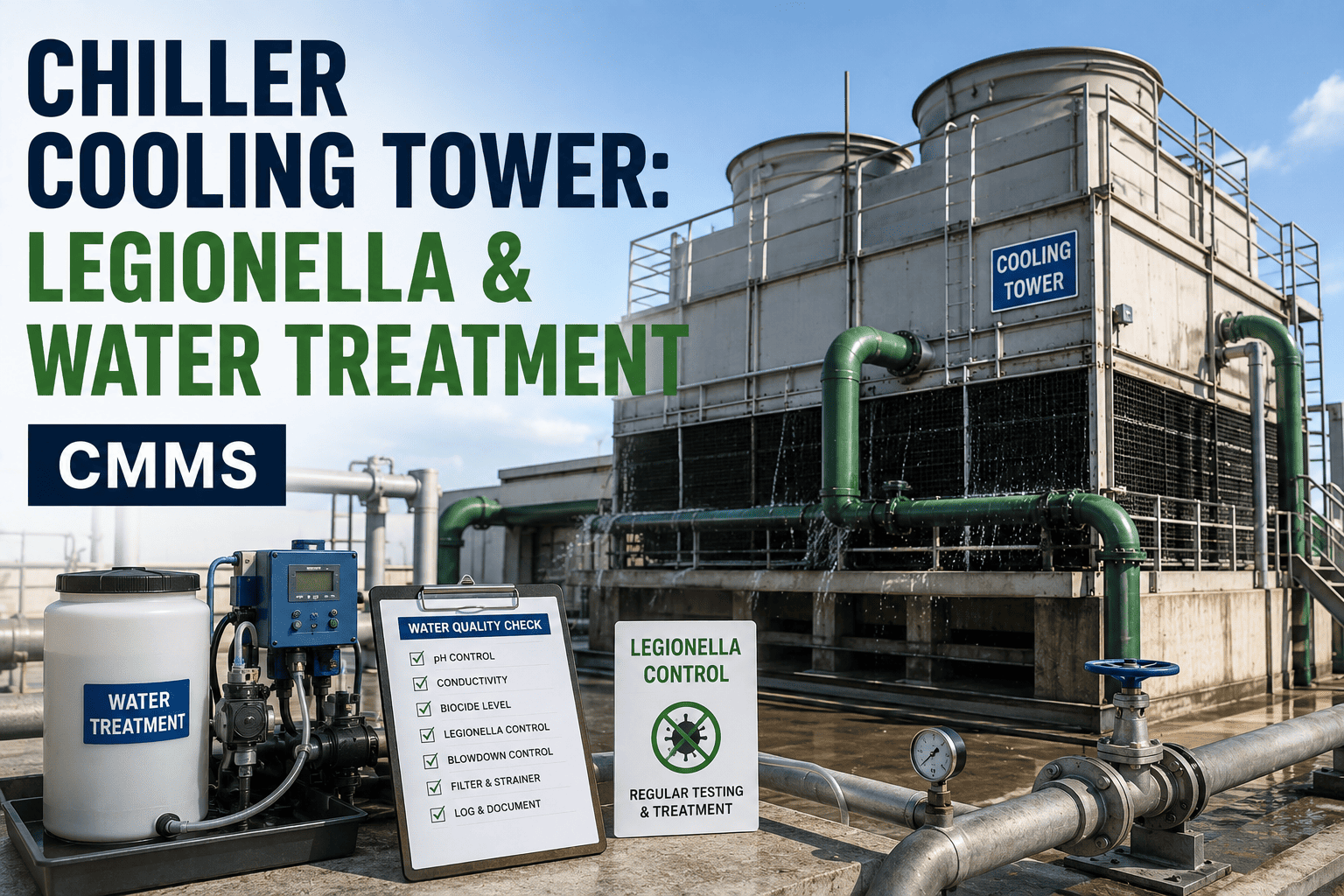
Chiller cooling tower maintenance is the single highest-risk discipline in HVAC operations: a poorly treated basin, a stuck bleed-off valve, or a missing Legionella log can trigger disease outbreaks, OSHA citations, and thousands of dollars in emergency chemical dosing. This guide walks maintenance and reliability teams through basin level inspection, bleed-off valve operation, and Legionella risk water quality documentation—then shows how a chiller cooling tower CMMS like OxMaint automates the records, triggers, and audits that keep you compliant. If you want to skip the spreadsheet chaos, you can Start Free Trial and configure your tower PMs today.
Is one missing cooling-tower log putting your facility one audit away from shutdown?
Over 50 documented Legionella outbreaks per year trace back to unmaintained cooling towers — and 80% of citations stem from missing or illegible water-treatment records. OxMaint digitizes every basin inspection, bleed-off cycle, and Legionella test into an audit-ready trail.
Monthly basin inspection tasks every chiller cooling tower PM needs
A single 30-minute basin inspection can catch biofilm, scale, and drift-eliminator failure before they escalate into a Legionella risk event. Use this 12-point cooling tower basin inspection checklist as your PM template.
Confirm level is at the overflow rim minus 2 inches. Log the reading; a drifting level signals a stuck make-up valve — a top cause of overflow and chemical loss.
Cycle the bleed-off (blowdown) valve manually and verify conductivity setpoint is within 5% of target. Improper bleed-off cycles of hardness concentration directly feed scale.
Inspect eliminators for warping, gaps, and biological fouling. Drift carryover beyond 0.005% of recirculation rate is a primary Legionella aerosol pathway.
Check for scale blockage in fill pans and nozzles. Even 10% nozzle blockage reduces heat-transfer efficiency by 4–6% and creates stagnant zones ideal for bacterial growth.
Measure sediment depth at four corners. Sediment above 0.25 inches harbors Legionella and reduces biocide effectiveness — schedule a drain-and-clean if exceeded.
Test the make-up float valve for smooth travel and positive shutoff. A leaking valve dilutes inhibitor chemistry and wastes thousands of gallons annually.
| Inspection Parameter | Target Range | Frequency | Action Threshold |
|---|---|---|---|
| Conductivity (bleed-off trigger) | 800–1,200 µS/cm | Daily / logged | Auto-bleed if > 1,200 |
| pH | 7.5–9.0 | Weekly | Investigate if < 7.0 or > 9.5 |
| Free chlorine residual | 0.5–1.0 ppm | Twice weekly | Shock dose if < 0.3 ppm |
| Heterotrophic plate count | < 10,000 CFU/mL | Weekly | Re-treat if > 100,000 CFU/mL |
| Legionella culture | < 10 CFU/mL | Quarterly minimum | Decon & report if > 1,000 CFU/mL |
| Basin sediment depth | < 0.25 inches | Monthly | Drain-and-clean if exceeded |
Legionella risk monitoring documentation your CMMS must track
ASHRAE 188, OSHA, and CDC guidance all converge on one expectation: a documented water management program with traceable records for every biocide dose, test, and inspection. A chiller cooling tower CMMS centralizes this into one defensible audit trail.
Water Quality Parameter Logging
Operators log conductivity, pH, and chlorine residuals. OxMaint auto-stamps each entry with technician ID, timestamp, and GPS location — eliminating the clipboard-to-spreadsheet gap that causes 80% of documentation failures.
Biocide & Inhibitor Dose Verification
Verify that automated dosing pumps delivered the correct volume of oxidizing biocide, non-oxidizing biocide, scale inhibitor, and corrosion inhibitor. A 20% under-dose for two consecutive weeks can let Legionella establish biofilm in the fill media.
Basin Inspection & Sediment Audit
Full 12-point basin inspection logged against the asset record. Photos of drift eliminators, fill media, and sediment levels attach directly to the work order — giving auditors visual proof, not just checkboxes.
Legionella Culture Sampling & Reporting
Draw lab-confirmed Legionella cultures from the basin and return line. Results below 10 CFU/mL are filed; results above 1,000 CFU/mL auto-trigger an emergency decontamination work order with supervisor notification.
Full System Decommission & Cleaning
Drain, mechanically descale, and re-coat the basin. OxMaint schedules this automatically 90 days in advance, locks in vendor availability, and pre-stages the parts list so the 8-hour shutdown window is never missed.
How to calculate and automate cooling tower bleed-off
Bleed-off (blowdown) is the controlled discharge of concentrated basin water to prevent dissolved solids from precipitating as scale. Get the cycles-of-concentration formula wrong and you either waste water or foul your condenser bundles — both cost five-figure sums annually.
Target CoC for most HVAC cooling towers: 3–6 cycles. Below 3 wastes water and chemicals; above 6 risks calcium-carbonate scale on fill media and condenser tubes.
Example: A 500-ton tower with 6 gpm evaporation at 4 cycles needs ~2.0 gpm bleed-off. OxMaint can log actual bleed-off against this target and flag deviations exceeding 15%.
A 180-asset food-processing plant spending $42K/yr on water treatment
This facility ran bleed-off on a fixed timer with no conductivity feedback. Hardness spiked in winter, scale formed in condenser bundles, and chiller kW/ton degraded by 18%. The cost: $11,200 in extra energy and $6,800 in emergency descaling over eight months. After implementing OxMaint's CMMS with conductivity-triggered bleed-off logging and automated PM triggers, they restored chiller efficiency within one quarter and cut chemical waste by 22%. The compliance audit that previously took 3 days of manual record-gathering was completed in 20 minutes via the OxMaint asset history export.
Chiller cooling tower CMMS capabilities that eliminate compliance gaps
OxMaint maps each high-risk cooling tower maintenance task to an automated, auditable workflow — so no inspection is missed, no log is lost, and no audit catches you unprepared.
Automated PM Scheduling & Triggers
Auto-generate basin inspections, biocide logs, and quarterly Legionella sampling work orders on fixed intervals or meter-based triggers. Facilities report 95%+ PM compliance rates within 60 days of deployment — up from a typical 60–70% with spreadsheets.
Audit-Ready Water Treatment Logs
Every conductivity reading, pH log, chlorine residual, and biocide dose is timestamped, geo-stamped, and attached to the specific asset. Export a full compliance report for any date range in under 60 seconds — no more digging through three-ring binders.
Legionella Risk Escalation Workflows
Set threshold alerts on water quality parameters. When Legionella culture results or chlorine residuals breach your configured limits, OxMaint auto-creates a priority-1 work order, notifies the facility manager, and logs the corrective action chain — the exact documentation OSHA and ASHRAE 188 require.
Predictive Analytics for Scale & Fouling
OxMaint's AI engine tracks chiller approach temperature, condenser pressure, and bleed-off volume trends to predict scale formation and biological fouling 2–4 weeks before efficiency drops — cutting unplanned downtime by 30–50% and extending tube-bundle life by years.
Stop betting your compliance on clipboards and spreadsheets
See how OxMaint digitizes your cooling tower PMs, Legionella logs, and bleed-off tracking into one audit-ready platform — book a 30-minute demo on your assets today.
Cooling tower Legionella compliance & CMMS — common questions
How often should a cooling tower be inspected for Legionella risk?
ASHRAE 188 and CDC guidance recommend visual basin inspections monthly, water quality parameter logging (conductivity, pH, chlorine) at least twice weekly, and lab-confirmed Legionella culture sampling quarterly at minimum. High-risk facilities or those in warm climates should test monthly during summer. OxMaint auto-schedules all of these intervals and escalates any missed inspection to the facility manager within 24 hours.
What records does OSHA expect for cooling tower water treatment compliance?
OSHA expects a documented water management program with dated logs of biocide application volumes and times, water quality test results, bleed-off valve operation, basin cleaning dates, drift eliminator inspections, and Legionella culture results with corrective actions. A chiller cooling tower CMMS like OxMaint captures all of these in a single asset-linked record, exportable as a compliance report in under a minute — you can Start Free Trial and import your existing log format today.
What is the correct bleed-off rate for a cooling tower?
Bleed-off rate equals evaporation rate divided by (cycles of concentration minus 1), minus drift loss. For a typical 500-ton HVAC tower operating at 4 cycles with 6 gpm evaporation, the target bleed-off is approximately 2.0 gpm. The ideal CoC range is 3–6; below 3 wastes water, above 6 risks scale. OxMaint logs actual bleed-off against the calculated target and flags deviations exceeding 15%.
Can a CMMS automate Legionella documentation for multiple cooling towers?
Yes. A CMMS like OxMaint creates individual asset records for each tower, assigns role-based PM schedules, attaches water quality readings and lab reports to each asset, and generates per-tower or facility-wide compliance reports. Multi-site operators can view all towers on a single dashboard, with threshold alerts that auto-trigger corrective work orders when any parameter breaches limits.
How long does it take to implement a cooling tower CMMS?
Most facilities with 5–50 cooling tower assets are fully operational in OxMaint within 2–5 days. The process involves importing your asset list, configuring PM templates (basin inspection, biocide logging, Legionella sampling), and setting up escalation thresholds. OxMaint onboarding includes template libraries pre-built for ASHRAE 188 compliance — book a demo at calendly.com/oxmaintapp/30min to see it on your data.
Your cooling towers deserve better than a binder
Join the maintenance teams using OxMaint to cut compliance audit time by 90%, eliminate paper work orders, and predict scale before it costs you a chiller.
Free 14-day trial · No credit card