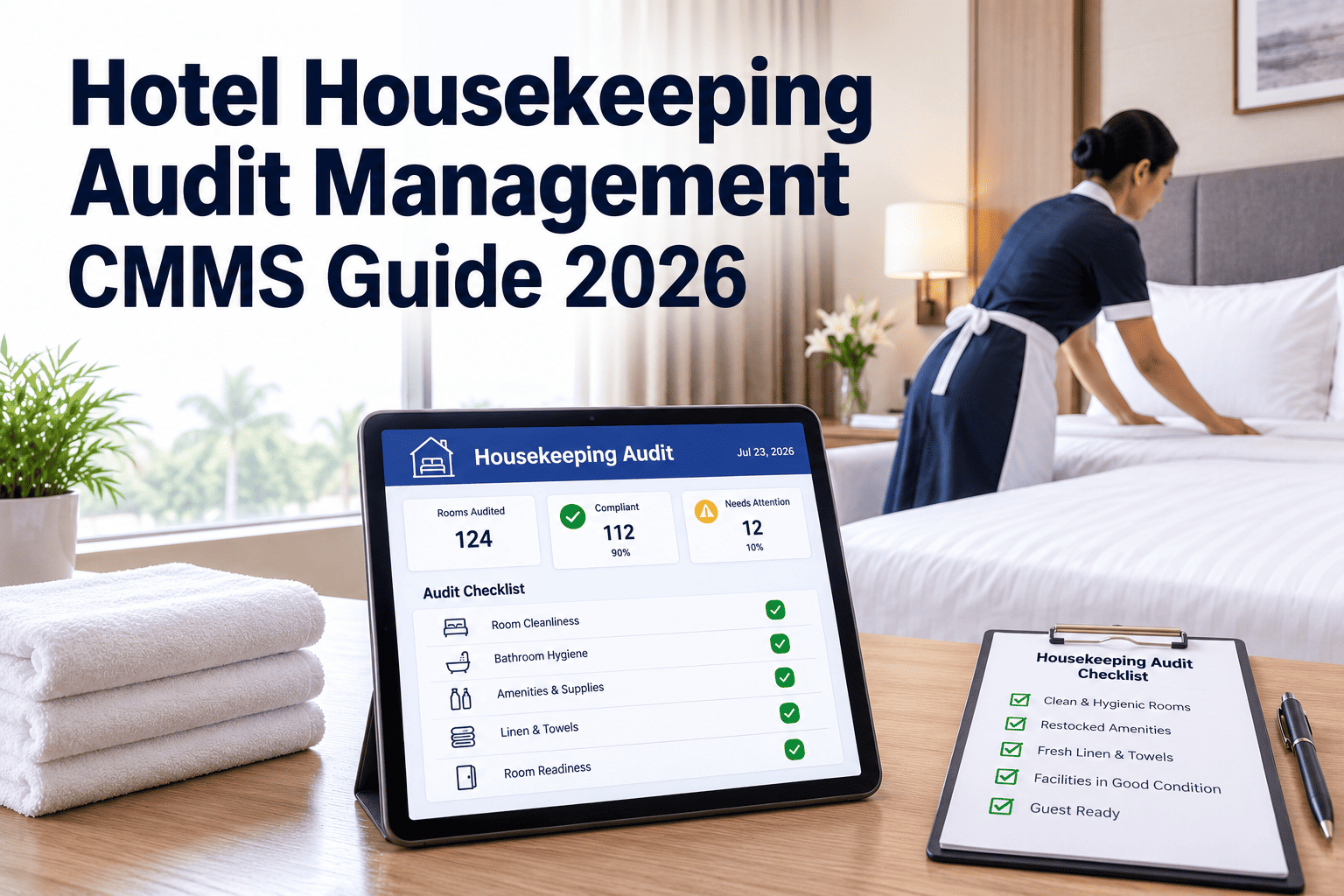
A housekeeping deficiency report is only valuable if it becomes an engineering work order before the guest returns. This CMMS housekeeping deficiency conversion guide covers how room issue conversion in hotels works in 2026 — from defect intake on a housekeeping mobile app through automatic work order creation, categorization, routing, and the housekeeping-to-engineering handoff that makes defect flow instant, auditable, and defensible. Hotels that still relay room deficiencies through radio calls, paper slips, or front-desk phone tags lose 3–6 hours per defect and routinely re-inspect rooms that engineering never received a ticket for. If you want to replace that chaos with a CMMS hotel deficiency workflow that closes the loop automatically, you can Start Free Trial or read the full conversion guide below.
Deficiency Guide 2026
When a housekeeping deficiency stays in the room, it becomes a guest complaint — not a work order.
A broken fan, a leaking faucet, a dead TV remote: if housekeeping logs it on paper and engineering never sees the ticket, the defect stays in the room. OxMaint's CMMS housekeeping deficiency workflow converts every flagged room issue into a routed engineering work order the moment it is logged — no phone calls, no radio chatter, no lost slips.
The Cost of Manual Handoff
Why paper-based deficiency reporting fails hotels
In a 250-room property, housekeeping flags an average of 18–30 room deficiencies per day — from flickering bulbs to HVAC noise to dripping minibar sinks. Without work order conversion CMMS integration, that volume breaks down fast.
The status quo is not just slow — it is indefensible. When a guest complains about a defect that housekeeping already flagged, the hotel has no audit trail proving the ticket was created, routed, or acted upon. A CMMS housekeeping work order system eliminates that gap: every flagged deficiency becomes a timestamped, categorized, routed work order in the engineering queue within seconds — not hours.
Conversion Workflow
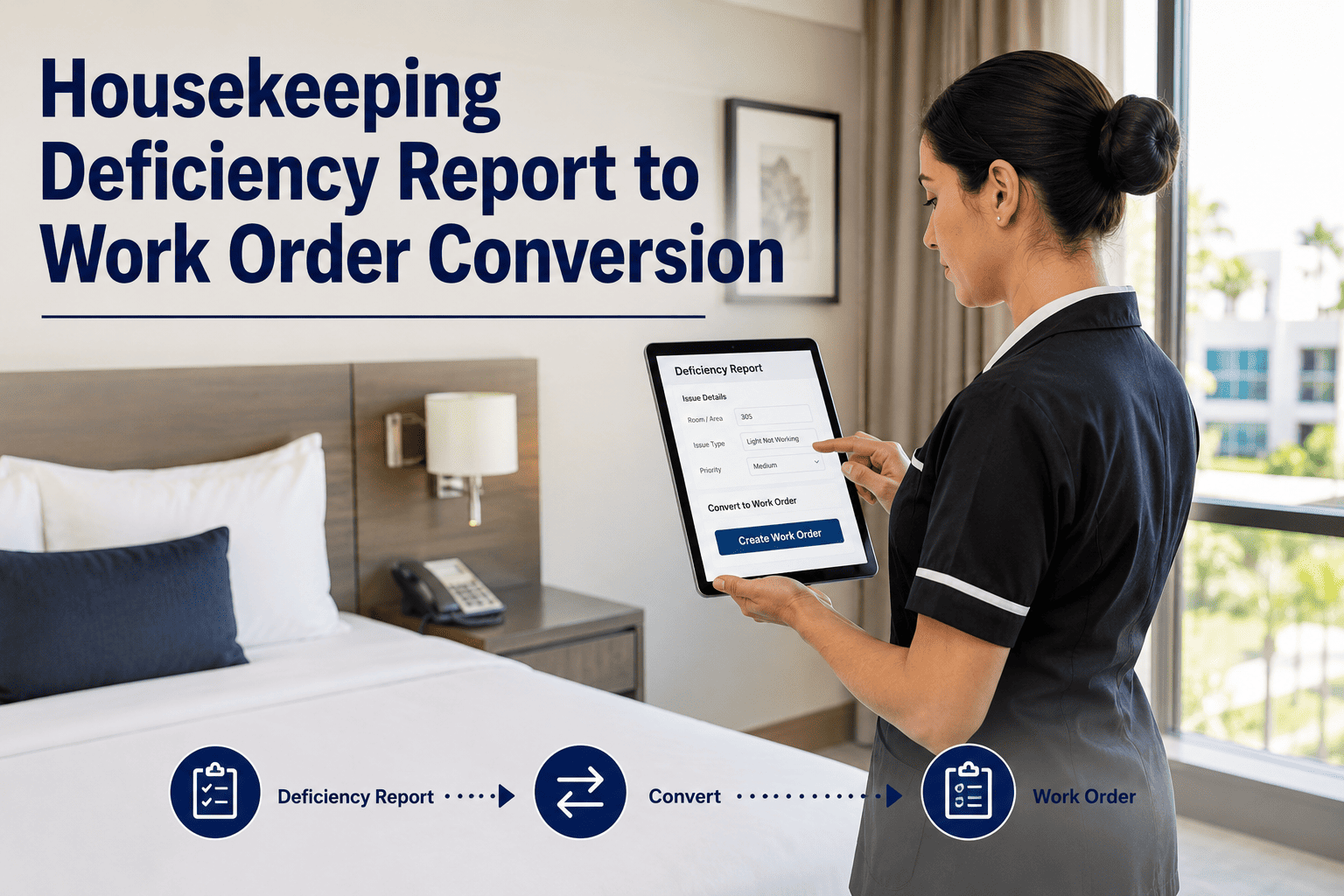
Housekeeping deficiency report to work order conversion — step by step
The deficiency report CMMS guide below maps the five-stage flow that turns a room flag into a closed, verified work order — with no manual data entry at the handoff point.
Defect intake on the housekeeping mobile app
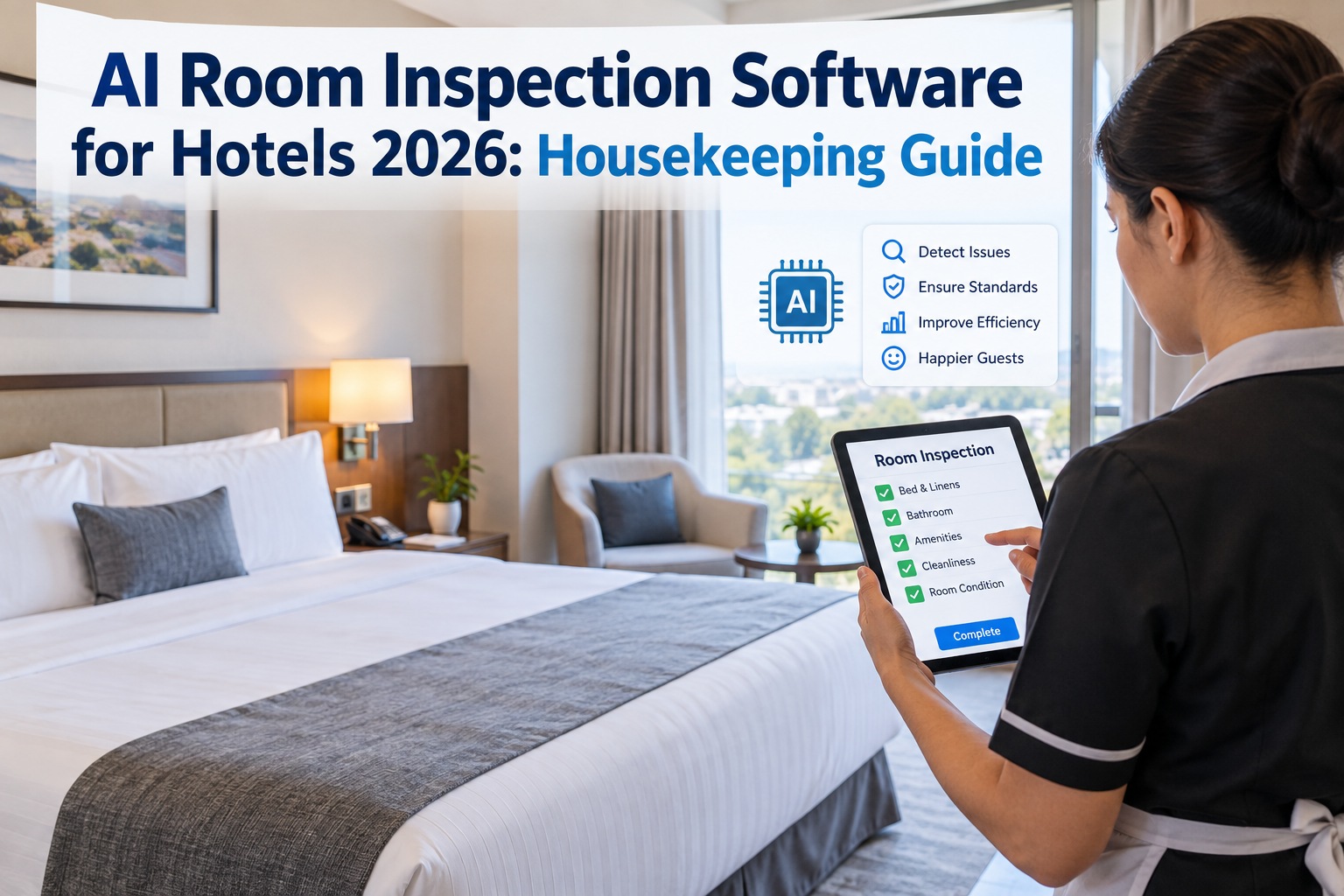
A room attendant spots a defect — a cracked vanity mirror, a noisy AC unit, a slow-draining shower. They open the OxMaint housekeeping app, select the room number, choose a deficiency category, attach a photo, and tap submit. The entire intake takes under 45 seconds and requires no typing if the attendant prefers voice or category-tap entry.
Automatic work order creation
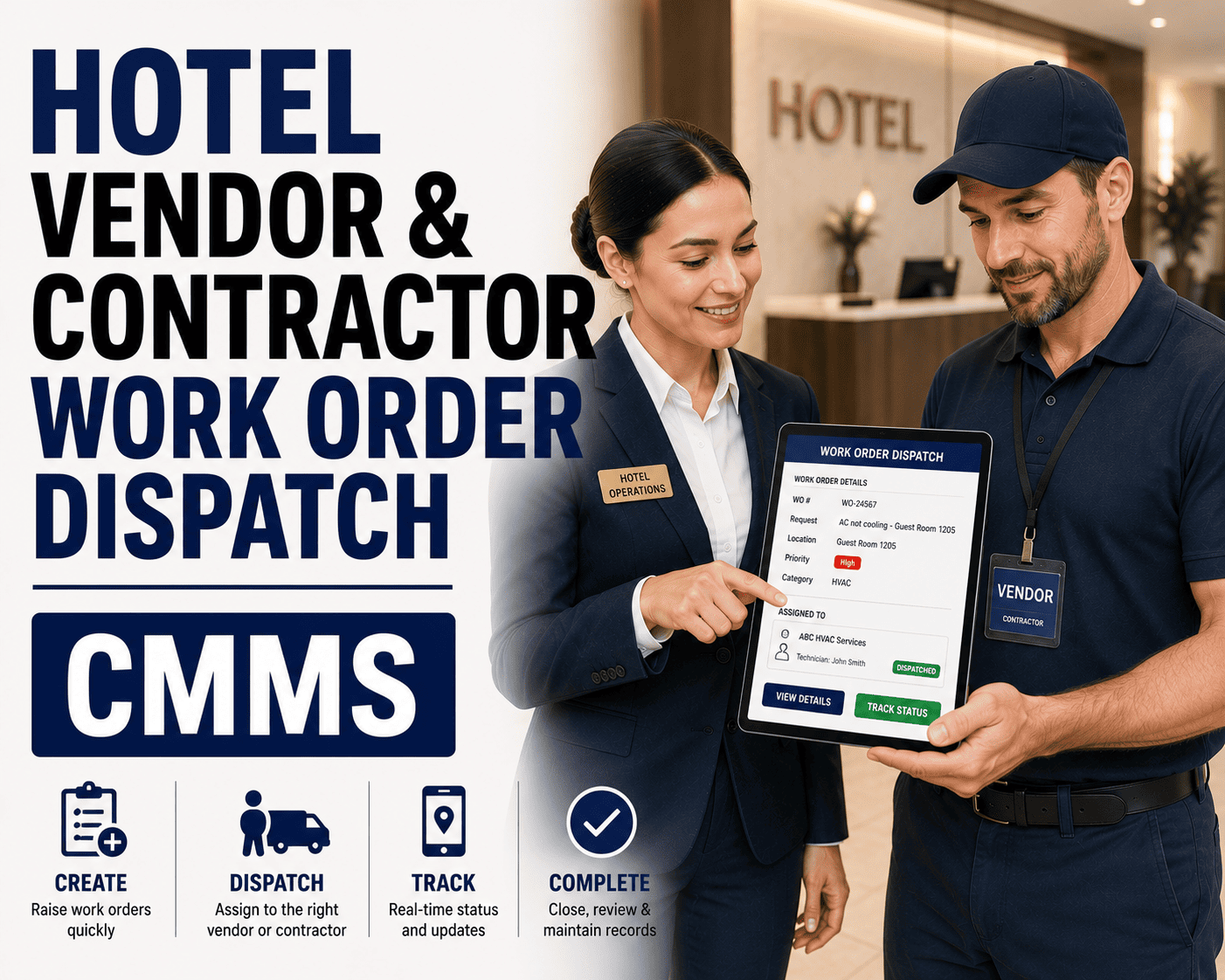
The moment the deficiency is submitted, OxMaint's CMMS engine generates a structured work order — auto-populated with room number, deficiency type, priority level, guest status (occupied vs. vacant), and check-in countdown. No engineering dispatcher touches the ticket. The work order exists in the system within 2 seconds of the housekeeper tapping submit.
Categorization and skill-based routing
Each deficiency category — plumbing, electrical, HVAC, carpentry, AV, appliance — routes to the correct engineering trade automatically. A leaking faucet goes to the plumber on shift; a dead TV remote routes to the AV tech. Priority escalation rules kick in for defects flagged in rooms with same-day arrivals, pushing those tickets to the top of the queue.
Engineering execution and real-time status
The assigned technician sees the work order on their mobile device with the photo, room number, and guest-status context. They acknowledge, travel, begin repair, and close the ticket — each status change timestamped. Housekeeping sees the live status on their app, so they know exactly when the room is ready for final inspection.
Closed-loop verification and analytics
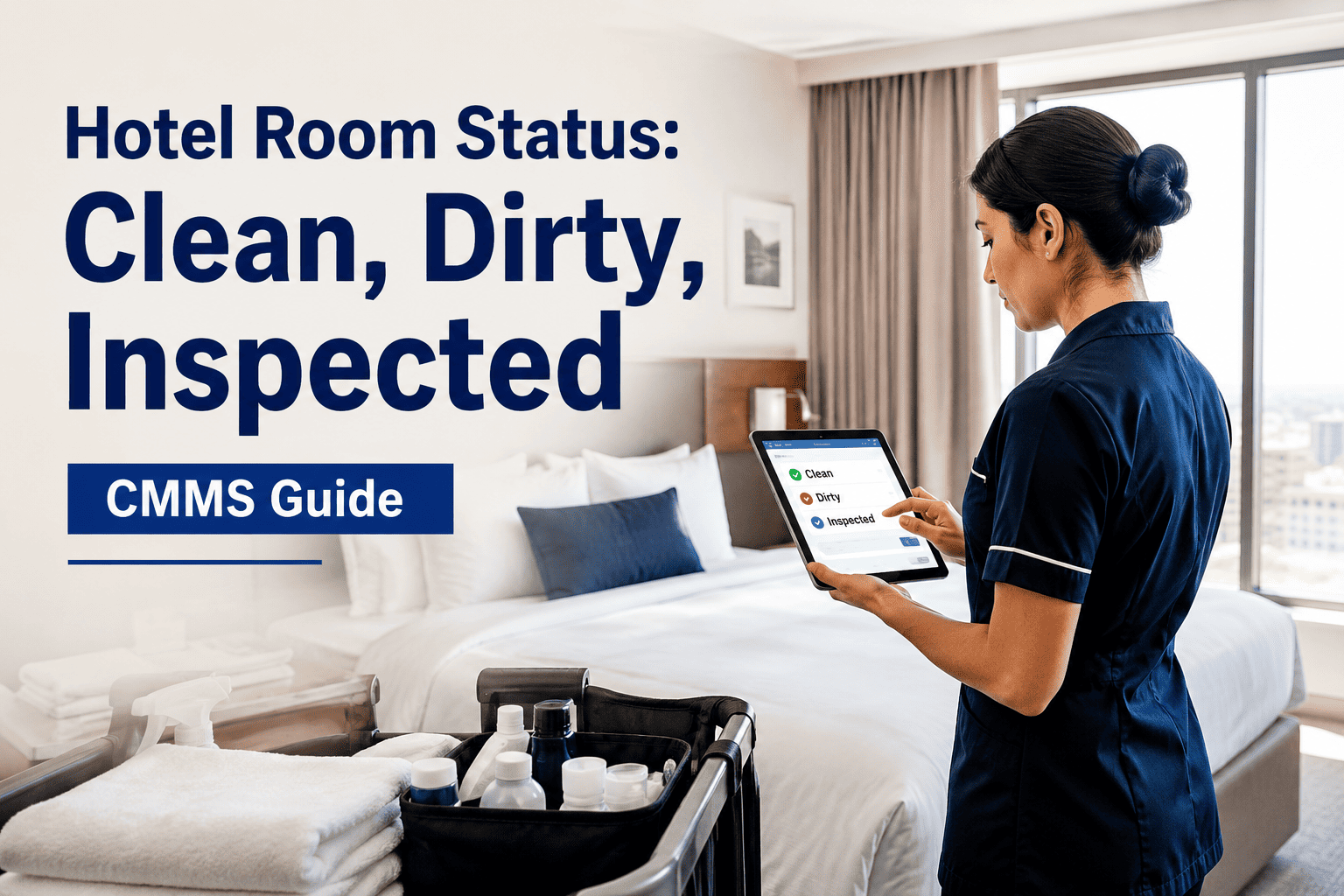
When engineering closes the work order, housekeeping receives a notification to re-inspect. Once they confirm the fix, the loop closes. Every step — flag, creation, route, acknowledge, repair, verify — is logged for audit, compliance, and recurring-defect analytics that surface failing assets before they generate repeat complaints.
Before vs. After
Paper slip vs. CMMS deficiency conversion — what changes
The table below compares the legacy paper-and-radio deficiency handoff against an automated CMMS hotel deficiency workflow across the metrics that matter to operations, guests, and audit readiness.
| Deficiency Handoff Metric | Paper / Radio Handoff | CMMS Work Order Conversion |
|---|---|---|
| Time from flag to engineering receipt | 2–6 hours (shift-dependent) | Under 5 seconds (automatic) |
| Defects lost or unentered | 18–22% of flagged slips | 0% — every flag becomes a ticket |
| Photo evidence attached | Rarely — verbal description only | Always — photo + category + room |
| Routing to correct trade | Manual dispatcher judgment | Auto-routed by deficiency category |
| Priority for arriving-guest rooms | Verbal escalation, often missed | Auto-escalated by check-in countdown |
| Audit trail for compliance | None — paper slips discarded | Full timestamped chain of custody |
| Housekeeping visibility into fix status | Phone call to engineering office | Live status in the housekeeping app |
| Recurring-defect analytics | Not available | Asset-level failure pattern detection |
Real-World Scenario
A 280-room hotel eliminates 11 daily lost-defect tickets
Consider a 280-room full-service hotel running a legacy paper-slip deficiency system. Housekeeping flags roughly 24 room defects per day. Internal audit found that 11 of those 24 tickets never reached engineering the same day — they were left at the front desk, misfiled, or handed off verbally during a shift change and forgotten. The result: 11 rooms per day with unresolved defects, an average of 3 comp rooms per week, and a recurring pattern of negative guest reviews citing maintenance issues.
After deploying OxMaint's CMMS hotel deficiency conversion workflow, the property eliminated the lost-ticket gap entirely. Every housekeeping flag became a routed work order within seconds. Same-day fix rates climbed from 54% to 92%. Comp rooms tied to maintenance complaints dropped by 78% within the first 90 days. The engineering team — initially skeptical of "more software" — reported saving roughly 2 hours per shift previously spent chasing phone calls and deciphering handwritten slips.
OxMaint Solution
How OxMaint solves housekeeping-to-engineering conversion
OxMaint is an AI-powered CMMS and EAM platform built to make every maintenance workflow — including housekeeping deficiency conversion — instant, auditable, and measurable. Here is how four specific capabilities map directly to the room issue conversion problem.
Mobile housekeeping deficiency intake
Room attendants flag defects in under 45 seconds from their phone — room number, category, photo, priority. No typing required, no paper, no radio calls. Outcome: 100% of flagged deficiencies enter the system, eliminating the 18–22% loss rate of paper slips.
Instant automatic work order creation
OxMaint converts each housekeeping flag into a fully structured work order in under 5 seconds — auto-populated with asset context, room status, and guest check-in timing. Outcome: the 3.6-hour average handoff lag drops to near-zero, every time.
AI-driven categorization and routing
Deficiency categories auto-route to the correct trade — plumbing, electrical, HVAC, AV — with priority escalation for rooms with imminent arrivals. Outcome: defects reach the right technician first time, cutting average repair-to-completion time by 40–60%.
Closed-loop verification and audit trail
Every step from flag to fix to housekeeping re-inspection is timestamped and logged. Outcome: full compliance audit-readiness, zero "he-said-she-said" disputes, and recurring-defect analytics that flag failing assets before they generate repeat guest complaints.
See OxMaint convert your housekeeping deficiencies into closed work orders — live.
Book a 30-minute demo and we will walk you through the full housekeeping-to-engineering deficiency workflow on your own room and asset data.
Frequently Asked Questions
CMMS housekeeping deficiency conversion — common questions
What is a housekeeping deficiency report to work order conversion?
It is the automated process of turning a room defect flagged by housekeeping — such as a leaking faucet or broken TV — into a structured engineering work order inside a CMMS, without manual data entry. In OxMaint, the conversion happens the moment housekeeping submits the flag on their mobile app, creating a routed work order in under 5 seconds. You can see it in action when you Book a Demo.
How does a CMMS improve hotel housekeeping deficiency workflows?
A CMMS eliminates the paper-slip and radio-call handoff that loses 18–22% of flagged defects. It auto-creates work orders, routes them to the correct trade, escalates priority for rooms with arriving guests, and gives housekeeping live visibility into fix status — cutting same-day defect resolution from roughly 54% to over 90%.
Can housekeeping staff use a CMMS app without technical training?
Yes. OxMaint's housekeeping intake screen is designed for under 45-second flagging using room-number selection, category taps, and a photo — no typing required. Most properties onboard housekeeping teams in a single 15-minute huddle, and adoption typically exceeds 90% within the first week.
What happens to the work order after housekeeping flags a deficiency?
OxMaint auto-populates the work order with room number, deficiency type, priority, guest status, and check-in timing, then routes it to the correct engineering trade. The technician acknowledges, repairs, and closes the ticket — each step timestamped. Housekeeping gets notified to re-inspect, closing the loop and creating a full audit trail.
How long does it take to implement CMMS deficiency conversion in a hotel?
Most hotels are live on OxMaint's housekeeping-to-engineering deficiency workflow within 2–4 weeks, including room and asset setup, deficiency category configuration, routing rules, and team onboarding. You can accelerate this by starting a free trial at Start Free Trial or scheduling a guided setup demo.
Stop losing room defects to paper slips and phone calls.
Deploy OxMaint's CMMS housekeeping deficiency workflow and convert every flagged room issue into a routed, tracked, verified engineering work order — automatically.
Free 14-day trial · No credit card