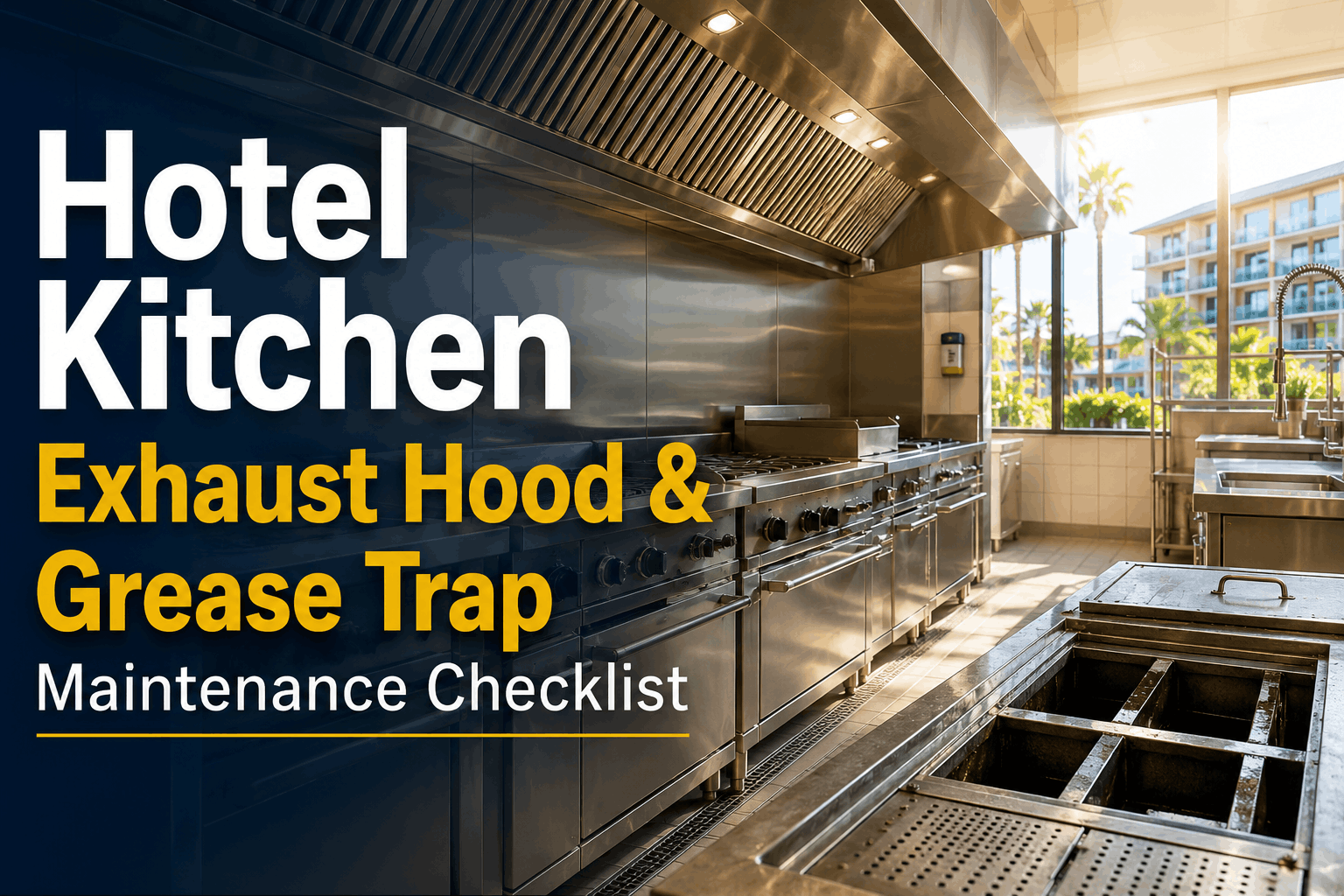
`Monthly grease trap and FOG (fats, oils, and grease) management is mandatory for health code compliance, preventing catastrophic sewer backups, and avoiding fines up to $50,000 per violation. Hotels implementing structured grease interceptor cleaning schedules using a digital CMMS like Oxmaint's hospitality platform reduce emergency plumbing calls by 85%, maintain health department compliance at 100%, and prevent property-damaging sewer backups that cost $15,000–100,000+ to remediate. From restaurant kitchens to room service areas and banquet facilities, systematic grease trap inspection and maintenance prevent costly violations, operational disruptions, and damage to hotel reputation.
Manage Your Hotel Grease Traps with Oxmaint
Monthly inspection schedules, cleaning vendor management, FOG removal tracking, health department documentation, sewer backup prevention, and compliance audit trails—all mobile-accessible with automatic notification and vendor coordination.
1. Monthly Grease Trap Inspection Protocol
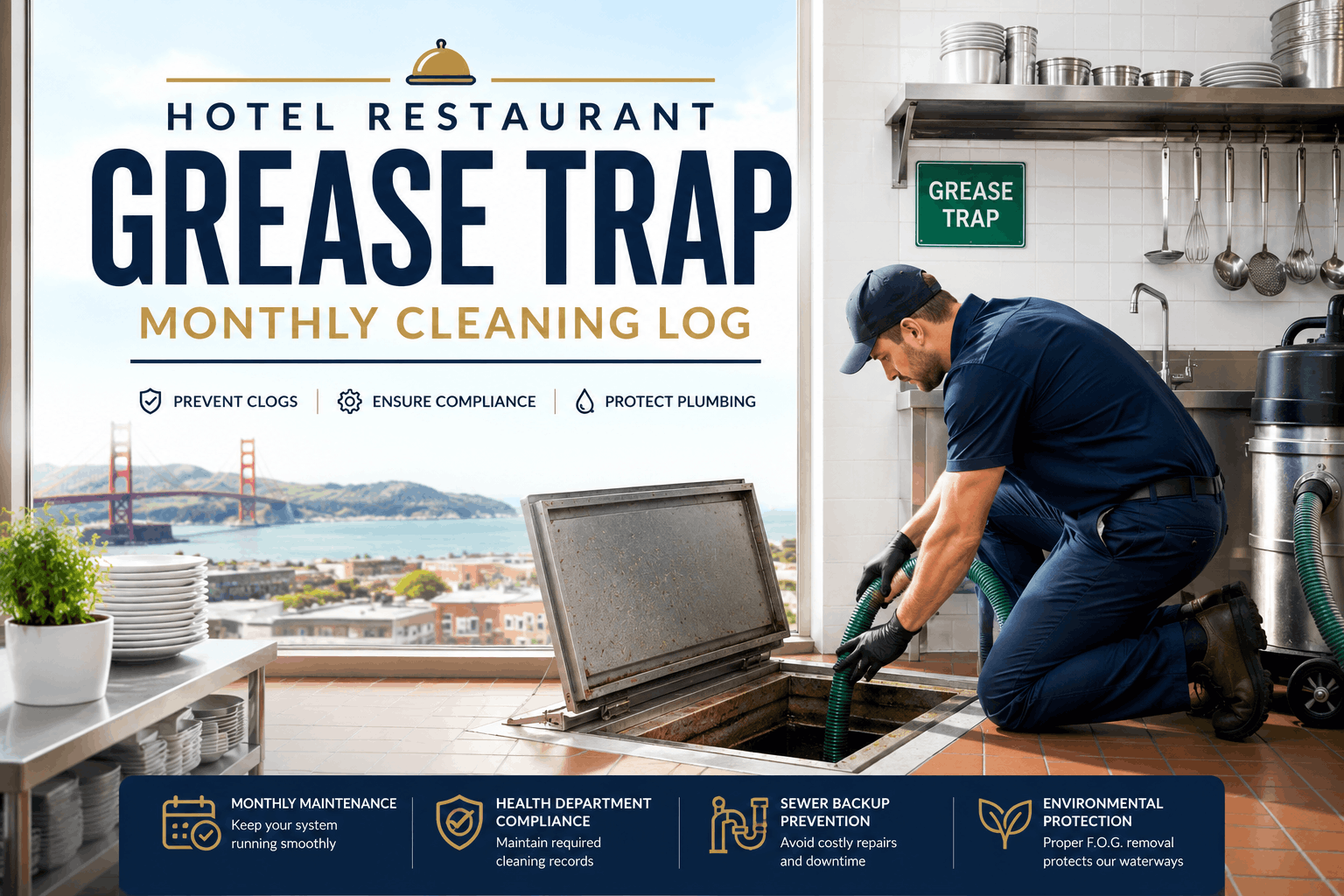
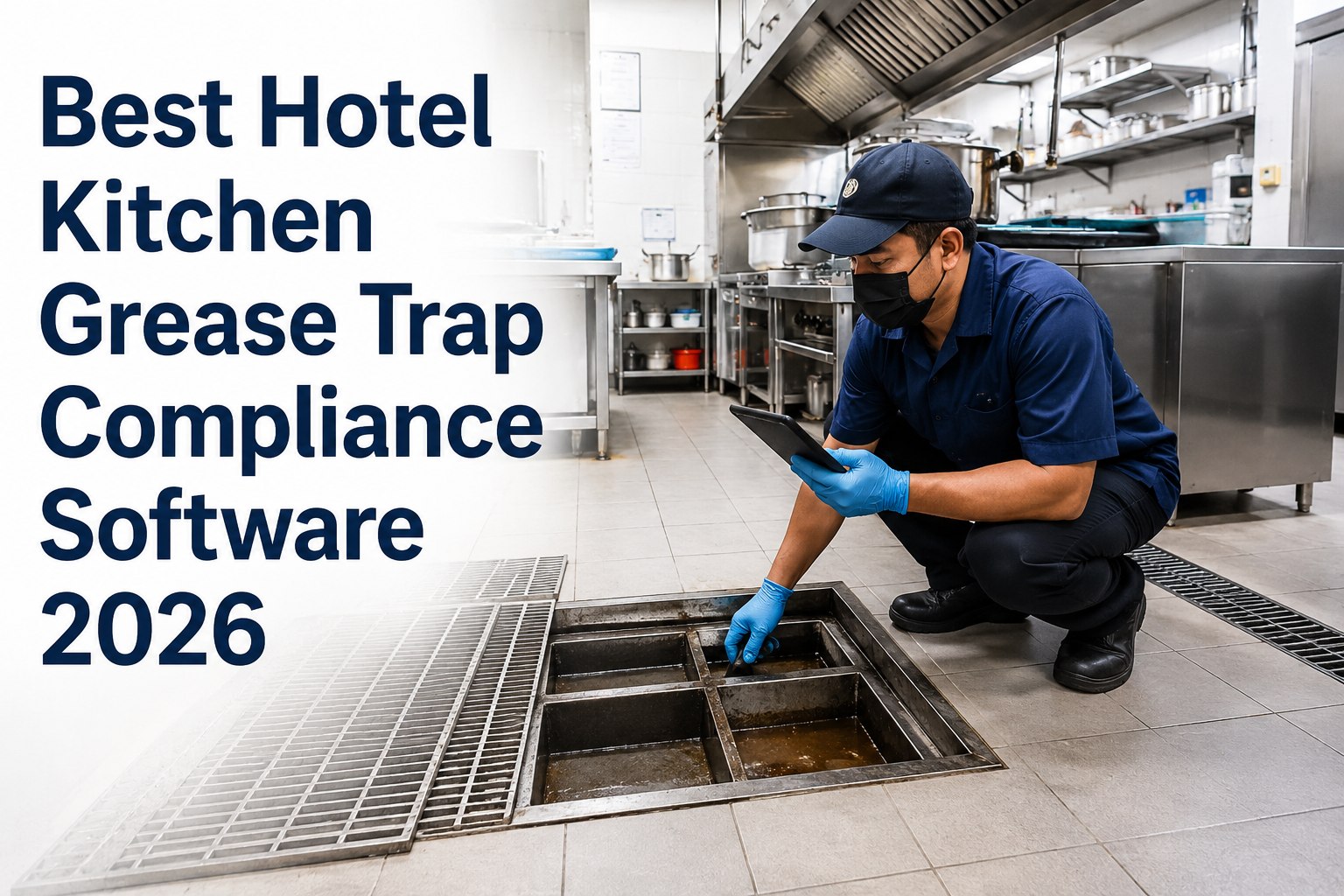
Monthly visual and physical inspections detect rising FOG levels, structural damage, and leakage before catastrophic failures occur. Documented inspections prove compliance and provide early warning of system capacity issues requiring bigger infrastructure investments.
2. Professional Grease Trap Cleaning and FOG Removal
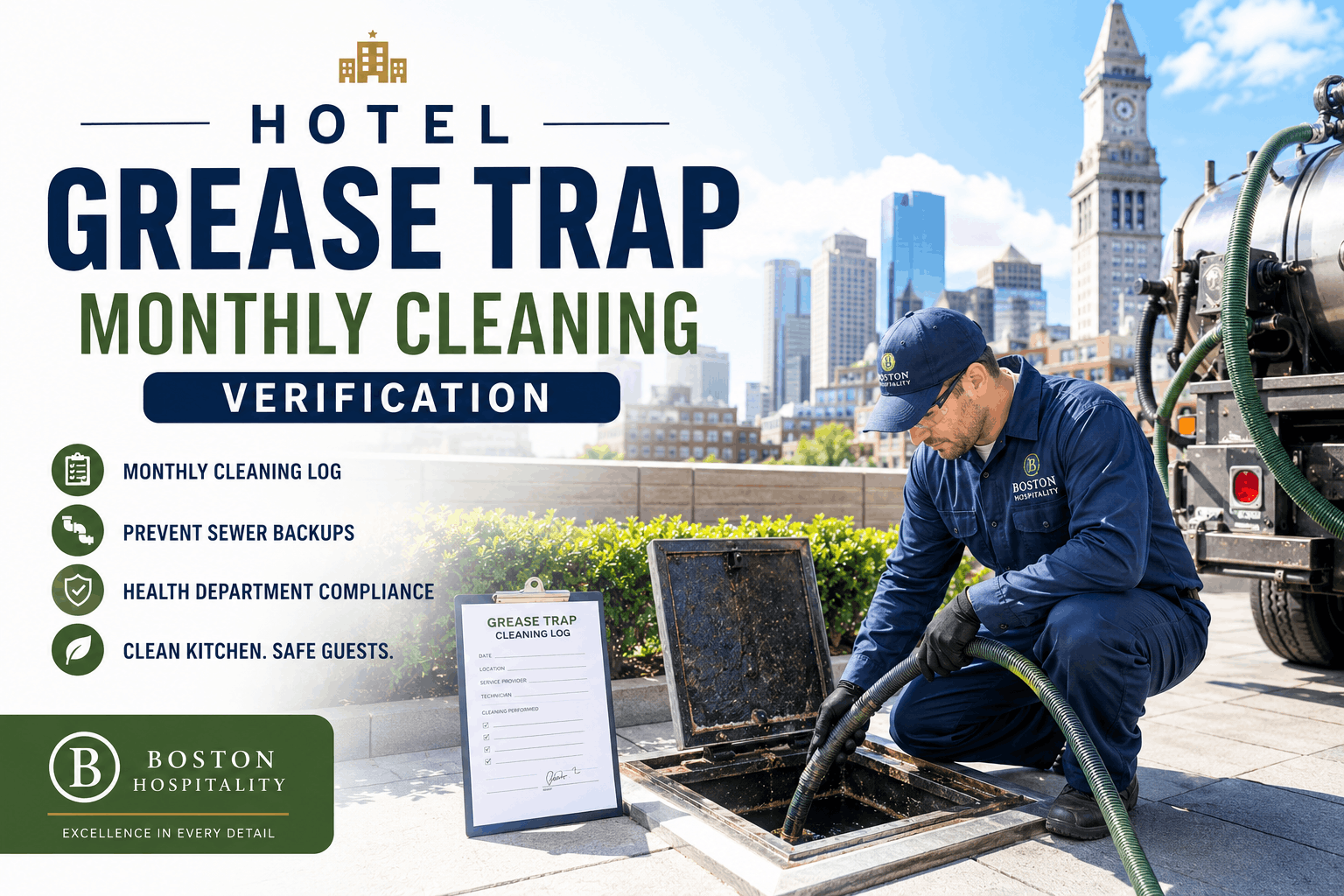
Professional grease trap cleaning removes 95%+ of accumulated FOG and solids, restoring treatment capacity and sewer flow. Scheduled cleaning prevents blockages and extends system lifespan by 40–60% compared to emergency reactive pumping.
Contract Licensed Grease Trap Service Vendors
Use only certified, insured pumping and cleaning contractors. Verify they dispose of FOG waste at licensed facilities, not into storm drains. Maintain contracts with backup vendors to prevent service gaps during peak kitchen seasons.
Establish Monthly or Quarterly Cleaning Schedule
Most restaurants require monthly cleaning; high-volume hotels (casino restaurants, banquets) may need bi-weekly service. Set cleaning schedule before FOG reaches dangerous levels. Preventive cleaning is 40% cheaper than emergency pumping calls.
Track and Log All Cleaning Service Visits
Document service dates, amount of FOG removed (measured in gallons), any repairs performed, vendor contact, and cost. Digital records prove regulatory compliance during health department inspections and support budget planning.
Verify Service Certification and Waste Disposal Documentation
Request certificates of service showing grease disposal location (licensed facility, not local sewer). Keep all documentation for audits. Start your free trial to store service certificates and disposal proofs digitally with attached photos of cleaning completion.
3. Kitchen Staff FOG Disposal and Waste Prevention
Employee training on proper grease disposal prevents 50–60% of FOG-related backups. Implementing no-grease-down-drain policies and installing fryer oil collection systems reduces trap maintenance costs by $3,000–8,000 annually.
4. Health Department Compliance and Documentation
Health code requires documented monthly inspections and professional cleaning records. Hotels without complete documentation face automatic compliance violations, operational permit suspension, and fines of $5,000–50,000+ per infraction during routine inspections.
Maintain Digital Inspection and Cleaning Records
Keep timestamped records of every monthly inspection, FOG depth measurement, and professional cleaning visit. Photo documentation of trap condition proves compliance and prevents disputes during health inspections.
Create Compliance Audit Reports for Health Inspectors
Generate monthly or quarterly audit reports showing all maintenance completed, cleaning vendor certifications, and FOG disposal documentation. Organized, comprehensive records demonstrate due diligence and often result in favorable health inspection outcomes.
Schedule Proactive Health Department Pre-Inspections
Request pre-inspection consultations with health departments to identify compliance gaps before official audits. Proactive engagement shows commitment to food safety and often results in corrective guidance rather than violations.
Track and Respond to Health Code Violations Immediately
If violations are cited, create corrective action plans and document all remediation. Book a demo to see how Oxmaint tracks regulatory corrections with timestamps and photographic evidence for health department follow-up audits.
5. Emergency Response and Sewer Backup Prevention
Preventive grease trap maintenance eliminates 85%+ of emergency sewer backups. The remaining incidents require rapid response protocols to minimize guest area contamination, operational disruption, and remediation costs.
Automate Your Grease Trap Maintenance and Compliance in Oxmaint
Monthly inspection schedules, cleaning vendor management, FOG tracking, health department documentation, emergency response protocols, and compliance audit reports—all mobile-accessible with instant team alerts and complete historical records.
"Before Oxmaint, we had a catastrophic sewer backup that cost $87,000 to remediate and shut down our restaurant for 4 days. The health inspector found we had no documentation of grease trap maintenance. Now, we schedule cleaning automatically every month, track FOG levels with photos, and our compliance documentation is audit-ready anytime. We haven't had a single backup since, and our health inspection scores improved from 92 to 98 points."
— Robert M., Executive Chef & Facilities Manager, 425-Room Resort Hotel, Denver, CO
Frequently Asked Questions — Hotel Grease Trap Maintenance
1. How often must hotel grease traps be professionally cleaned?
Health codes typically require monthly cleaning for restaurants; frequency depends on daily FOG volume. High-volume kitchens may need bi-weekly service. Your health department and grease trap vendor should jointly establish the appropriate schedule for your facility.
2. What happens if a hotel fails to maintain grease traps and gets cited?
Health department violations for grease trap non-compliance carry fines of $5,000–50,000+ per incident and can result in operating permit suspension, forced closure, or loss of food service licenses. Multiple violations can permanently damage licensing status.
3. What is the cost difference between preventive grease trap cleaning and emergency sewer backups?
Preventive monthly cleaning costs $300–800 per service. Emergency sewer backups cost $15,000–100,000+ to remediate, plus lost revenue from operational shutdown, health violations, and potential guest injuries. Prevention is 50–200x cheaper.
4. Can used fryer oil be recycled instead of disposed as waste?
Yes. Used fryer oil is valuable; licensed vendors pay hotels $0.15–0.40 per pound for biodiesel conversion. Collecting fryer oil separately from grease traps reduces trap volume 30–50% and creates revenue instead of disposal cost.
5. What documentation must be retained for health department audits?
Keep records of monthly inspections, FOG depth measurements, professional cleaning dates and amounts removed, vendor certifications, disposal facility documentation, and any repairs performed. Retention period is typically 3 years minimum.
6. How can hotels detect if a grease trap is failing internally?
Signs include slow kitchen drain response despite regular cleaning, persistent odors, water pooling near access points, and fixture backups not resolved by plumbing. These indicate structural failure requiring professional inspection and possible tank replacement ($5,000–15,000).
7. What role should kitchen staff play in grease trap prevention?
Kitchen staff adherence to no-grease-down-drain policies prevents 50–60% of FOG-related failures. Staff training on proper disposal, monitoring trap area for warnings, and daily fryer oil collection are essential to preventive maintenance success.
8. Are there municipal incentives for hotels implementing proactive grease trap management?
Some cities offer lower wastewater fees or expedited health permit renewals for facilities demonstrating consistent preventive maintenance. Proactive grease management also improves municipal sewer system health, benefiting entire communities.
Prevent Costly Sewer Backups and Health Violations
Oxmaint automates grease trap maintenance schedules, cleaning coordination, FOG tracking, and compliance documentation—ensuring 100% regulatory adherence and eliminating emergency backup incidents that damage operations and reputation.