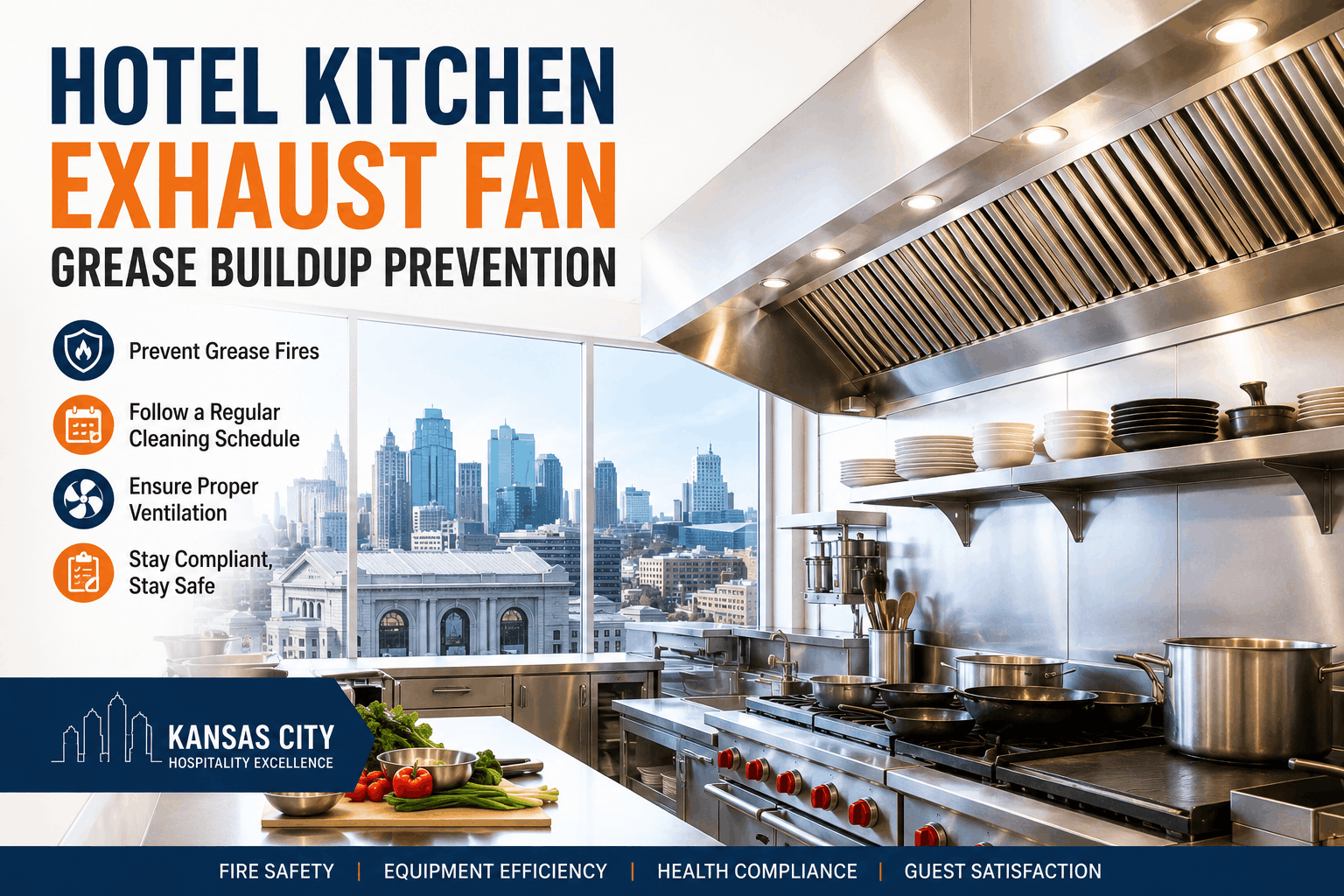
Hotel Kitchen Exhaust Fan Grease Buildup Prevention
By Alex Jordan on June 18, 2026
A single grease fire in a hotel kitchen exhaust system can close a restaurant for weeks, cause $500,000–2,000,000 in property damage, and generate negative headlines that damage brand reputation for years. NFPA 96 requires commercial kitchen exhaust systems to be inspected and cleaned at regular intervals based on the volume of cooking — and the consequences of non-compliance extend far beyond fines. Insurance carriers routinely deny claims when grease buildup exceeds NFPA standards, and health departments can suspend operating permits until systems are certified clean. Start a free trial with Oxmaint to schedule and track kitchen exhaust fan cleaning and inspections, or book a demo to see how hotel engineering teams use Oxmaint's kitchen safety module to prevent grease fires and maintain compliance.
HOTEL KITCHEN · FIRE SAFETY · EXHAUST MAINTENANCE · 2026
Hotel Kitchen Exhaust Fan Grease Buildup Prevention: Inspection and Cleaning Schedule for Fire Safety Compliance
Grease filter replacement, exhaust fan motor inspection, hood cleaning schedule, fire suppression readiness, health department compliance, and NFPA 96 requirements — the complete guide to preventing grease fires in hotel kitchen exhaust systems.
$500K–2MAverage property damage from a commercial kitchen grease fire
60%Of restaurant fires originate in the kitchen exhaust system
30–90 daysNFPA 96-required cleaning interval for high-volume cooking operations
100%Insurance claim denial rate when grease buildup exceeds NFPA standards
Why Kitchen Exhaust Grease Buildup Is a Fire Hazard — The Science of Ignition
Kitchen exhaust systems accumulate grease in three locations: the filters (primary capture), the ductwork (where vapor condenses), and the fan housing (where high-velocity particles deposit). Grease is a combustible fuel with an auto-ignition temperature of approximately 500°F. Cooking operations routinely produce temperatures exceeding 600°F at the cooking surface, and flare-ups can exceed 1,000°F. Once ignited, grease in the ductwork or fan housing can sustain combustion even if the cooking surface fire is extinguished — the ductwork provides a chimney effect that intensifies the fire and spreads it to the roof. Start a free trial or book a demo to see how Oxmaint's kitchen safety module ensures your exhaust system is always within safe grease limits.
1
Grease Ignition Temperature
~500°F — auto-ignition point of accumulated grease
Risk: Grease in ductwork ignites from cooking surface fire or heat transfer through metal.
2
Grease Accumulation Rate
0.5–2.0 mm/month in high-volume kitchens
Deep-fat frying operations produce 3× more grease than charbroilers.
NFPA 96: Exhaust system must be cleaned when visible grease exceeds 0.3 mm (1/16 inch).
3
Ductwork Chimney Effect
Vertical ductwork accelerates fire spread to the roof
Grease fire in duct can reach roof in under 60 seconds.
Critical: Regular cleaning eliminates combustible fuel source in ductwork.
NFPA 96 Requirements — Inspection and Cleaning Frequency
NFPA 96 (Standard for Ventilation Control and Fire Protection of Commercial Cooking Operations) establishes the minimum requirements for kitchen exhaust system inspection and cleaning. The standard defines cleaning frequency based on the type and volume of cooking operations. Oxmaint's kitchen safety module tracks cleaning due dates per kitchen and generates work orders automatically when intervals are due.
NFPA 96 Cleaning Frequency — By Cooking Operation Type
Deep-Fat Frying / High-Volume
Cleaning Interval: 30 days
Inspection: Weekly visual check for grease accumulation. Filters: Weekly cleaning or replacement.
High Risk
Charbroiling / Moderate-Volume
Cleaning Interval: 60–90 days
Inspection: Monthly visual check. Filters: Monthly cleaning or as needed based on accumulation.
Moderate Risk
Light Cooking / Low-Volume
Cleaning Interval: 90–180 days
Inspection: Quarterly visual check. Filters: Monthly or as needed.
Lower Risk
The 5 Critical Components of Kitchen Exhaust Fire Prevention
Kitchen exhaust fire prevention requires attention to five critical components. Each component has specific inspection, cleaning, and maintenance requirements. Oxmaint's kitchen safety module tracks all five components and generates work orders at the required frequencies.
Kitchen Exhaust Fire Prevention — 5 Critical Components
Grease Filters
Weekly
Clean or Replace
First Defense
Exhaust Fan / Housing
Monthly
Inspect & Clean
Motor + Blades
Ductwork
30–90 Days
Professional Cleaning
NFPA 96 Required
Fire Suppression System
Monthly
Test & Inspect
Semi-Annual Pro
Hood & Baffle System
Daily
Visual Check
Housekeeping
Kitchen Exhaust Fan Maintenance — Motor, Blades, and Housing
The exhaust fan is the most critical mechanical component of the kitchen ventilation system. Fan motor failure, imbalanced blades, or grease-laden housing can cause system failure, reduced airflow, and fire risk. Oxmaint's fan maintenance module tracks motor run hours, schedules lubrication, and alerts engineering when vibration or current draw exceeds thresholds.
1
Motor Inspection & Lubrication
Monthly — check bearings, belts, and motor temperature
Lubricate motor bearings every 1,000 operating hours or quarterly.
Motor failure causes system shutdown and grease accumulation in ductwork. Most common cause of unplanned kitchen exhaust downtime.
2
Fan Blade Cleaning & Balancing
Monthly — inspect for grease accumulation and blade imbalance
Grease buildup on blades reduces airflow by 30–50% and creates vibration.
Imbalanced blades damage bearings and motors. Clean blades with degreaser and check for balance annually.
3
Belt Tension & Condition
Monthly — inspect belts for wear, cracking, and proper tension
Loose belts cause reduced airflow and overheating. Worn belts fail unexpectedly.
Replace belts annually or at signs of wear. Keep spare belts in inventory.
4
Housing Grease Inspection
Monthly — check fan housing for grease accumulation
Grease in fan housing is a direct fire hazard — ignites from motor heat or duct fire.
If grease accumulation exceeds 0.3 mm, schedule professional cleaning immediately.
Fire Suppression System — Inspection and Readiness
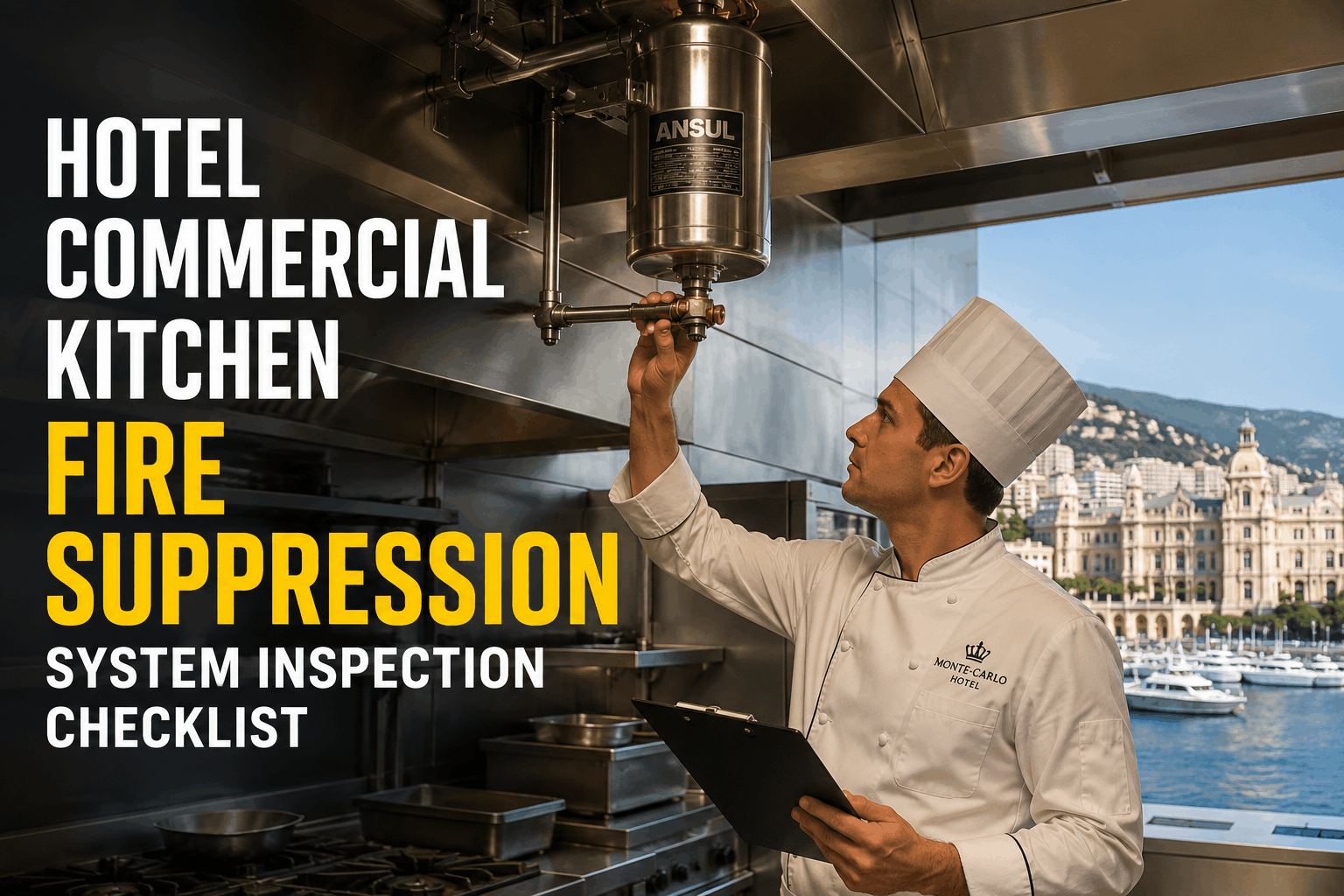
The kitchen fire suppression system is the last line of defense. It must be inspected monthly, tested semi-annually, and serviced annually by a certified professional. Oxmaint's compliance module tracks inspection due dates, stores service certificates, and generates alerts when any component is overdue.
Fire Suppression System — Inspection and Testing Schedule
Verify pressure in green zone. Check fusible links and nozzle caps. Ensure manual pull station is accessible.
Kitchen Staff
Semi-Annual Professional Test
Full functional test by certified technician
Simulate discharge (without agent). Verify all nozzles are clear. Check all mechanical connections.
Licensed Pro
Annual Professional Service
Complete system inspection and certification
Inspect all components. Replace cartridge if required. Issue certificate of inspection. Record in CMMS.
Licensed Pro
Protect Your Kitchen from Grease Fires — Automate Your Exhaust Maintenance Schedule
Oxmaint's kitchen safety module tracks filter cleaning, fan maintenance, duct cleaning, and fire suppression inspections — generating work orders at every required interval.
Health Department and Insurance Compliance Requirements
Health departments inspect kitchen exhaust systems as part of routine food safety inspections. Common violations include excessive grease accumulation, missing or damaged filters, and inoperable fire suppression systems. Insurance carriers require documented proof of regular cleaning and inspection — claims are routinely denied when grease buildup exceeds NFPA 96 standards. Oxmaint's compliance module stores all inspection and cleaning records in one place, making audit responses immediate and insurance claims defensible.
Compliance Documentation — What to Keep and For How Long
Professional Cleaning Certificates
Retain
5+ Years
Insurance Required
Monthly Filter Cleaning Logs
Retain
3+ Years
Health Dept
Fire Suppression Certificates
Retain
5+ Years
NFPA 96
Fan Maintenance Records
Retain
3+ Years
Warranty / Insurance
"
We had a grease fire in our kitchen exhaust system that caused $750,000 in damage and closed our restaurant for 10 weeks. Our insurance claim was denied because we couldn't produce records of professional duct cleaning within the NFPA 96-required interval. We implemented Oxmaint's kitchen safety module after reopening — now every cleaning, inspection, and filter change is documented and timestamped. We'll never lose an insurance claim to missing records again.
Director of Engineering — 400-room Full-Service Hotel, US Southeast
Frequently Asked Questions — Kitchen Exhaust Fan Grease Prevention
How often should kitchen exhaust ducts be professionally cleaned?
NFPA 96 requires cleaning intervals based on cooking volume: high-volume (deep-fat frying) every 30 days, moderate-volume (charbroiling) every 60–90 days, and low-volume (light cooking) every 90–180 days. Professional cleaning must be performed by a certified company and documented with a certificate. OxMaint tracks due dates and stores certificates automatically.
What does NFPA 96 require for kitchen exhaust system inspection?
NFPA 96 requires inspection of the entire exhaust system — hood, filters, ductwork, fan, and fire suppression system — at intervals determined by cooking volume. The inspection must verify grease accumulation does not exceed 0.3 mm (1/16 inch). Documentation of all inspections and cleanings must be retained on-site.
How do I know if my kitchen exhaust fan has excessive grease buildup?
Visible signs include: grease dripping from hood or ductwork, grease accumulation on fan blades (visible through housing inspection door), reduced airflow (weak capture of cooking vapors), and visible grease around fan motor housing. If you can see grease accumulation exceeding 0.3 mm, schedule professional cleaning immediately.
What is the insurance impact of failing to clean kitchen exhaust systems?
Insurance carriers require proof of regular cleaning per NFPA 96. If a grease fire occurs and you cannot produce cleaning records, your claim will likely be denied — transferring 100% of the loss to your operating budget. Many policies now include specific exclusions for losses related to failure to maintain kitchen exhaust systems. Book a demo to see how Oxmaint's documentation protects your claims.
Prevent Grease Fires Before They Start — Schedule Every Cleaning, Track Every Inspection.
Oxmaint's kitchen safety module tracks filter cleaning, fan maintenance, duct cleaning, fire suppression inspections, and compliance documentation — all in one platform. Free to start.