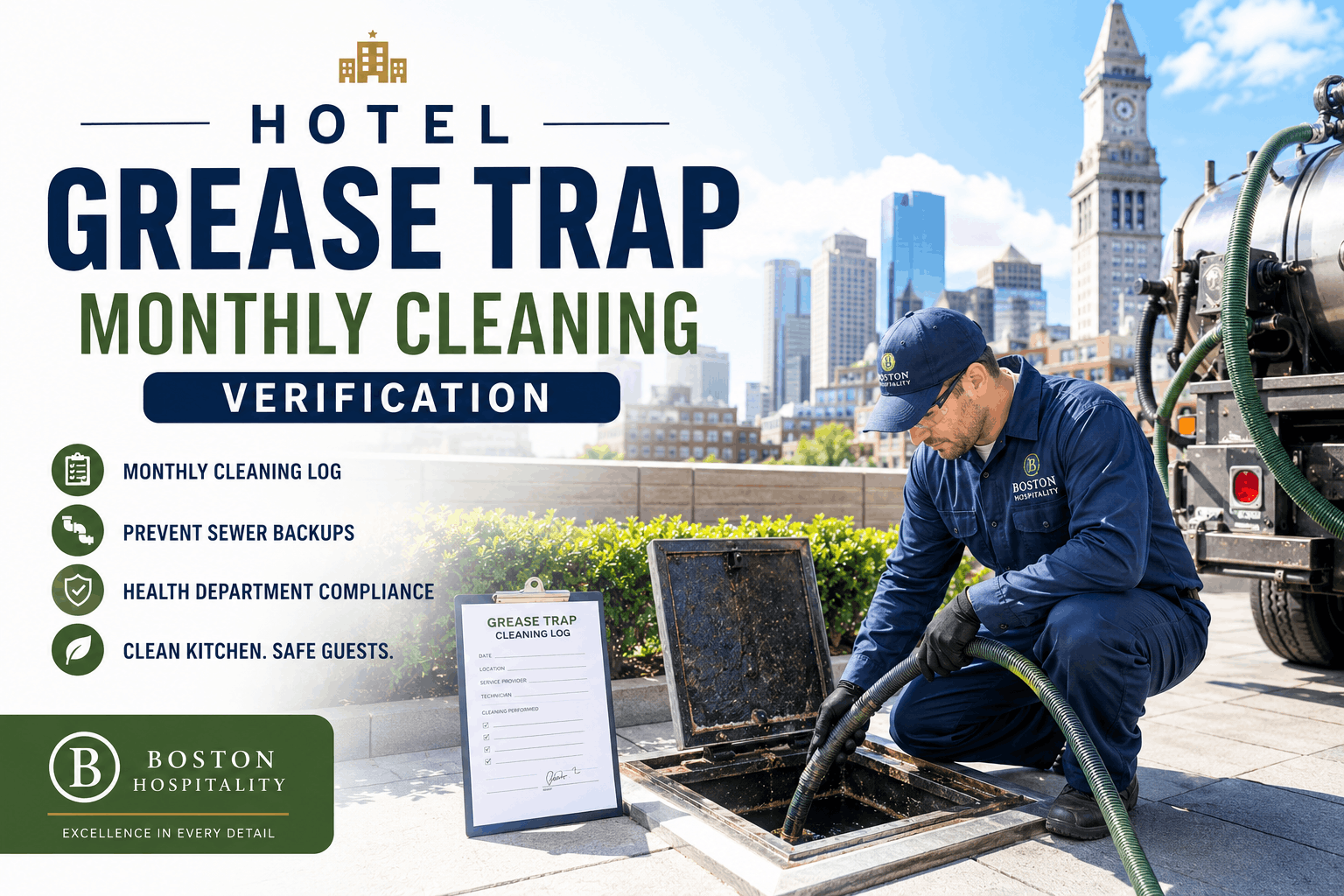
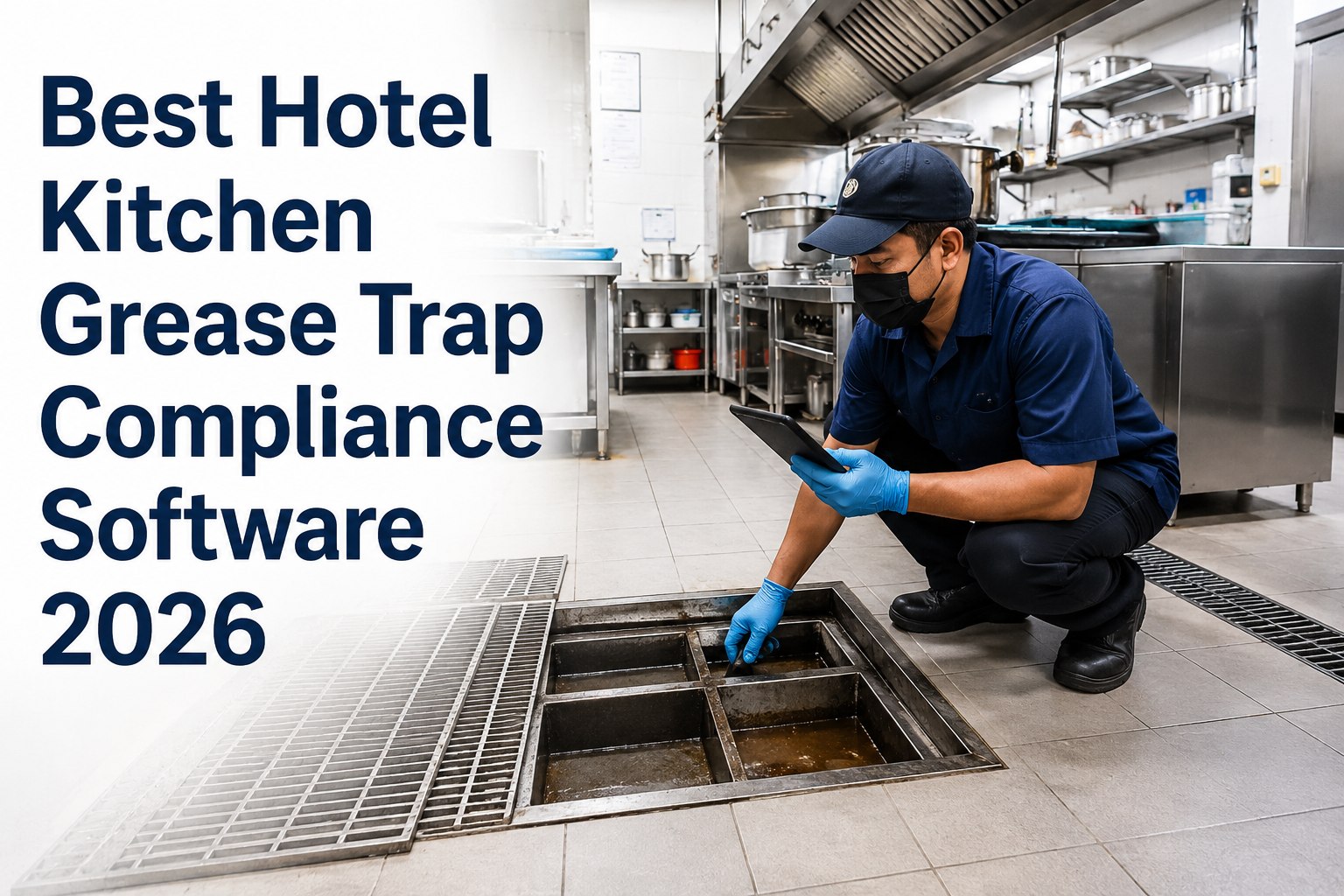
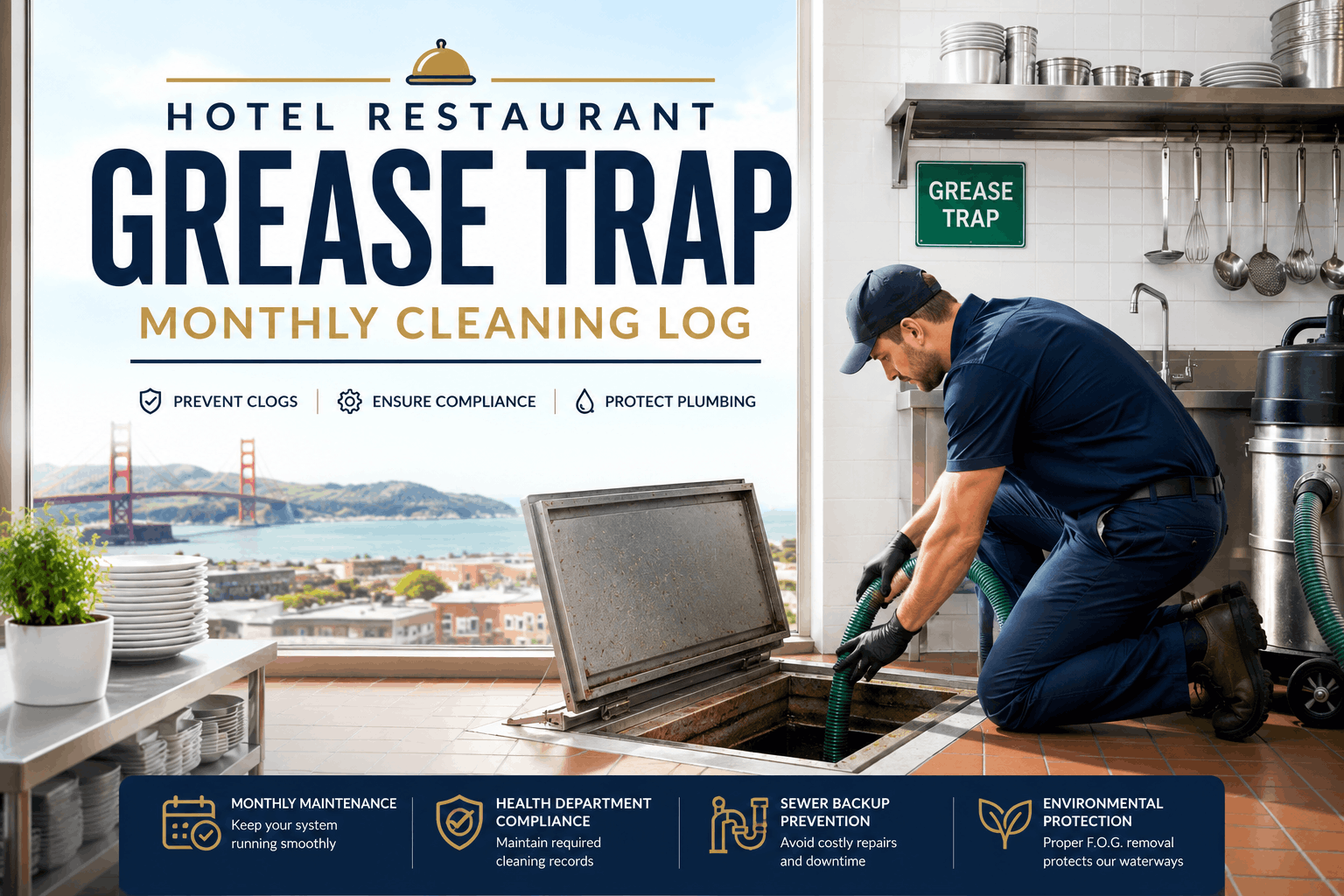
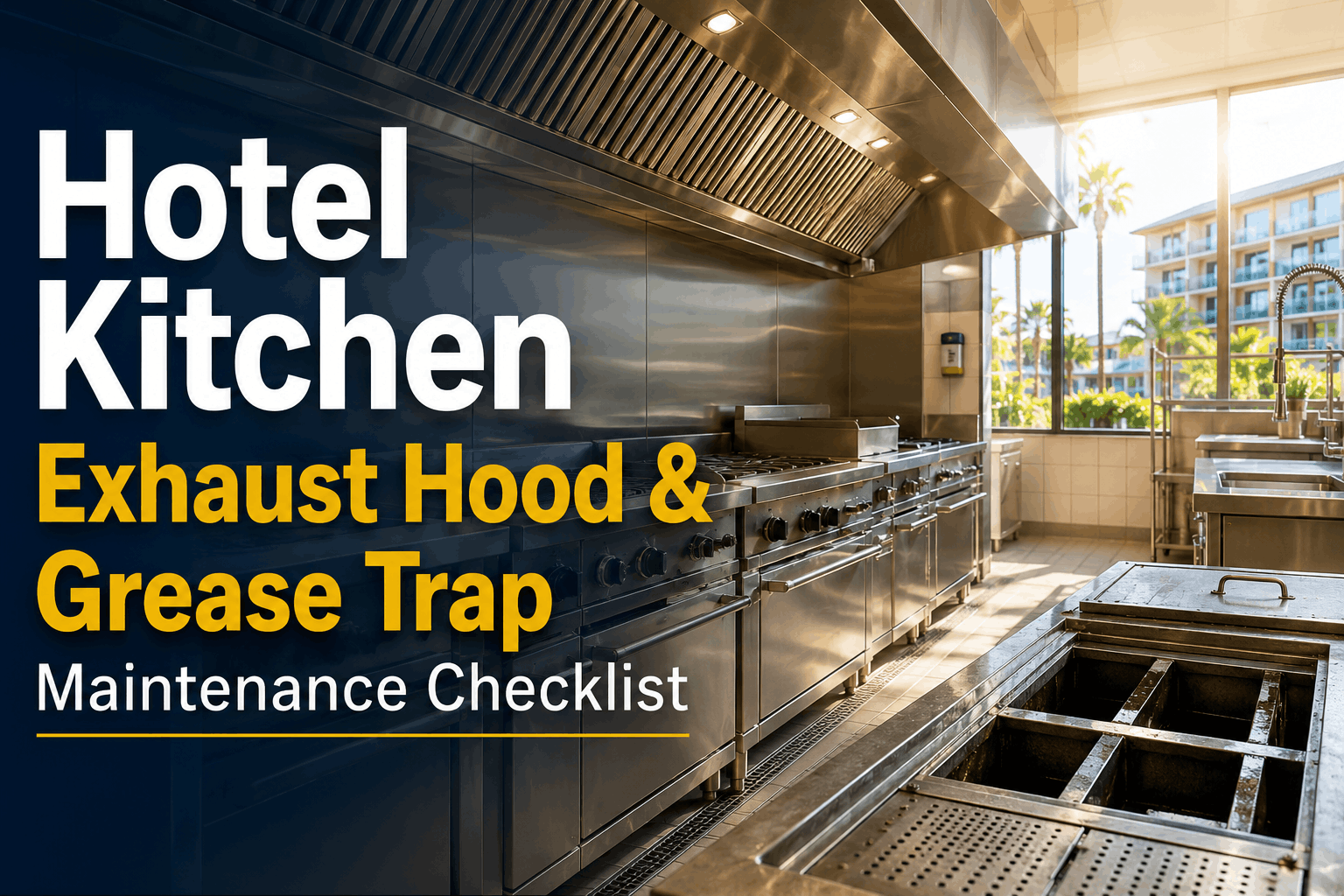
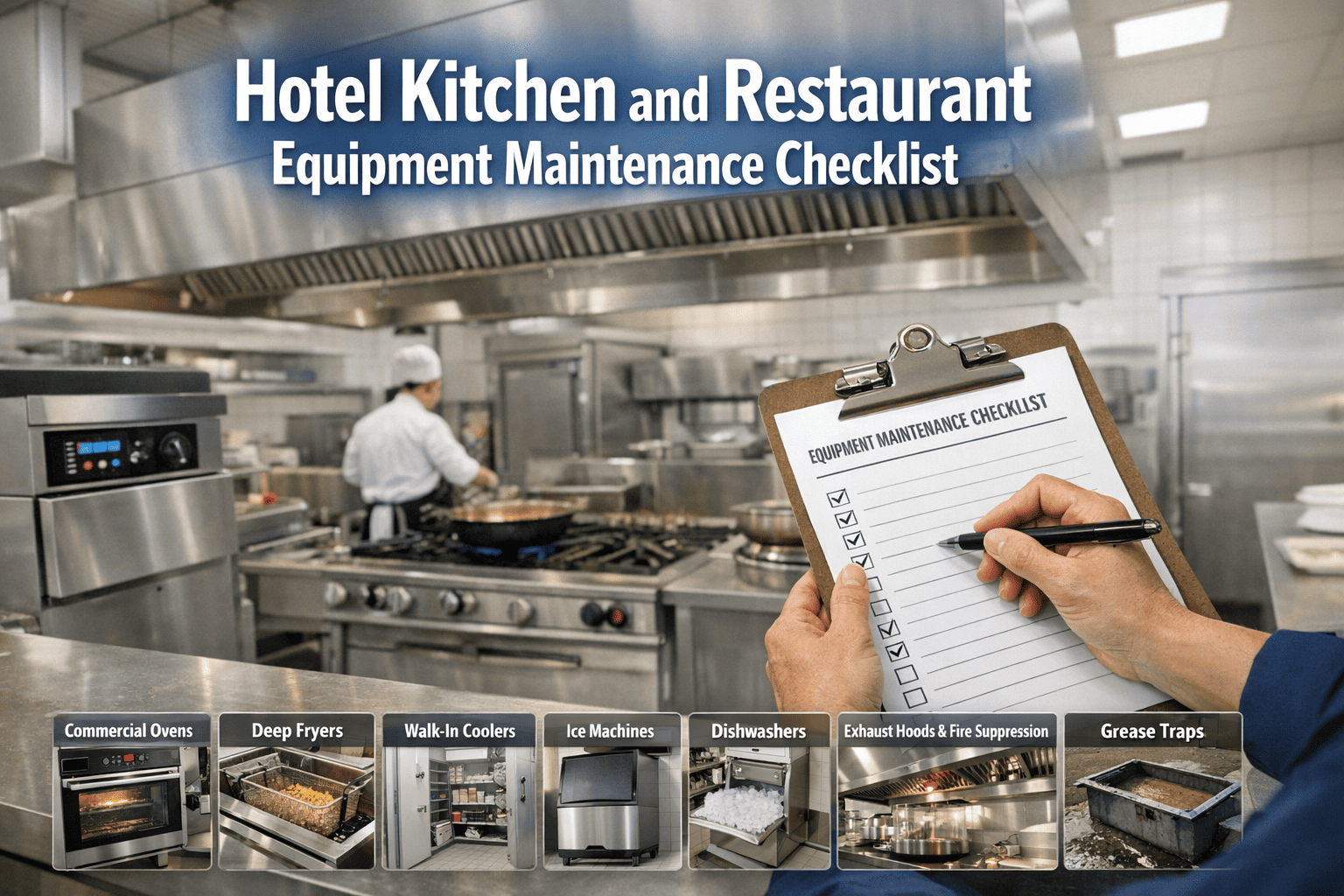
Grease trap failure is one of the most expensive and reputationally damaging events in hotel kitchen operations. A complete sewer backup caused by a neglected grease interceptor can shut down a banquet kitchen for 48+ hours, cost $15,000–$50,000 in emergency plumbing and cleanup, and trigger health department closure orders — and virtually every catastrophic grease trap failure was preceded by weeks of detectable warning signs that a monthly visual inspection programme would have caught. AI-powered grease trap monitoring tracks FOG (fats, oils, grease) accumulation levels, flow rate reductions, and biological additive effectiveness continuously — generating alerts 2–4 weeks before a blockage event. This guide covers how grease trap verification works, the failure modes it detects, the technologies that power it including IoT sensors, digital twin modelling, and kitchen ERP integration, and how Oxmaint's predictive maintenance platform converts grease trap sensor data into scheduled pumping work orders before a backup occurs.
HOTEL KITCHEN · GREASE MANAGEMENT · 2026
Grease Trap Monthly Cleaning Verification: Detect FOG Buildup & Sewer Backup Risk 2–4 Weeks Early
Oxmaint monitors grease accumulation, flow rates, and biological additive effectiveness in real time — turning grease interceptor data into scheduled pumping before a kitchen backup forces a health department closure.
Each grease trap failure mode leaves a measurable data signature weeks before it becomes a catastrophic sewer backup event. Oxmaint's verification protocol is built on kitchen-specific thresholds — so alerts are calibrated to your hotel's actual grease loading, not generic assumptions that cause over-pumping or under-pumping.
Excessive FOG Accumulation
Critical
Monthly verification measures grease cap thickness and total solids. Cap exceeding 25% of total liquid depth signals imminent risk of solids carryover into sewer — detectable 2–3 weeks before blockage.
Flow Rate Reduction
Critical
Slowed drainage from sinks and dishwashers indicates grease cap is impeding flow. Measurable 15–20% flow reduction occurs before any visible backup — a key monthly verification finding.
Odour & Hydrogen Sulfide
Critical
Rotten egg smell indicates grease decomposition and hydrogen sulfide generation — a health code violation and corrosion risk to downstream plumbing. Detectable in monthly site checks.
Biological Additive Failure
Medium
Monthly verification checks whether bacteria/enzyme additives are reducing solids. No measurable reduction after 30 days = ineffective product or incorrect application.
Structural Damage
Medium
Cracked lids, leaking gaskets, or corroded baffles reduce trap efficiency and allow grease to bypass into sewer — detectable during monthly visual exterior inspection.
Inlet/Outlet Baffle Condition
Medium
Missing or damaged baffles allow grease to escape the trap entirely. Monthly verification checks baffle integrity and proper positioning — overlooked until a downstream blockage occurs.
Monthly Grease Trap Verification Protocol
Reliable grease trap management requires multiple verification methods working together. No single check provides the full picture — but combined through Oxmaint's structured monthly checklist, these verifications deliver compliance documentation and early warning detection across all kitchen zones.
Visual Grease Cap Measurement
Thickness Check
Use a grease gauge or marked stick to measure floating grease cap thickness. Record measurement at inlet and outlet ends. Cap >25% of total liquid depth = schedule pumping immediately.
Flow Rate Timing Test
Drainage Check
Time how long a full three-compartment sink takes to drain fully. A 20–30% increase from baseline indicates grease cap is impeding flow — verify immediately.
Solids Accumulation Check
Bottom Sludge
Probe bottom of trap to measure solids depth (settled food particles, grit). Solids >25% of liquid depth requires pumping regardless of grease cap thickness.
Baffle & Fitting Inspection
Structural Check
Inspect inlet/outlet baffles for corrosion, displacement, or missing sections. Check lid gaskets, bolts, and access covers for leaks or damage. Document with photos.
Odour & Ventilation Check
Air Quality
Note any sewer gas or rotten egg odours around the trap and nearby drains. Persistent odour indicates trap failure or dry P-traps — a health code violation.
Pumping Documentation Review
Service Records
Confirm last pumping date and verify against local code requirements (typically every 30–90 days for hotels). Attach pumping manifest to monthly log.
Cost escalates with every week of delayed action — from $250 to $50,000+
Stage 1 — Monthly Verification (3–4 weeks before overflow)
Visual check + minor cleaning
$50–$100 (labour)
Stage 2 — Scheduled Pumping (1–2 weeks before capacity)
Professional grease trap pumping + disposal
$250–$750 (typical hotel trap)
Stage 3 — Slow Drain / Odour Complaint (3–7 days before backup)
Emergency pumping + drain cleaning
$800–$2,500
Stage 4 — Sewer Backup (kitchen flooding event)
Emergency plumbing + kitchen shutdown + health department closure + fines
$15,000–$50,000+
"We had been pumping our main kitchen grease trap every 90 days based on the previous engineer's schedule. After implementing Oxmaint's monthly verification log, we discovered we could safely go 110 days between pumpings for our banquet kitchen — but our smaller prep kitchen needed pumping every 45 days. We stopped over-pumping one and under-pumping the other. Saved $4,200 annually on pumping costs alone."
— Director of Engineering, Convention Hotel, Florida · 2025
Oxmaint Platform Features — Grease Trap Verification & Compliance
Digital Grease Cap Measurement Log
Record grease cap thickness in inches/cm at inlet and outlet. Oxmaint calculates % of liquid depth and triggers alert when exceeding 25% threshold — with photo attachment for audit proof.
Pumping Frequency Optimisation
Track grease accumulation rate over time. Oxmaint calculates actual pumping interval needed based on your kitchen's grease loading — not a generic calendar guess.
Health Department Audit Trail
Every monthly verification, pumping manifest, and maintenance action is timestamped and stored. Export complete 12-month logs for health inspections in under 60 seconds.
Auto Pumping Work Order Generation
When grease cap or solids exceed threshold, Oxmaint generates a work order pre-populated with trap location, estimated gallons, and last pumping date — sent to your approved vendor.
Kitchen-Wide Grease Dashboard
Every grease trap — main kitchen, prep kitchen, banquet, employee cafeteria — visible on one screen with days since last pump, current fill estimate, and alert status.
Sewer Use Fee Optimisation
Many municipalities charge higher sewer fees for FOG violations. Documented monthly verification logs can be submitted to dispute excess charges or reduce surcharge rates.
Verify Grease Trap Compliance Monthly on Oxmaint
Oxmaint tracks grease cap thickness, flow rates, solids accumulation, and pumping history — alerting your team weeks before a backup and generating pumping work orders automatically.
Frequently Asked Questions — Hotel Grease Trap Monthly Cleaning Verification
How often should a hotel kitchen grease trap be pumped?
Code requirements vary, but most municipalities require pumping at least every 30–90 days for hotels. The correct interval depends on kitchen volume, menu type, and grease loading. Monthly verification using Oxmaint's measurement protocol determines your actual interval — many hotels pump too frequently (wasting money) or not frequently enough (risking backups).
What are the health code violations associated with grease trap neglect?
Common violations include: FOG discharge exceeding local limits, sewer gas odours in food prep areas, grease accumulation on trap exterior (pest harbourage), missing or damaged lids, and failure to maintain pumping records. Each violation carries fines of $500–$5,000 per day. Repeated violations can trigger permit suspension or closure orders.
What are the early warning signs of a failing grease trap?
Slow draining sinks (20%+ increase in drain time), gurgling sounds from drains, sewer gas odours around kitchen, grease visible in dishwashing discharge, and recurring drain fly infestations. Monthly verification captures these signs 2–4 weeks before a full backup occurs.
How do biological additives affect grease trap maintenance?
Bacteria/enzyme additives can reduce solids accumulation and control odours when applied correctly. However, many products are ineffective in cold wastewater or with certain detergents. Monthly verification measures solids reduction to determine if your additive is working — if no measurable reduction after 30 days, switch products or discontinue use.
What documentation is required for health department grease trap compliance?
Most jurisdictions require: monthly grease cap measurement logs (signed and dated), pumping manifests from approved haulers (including disposal location), maintenance records for any repairs, and odour/flow observations. Records typically must be kept for 3–5 years and available for inspection within 24 hours. Oxmaint provides audit-ready export for all these categories.
Can Oxmaint integrate with our existing kitchen operations system?
Yes. Oxmaint integrates with kitchen display systems, inventory management, and ERP platforms. Pumping work orders can auto-sync with your purchasing system for hauler selection and cost tracking — no duplicate data entry for maintenance and operations teams.
Prevent Grease Trap Backups Before They Reach Your Kitchen Floor
Join hotels across North America using Oxmaint to verify grease trap compliance monthly — free trial, no card needed.