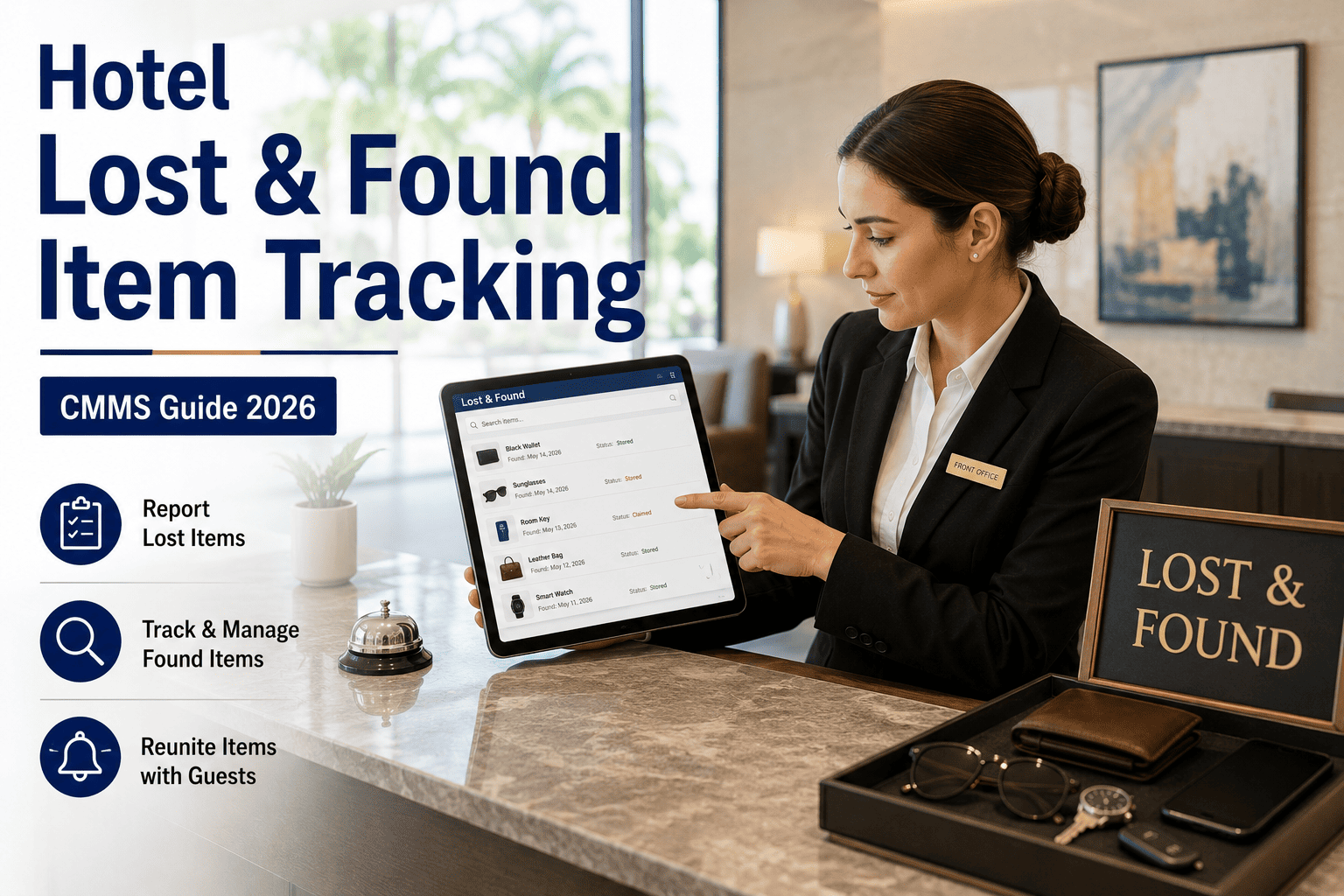
Hotel lost and found item tracking is a brand-standard, legal, and guest-satisfaction issue rolled into one — and paper logs are a liability. A CMMS-based lost and found inventory lets your housekeeping and front-office teams log items during turnover, verify guest claims with photo evidence and audit trails, and stay compliant with retention and disposal policies. This 2026 guide walks through the full workflow — from intake to reunification — and shows how OxMaint makes the entire process audit-ready. Ready to digitize your log? Start Free Trial and see it live in minutes.
CMMS HOTEL LOST & FOUND GUIDE 2026
Is your hotel's lost & found log audit-ready — or a paper liability?
Paper logs and spreadsheets can't prove chain-of-custody, can't attach photos, and can't survive a brand audit. OxMaint turns every lost item into a tracked, photo-verified, legally defensible record — from housekeeping intake to guest reunification or disposal.
WHY PAPER LOGS FAIL HOTELS
The real cost of a broken hotel lost & found process
A single mishandled claim can cost a hotel a 5-star review, a chargeback, or a legal complaint — and most properties still rely on a three-ring binder.
INTAKE TO DISPOSAL
Hotel lost & found workflow: the CMMS approach for 2026
A defensible lost & found system has six stages — each must produce a timestamped, attributable record. Here's the workflow OxMaint enforces across every shift.
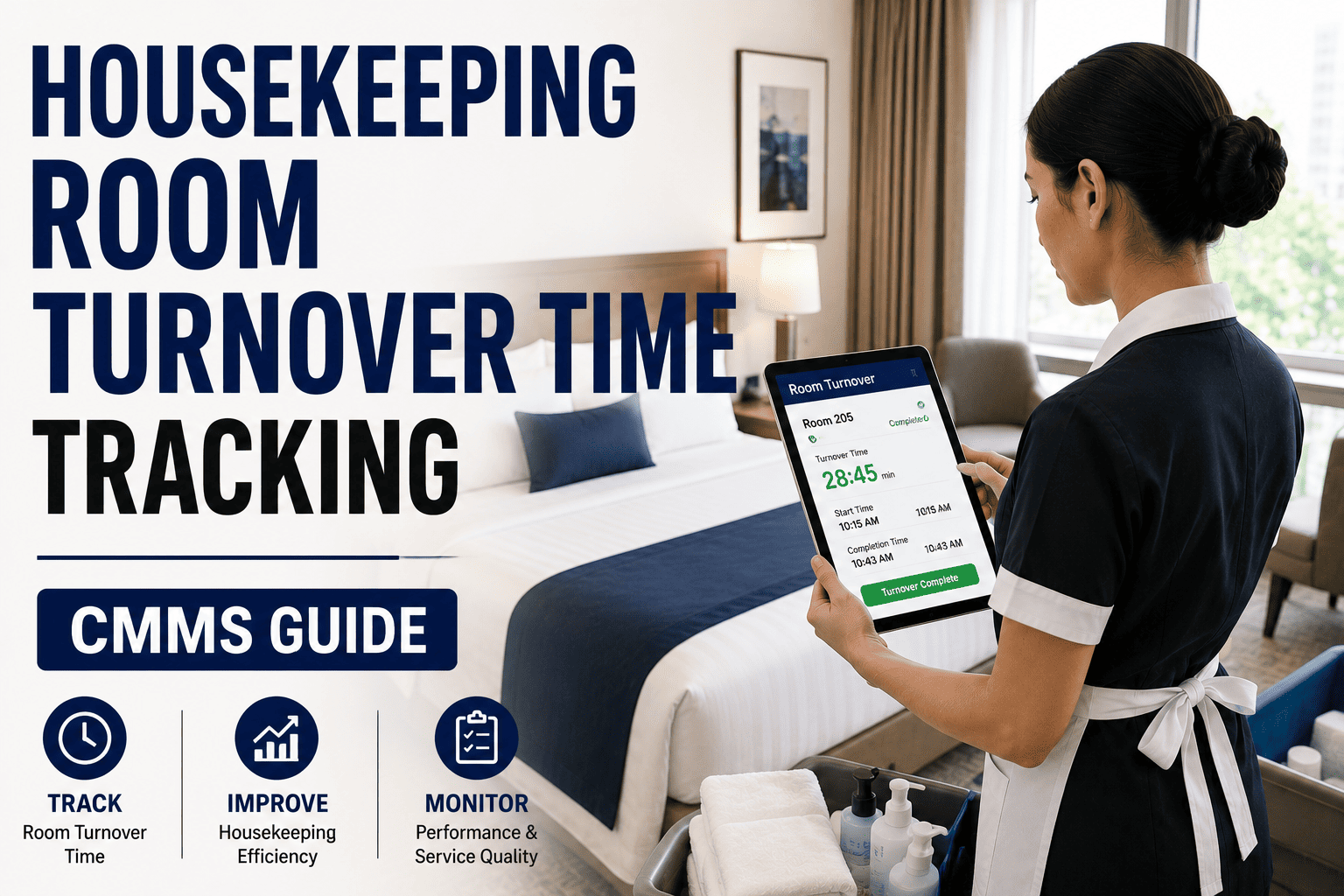
Housekeeper finds an item, opens a lost & found work order on a mobile device, snaps a photo, tags the room number and checkout guest. The record is timestamped and geo-attributed in OxMaint — no paper form, no transcription delay.
Item is transported to the locked lost & found room. OxMaint records the transfer — who moved it, when, and into which bin or shelf. Every handoff is a signed entry in the item's history.
Guest calls or emails. Front desk searches OxMaint by description, date, or room number — the photo appears instantly. Staff verify the claim against the photo and shipping address before releasing anything.
OxMaint generates a return work order with tracking number, shipping label, and guest acknowledgment. The item's status moves to "returned" with a delivery confirmation timestamp.
OxMaint's retention engine counts down each item's hold period (typically 30–90 days depending on brand standard and local law) and flags items approaching the disposal deadline.
When the hold expires, OxMaint generates a disposal work order. Staff record the method — donated, destroyed, or discarded — with a photo and signature. The full lifecycle is now audit-ready.
HOW OXMAINT HELPS
How OxMaint makes hotel lost & found audit-ready
OxMaint replaces the paper binder with a CMMS-driven lost & found inventory that your executive housekeeper, front-office manager, and auditor can all trust.
Photo-verified intake on mobile
Housekeepers snap a photo and tag the room right from the OxMaint mobile app — cutting intake time from 20 minutes to under 3 and eliminating description disputes.
Chain-of-custody audit trail
Every handoff — from housekeeper to storage to shipping — is a signed, timestamped entry. Auditors see who touched the item, when, and where it went at every stage.
Instant guest claim search
Front desk searches by name, room number, date, or item description. The matching photo appears in seconds — staff can verify the claim before the guest hangs up.
Automated retention & disposal
OxMaint tracks each item's hold period and auto-generates disposal work orders at the deadline — with photo proof of donation or destruction. No expired items slip through.
PAPER VS. CMMS
Paper log vs. CMMS lost & found: what changes
A 180-room hotel logging roughly 40 lost items per month spends 15+ staff hours on paper-based intake and claims. Here's how that shifts with OxMaint.
| Capability | Paper Log / Spreadsheet | OxMaint CMMS |
|---|---|---|
| Photo evidence at intake | Optional, rarely attached | Mandatory — mobile photo on every item |
| Chain-of-custody trail | None — single signature line | Every handoff signed & timestamped |
| Guest claim search time | 15–25 minutes of flipping pages | Under 3 minutes — instant photo match |
| Retention deadline tracking | Manual calendar reminders (often missed) | Automated countdown + disposal work order |
| Disposal documentation | Checkbox on a form | Photo + method + signature in audit trail |
| Brand audit readiness | 32% pass rate (industry estimate) | 100% — every record exportable on demand |
| Monthly staff hours (180-room hotel) | 15+ hours on intake & claims | Under 4 hours — 73% reduction |
REAL-WORLD SCENARIO
A 180-room hotel: from binder to CMMS in one week
A 180-room boutique hotel in Phoenix was logging roughly 40 lost items per month in a paper binder. Front-desk staff spent an average of 22 minutes per guest claim flipping through pages, and the property failed two consecutive brand-standard audits because disposal records were incomplete.
After deploying OxMaint, housekeepers began logging items via the mobile app with photos at the point of discovery — intake dropped to under 3 minutes per item. Front-desk claim searches dropped to under 3 minutes. The retention engine automatically flagged 12 items approaching their 90-day deadline, and disposal work orders were completed with photo evidence. The property passed its next brand audit with zero findings.
See OxMaint on your hotel's lost & found — book a 30-minute demo
Watch a live item go from housekeeping intake to photo-verified guest claim in real time. We'll show you the retention engine, audit export, and mobile app on your workflow.
FAQ
Hotel lost & found tracking: frequently asked questions
How long should a hotel keep lost and found items?
Most brand standards and state laws require hotels to retain lost and found items for 30 to 90 days. High-value items such as electronics, jewelry, and passports may require longer holds or police notification. OxMaint's retention engine lets you set hold periods by item category and automatically generates disposal work orders when the deadline arrives — so no item is held too long or disposed of too early.
What is the best way to track hotel lost and found items?
The best method is a CMMS-based lost and found inventory that captures a photo and timestamp at intake, records every custody handoff, and links each item to a searchable record. This replaces paper logs and spreadsheets, which can't prove chain-of-custody or survive a brand audit. You can Start Free Trial on OxMaint and digitize your entire log in under a day.
How does guest claim verification work in a CMMS?
When a guest contacts the hotel, front-desk staff search the CMMS by name, room number, check-out date, or item description. The intake photo appears instantly, letting staff confirm the item belongs to the guest before requesting a shipping address. OxMaint then generates a return work order with tracking details, so the full claim — from verification to delivery — is documented in one record.
Can a CMMS help with lost and found brand audits?
Yes. OxMaint exports a complete audit trail for every item — intake photo, custody chain, retention countdown, and disposal documentation — as a single report. Auditors can verify that each item was logged, stored securely, held for the required period, and disposed of with photo evidence. Properties using OxMaint typically pass brand-standard audits with zero lost-and-found findings.
What happens to unclaimed lost and found items?
Once the retention period expires, unclaimed items are typically donated to charity, destroyed (for sensitive items like documents or medication), or discarded. OxMaint generates a disposal work order at the deadline, and staff must record the disposal method, attach a photo, and sign off — creating a legally defensible record that the item was handled according to policy. To see this workflow live, Book a Demo with our team.
Make your hotel's lost & found audit-ready today
Join properties that cut intake time 85%, pass brand audits with zero findings, and turn lost & found from a liability into a guest-satisfaction win.
Free 14-day trial · No credit card