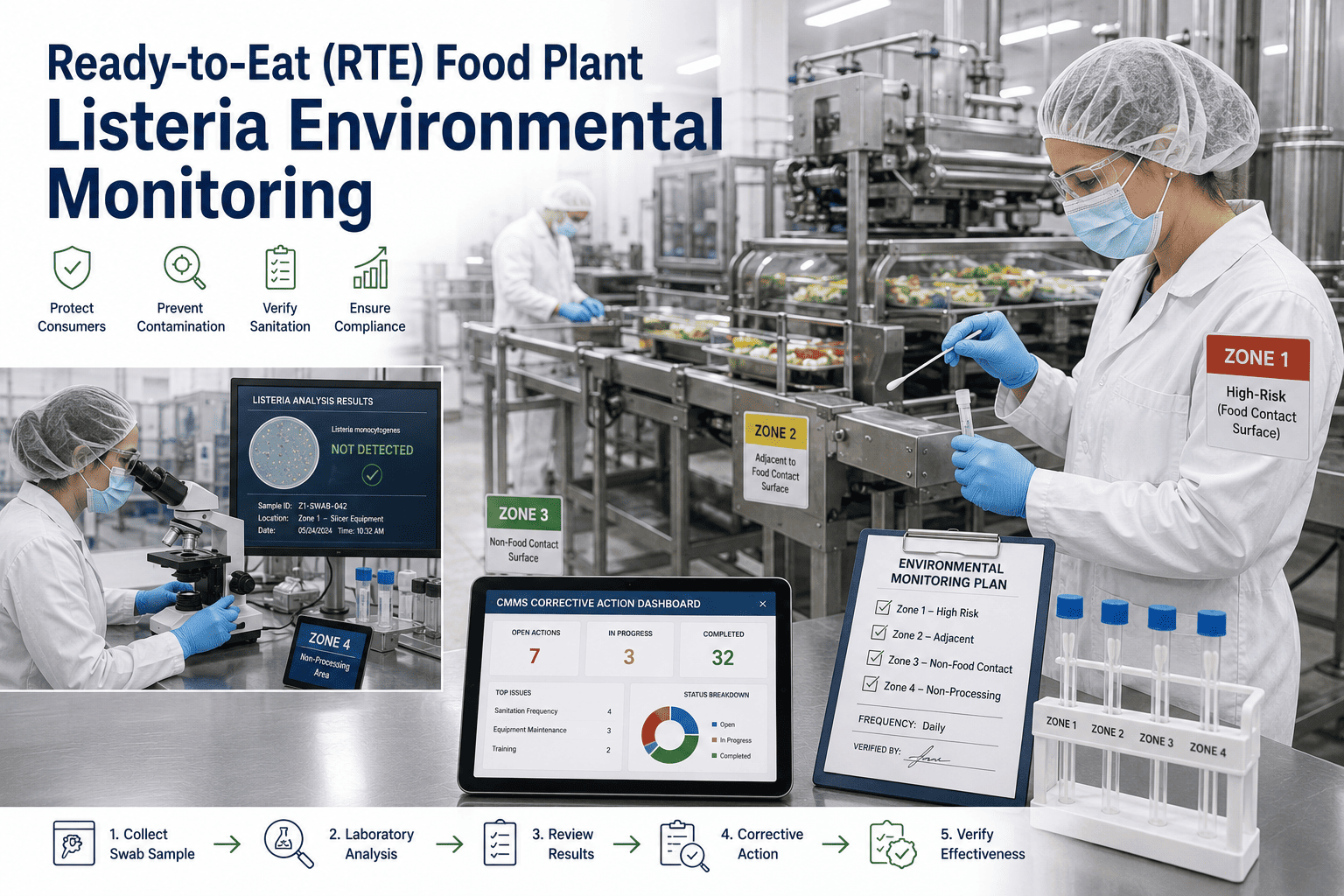
A single positive Listeria result in a ready-to-eat food facility does not mean contamination happened yesterday. It means harborage has been building — in floor drains, conveyor frame welds, condensate drip points, and hollow rollers — for weeks or months, invisible to cleaning crews because no one was systematically converting test results into structured maintenance responses. The U.S. Centers for Disease Control estimates that Listeria monocytogenes causes approximately 1,600 illnesses and 260 deaths annually in the United States, with the highest mortality burden tied directly to RTE foods consumed without cooking. FSIS data shows that 60% of large RTE meat and poultry plants that experience a positive Zone 1 result had prior Zone 2 or Zone 3 positives that were not escalated into corrective work orders. The maintenance gap is not the testing — it is the structured response. When a QA team logs a positive swab result and the corrective action happens through a phone call, a whiteboard note, and an informal handoff to maintenance, the documentation chain that FDA and FSIS auditors will request simply does not exist. OxMaint closes that gap: every positive result, every corrective work order, every verification sample, and every niche elimination task lives in a single CMMS — searchable, auditable, and inspection-ready — so you can start a free trial and connect your post-positive response workflow to structured CMMS documentation today, or book a demo to see how OxMaint structures corrective maintenance work orders from Listeria positive results in your facility layout.
The Operational Reality of Listeria in RTE Facilities
1,600+
Listeria illnesses annually in the U.S.
CDC, 2023
20%
Case fatality rate — highest of any foodborne pathogen
FDA / FSIS Joint Data
60%
Of Zone 1 positives had prior unescalated Zone 2/3 results
FSIS Inspection Analysis
$10M+
Average cost of a Class I Listeria recall event
GFSI / Industry Benchmarks
See how much compliance risk you can eliminate by connecting your post-positive response to structured CMMS corrective action workflows.
- Structured corrective work orders generated from every positive result
- Verification sample closure gates before corrective actions close
- Audit-ready EMP corrective action documentation in minutes, not days
Used by operations teams managing 10,000+ food facility assets — live in days, not months.
Regulatory Framework
What a Listeria EMP Requires — and Where the Maintenance System Fits
A Listeria Environmental Monitoring Program (EMP) is a structured, ongoing system for sampling, testing, trending, and responding to Listeria species across all environmental zones of a ready-to-eat food manufacturing facility. The swab schedule, lab submission, and result trending sit in QA. But the moment a positive result is confirmed, the program crosses into maintenance territory — and that is where most RTE facilities have their most significant documentation gap. The regulatory foundation for RTE EMP programs sits at the intersection of FDA's FSMA Preventive Controls for Human Food rule (21 CFR Part 117), FSIS Directive 10,240.4 for federally inspected establishments, and GFSI benchmark standards — all of which require documented corrective actions with verification records whenever a positive result is found.
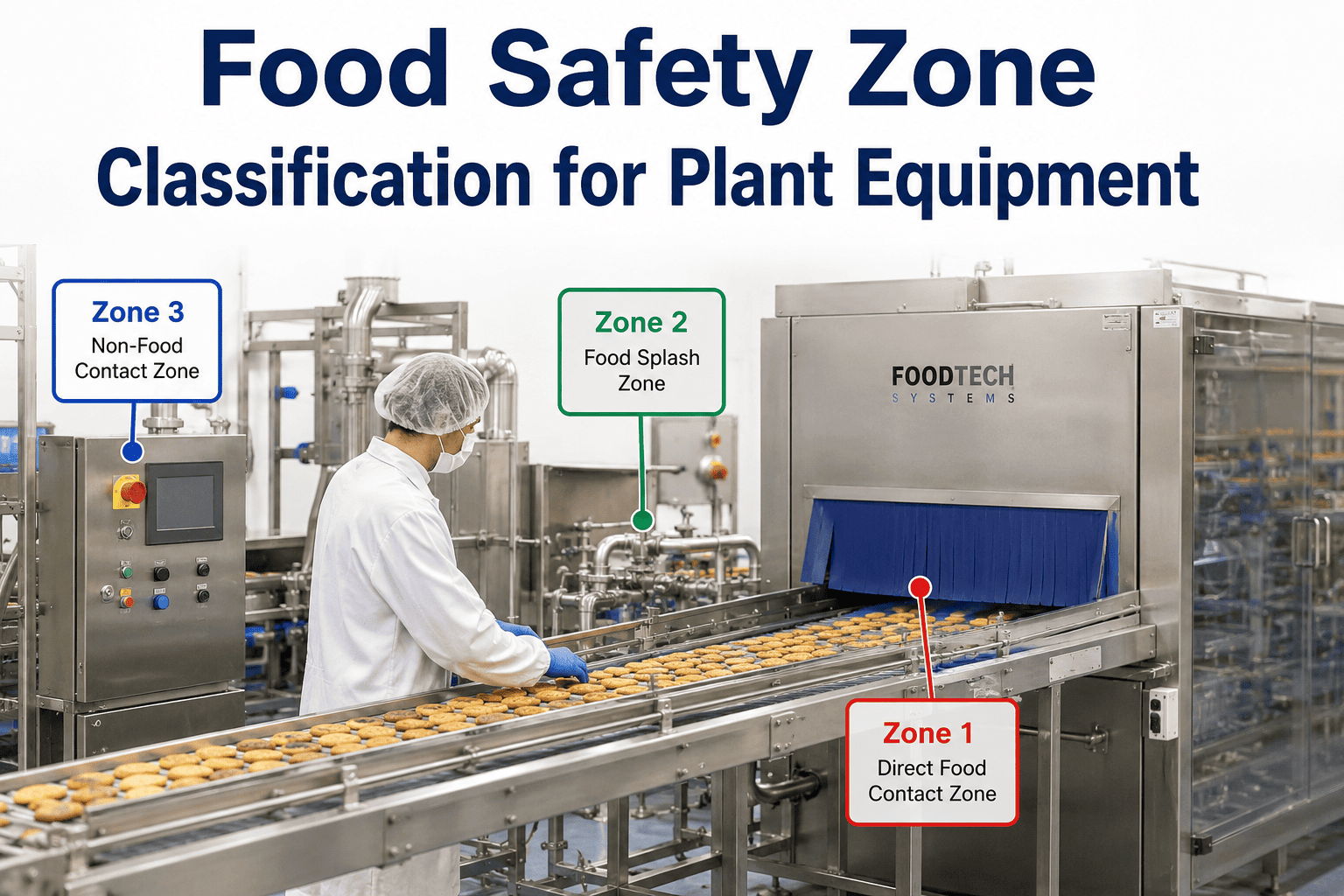
The four environmental zones define where the work order lands. Zone 1 is direct product-contact surface: conveyor belts, slicing blades, portioning equipment. Zone 2 is non-product-contact surfaces adjacent: equipment frames, conveyor supports, drip shields. Zone 3 is the broader production environment: floor drains, wall-floor junctions, door frames. Zone 4 is outside production: maintenance shops, ingredient staging, traffic pathways. A positive in any zone requires a documented corrective action — and that corrective action is a maintenance task, not a QA entry. The difference between a facility that passes inspection and one that receives a 483 is whether that maintenance task was generated as a tracked, time-stamped work order with a verification requirement before closure. Teams that shift post-positive response into CMMS can start a free trial and move corrective action routing and documentation into a single auditable system today, or book a demo to see the full corrective workflow mapped to your facility zones.
Most RTE facilities are testing for Listeria consistently. Fewer than 40% have a structured CMMS workflow that converts a positive result into a tracked, time-stamped corrective action within the same shift.
Response Framework
The 8 Corrective Action Components a CMMS Must Document After a Listeria Positive
A defensible, audit-ready post-positive response requires eight distinct corrective action components — each generating records that must be retrievable, time-stamped, and traceable to a responsible party. QA manages the swab program. OxMaint manages everything that happens after the positive is confirmed.
01
Immediate Notification Work Order
Corrective work order generated at result entry, routed to maintenance planner with zone, site ID, and result severity. Eliminates the 12–36 hour informal notification lag that delays same-shift response.
02
Product Hold Documentation
Hold decision linked to the triggering positive result in the same work order record. Responsible person, date, time, and lot scope recorded — retrievable as a single auditable chain without cross-referencing QA binders.
03
Deep Clean and Sanitization Record
Cleaning method, chemical identity, concentration, contact time, operator identity, and SOP version required before work order closure. Produces exactly the corrective cleaning record FSMA 117.150 demands.
04
Equipment Disassembly Inspection
For Zone 1 positives: disassembly scope, surfaces inspected, findings recorded, and any niche-elimination tasks identified — all documented against the specific equipment asset ID in the CMMS.
05
Drain and Infrastructure Service
Drain trap inspection, wall-floor junction assessment, overhead condensate check — physical harborage niche investigation tasks generated as separate work orders linked to the triggering positive result.
06
Root Cause Investigation Record
Required investigation fields: probable harborage source, contributing maintenance factor (hollow roller, cracked seal, inadequate drainage), and niche-elimination recommendation — cannot close the work order without completing this field.
07
Verification Sample Closure Gate
Corrective action work order cannot be closed without a linked verification sample result recorded by QA. The single highest-impact change in EMP corrective action structure — eliminates closures with no re-swab confirmation.
08
Niche Elimination Work Order
Physical niche elimination tasks — sealing conduit penetrations, replacing hollow rollers, reconstructing drain assemblies — generated as standalone work orders with photographic verification requirement and completion date tracking.
Facilities with CMMS-tracked post-positive corrective actions close them 3.4x faster and show 67% lower re-positive rates at previously identified sites — because the work order, the verification sample, and the site history are all in one place.
Operational Pain Points
6 Post-Positive Response Failures That Turn a Manageable EMP Result into a Recall Event
Most Listeria incidents at RTE facilities are not testing failures — they are response failures. The swab program finds the signal. The system fails to convert that signal into a documented work order fast enough, or loses the corrective action history that would have shown the same harborage site recurring. Facilities that fail FDA or FSIS inspections on Listeria grounds almost always have at least three of these six gaps simultaneously — and the fastest path to closing them is connecting post-positive response to your CMMS, where a free trial shows you how OxMaint maps every positive to a tracked corrective action, or book a demo to walk through your specific facility's highest-risk zone configuration.
01
No Zone 2/3 Escalation into Maintenance Work Orders
Facilities test Zone 2 and 3 but have no defined rule for when a pattern of non-product-contact positives triggers a maintenance investigation work order. Zone 2 findings accumulate in a QA log. Nobody generates a work order. Zone 1 goes positive. FSIS finds three months of prior Zone 2 results in the same area with no corrective action record — a direct inspection finding even though QA logged every result.
02
Corrective Actions Closed Without Verification Sample
Paper-based corrective action forms are completed the same day as the positive result, then filed. The form says "deep cleaned and sanitized." No re-swab confirmation is linked to the closure record. The same site tests positive 28 days later. Auditors find closure records with no verification sample — a direct FSMA 117.150 finding that is entirely preventable with a mandatory closure gate in the CMMS.
03
Harborage Niche Never Physically Eliminated
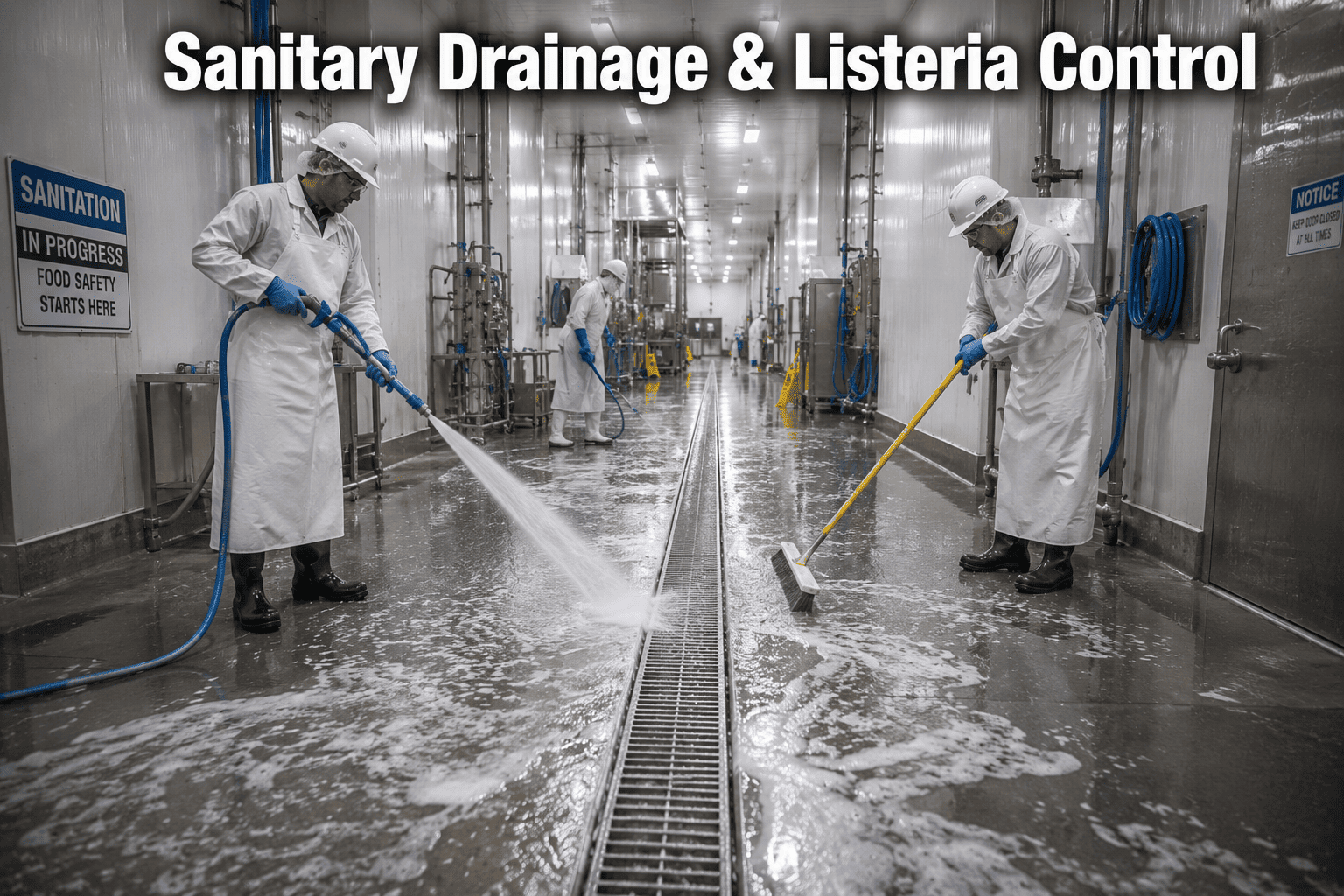
Hollow frame legs, cracked floor tiles, improperly sealed conduit penetrations, and standing water in drain trap assemblies are the most common Listeria harborage niches — and they almost never appear on equipment maintenance checklists. Without a CMMS work order for niche elimination, the cleaning crew cleans around the niche repeatedly while the harborage site remains physically in place and continues generating positives.
04
Maintenance and QA Operating in Separate Systems
When a Zone 1 positive is confirmed, maintenance needs to disassemble equipment and inspect for harborage while QA manages product hold and intensified sampling. In facilities where maintenance and QA operate in separate systems, coordination happens through phone calls and informal handoffs — creating gaps in both the investigation timeline and the corrective action documentation that auditors identify immediately.
05
No Root Cause Investigation Linked to Corrective Work Order
Corrective cleaning is performed and documented. But the investigation of why the site tested positive — worn gasket, hollow roller with organic accumulation, drain trap with inadequate depth — is never documented. When the same site tests positive again, there is no prior root cause record to reference. The pattern of recurring positives with no investigation escalation is a standalone inspection finding under FSIS Directive 10,240.4.
06
Corrective Action History Lost at Staff Turnover
EMP corrective action records stored in binders, QA staff turnover, and institutional memory of which drain has driven positive results every winter is lost. The new QA coordinator runs the program per current procedure. The same drain tests positive again. There is no CMMS record linking this event to the prior corrective action history — and the harborage niche that should have been physically eliminated 18 months ago remains in place.
OxMaint Platform
How OxMaint Structures Post-Positive Corrective Action from Result to Verified Closure
OxMaint connects your post-positive response to your maintenance workflow. QA runs the swab program — scheduling, lab submission, and result trending stay in your existing QA system. The moment a positive result is confirmed, OxMaint takes over: a corrective action work order is generated, routed to the responsible maintenance planner, and requires a verification sample record before it can close. Every action is time-stamped, traceable, and retrievable in the format FDA and FSIS auditors expect. No emergency binder-building before inspections. No manual cross-referencing of QA logs and maintenance records. The full corrective action history — work order cycle times, niche elimination status, repeat site frequency, and verification sample linkage — is visible in a single dashboard. Teams serious about closing their post-positive documentation gap should start a free trial and build their first corrective action workflow today, or book a demo to see the full workflow on your facility's zone structure.
Core Capability
Post-Positive Corrective Work Order Generation
QA enters the positive result. OxMaint generates a pre-configured corrective work order: deep clean sequence, equipment disassembly inspection, drain service, and niche investigation — routed to maintenance and QA simultaneously with completion deadline and escalation timer. Response begins same shift, fully documented from the first action.
Closure Integrity
Verification Sample Closure Gate
Corrective action work orders cannot close in OxMaint without a linked verification sample result entered by QA. Eliminates the most common EMP audit failure: corrective actions documented as complete with no re-swab confirmation in the record.
Root Cause Tracking
Required Root Cause Investigation Fields
Root cause fields are mandatory before work order closure. Probable harborage source, contributing maintenance factor, and niche-elimination recommendation must be recorded. Builds the investigation record that FSIS Directive 10,240.4 requires — automatically, not retroactively.
Niche Elimination
Physical Niche Elimination Work Orders
Niche-elimination tasks generated from corrective action records: sealing conduit penetrations, replacing hollow rollers, reconstructing drain assemblies. Tracked to physical completion with photographic verification — separate from the cleaning record, because elimination is a maintenance task, not a sanitation task.
Site History
Corrective Action History by Site and Asset
Every corrective work order linked to the specific site ID and equipment asset. Full corrective action history retrievable by site — showing prior positives, response actions, verification results, and niche elimination status. Survives staff turnover. Visible from day one for new QA and maintenance personnel.
Audit Readiness
FDA/FSIS Corrective Action Documentation Package
Post-positive corrective action records — work order, cleaning record, equipment inspection findings, verification sample result, root cause summary, niche elimination status — exportable as a structured package in the format FDA and FSIS investigators request. Preparation in under 30 minutes, not 2–3 days.
Reactive vs Planned
Post-Positive Listeria Response: Before and After CMMS Integration
| Response Capability |
Before OxMaint — Paper / Informal |
After OxMaint — CMMS-Integrated |
| Post-positive work order generation |
Phone call or email to maintenance. Work begins next available shift — typically 12–36 hours after result. No documentation of notification time. |
Work order generated at result entry and routed immediately. Response begins same shift. Notification time and response time both tracked. |
| Corrective action documentation |
Paper CA form completed and filed. Closure date recorded but no mandatory fields for chemical actuals, operator identity, or verification sample linkage. |
Structured work order with all required fields mandatory. Cannot close without verification sample result. Full audit trail in one record. |
| Verification sample closure |
Re-swab may be performed but not consistently linked to corrective action closure record. Auditors find closed CAs with no confirmation result. |
Verification sample is a required closure field. Work order stays open until QA enters the result. No exceptions. |
| Root cause investigation record |
Rarely documented beyond "cleaned and sanitized." No structured investigation of harborage source or contributing maintenance factor. |
Root cause fields required before closure. Harborage source, maintenance factor, and niche-elimination recommendation all recorded in the work order. |
| Niche elimination tracking |
Niche elimination not distinguished from routine cleaning. Physical harborage sites persist because no separate work order is generated for structural remediation. |
Niche elimination tasks generated as separate work orders. Physical completion tracked with verification. Linked to the triggering positive result record. |
| Site corrective action history |
Prior corrective actions for the same site scattered across binders and spreadsheets. Pattern of recurrence not visible without manual data review. |
Full corrective action history per site retrievable in seconds. Recurring sites visible in real time. History survives staff turnover. |
| Audit preparation time |
2–3 days assembling positive logs, CA forms, cleaning records, and verification samples from multiple physical and digital locations. |
Documentation package generated in under 30 minutes. All records linked to site ID and result date. Exported in FDA/FSIS request format. |
| Multi-site corrective action oversight |
No consolidated view. Operations leadership relies on site-level reports summarized manually and inconsistently. |
Portfolio dashboard: open corrective actions, cycle times, verification closure rates, and niche elimination status — all sites, real time. |
ROI and Outcomes
Measurable Results from CMMS-Integrated Listeria Corrective Action Programs
The financial case for structured post-positive corrective action management is built on documented cost differentials between facilities that close harborage through systematic, verified maintenance response and those that discover contamination through product positives or regulatory inspection findings. A structured corrective work order with verification costs a few thousand dollars in labor and materials. A Class I Listeria recall averages over $10 million before litigation. Facilities that connect post-positive response to CMMS corrective action workflows consistently show measurable reductions in re-positive rates, corrective action cycle times, and audit preparation labor — which is why operations teams managing high-volume RTE production lines should start a free trial to see how OxMaint structures these outcomes into daily workflow, or book a demo to walk through the ROI model for your specific facility configuration.
67%
Reduction in re-positive rate at identified sites
When corrective actions require linked verification samples before closure — the single highest-impact structural change
3.4x
Faster corrective action closure vs paper-based response
Automated routing eliminates the 12–36 hour informal notification lag that delays response to positive Zone 1 results
$10M+
Average Class I Listeria recall cost — preventable with earlier harborage elimination
Direct costs before litigation and insurance impact — driven by harborage that persists because niche elimination was never tracked to completion
30 min
Audit documentation preparation vs 2–3 days paper-based
Eliminates the pre-inspection documentation sprint that consumes QA manager capacity and creates transcription error risk
Frequently Asked Questions
Listeria Post-Positive Corrective Action — Questions from RTE Plant Operations Teams
What triggers an intensified corrective maintenance response after a Listeria positive under FSMA and FSIS requirements
A Zone 1 positive requires immediate corrective action, product-hold assessment, and verified re-sampling per 21 CFR Part 117 and FSIS Directive 10,240.4. Industry best practice is that two consecutive Zone 2 or Zone 3 positives at the same location also trigger a structured maintenance investigation work order — before any Zone 1 event — because the pattern indicates harborage development. OxMaint structures this as a triggered work order from QA's confirmed result entry, not as an automated swab schedule function.
What must a compliant post-positive Listeria corrective action record contain for an FDA or FSIS audit
The record must include: the specific site ID, zone, date, and triggering result; corrective action description (cleaning method, chemical, contact time, disassembly scope); completion date/time and responsible person; the re-sampling schedule; verification sample results with dates; and a root cause summary if the site has recurred. OxMaint generates and retains all of this in a single work order, with verification sample as a required field before closure.
What are the most common Listeria harborage niches that require maintenance work orders rather than routine sanitation
The most frequently identified niches requiring structural maintenance — not just cleaning — are: hollow conveyor frame legs with open bottom ends, floor drain trap assemblies with standing water, cracked wall-floor caulk, overhead condensate drip points, improperly sealed conduit penetrations, cracked floor tiles beneath equipment, hollow conveyor rollers, and micro-cracked gaskets on slicing equipment. Eliminating these requires maintenance work orders with physical completion verification, tracked separately from sanitation records in OxMaint.
Does OxMaint replace the QA-managed EMP swab schedule and result trending system
No. OxMaint is the corrective action and maintenance documentation layer — it does not manage swab scheduling, lab submission, or result trending. Those functions stay in your existing QA system. OxMaint picks up the moment a positive result is confirmed: generating the corrective work order, routing it to maintenance, requiring verification before closure, and retaining the full corrective action record in audit-ready format. The two systems work in parallel, with OxMaint owning everything on the maintenance side of the positive result.
OxMaint — CMMS for RTE Food Plant Listeria Post-Positive Corrective Action
Stop Managing Listeria Corrective Actions in Paper Forms That Cannot Route, Verify, or Close
Turn every confirmed positive result into a tracked, time-stamped, audit-ready corrective action workflow. OxMaint generates the work order, routes it to maintenance, requires verification before closure, and retains everything in the format FDA and FSIS inspectors request.
- Post-positive corrective work orders generated at result entry
- Verification sample closure gate — no exceptions
- Niche elimination work orders tracked to physical completion
- Full corrective action history per site — survives staff turnover