Food manufacturing facilities operating under GFSI-benchmarked schemes — SQF, BRCGS, FSSC 22000 — are required to demonstrate that HVAC systems actively protect hygienic zones through measurable pressure differentials, documented filter maintenance, and verified air balance records. A facility that relies on visual inspection or memory-based servicing is one failed audit away from a major non-conformance. Start a free trial to see how Oxmaint structures HVAC PM schedules across hygienic zones, or book a demo and we will map your zone hierarchy into a live CMMS workflow.
HVAC · Positive Pressure · Hygienic Zones · GFSI Compliance
Food Plant HVAC and Positive Pressure Control for Hygienic Zones
Pressure cascade management, air filtration schedules, zone classification, and CMMS-tracked records that satisfy BRCGS, SQF, and FSSC 22000 auditor requirements.
68%
of GFSI audit findings trace back to inadequate environmental control documentation (SGS Food Safety Report 2023)
15 Pa
Minimum positive pressure differential required for high-care zones above adjacent lower-risk areas (BRCGS Issue 9)
4x
Higher airborne contamination risk in zones with unverified pressure cascades vs. monitored facilities (EHEDG data)
$2.3M
Average cost of a product recall linked to airborne microbial contamination in food processing (FDA recall data)
What This Covers
01 · Hygienic Zone Classification
02 · Pressure Cascade Design
03 · Air Filtration Standards
04 · Common Failures
05 · How Oxmaint Solves It
06 · ROI Results
07 · FAQs
Section 01
What Is Positive Pressure Control in Food Plants
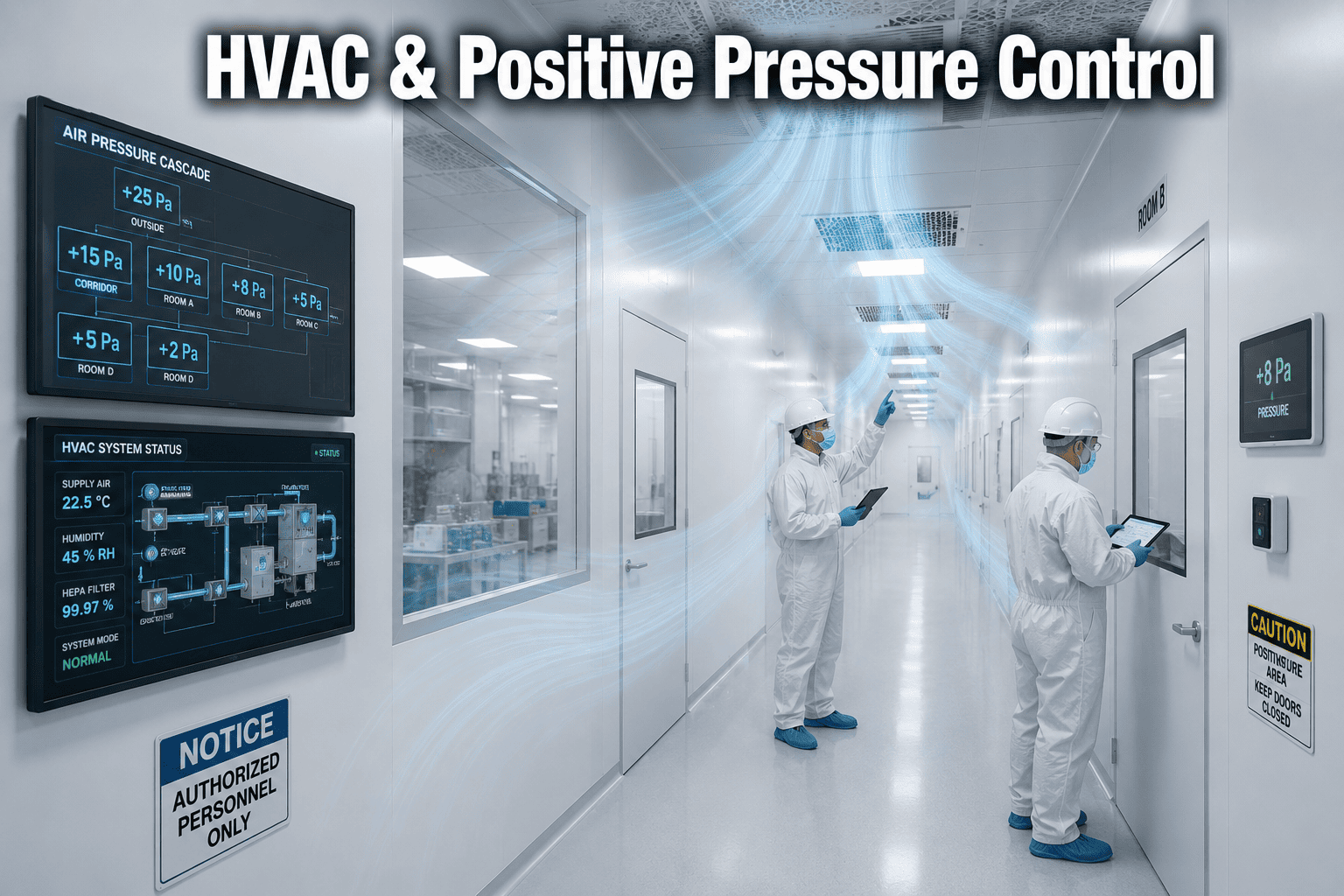
Positive pressure control in a food manufacturing facility is the deliberate engineering of air pressure differentials between zones of differing hygiene classification — ensuring that air always flows from higher-risk-controlled areas outward toward lower-risk or non-food areas, never the reverse. When a door between a high-care zone and an ambient area is opened, a properly pressurised system pushes conditioned, filtered air outward rather than pulling unfiltered corridor air inward.
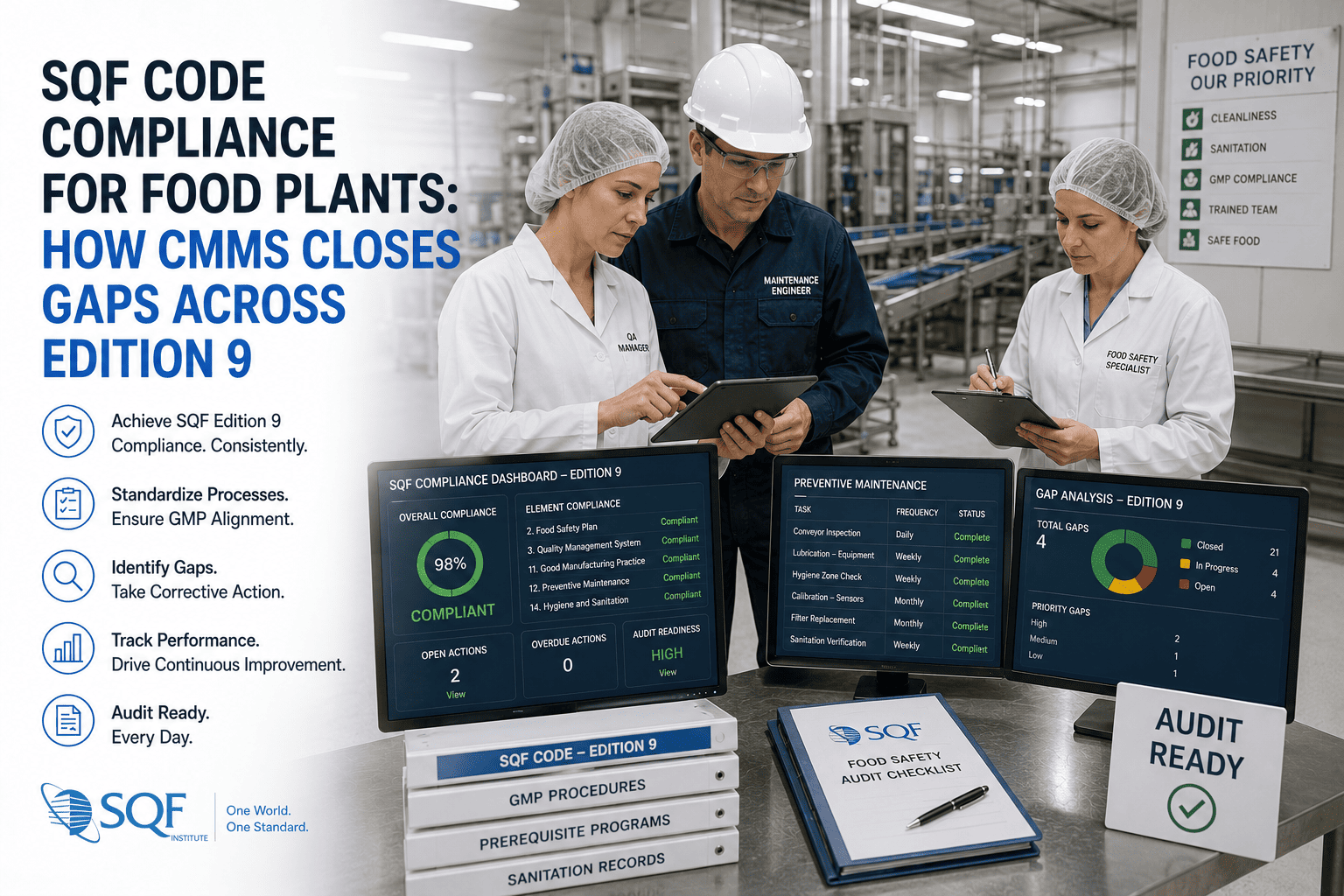
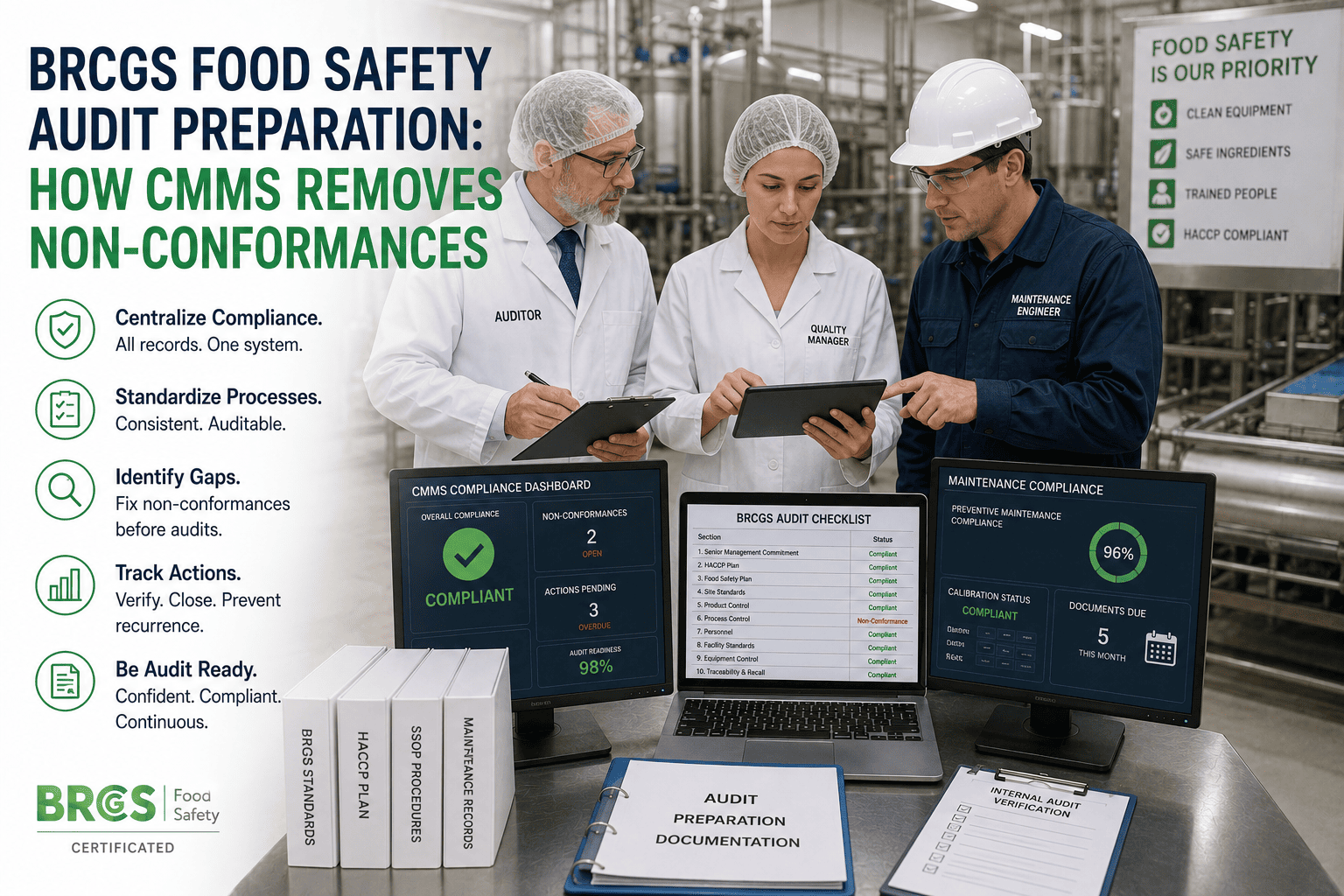
GFSI-benchmarked standards including BRCGS Issue 9 (Clause 4.8), SQF Edition 9 (Module 11), and FSSC 22000 v6 all require that facilities with high-care or high-risk zones demonstrate documented evidence of pressure differential maintenance. The requirement is not aspirational — it is auditable. Auditors verify it through pressure gauge readings, calibration records, and CMMS-linked filter change logs.
The practical consequence is that HVAC in a food plant is not a comfort system — it is a critical food safety control measure. Maintenance teams that manage HVAC reactively, without structured PM schedules, pressure verification rounds, and documented filter change history, are operating a food safety hazard they may not be able to defend during an unannounced audit — which is exactly why facilities that implement CMMS-driven HVAC programmes see audit-finding rates drop by 40% or more. Start a free trial to build your HVAC control structure in Oxmaint, or book a demo to see a live food plant HVAC configuration.
Most food plants lose audit points not from contaminated product — but from missing pressure differential records that were never captured in the first place.
Section 02
Hygienic Zone Classification and Pressure Cascade Framework
A functional positive pressure strategy begins with correct zone classification. Each zone tier in the cascade below has distinct air handling, filtration, and pressure differential requirements under GFSI schemes. Facilities that fail to formally document their zone map cannot demonstrate cascade integrity to auditors.
Zone 01
High-Risk Zone (HRZ)
Ready-to-eat products with no further kill step. Requires the highest positive pressure differential (typically 15–25 Pa above adjacent zones), HEPA-grade filtration, and strictly controlled personnel entry protocols with full HVAC change records.
Zone 02
High-Care Zone (HCZ)
Open high-risk product handling without a validated downstream kill step. Requires positive pressure above ambient and low-care areas, documented air changes per hour (ACH), and verified filter integrity at defined intervals (typically monthly G4/F7 check, annual F9/HEPA replacement).
Zone 03
Low-Care / Ambient Zone
Raw material handling, enclosed product, or pre-kill-step processing. Still requires HVAC PM documentation and demonstrated neutrality or slight positive pressure versus external corridors and non-food areas to prevent inward contamination draw.
Zone 04
Non-Food / External Zones
Corridors, utility areas, warehouses, and staff zones. Must be maintained at neutral or slight negative relative to food-contact zones. Any cross-connection in ductwork between this zone and Zone 01/02 is a critical non-conformance under BRCGS and SQF.
AHU
Air Handling Unit (AHU) Maintenance
The mechanical origin of pressure integrity. Pre-filter, main filter, and HEPA stages must each have CMMS-tracked replacement schedules based on differential pressure readings — not calendar alone. Dirty filters collapse pressure differentials silently over weeks.
dP
Differential Pressure Monitoring
Continuous or periodic measurement of pressure delta between adjacent zones. Auditors under BRCGS Issue 9 and SQF Ed. 9 require documented evidence of pressure readings at defined frequencies — typically weekly for high-care, monthly for low-care — with calibrated gauges traceable to a calibration schedule.
ACH
Air Changes Per Hour (ACH) Verification
High-care and high-risk zones require a minimum ACH rate to dilute airborne particulates. Typically 20+ ACH for high-risk RTE areas. ACH verification should be recorded during commissioning and after any significant HVAC maintenance event that could alter airflow volume.
Cal
Gauge and Sensor Calibration Records
Pressure gauges used for compliance measurements must have documented calibration records with calibration date, technician, reference standard, and next due date. Uncalibrated monitoring equipment invalidates the pressure differential record entirely under GFSI audit protocol.
Section 03
HVAC and Pressure Control Pain Points in Food Plants
Facilities that manage HVAC through manual logs, memory-based servicing, or disconnected spreadsheets face four structural failure modes that recur across GFSI audits. Each represents both a compliance risk and a hidden financial cost — start a free trial to begin replacing these gaps with structured CMMS records.
01
Pressure Differential Drift Goes Undetected
Filter loading, damper drift, and fan belt wear all reduce pressure differentials gradually. Without a CMMS-triggered inspection schedule and recorded gauge readings, facilities only discover the pressure has dropped when an auditor or microbiological environmental monitoring result surfaces the failure — weeks after the hygiene risk has been live.
02
Filter Change Records Are Incomplete or Missing
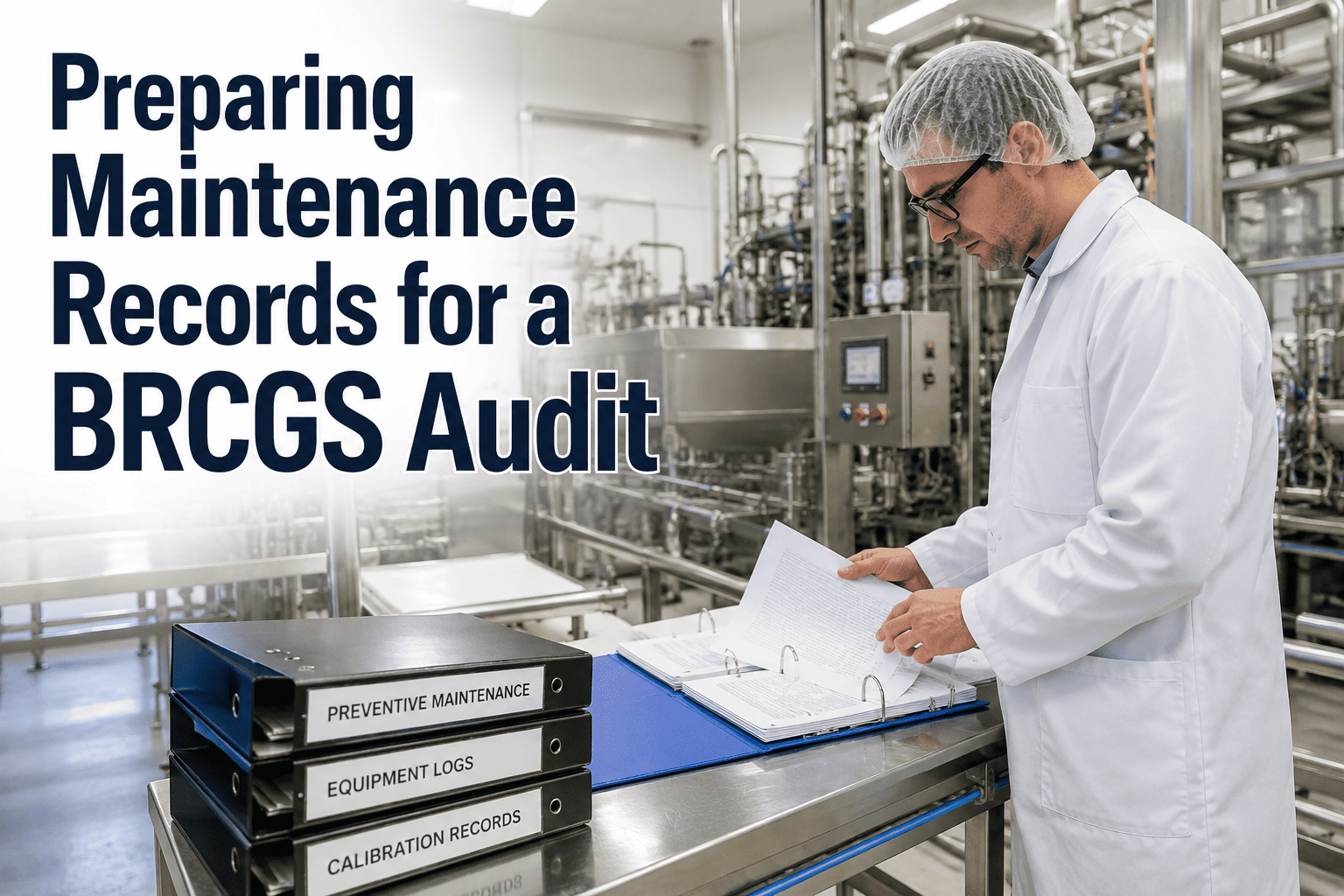
BRCGS Clause 4.8.3 and SQF 11.7.2 require documented filter change records with dates and filter specifications. Many plants have filters changed by maintenance staff with no formal work order, no record of filter grade, and no linkage to the calibration schedule for the differential pressure gauge used to verify post-change performance.
03
Zone Boundary Integrity Breaks Down Over Time
Building modifications, new equipment installations, and informal duct tie-ins made by contractors create undocumented cross-connections between hygienic zones. Without an asset registry that maps the HVAC network to zone classification, facilities cannot demonstrate — or even fully know — whether their pressure cascade is intact.
04
Reactive HVAC Repairs During Production
AHU failures during production runs force emergency decisions: continue producing with degraded air quality, or halt production. Emergency HVAC repair costs average 4.8x planned maintenance costs, and an unplanned shutdown in a high-care zone can trigger a full environmental deep-clean and microbiological re-qualification before restart.
05
Calibration Records Disconnected from PM Schedules
Pressure monitoring is only as defensible as the calibration status of the instrument used. Many facilities maintain calibration records for lab instruments but have no formal calibration schedule for installed pressure gauges across production zones — a gap auditors under BRCGS Issue 9 now specifically probe during environment control reviews.
06
No Single Source of Truth for Multi-Site HVAC Compliance
Multi-site food manufacturers with 3 or more facilities typically have HVAC records spread across paper binders, local Excel files, and site-specific databases. When corporate QA or a global auditor requests a portfolio-level view of HVAC compliance status, assembling the picture takes days — and inconsistencies between sites surface as systemic gaps rather than isolated findings.
A single undetected pressure cascade failure in a high-care zone can contaminate product across an entire production shift — with no visible sign until environmental swabs return positive.
Section 04
How Oxmaint Solves Food Plant HVAC Compliance
Oxmaint structures HVAC maintenance as a tiered, zone-aware PM programme — not a flat asset list. Every AHU, filter bank, pressure gauge, and damper is tagged to its hygienic zone classification, with PM frequencies, inspection checklists, and calibration schedules that mirror BRCGS, SQF, and FSSC 22000 requirements out of the box.
01
Zone-Mapped Asset Registry
Every HVAC asset — AHU, FCU, damper, filter bank, gauge — is registered under a Zone classification hierarchy (HRZ, HCZ, Low-Care, Non-Food). PM schedules and compliance frequencies are inherited from zone classification automatically, eliminating manual schedule management per asset.
02
Pressure Differential Inspection Checklists
Mobile inspection checklists prompt technicians to record pressure gauge readings at each zone boundary on a defined schedule. Results are timestamped, technician-attributed, and immediately visible to QA — with automatic flagging when a reading falls below the defined threshold for that zone pair.
03
Filter Change Work Orders with Full Traceability
Scheduled filter changes are generated as formal work orders that capture filter grade, lot number, change date, technician, and post-change pressure verification reading in a single linked record. Every filter change is auditable with one click — no paper trail required.
04
Calibration Schedule Integration
Pressure gauges and differential monitors are managed as calibrated instruments with calibration due dates, calibration records, and blocking logic that flags inspection results recorded with an out-of-calibration instrument. Your pressure data is defensible under GFSI audit.
05
Corrective Work Order Auto-Generation
Any inspection finding that exceeds a defined tolerance — pressure below threshold, filter differential pressure too high, ACH below minimum — automatically triggers a corrective work order assigned to the responsible technician, with response-time SLAs set by zone criticality.
06
Multi-Site HVAC Compliance Dashboard
Portfolio-level view of HVAC PM completion rates, open corrective work orders, overdue filter changes, and upcoming calibrations across every site — presented in a single dashboard that QA managers and auditors can access with full drill-down to individual asset records.
Section 05
Reactive HVAC Management vs. Oxmaint CMMS-Driven Programme
The difference between a facility that passes GFSI audits on HVAC and one that collects major non-conformances is almost always a documentation and scheduling gap — not an engineering gap. The comparison below shows what that gap looks like in practice.
| Area |
Reactive / Unstructured |
Oxmaint CMMS-Driven |
| Pressure Differential Records |
Spot checks logged on paper; frequency inconsistent; records often unavailable on audit day |
Weekly/monthly dP readings captured on mobile; timestamped; searchable; auditor-ready in seconds |
| Filter Change Frequency |
Calendar-based or "when it looks dirty"; no consistent record of filter grade or post-change verification |
dP-triggered and calendar-hybrid PM; every change generates a traceable work order with filter grade and verification reading |
| Zone Boundary Mapping |
Informal or out-of-date drawings; HVAC asset list not linked to zone classification; cross-connections unknown |
Every AHU and duct segment tagged to zone hierarchy; modifications require asset record update; cross-connection risk visible |
| Calibration of Monitoring Equipment |
Lab instruments calibrated; installed production gauges on no formal schedule; calibration status unknown |
All pressure gauges in calibration schedule; readings blocked or flagged if recorded with out-of-cal instrument |
| Response to Pressure Failure |
Failure identified during audit or environmental monitoring result; root cause investigation after the fact |
Auto-generated corrective WO within minutes of threshold breach; zone-specific SLA; full resolution audit trail |
| Multi-Site Oversight |
Site-specific records in disparate formats; no portfolio view; consolidation takes days before an audit |
Unified dashboard showing HVAC compliance status, open WOs, and overdue PMs across all sites in real time |
Section 06
HVAC Compliance ROI — What Structured PM Delivers
40%
Reduction in HVAC-Related Audit Findings
Facilities that implement CMMS-driven HVAC programmes with structured dP recording see major non-conformance rates for environment control drop by 40% within 12 months (GFSI industry benchmarking data)
4.8x
Lower Emergency Repair Cost vs. Planned
Emergency HVAC repairs triggered by unplanned AHU failures in food production cost 4.8x more than planned PM interventions — and that figure excludes production downtime and environmental requalification costs
2 Days
Average Oxmaint HVAC Setup Time
Most food facilities have their HVAC asset registry, zone classifications, PM schedules, and first inspection checklists live in Oxmaint within 48 hours — no heavy implementation, no consultant required
100%
Audit Record Availability on Demand
Every pressure differential reading, filter change record, and calibration certificate is immediately searchable and exportable — auditors can review 24 months of HVAC compliance records in minutes rather than days
Section 07
Frequently Asked Questions
What positive pressure differential does BRCGS Issue 9 require for high-care zones?
BRCGS Issue 9 Clause 4.8.3 requires that high-care zones be maintained at a positive pressure differential relative to adjacent lower-hygiene zones and external areas. The standard specifies a minimum of 10–15 Pa differential in most guidance documents, though the exact value must be defined in the facility's HVAC design specification and validated during commissioning. The critical compliance point is not the absolute number but the documentation trail: facilities must demonstrate a defined target differential, calibrated monitoring equipment, a defined measurement frequency, and records showing the target has been consistently achieved. Oxmaint captures all four elements in linked work order and inspection records that auditors can review in a single export.
How often do food plant HVAC filters need to be changed under GFSI requirements?
GFSI-benchmarked standards do not specify a universal filter change frequency — they require that filter change schedules be defined based on the risk classification of the zone served and the results of differential pressure monitoring across the filter bank. In practice, pre-filters in high-care zone AHUs are typically inspected monthly and changed every 1–3 months depending on dP readings; F7/F9 main filters are changed quarterly to bi-annually; HEPA filters annually or when dP exceeds specification. The compliance requirement is that every change is documented with a traceable work order capturing the filter specification, change date, and post-change dP verification. Oxmaint's filter PM module manages this automatically with dP-triggered and calendar-hybrid scheduling that meets BRCGS, SQF, and FSSC 22000 evidence requirements.
Do pressure gauges in food plant HVAC systems need formal calibration records?
Yes — and this is a gap that BRCGS Issue 9 auditors now specifically probe. Any measurement device used to demonstrate compliance with a food safety parameter — including pressure differential gauges used to verify hygienic zone integrity — must have a documented calibration record showing calibration date, calibration method or standard referenced, technician performing calibration, and next calibration due date. An undated or uncalibrated gauge makes every pressure differential reading recorded with it legally and auditorially indefensible. Oxmaint manages HVAC gauges as calibrated instruments within the same asset registry as production measuring equipment, with calibration due dates surfaced in the maintenance dashboard and automatic flagging when readings are recorded with an out-of-calibration device.
What happens if a high-care zone pressure differential drops below threshold during production?
A pressure differential failure in a high-care zone during active production is a potential food safety incident requiring an immediate documented response. The required steps typically include: stopping the pressure differential reading and confirming the failure with a second instrument; identifying the root cause (filter overload, fan fault, damper failure, door seal failure); assessing whether product exposed during the failure period can be released or must be quarantined pending a risk assessment; restoring positive pressure and verifying with a second measurement; and documenting the entire sequence with timestamps and responsible parties. Under SQF and BRCGS, the incident and corrective action must be logged in the food safety event register. Oxmaint's corrective work order module captures all of this in a structured record linked to the original inspection finding, creating a defensible incident timeline for auditor review.
FOOD PLANT HVAC · GFSI COMPLIANCE · CMMS
Stop Losing Audit Points to HVAC Documentation Gaps
Turn your HVAC pressure cascade, filter change history, and calibration records into a defensible, auditor-ready compliance programme — without spreadsheets, paper logs, or last-minute scrambles before survey day.
- Real-time HVAC zone compliance visibility across every site
- Automated PM schedules tied to zone classification and dP thresholds
- 5–10 year CapEx forecasting for AHU and filter bank replacements
Used by food operations teams managing complex multi-zone facilities. Live in days, not months. No heavy implementation required.