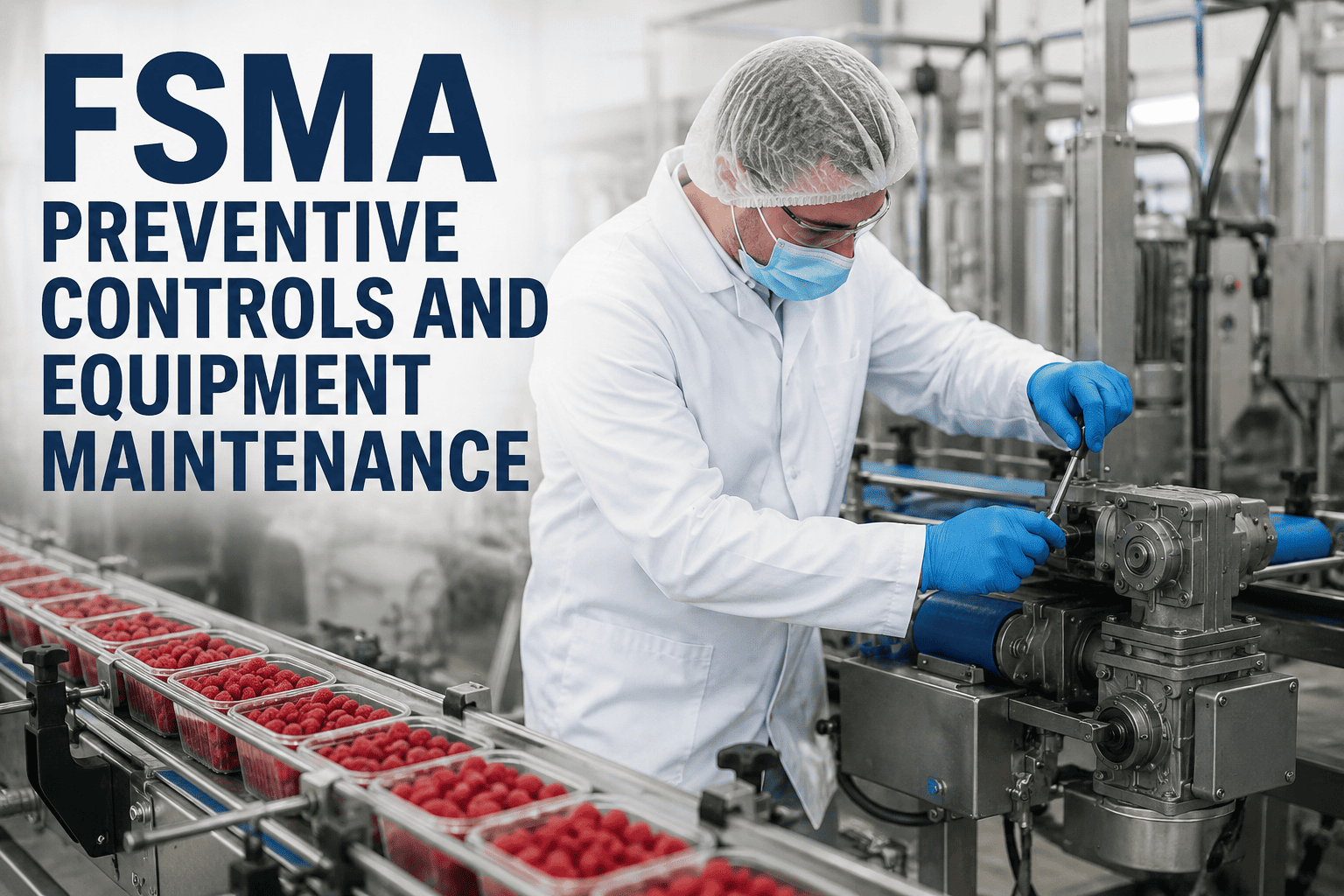
Under FSMA's Preventive Controls rule, equipment maintenance is not a background operations task — it sits inside 21 CFR Part 117 as a named requirement alongside monitoring, corrective actions, and verification. When a chiller drifts outside its validated range or a metal detector runs uncalibrated for a shift, that gap becomes a documented preventive control failure the moment an FDA investigator requests records. Facilities running maintenance on paper usually discover the gap during a Form 483 review, when it is too late to fix quietly. Centralising maintenance and calibration data removes the guesswork from proving your food safety plan actually works — see how it fits your plant with a free trial of OxMaint.
FSMA Preventive Controls and Equipment Maintenance: Turning 21 CFR Part 117 Into an Audit-Ready CMMS Program
FSMA lists equipment maintenance as a preventive control in its own right — requiring documented monitoring, corrective actions, and verification for every asset tied to a food safety hazard.
What FSMA Actually Requires From Equipment Maintenance
The FSMA Preventive Controls rule asks every covered facility to identify hazards, apply controls that manage them, monitor those controls consistently, correct problems fast, and verify the whole system on paper. Equipment sits underneath every one of those five steps — a pasteurizer holding a validated cook temperature, a metal detector catching physical contaminants, a CIP system removing pathogen risk on a food-contact surface. When maintenance and calibration records for that equipment are missing or incomplete, the preventive control itself cannot be proven to have worked, regardless of how well it actually performed. OxMaint links every PM task, calibration event, and corrective action directly to the preventive control it supports, so a maintenance record and a food safety record become the same record — start a free trial to see your equipment mapped against your hazard analysis.
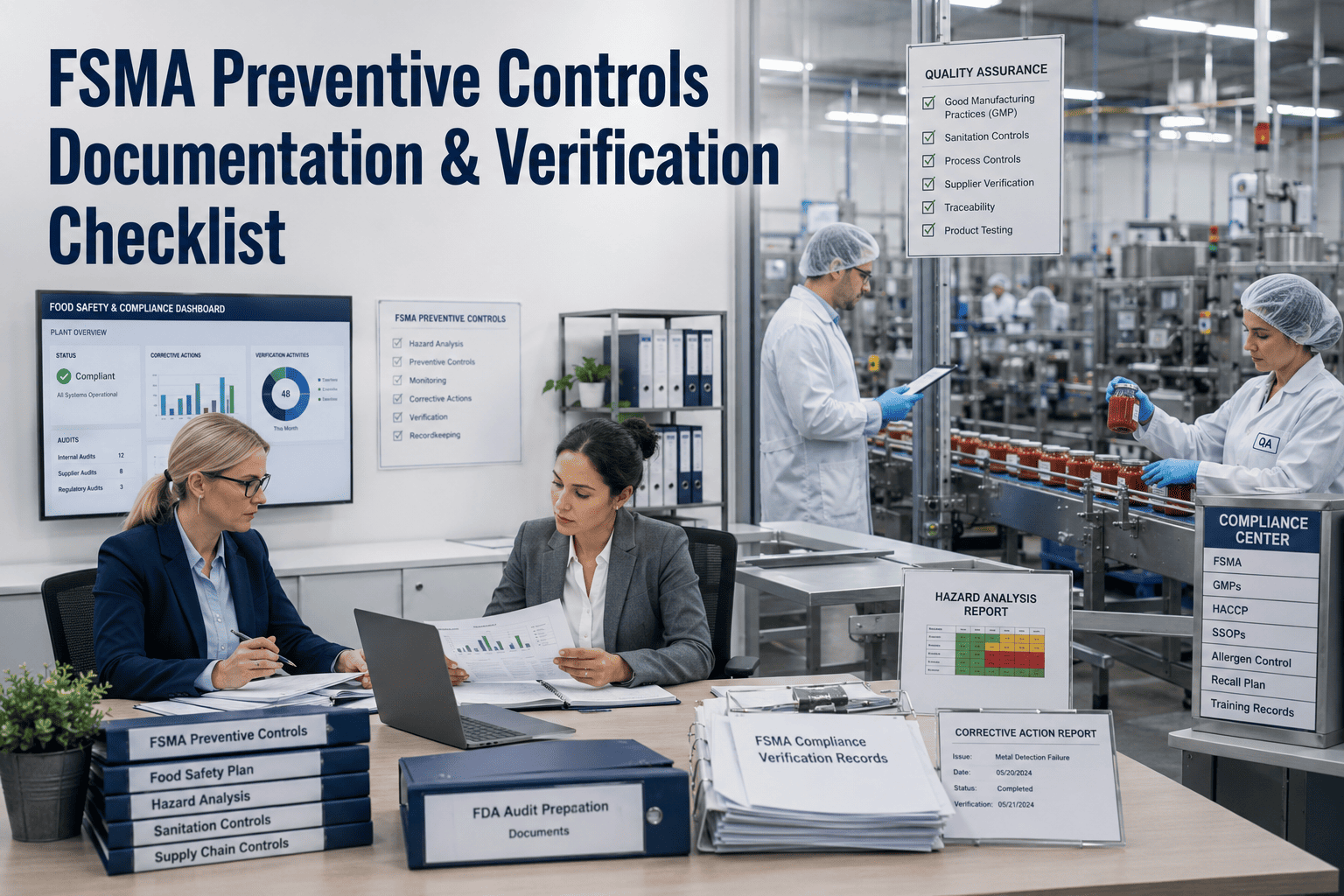
FDA investigators do not take your word that a food safety plan works — they ask for the monitoring logs, the corrective action reports, and the verification sign-offs that prove it, often reaching back two years. Facilities relying on binders and clipboards routinely produce illegible entries, missing pages, or timestamps that do not match the shift schedule, and any one of those gaps can turn into a Form 483 observation. A digital system removes the ambiguity: every reading is timestamped and signed the moment it happens, and every certificate carries an expiry alert well before it lapses. Book a demo to see how a connected record system holds up under inspection pressure.
Map Your Equipment to Your Food Safety Plan Before Your Next Inspection
Connect every preventive control to a maintenance record, a calibration certificate, and a verification sign-off — configured around your existing hazard analysis in weeks, not months.
The Eight Records FSMA Expects From Every Preventive Control
Where FSMA Documentation Breaks Down on the Plant Floor
How OxMaint Turns Preventive Controls Into an Automated Record
Paper Records vs. a Connected CMMS: Side by Side
The gap between a paper-based food safety plan and a digitally verified one rarely shows up in daily operations — it shows up the moment an inspector asks for two years of records. The comparison below reflects the difference reported by facilities that moved their preventive control documentation into a connected system.
| Documentation Type | Paper-Based | OxMaint Digital |
|---|---|---|
| Monitoring logs | Handwritten, gaps common | Timestamped at point of control |
| Calibration certificates | Filed manually, easy to miss | Stored with automatic expiry alerts |
| Corrective actions | Verbal fix, undocumented | Structured workflow with root cause |
| Verification review | Annual scramble | Quarterly report ready for PCQI |
| Inspection prep time | 40+ hours per request | Compiled in minutes |
Results Facilities Report After Digitising Preventive Controls
Frequently Asked Questions
Is equipment maintenance actually part of the FSMA Preventive Controls rule
Yes — maintenance records are the primary evidence that equipment performing a preventive control is functioning as validated. A pasteurizer, chiller, or metal detector without current maintenance and calibration records cannot demonstrate its control is working, which FDA treats as a verification gap. Book a demo to see how maintenance records map to your specific preventive controls.
How long must FSMA monitoring and maintenance records be kept
FDA requires most preventive control records, including monitoring and corrective action documentation, to be retained for at least two years from the date created. Some facility types face longer retention expectations depending on product type.
Does FDA accept digital records instead of paper logs
Yes, electronic records are explicitly accepted for FSMA compliance provided they are readily retrievable and clearly show who performed monitoring, when, and what was observed. Digital timestamps also remove the backdating concerns common in paper systems. Start a free trial to see a compliant digital record in practice.
Who is responsible for reviewing preventive control records
A Preventive Controls Qualified Individual, or someone under their direct oversight, must review monitoring and corrective action records. The PCQI must complete FDA-recognised training in risk-based preventive controls before taking on this role.
How quickly can a mid-size plant move preventive control records into a CMMS
Most facilities map their core hazard analysis to equipment records and launch their first digital monitoring and calibration schedules within two to three weeks using pre-built preventive control templates. Book a demo to see a rollout plan built around your food safety plan.
Every Preventive Control Monitored. Every Calibration Tracked. Every Record Ready Before the Inspector Asks.
Connect your hazard analysis to real equipment records — monitoring logs, calibration certificates, corrective actions, and PCQI verification reports in one platform your food safety and maintenance teams share.