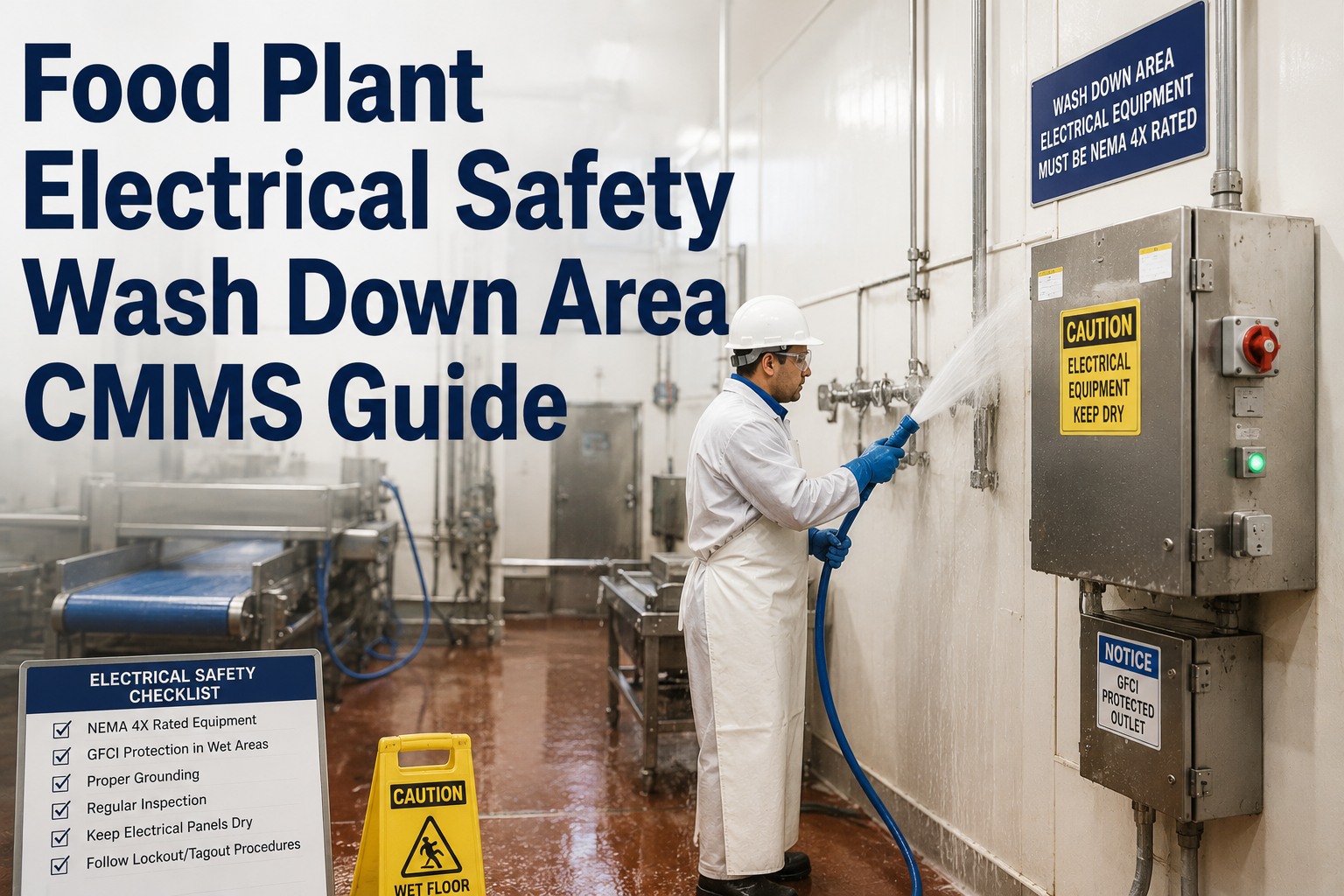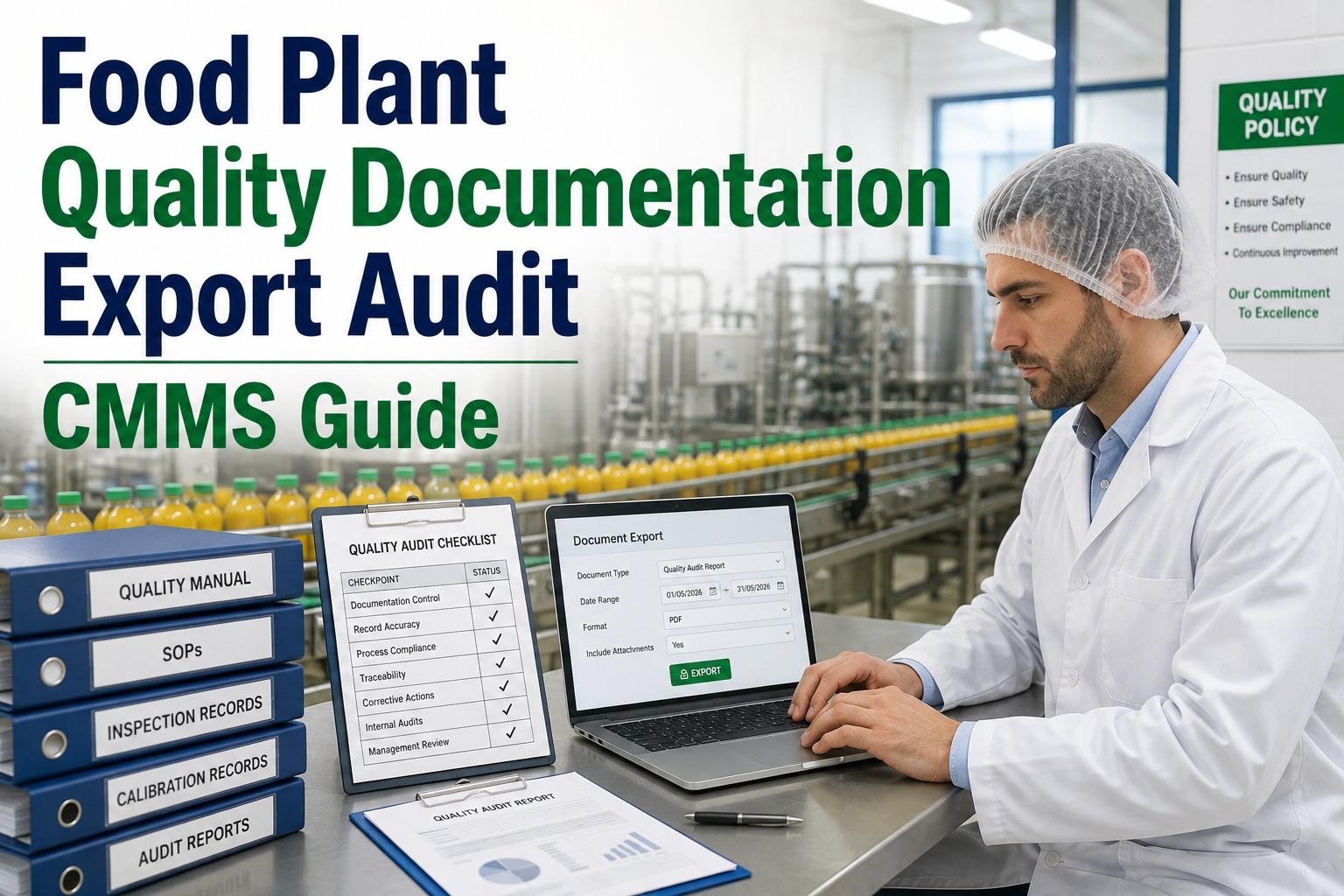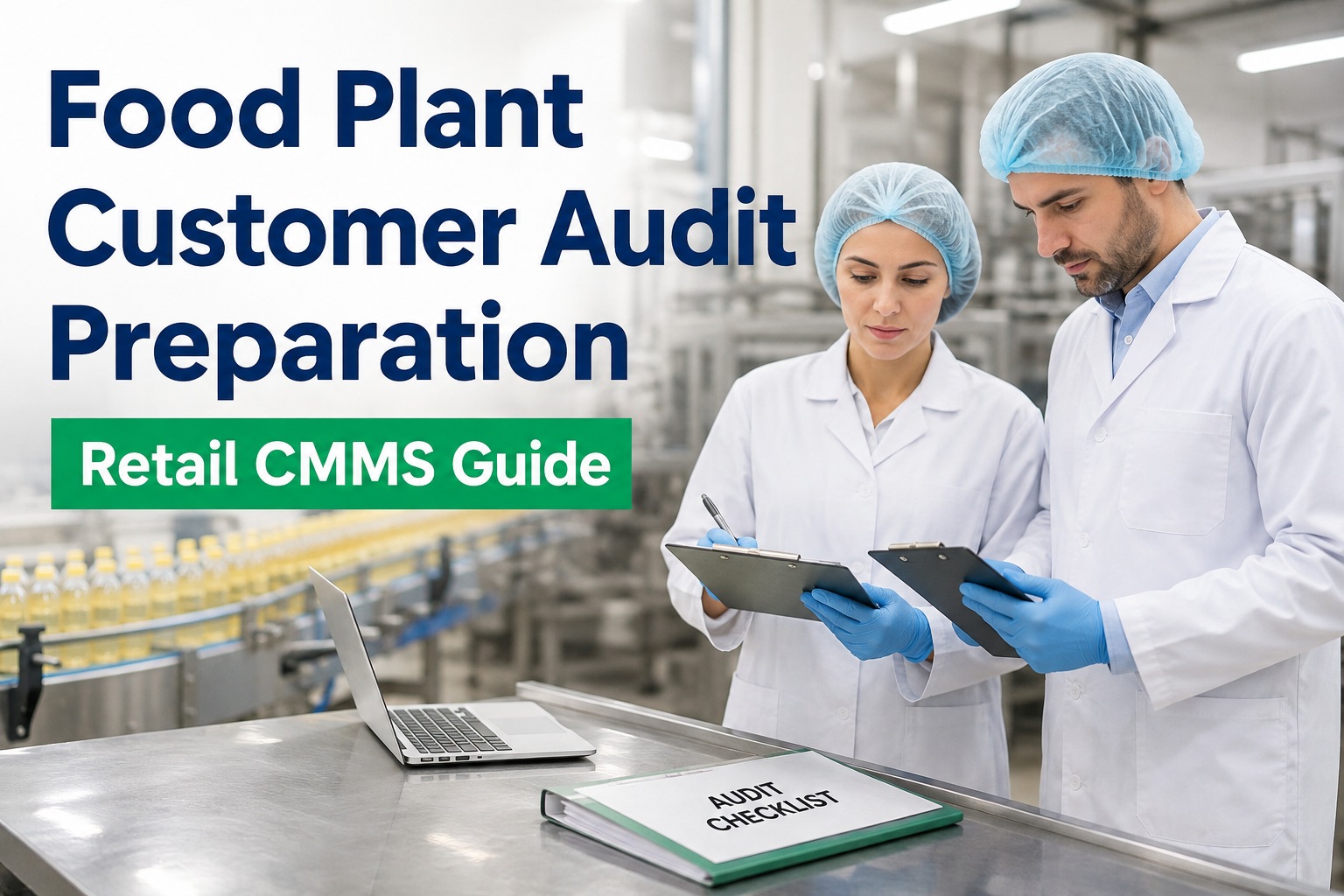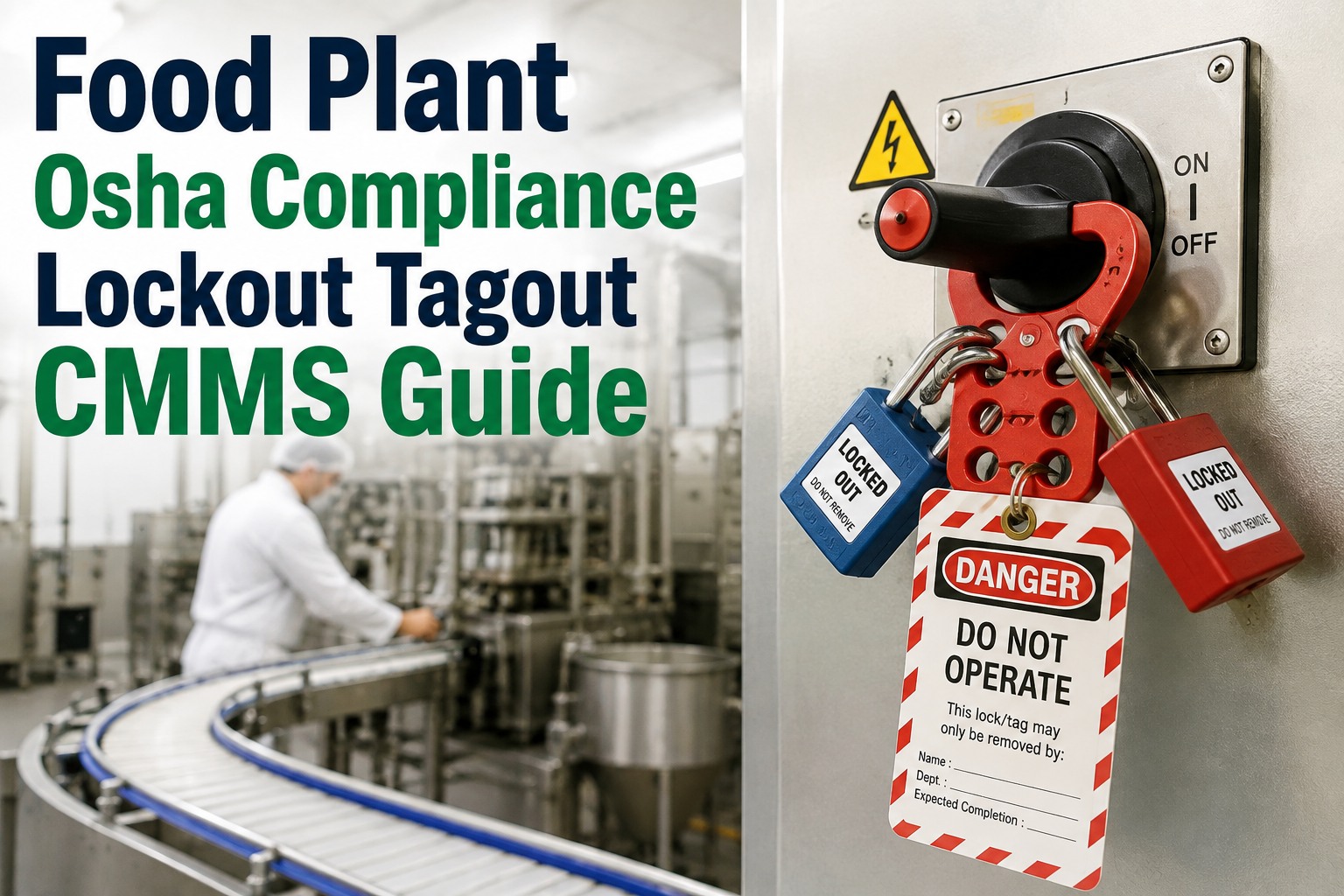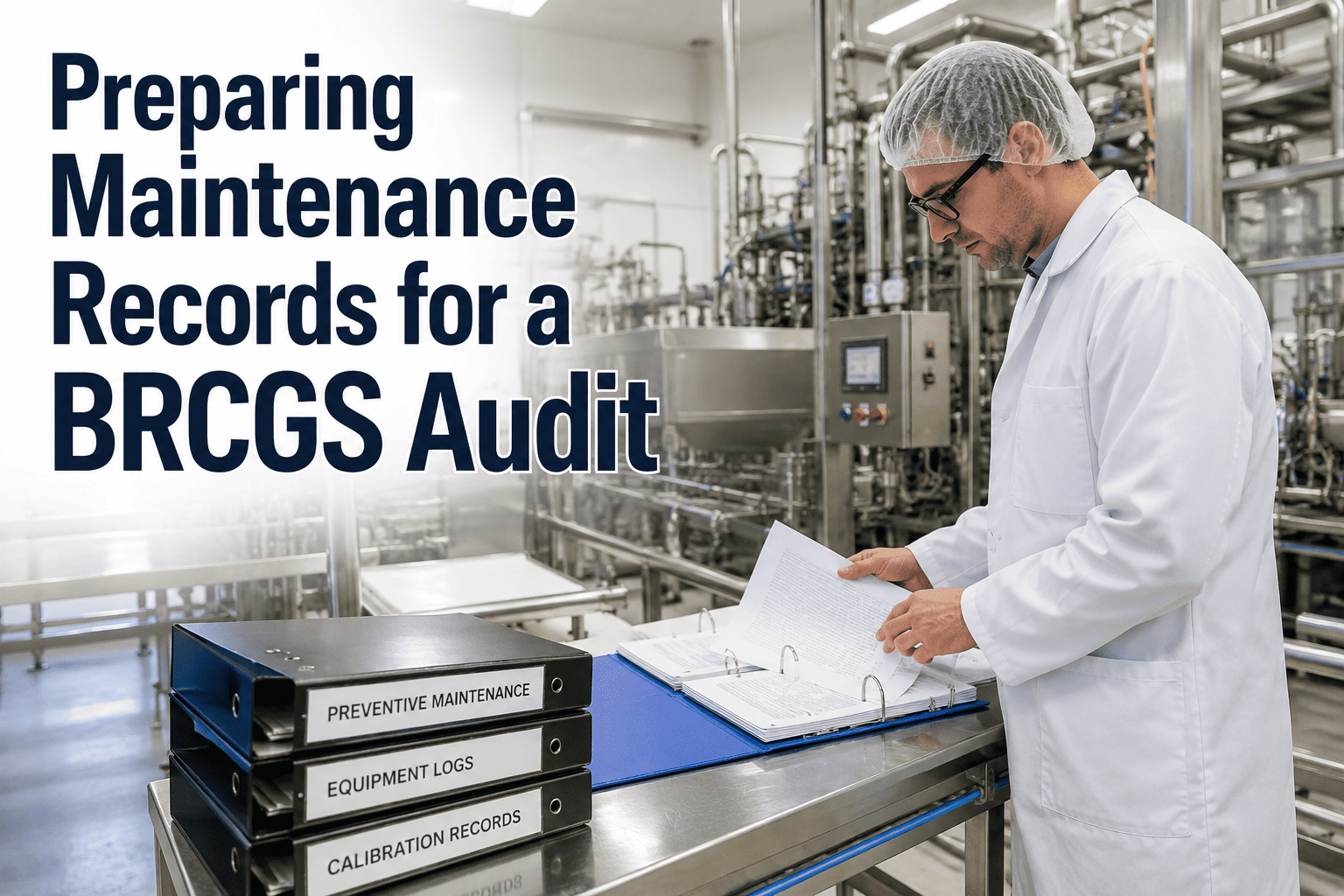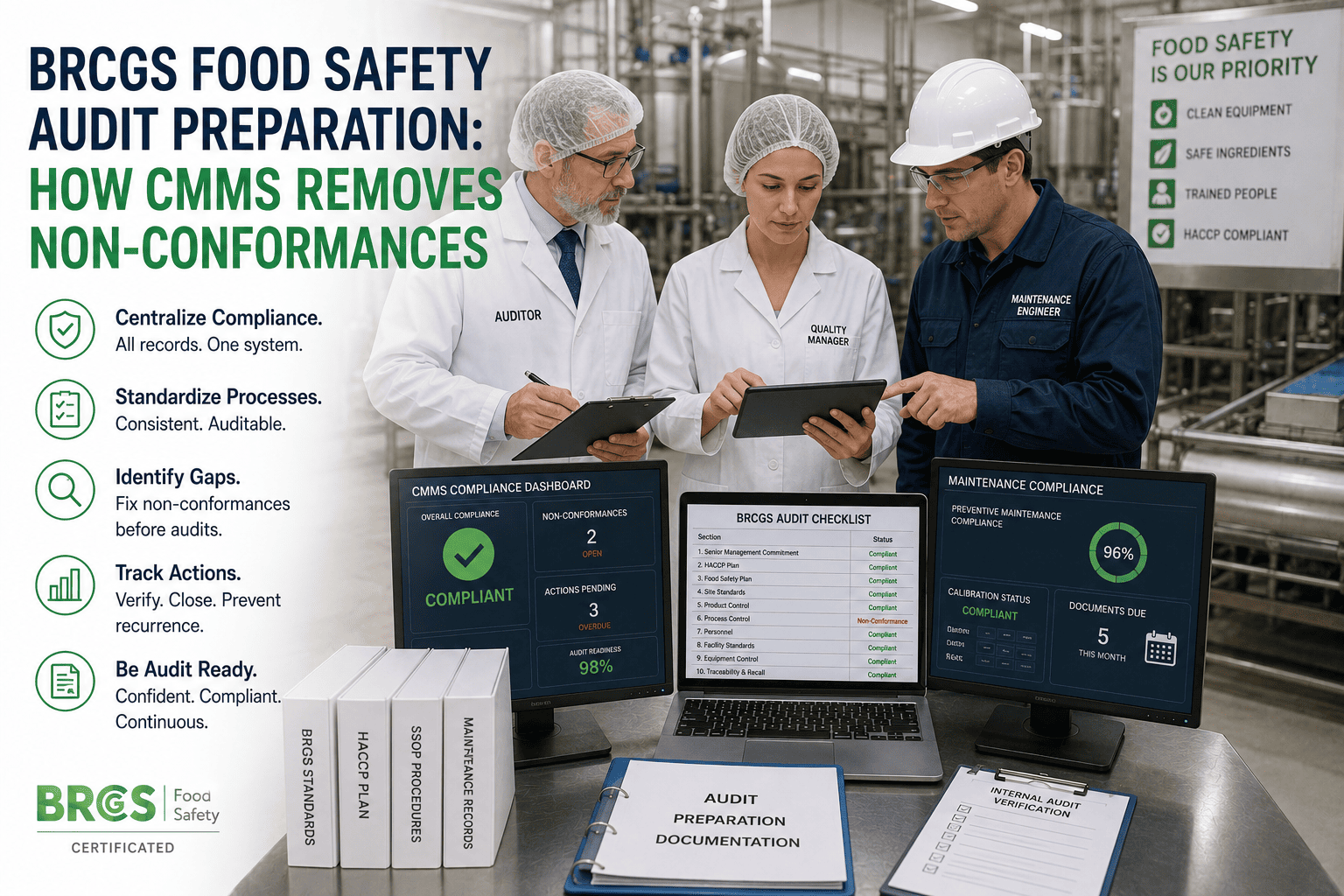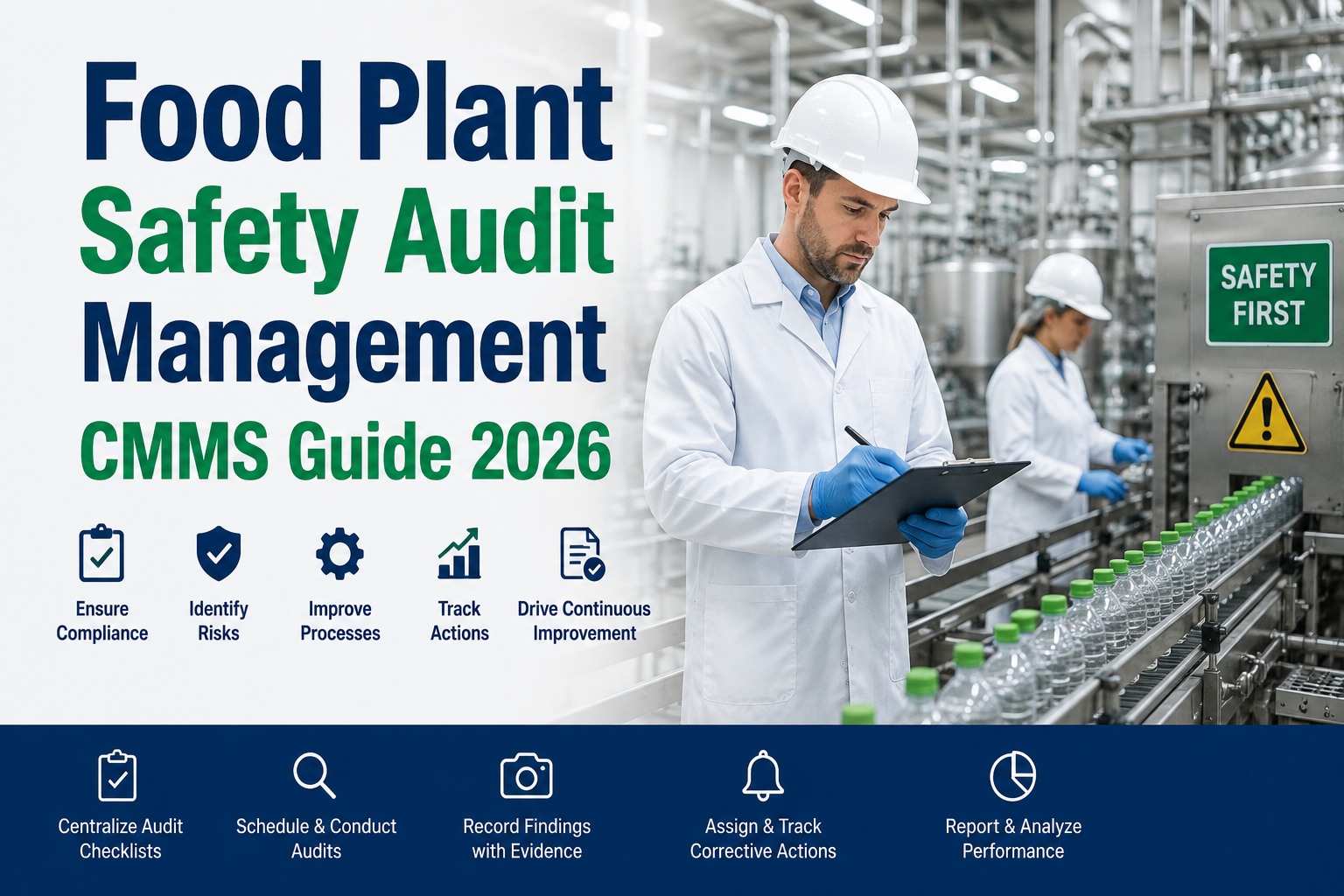
Food plant safety audit management across every regulatory body — OSHA, FDA, USDA, EPA and state fire marshals — is a coordinated operational discipline, not a scramble per audit cycle. This 2026 CMMS guide shows how maintenance and reliability teams consolidate multi-regulator requirements into one unified safety audit calendar, documentation architecture and continuous-compliance rhythm. Plants that run a single CMMS-driven audit workflow cut audit prep time by 40–60 %, reduce repeat findings by half, and keep evidence audit-defensible 365 days a year. Ready to replace spreadsheets and clipboards? Start Free Trial and see the difference on your own assets.
Can your plant pass an unannounced OSHA, fire or FDA inspection tomorrow — without a single weekend of prep?
Most food and beverage facilities juggle three to five regulatory bodies with overlapping but incompatible evidence requirements. One missed refrigeration log or expired fire-extinguisher check can trigger a Form 483, a six-figure OSHA citation or a product hold. OxMaint unifies every audit standard into one continuous compliance workflow — so the evidence is already assembled before the inspector arrives.
Why food plants fail safety audits — and what a CMMS fixes
A typical food and beverage plant answers to OSHA (worker safety), the FDA or USDA (food safety), the EPA (environmental), local fire marshals, and increasingly its own GFSI-recognised certification body. Each asks for the same maintenance records in slightly different formats, on different cycles, with different retention rules.
| Regulatory Body | Primary Audit Focus | Typical Inspection Cycle | Most Common Finding | Citation Risk |
|---|---|---|---|---|
| OSHA | Worker safety, LOTO, machine guarding | Unannounced; priority-driven | Incomplete LOTO certification logs | $15,625 – $156,259 per violation |
| FDA (FSMA) | Preventive controls, sanitation, records | Risk-based; 3–7 yr cycle | Missing PCQI preventive-maintenance verification | Form 483 · Warning letter · Consent decree |
| USDA / FSIS | Sanitation performance, equipment integrity | Continuous / daily on-site | SSOP deviations undocumented | NR · suspension · product recall |
| State Fire Marshal | Fire suppression, exits, electrical | Annual + complaint-driven | Expired extinguisher / hood suppression inspections | $1K – $50K · operational shutdown |
| EPA | SPCC, refrigerant, wastewater | Periodic; self-reported | Missing refrigerant leak-repair records | $37,500+ per day per violation |
| GFSI (SQF / BRCGS) | Prerequisite programs, maintenance | Annual recertification | No preventive-maintenance schedule evidence | Non-conformance · certificate loss |
The penalty for disconnected audits isn't only the fine — it's the $25K–$80K in unbudgeted labour, expedited contractor calls and production holds spent preparing evidence the week before each inspection. A CMMS food safety audit workflow eliminates that scramble by capturing evidence at the point of work, every time.
How to build a continuous-compliance safety audit calendar in 5 phases
The safety audit guide that works in 2026 is not a binder — it is a rolling, 12-month operating rhythm that synchronises preventive maintenance tasks with each regulator's cycle. Here is the five-phase blueprint maintenance managers use to stay continuously audit-defensible.
Map Every Regulatory Obligation to an Asset
Export each regulator's requirement list — OSHA 1910 LOTO, FDA 21 CFR 117 subpart B, USDA SSOPs, NFPA 25, EPA SPCC — and tag every obligation to the specific asset, line or zone it governs inside the CMMS. A 180-asset food plant typically surfaces 400–600 individual compliance tasks during this mapping pass.
Generate a Unified 12-Month Audit Calendar
The CMMS auto-generates work-order triggers for every mapped task — daily sanitation checks, weekly fire-system tests, monthly LOTO recertifications, quarterly refrigeration-log audits and annual GFSI evidence reviews. One calendar, colour-coded by regulator, replaces five disconnected spreadsheets.
Capture Digital Evidence at the Point of Work
Technicians complete mobile work orders with mandatory photo, signature, gauge-reading and checklist fields. A completed task instantly creates an immutable, time-stamped record — no paper, no re-keying, no lost clipboards. This alone cuts audit-prep labour by 40–60 %.
Run Automated Compliance Dashboards
Live dashboards show on-time completion rate, overdue tasks and open findings by regulator. When a refrigeration unit misses its temperature-logging window, the system escalates to the maintenance manager before it becomes a Form 483 observation.
Assemble Audit-Ready Evidence Packs in Minutes
When an inspector arrives, filter the CMMS by asset, date range and regulatory standard and export a bound, indexed evidence report. What used to take three weekends now takes three minutes — and every record traces back to the originating work order.
Safety audit checklist: OSHA, fire and food safety tasks your CMMS must track
Below is the core task grid a CMMS food plant safety audit workflow enforces automatically. Every row maps a regulatory requirement to a trigger frequency, responsible role and evidence type — the exact structure auditors look for.
Lockout / Tagout
- Annual LOTO procedure review per machine
- Authorized-employee recertification (annual)
- Periodic energy-source inspection
- LOTO device inventory audit
Fire Suppression & Life Safety
- Monthly extinguisher visual inspection
- Annual hood-suppression system test
- Quarterly sprinkler / standpipe check
- Emergency lighting & exit sign test (monthly)
Food Safety & Sanitation
- Pre-op sanitation verification (daily)
- Refrigeration / cold-chain temperature log
- Allergen changeover verification
- Calibration of metal detectors & scales
Environmental & Refrigerant
- SPCC tank inspection (monthly / 3-yr)
- Refrigerant leak monitoring (continuous)
- Wastewater discharge sampling
- Storm-water visual monitoring
What a 180-asset food plant saves with CMMS-driven audit management
A 180-asset poultry processing plant in Arkansas was spending roughly $42,000 per year on audit prep labour — three full weekends before each OSHA and SQF recertification, plus a part-time compliance clerk re-keying paper logs into spreadsheets. After implementing OxMaint, the plant mapped all 520 regulatory tasks to assets, auto-generated work-order triggers, and retired 14 clipboard-based checklists.
Within the first audit cycle, prep labour dropped to under $9,000, repeat OSHA findings fell from 7 to 1, and the SQF recertification produced zero non-conformances. Payback on the CMMS investment was achieved in 4.2 months.
See OxMaint close every audit finding before it happens
Book a 30-minute demo and we'll map your OSHA, FDA and fire-safety requirements to a live CMMS workflow on your own asset list.
OxMaint capabilities that keep every audit body satisfied — in one platform
OxMaint is an AI-powered CMMS and EAM platform built for maintenance and reliability teams that cannot afford a single missed compliance task. Here is how four core capabilities translate directly into audit-readiness and measurable cost avoidance.
Unified Multi-Regulator Audit Calendar
Auto-generate work-order triggers for OSHA, FDA, USDA, EPA and fire-safety tasks from one calendar. No more five-spreadsheet juggle.
Mobile Evidence Capture
Technicians complete digital work orders with mandatory photos, signatures and gauge readings. Every record is time-stamped and immutable.
Real-Time Compliance Dashboards
Live tiles show on-time completion, overdue tasks and open findings by regulator. Escalation alerts fire before a missed task becomes a citation.
One-Click Evidence Pack Export
Filter by asset, date and regulatory standard to produce a bound, indexed audit report in minutes — each record traceable to the originating work order.
Safety audit management CMMS — answers maintenance leaders ask
What is a CMMS food plant safety audit and how does it work?
A CMMS food plant safety audit is a continuous, software-driven workflow that maps every OSHA, FDA, USDA, EPA and fire-safety regulatory requirement to a specific asset, then auto-generates and tracks the maintenance work orders that satisfy each requirement. Instead of assembling paper evidence the week before an inspection, the CMMS captures digital proof — photos, signatures, readings — at the point of work, so evidence is always current and audit-defensible. You can see this in action when you Book a Demo.
How does a CMMS unify OSHA, fire safety and food safety audits?
A CMMS unifies audits by tagging each maintenance task with the regulatory standard it satisfies — 1910 LOTO, NFPA 25, 21 CFR 117, SSOP — and displaying all obligations on one colour-coded calendar. When a technician completes a fire-extinguisher check, the same record satisfies the fire marshal, OSHA and your GFSI auditor simultaneously, eliminating duplicate documentation and coverage gaps.
How much does CMMS safety audit management cost versus paper or spreadsheets?
A typical 180-asset food plant spends $25,000–$80,000 per year in labour assembling paper or spreadsheet evidence for audits. A CMMS like OxMaint replaces that with automated work-order triggers and mobile evidence capture, cutting prep labour by 40–60 % and typically paying for itself in under five months — before counting avoided citations or production holds.
Can OxMaint help pass an unannounced FDA or OSHA inspection?
Yes. Because OxMaint captures time-stamped, immutable records for every preventive and compliance task as it happens, the evidence an inspector asks for is already assembled. A one-click filter by asset, date range and regulatory standard produces an indexed evidence pack in minutes, and live dashboards surface overdue tasks before they become findings.
How long does it take to switch from spreadsheets to a CMMS for safety audits?
Most food plants complete the core switch in two to four weeks: import the asset register, map regulatory tasks, configure work-order triggers and roll out the mobile app to technicians. OxMaint onboarding includes guided setup and template libraries pre-mapped to common OSHA, FDA and fire-safety requirements, so teams can Start Free Trial and begin capturing compliant records on day one.
Make your next safety audit the easiest one you've ever had
OxMaint unifies OSHA, FDA, USDA, EPA and fire-safety compliance into one AI-powered CMMS — so every work order doubles as audit evidence, and every inspector visit is a non-event.
Free 14-day trial · No credit card