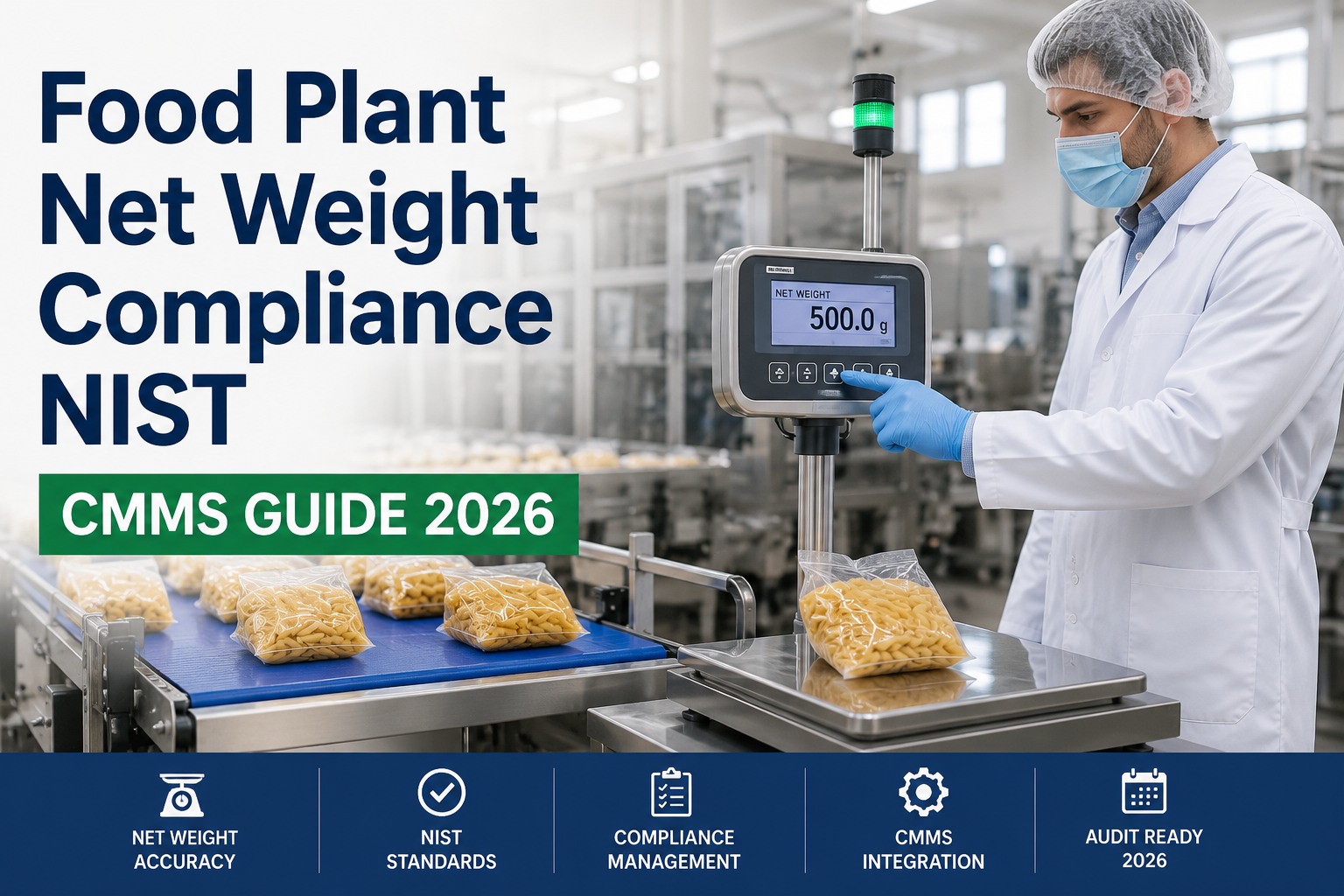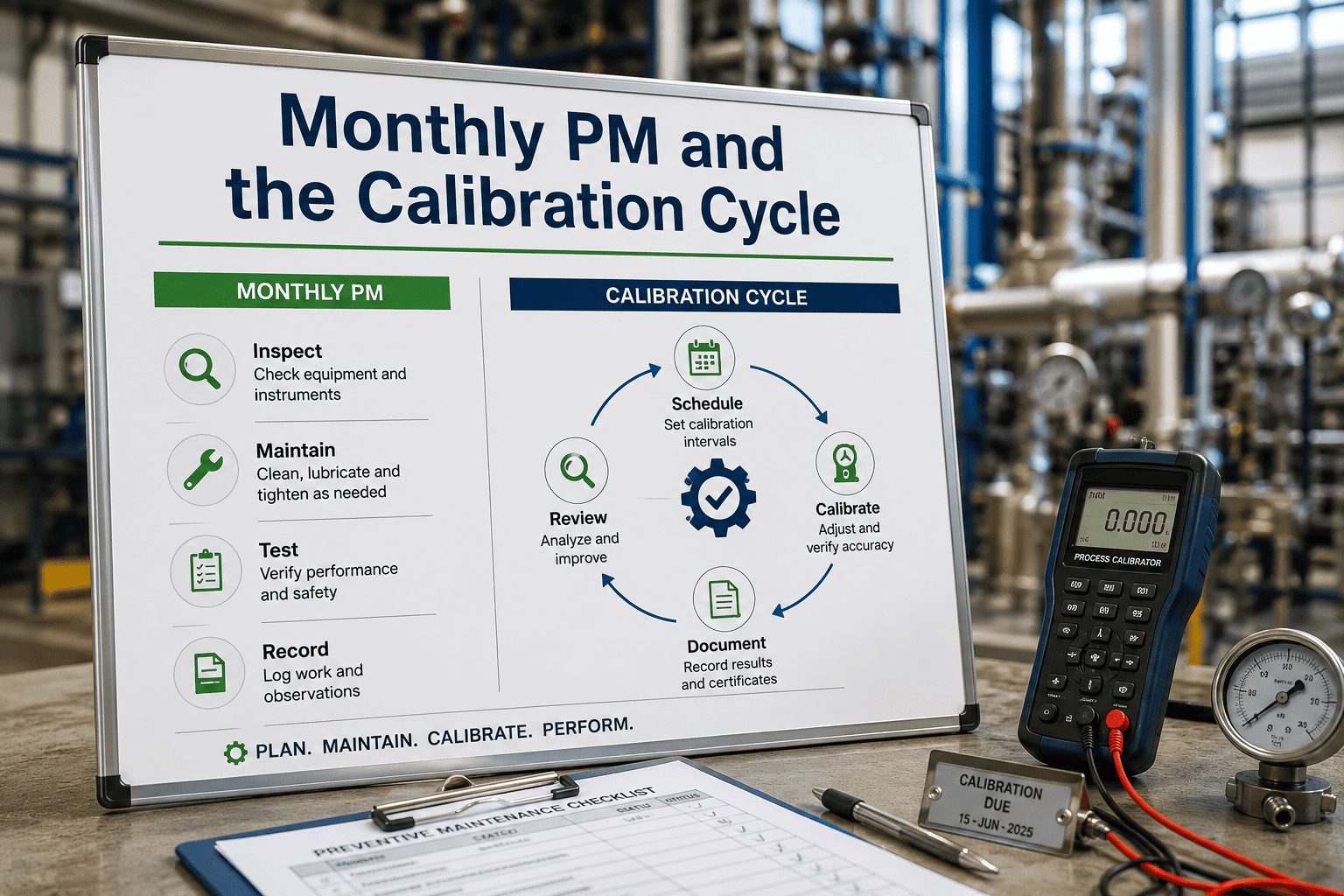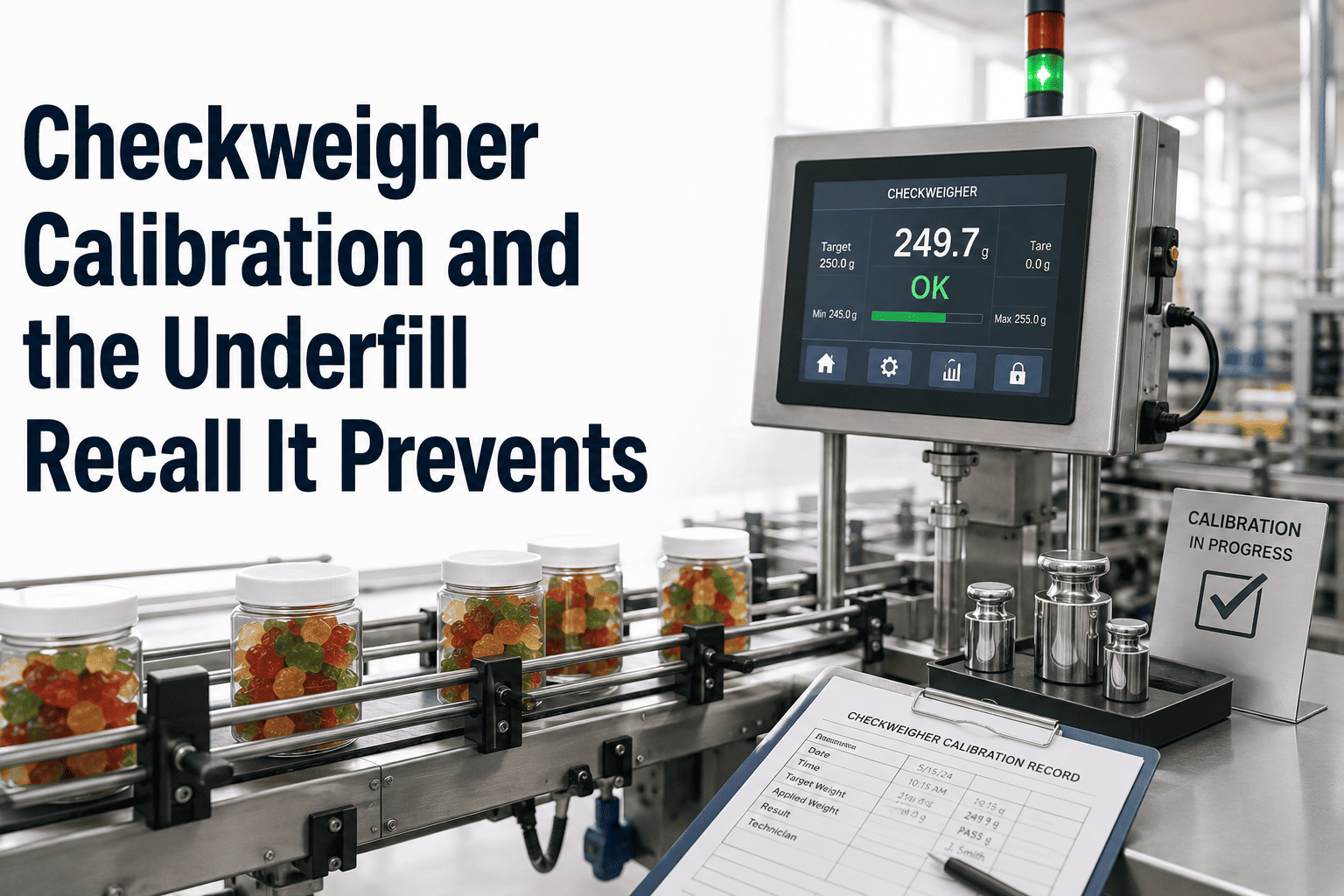
Checkweigher calibration failure is one of the top documented sources of underfill and overfill recalls in food production, and a disciplined verification workflow is what prevents both. This food plant checkweigher calibration guide covers calibration cadence, traceability, deviation tracking, and the CMMS-driven preventive maintenance program that keeps net-weight compliance defensible under NIST Handbook 133 and FDA review. Plants that digitize checkweigher verification through a CMMS like OxMaint typically cut calibration-related downtime by 30–50% and eliminate the paper trail gaps that trigger Form 483 observations. Ready to make every fill-weight audit defensible? Start Free Trial and see the workflow in action.
Is an underfill recall hiding in your checkweigher calibration log?
A single drifted load cell can ship thousands of underweight packages before QA catches it — and the FDA does not accept "we calibrated last quarter" as a defense. OxMaint turns checkweigher verification into a scheduled, signed, auditable PM that catches drift before it reaches the filler.
How often should a food plant calibrate checkweighers?
Most FDA-inspected food plants verify checkweigher accuracy at least once per shift using certified test weights, with a full multi-point calibration performed every 30–90 days depending on line speed, product variability and equipment age. NIST Handbook 133 requires that net-weight enforcement be defensible to ±0.3% of declared weight, and the only way to prove that level of accuracy under audit is a time-stamped, signed calibration record for every checkweigher on every line.
Verification check (3-point)
Run certified test weights at low / target / high points. Record actual vs. displayed weight. If deviation exceeds ±0.1%, trigger an out-of-spec work order immediately.
Linearity & repeatability test
Test 5–10 points across the checkweigher's range to confirm linear response. Log the standard deviation of 10 consecutive passes at target weight — reject if repeatability exceeds 2σ.
Full preventive maintenance calibration
OEM-certified technician performs full multi-point calibration, load cell inspection, belt tension check, and firmware validation. Sign-off stored as a permanent compliance record.
Recertification & traceability audit
Test weights recertified to NIST-traceable standards. Full calibration history reviewed for drift trends. CMMS generates the audit-ready report for FDA or USDA inspection.
What an underfill recall actually costs a food plant
When a checkweigher drifts and ships underweight product, the financial impact cascades far beyond the reclaimed goods. A mid-sized food plant running 8 lines can lose $14K–$60K per day in a single underfill event — and that figure excludes the cost of a formal Class I recall.
A 180-asset food plant, one drifted load cell, 11 days of blind shipping
A frozen-entrée plant running 420 packages/minute across 6 lines skipped its weekly linearity check during a staffing shortage. A load cell on Line 4 drifted −1.8% over 11 days — enough to trigger an average underfill of 4.2g per 340g package. When a retail partner's audit caught the deviation, the plant had already shipped 378,000 underweight units. Direct retrieval and repack cost: $284K. FDA Form 483 observation: calibration records missing for 2 of the 11 days. Had the plant used a CMMS-enforced PM schedule with mandatory sign-off, the drift would have been caught at the next shift verification — limiting exposure to under 3 hours of production.
Checkweigher verification CMMS checklist for food plants
A defensible checkweigher verification program is not a spreadsheet — it is a closed-loop workflow where every calibration step is assigned, completed, signed, and trended. Below is the verification checklist that OxMaint enforces automatically for every checkweigher on every line.
Pre-check setup
- Confirm line is stopped and product cleared from belt
- Verify environmental conditions: temp, humidity, vibration
- Retrieve NIST-traceable test weights from calibration kit
- Record checkweigher ID, line ID, shift and technician in CMMS
3-point accuracy test
- Pass low-end weight (−2σ) 5 times, record each reading
- Pass target weight 10 times, calculate mean & std dev
- Pass high-end weight (+2σ) 5 times, record each reading
- Flag deviation > ±0.1% as out-of-spec; auto-generate corrective WO
Rejection system test
- Place underweight dummy package on belt, confirm reject
- Place overweight dummy package, confirm reject
- Verify reject count matches checkweigher reject counter
- Inspect reject arm/air-jet for mechanical wear or misalignment
Sign-off & traceability
- Technician e-signs verification record in CMMS
- Supervisor countersigns if any deviation was logged
- Record auto-stamped with date, time, asset ID, technician ID
- Record locked and archived for FDA / NIST Handbook 133 audit
How to track checkweigher calibration deviation over time
Single-point calibration snapshots do not prevent recalls — trend analysis does. By logging every verification reading into a CMMS and charting deviation against time, maintenance teams can see drift developing weeks before it hits the rejection threshold, and schedule corrective maintenance before the line ships a single underweight package.
If deviation exceeds ±0.1% on any of 3 test points, the checkweigher is flagged for immediate corrective calibration. OxMaint auto-triggers a priority work order and quarantines the line until sign-off.
| Deviation Range | Status | CMMS Action | Production Impact |
|---|---|---|---|
| 0.0% to ±0.05% | Pass | Log & sign; schedule next verification per cadence | None — line continues running |
| ±0.05% to ±0.1% | Monitor | Notify reliability engineer; add to drift watch list | None — increase verification to every 4 hours |
| > ±0.1% | Out of Spec | Auto-generate priority corrective WO; quarantine line | Line stopped until recalibration & sign-off |
| > ±0.3% | Critical | OEM service call; full audit of shipped product since last pass | Potential recall investigation initiated |
How OxMaint prevents the underfill recall your spreadsheet can't
Spreadsheets and paper logs do not enforce calibration cadence, do not auto-trigger corrective work orders, and do not give you a defensible audit trail when the FDA walks the floor. OxMaint is an AI-powered CMMS built for maintenance & reliability teams that closes every gap in your checkweigher calibration program.
Scheduled PM with mandatory sign-off
OxMaint auto-generates shift, weekly and monthly checkweigher verification work orders. If a verification is missed, the system escalates to the reliability lead — no calibration quietly slips through a staffing gap.
Outcome: 100% calibration compliance, zero missed verificationsAI-driven drift detection
Every verification reading is logged and trended. OxMaint's AI analyses deviation patterns across checkweighers and predicts which load cell will drift out of spec next — so you replace it before the line ships a single underweight unit.
Outcome: Catch drift 2–4 weeks earlier than shift checks aloneAudit-ready compliance records
Every calibration event is locked with technician ID, supervisor countersign, timestamp, test-weight serial number and deviation reading. Generate a NIST Handbook 133 audit report in one click — no scrambling through binders during an FDA inspection.
Outcome: Form 483 calibration gaps eliminated; audit prep cut from days to minutesSpare-parts & test-weight inventory
OxMaint tracks certified test-weight recertification dates and auto-reorders load cells, belts and reject-arm components when stock hits minimum. Your next calibration is never delayed by a missing part.
Outcome: Calibration downtime reduced 30–50%; zero part-related delaysSee OxMaint enforce checkweigher calibration on your lines
Book a 30-minute demo and we'll show you exactly how OxMaint schedules, tracks and audits your checkweigher verification program — from shift-level accuracy checks to FDA-ready compliance reports.
Checkweigher calibration & CMMS verification: top questions
How often should checkweighers be calibrated in a food plant?
Food plants should perform a 3-point verification check at the start of every shift, a full linearity test weekly, and a complete preventive maintenance calibration every 30–90 days depending on line speed and equipment age. OxMaint enforces this cadence automatically by generating scheduled PM work orders — if a verification is missed, the system escalates to the reliability lead so no calibration window slips through.
What is the acceptable deviation for checkweigher calibration?
Under NIST Handbook 133, net-weight compliance must be defensible to ±0.3% of declared weight. Best practice for checkweigher calibration is to flag any deviation exceeding ±0.1% during shift verification as out-of-spec, triggering immediate corrective calibration. OxMaint auto-generates a priority work order when deviation crosses this threshold and quarantines the line until a signed recalibration is recorded.
How does a CMMS prevent underfill recalls?
A CMMS prevents underfill recalls by enforcing scheduled verification, logging every calibration reading with full traceability, and using trend analysis to detect load-cell drift before it reaches the rejection threshold. OxMaint goes further with AI-driven predictive maintenance that identifies which checkweigher is trending toward failure — see it in action by booking a demo at calendly.com/oxmaintapp/30min.
What records does the FDA expect for checkweigher calibration?
The FDA expects time-stamped, signed records showing the checkweigher ID, technician identity, test weights used (with NIST-traceable certification numbers), actual vs. displayed readings, deviation calculations, and corrective actions taken for any out-of-spec result. OxMaint captures all of this automatically and can generate a complete audit report in one click — no paper binders, no gaps.
Can OxMaint track multiple checkweighers across different production lines?
Yes. OxMaint's asset hierarchy lets you register every checkweigher by line, plant and product family, each with its own calibration cadence, test-weight set and deviation thresholds. You can start by importing your existing asset list — Start Free Trial — and OxMaint will generate the full PM schedule for every checkweigher in your facility within minutes.
Stop relying on paper logs to prevent a $10M underfill recall
OxMaint turns checkweigher calibration into a scheduled, signed, AI-trended compliance program — so your next FDA inspection is a non-event. Get started today.
Free 14-day trial · No credit card