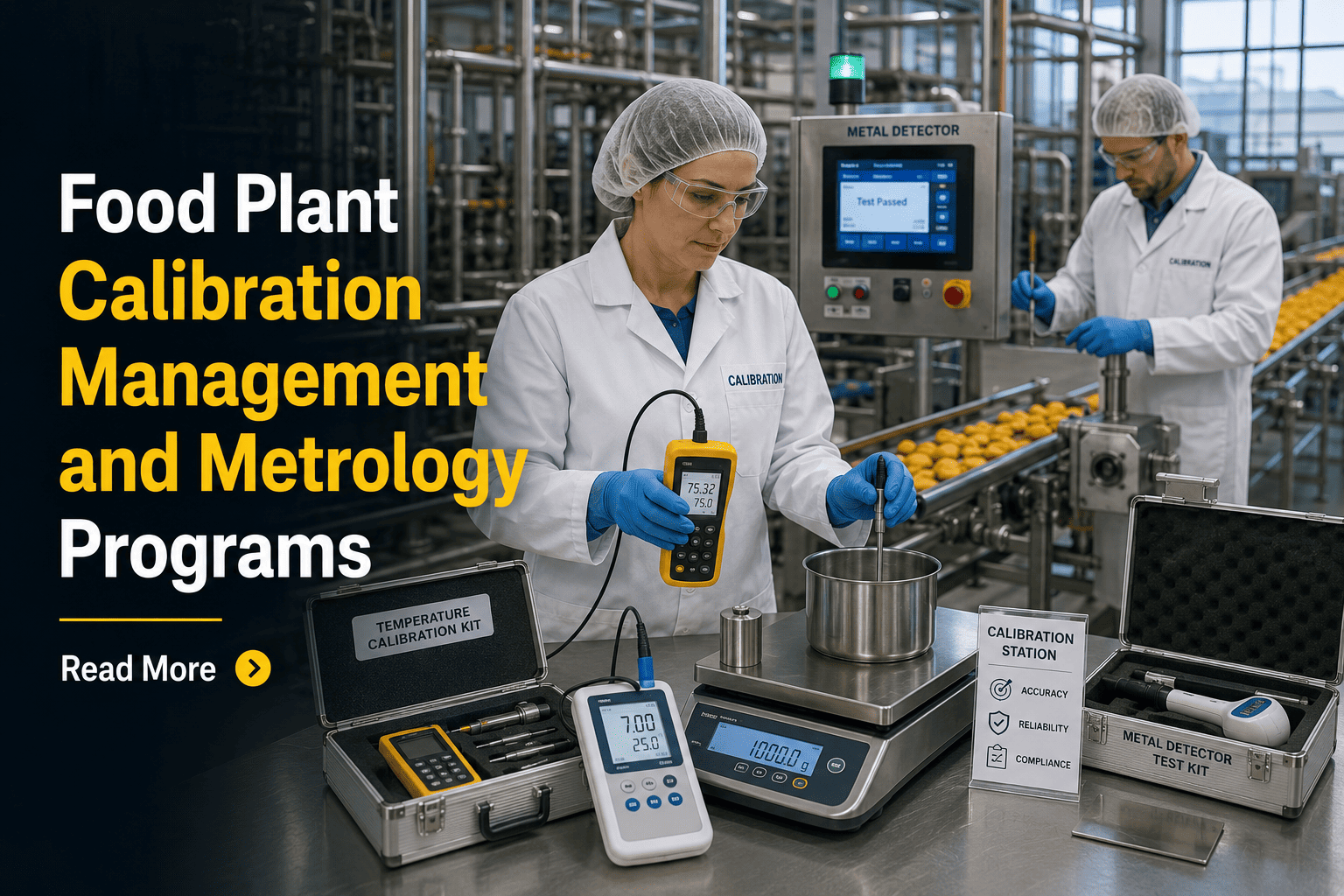
A miscalibrated thermometer in a pasteurization line does not just produce incorrect temperature readings — it creates an undocumented HACCP deviation that can trigger a Class I recall, an FDA warning letter, and a production shutdown that costs more than a full year of calibration program investment. Food plant calibration management is not an administrative formality; it is a front-line food safety control. Yet most facilities still manage calibration schedules in spreadsheets, calibration certificates in filing cabinets, and out-of-tolerance findings in email threads — fragmented records that leave critical gaps in the FSMA verification trail auditors specifically look for. Facilities that move calibration management into a CMMS-integrated metrology program — with automated schedule alerts, NIST-traceable certificate storage, and out-of-tolerance impact assessments — convert calibration from a reactive compliance burden into a proactive food safety asset — start a free trial to see how Oxmaint manages your full calibration program, or book a demo and we will map your instruments to a structured metrology workflow.
FOOD MANUFACTURING · CALIBRATION · FSMA COMPLIANCE
Never Miss a Calibration Again — or Face the Audit Consequences
See how Oxmaint tracks every thermometer, scale, pH meter, and metal detector with automated alerts, NIST-traceable records, and FSMA-ready audit exports.
Automated calibration due-date alerts
NIST-traceable certificate storage
Out-of-tolerance impact assessment workflow
No heavy implementation required · Live in days, not months · Works across multi-site portfolios
34%
of FDA food facility warning letters cite calibration record deficiencies as a contributing factor
Source: FDA Warning Letter Database
$1.8M
average cost of a food recall triggered by a temperature control failure linked to instrument calibration
Source: Grocery Manufacturers Association
62%
of food plants identify calibration schedule overruns as a recurring audit finding
Source: GFSI Benchmarking Study
4.1×
faster out-of-tolerance investigation closure with CMMS-linked impact assessment vs manual process
Source: ISPE Process Validation Guide
WHAT IS
Food Plant Calibration Management and Metrology Programs
Food plant calibration management is the systematic process of verifying that measuring and monitoring equipment — thermometers, scales, pH meters, metal detectors, flow meters, pressure gauges, and process sensors — produces accurate readings within defined tolerances, and maintaining documented evidence of that verification traceability back to national or international measurement standards (NIST in the USA, NPL in the UK, PTB in Germany).
Metrology is the science of measurement that underpins calibration programs: defining measurement uncertainty, establishing traceability chains, and setting calibration intervals based on instrument stability and criticality. In food manufacturing, metrology is not an academic concept — it directly determines whether a HACCP monitoring record can be defended in an FDA or USDA audit, whether a GFSI scheme audit will accept verification data, and whether a food safety plan will survive a regulatory inspection.
A structured calibration management program covers four elements: instrument inventory with criticality classification, calibration interval management with automated scheduling, NIST-traceable certificate storage with out-of-tolerance escalation, and FSMA verification integration that links instrument status to food safety plan records — start a free trial to build this program in Oxmaint today.
KEY FRAMEWORK
The 8 Pillars of a Food Plant Metrology Program
01
Instrument Inventory and Classification
All measuring instruments catalogued with asset ID, location, measurement parameter, range, accuracy class, and criticality rating (CCP monitor, regulatory requirement, production control, or reference).
02
Calibration Interval Setting
Intervals set based on OEM recommendation, instrument stability history, regulatory requirements, and risk classification. CCP instruments typically require monthly to quarterly calibration; reference standards annually.
03
NIST-Traceable Calibration Execution
Calibration performed using reference standards with documented NIST traceability chain. Every calibration event records as-found and as-left values, reference standard used, technician, and date.
04
Thermometer Calibration (HACCP Critical)
Pasteurization, cooking, cooling, and storage temperature monitors are the highest-criticality instruments in food manufacturing. Calibration intervals, ice-point verification procedures, and as-found records directly support HACCP monitoring records.
05
Scale and Weighing System Calibration
Scales used in ingredient addition, net weight compliance, and allergen-controlled ingredient systems require calibration with legally traceable weights. Legal-for-trade scales face additional regulatory requirements in the USA (NIST HB44), UK, and EU.
06
Metal Detector and X-Ray Validation
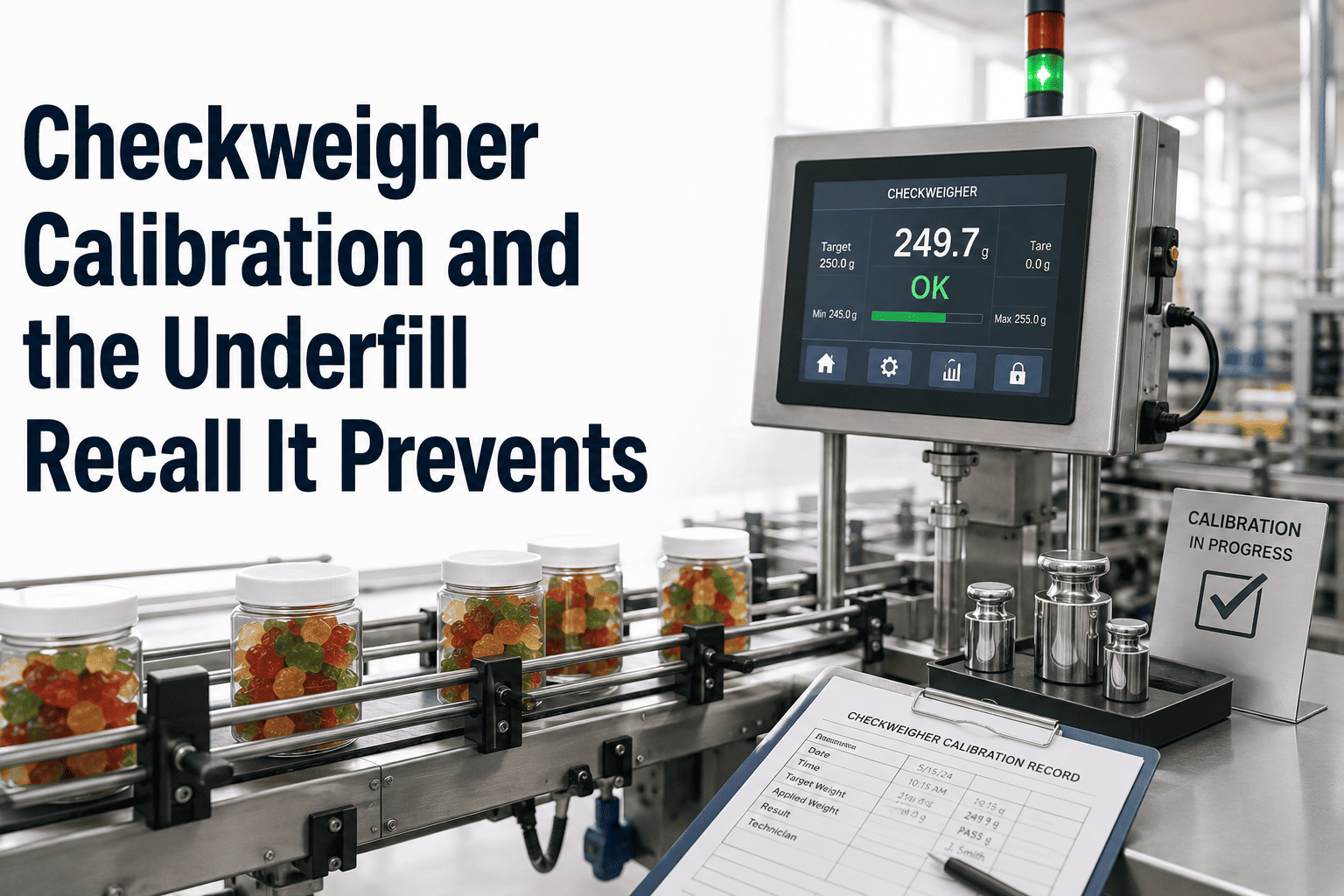
Metal detectors and X-ray systems are CCP instruments requiring daily or per-run performance checks with test pieces, plus formal calibration at defined intervals. GFSI schemes specify minimum test piece requirements by product type and detector sensitivity class.
07
Out-of-Tolerance Investigation and Impact Assessment
When an instrument is found out of tolerance, a structured impact assessment determines what product was produced since the last in-tolerance calibration, what measurements were affected, and whether a food safety or quality risk exists requiring hold, review, or recall action.
08
FSMA Verification Integration
Calibration records are linked to FSMA food safety plan verification activities, allowing auditors and QA teams to confirm that instruments used for HACCP monitoring and verification were in calibration at the time of measurement.
A single out-of-tolerance thermometer found during an FDA inspection can trigger a production hold covering every batch produced since the last verified calibration date — sometimes 30 to 90 days of output.
INDUSTRY PAIN POINTS
Where Food Plant Calibration Programs Fail Audits
Calibration failures in food manufacturing are almost never caused by instruments that suddenly malfunction — they are caused by program management gaps that allow instruments to run past their calibration due dates without detection, or out-of-tolerance findings that are not properly investigated — start a free trial to close these gaps with Oxmaint's calibration management module.
01
Calibration Overruns Not Detected Until Audit
Spreadsheet-based calibration schedules do not send automated alerts. Instruments routinely run 30, 60, or 90 days past their calibration due date before the gap is discovered during an internal audit or external inspection. Auditors ask for the overrun explanation — and there rarely is one.
02
NIST Traceability Chain Cannot Be Demonstrated
Many facilities have calibration certificates but cannot produce the complete traceability chain from the plant instrument to the working standard to the transfer standard to NIST. Auditors increasingly require this chain, especially for CCP instruments. Missing intermediate certificate links fail this requirement.
03
Out-of-Tolerance Findings Not Impact-Assessed
When a thermometer is found 0.8°C out of tolerance, the immediate question is: what product was produced using that instrument's readings since the last in-tolerance calibration? Most facilities log the out-of-tolerance finding and recalibrate — without performing the impact assessment that FDA and GFSI auditors require.
04
Metal Detector Performance Records Incomplete
Metal detector daily challenge records are maintained on paper logs that are rarely linked to the production batch records they relate to. During a customer or regulatory audit, tracing a specific production run to its metal detector challenge record requires manual search through paper archives — a process that takes hours and creates audit pressure.
05
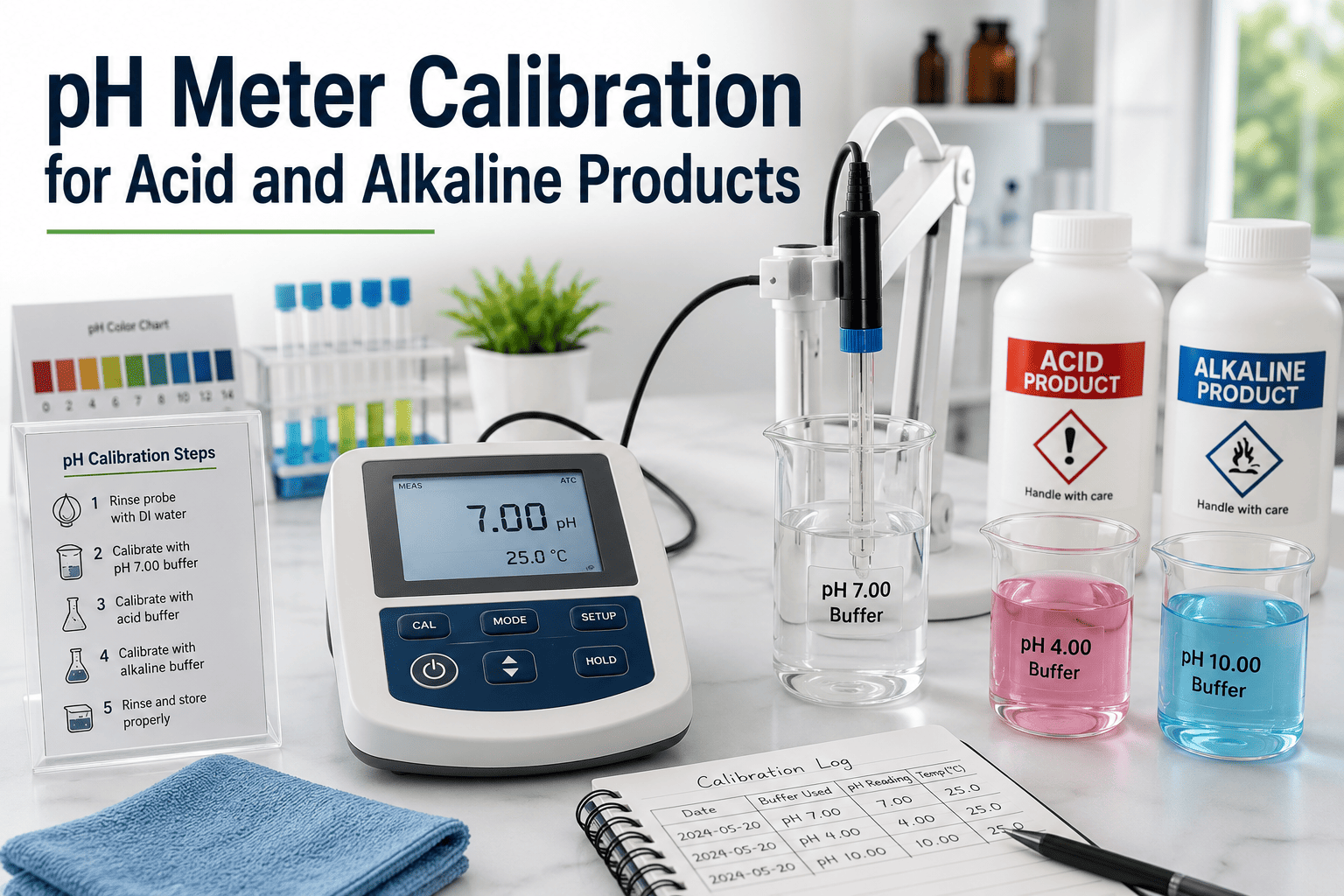
pH Meter Calibration in Acidified Food Lines
Acidified food regulations under 21 CFR Part 114 require pH monitoring with instruments that are calibrated per use or per shift. Many facilities use generic laboratory pH meters without the shift-calibration documentation and electrode maintenance records that a regulatory inspection requires, exposing them to significant enforcement risk.
06
Calibration Records Siloed from Maintenance System
Calibration is managed by quality; maintenance is managed by operations. When an instrument is repaired by maintenance, the quality team is often not informed, and no re-calibration is triggered post-repair. This creates instruments that have been modified without a calibration check — a finding that consistently appears in FDA inspection reports.
HOW OXMAINT SOLVES IT
Oxmaint Calibration Management Features for Food Plants
Instrument Asset Registry with Criticality Classification
Every measuring instrument is a CMMS asset in Oxmaint — tagged with measurement parameter, calibration interval, criticality class, and responsible technician. The complete instrument inventory is always current and searchable in seconds during an audit visit.
Automated Calibration Due-Date Alerts
Calibration due dates are calculated from the last calibration completion date and the defined interval. Automated alerts notify responsible technicians and QA managers at configurable lead times — 30 days, 14 days, and on the due date — eliminating the spreadsheet monitoring burden.
NIST-Traceable Certificate Storage and Chain Management
Calibration certificates are attached to the instrument asset record with reference standard identification. Oxmaint maintains the traceability chain — instrument, working standard, transfer standard — so the complete chain can be produced instantly for any instrument in any audit context.
Out-of-Tolerance Impact Assessment Workflow
When a calibration finding is logged as out-of-tolerance in Oxmaint, the system initiates an impact assessment workflow — capturing the out-of-tolerance period, affected production batches, measurement parameters, and disposition decision. The complete investigation is linked to the instrument record and available for audit review.
Repair-Triggered Re-Calibration Workflow
Maintenance work orders on measuring instruments automatically trigger a re-calibration requirement before the instrument is returned to service. Quality and maintenance are connected in the same system — the gap that allows repaired instruments to re-enter production without calibration verification is permanently closed.
FSMA Verification Export and Audit Trail
Oxmaint generates calibration history exports by instrument, date range, or product line — formatted for FSMA verification program records. Auditors can be given read access to relevant instrument records during inspections, eliminating manual document retrieval and accelerating audit close-out.
BEFORE VS AFTER
Reactive Calibration Management vs CMMS-Structured Metrology Program
| Calibration Area |
Without CMMS Integration |
With Oxmaint Calibration Management |
| Schedule Overrun Detection |
Discovered during audit preparation or external inspection |
Automated alerts 30/14/0 days before due date — zero surprise overruns |
| NIST Traceability |
Certificates in filing cabinets, chain incomplete for most instruments |
Full traceability chain stored digitally, retrievable in seconds |
| Out-of-Tolerance Response |
Instrument recalibrated, no impact assessment, audit gap created |
Structured impact assessment workflow with batch identification and disposition |
| Post-Repair Calibration |
Repaired instruments returned to service without re-calibration requirement |
Work order completion triggers mandatory re-calibration before return to service |
| Audit Record Retrieval |
3–4 hours of manual search per instrument during inspection |
Complete calibration history retrieved in under 60 seconds per instrument |
| FSMA Verification Link |
Calibration and food safety plan records in separate systems |
Calibration status linked to FSMA verification records in the same CMMS |
Facilities with CMMS-managed calibration programs resolve out-of-tolerance findings 4× faster and face 60% fewer repeat audit citations compared to facilities using spreadsheet-based scheduling.
ROI AND RESULTS
What a Structured Metrology Program Delivers
The financial case for CMMS-managed calibration is built on recall prevention, audit cost reduction, and the elimination of the production holds that follow undetected calibration overruns — start a free trial to quantify this ROI for your facility.
0
Calibration overrun surprises in audits
Facilities using automated CMMS calibration scheduling report zero surprise overruns in external audits
4.1×
Faster out-of-tolerance investigation closure
CMMS-linked impact assessment vs manual investigation process across food manufacturing facilities
60%
Reduction in repeat calibration audit citations
Facilities with CMMS calibration management vs spreadsheet programs over a 3-year audit cycle
$340K
Average production hold cost avoided annually
Per mid-size food facility when calibration overruns are detected and resolved before production impact
FAQ
Food Plant Calibration Questions Answered
What instruments require calibration under FSMA for food manufacturing?
Under FSMA, any instrument used to monitor a preventive control (HACCP critical control point or sanitation control) requires documented calibration as part of the verification program. This includes thermometers used for cooking, pasteurization, cooling, and storage temperature monitoring; pH meters used in acidified food or fermented product processes; water activity meters; and any instrument whose measurement forms the basis of a food safety plan critical limit. Metal detectors and X-ray systems, while monitored through challenge testing rather than traditional calibration, also require documented verification programs linked to production records.
What should a food plant do when an instrument is found out of tolerance at calibration?
An out-of-tolerance finding requires three immediate actions: first, quarantine the instrument and prevent use until recalibrated or replaced; second, conduct an impact assessment covering the period since the last in-tolerance calibration — identifying all production that relied on measurements from that instrument and assessing the food safety risk of the measurement error; third, document the disposition decision for any affected product (release, rework, hold, or recall based on the risk assessment). The complete investigation — out-of-tolerance finding, impact period, affected batches, risk assessment, and disposition — must be documented and retained as a FSMA corrective action record.
Book a demo to see how Oxmaint structures this workflow.
How often should thermometers be calibrated in a food manufacturing facility?
Calibration frequency depends on the instrument type, criticality, and stability history. Regulatory guidance and GFSI schemes typically require CCP thermometers to be calibrated at minimum quarterly, with some schemes requiring monthly verification for high-risk applications (pasteurization, cooking). Handheld thermometers used for product temperature spot checks typically require monthly calibration and daily ice-point verification. Continuous temperature monitoring systems (data loggers, SCADA-connected sensors) typically require quarterly calibration. Oxmaint allows calibration intervals to be set per instrument based on criticality class and automatically calculates due dates from the last calibration event.
How does Oxmaint handle calibration for instruments across multiple food plant sites?
Oxmaint's multi-site portfolio architecture allows calibration programs to be managed at the individual site level while providing portfolio-level visibility for QA directors and operations managers overseeing multiple facilities. Each site maintains its own instrument registry, calibration schedules, and certificate records. Portfolio-level reports show calibration compliance rates, overdue instruments, and out-of-tolerance findings across all sites simultaneously — allowing management to identify which facilities need calibration program support before a scheduled audit reveals the gap.
Start a free trial to see how the multi-site calibration dashboard works for your portfolio.
FOOD PLANT CALIBRATION · OXMAINT CMMS
Stop Discovering Calibration Gaps During FDA Audits
Oxmaint connects your entire calibration program — thermometers, scales, pH meters, metal detectors — into one CMMS-managed metrology system with automated scheduling, NIST-traceable records, and FSMA-ready audit exports.
Real-time calibration status visibility
Predictive out-of-tolerance alerts
5–10 year instrument lifecycle planning
Used by operations teams managing 10,000+ assets · See measurable results in the first 30 days · Limited onboarding slots available this quarter
No heavy implementation required · Live in days, not months · Works across multi-site portfolios