A packaging line rarely announces its problems, it just quietly drifts. A load cell loses calibration by fractions of a gram, a capper chuck wears half a millimetre, and neither shows up until a pallet of product fails a spot check or a customer complains about a loose lid. Fill-weight and torque deviations are two of the costliest quality escapes on any food or beverage line, and both start as small, preventable maintenance gaps rather than sudden breakdowns. The plants that stay ahead of these issues are not running better machines, they are running a fixed schedule that calibrates, checks, and logs before drift becomes a reject. See what that schedule looks like with a free trial of Oxmaint, and stop finding out about drift from a customer instead of a work order.
Small Numbers That Decide Whether A Batch Ships Or Gets Held
Where A Filler Fails Is Never Where A Capper Fails
Fill-weight problems and torque problems have almost nothing in common under the hood, which is exactly why a single generic PM checklist misses both. Each machine needs its own set of checks, tuned to its own wear points.
What Actually Drifts
- Load cells losing calibration gradually, invisible until fills drift past spec
- Nozzle and valve tip residue causing drips and short fills
- Piston seals and valve seats wearing and letting product bypass the dose
- Servo encoder or PLC program errors after a power event
What Actually Drifts
- Torque head calibration slipping below or above the closure specification
- Chuck and cam tooling developing wear grooves that grip inconsistently
- Magnetic clutch settings drifting on torque-controlled cappers
- Closure batch variation changing the application-to-removal torque ratio
Put Both Machines On One Schedule
Oxmaint links fill-weight calibration and torque verification to the same PM calendar, so a missed load cell check and a missed torque spot-check both surface as open work orders, not surprises during a quality audit.
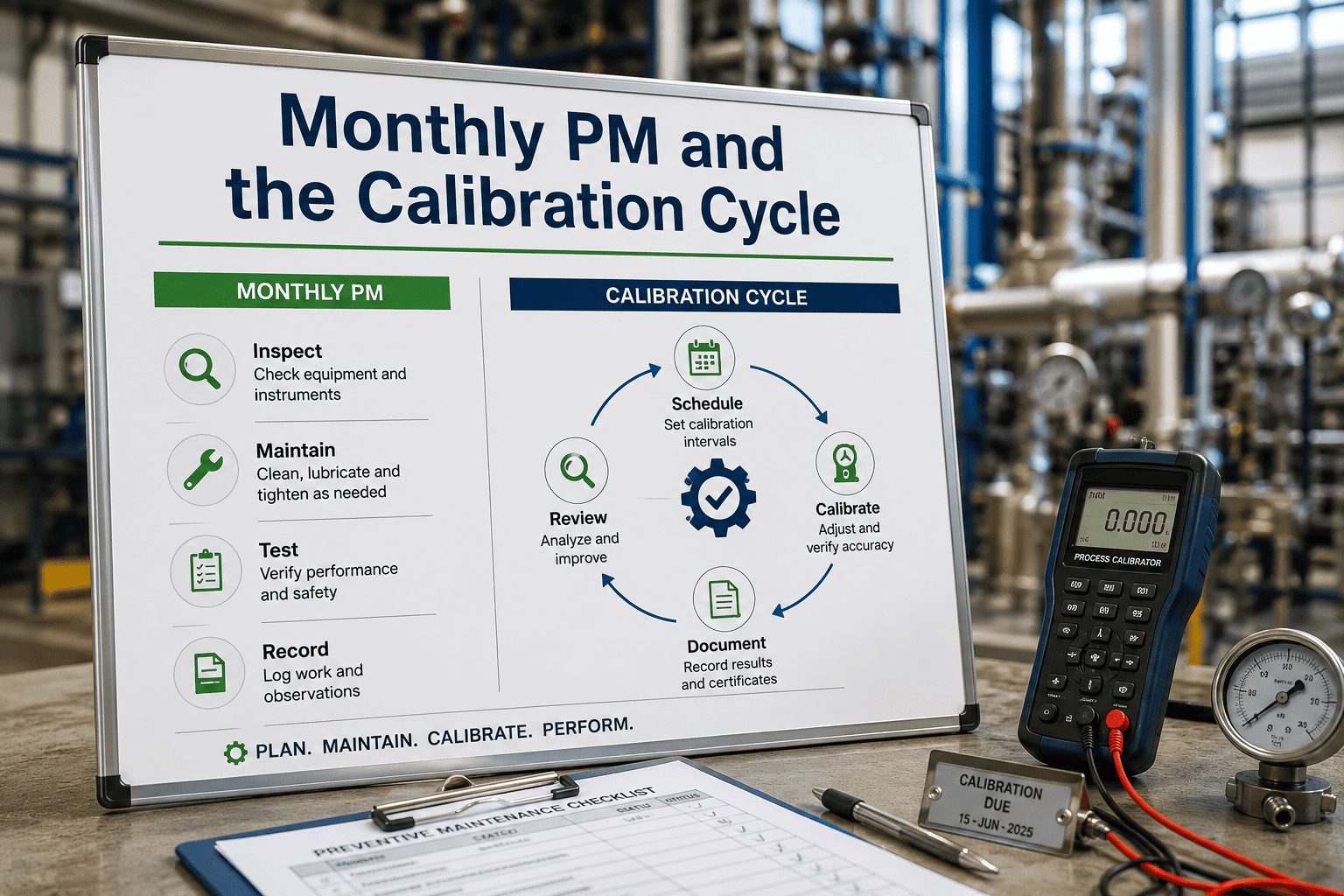
A Filler And Capper PM Calendar, Laid Out By Frequency
Nothing here is optional and nothing here needs to be remembered by a person. Each row is a recurring task a CMMS can trigger on its own, on time, every time.
Before The Line Starts Moving
Check nozzle and valve tips for residue, run a verification fill and weigh it against target, and spot-check torque at shift start before production volume builds.
Wear Checks Before They Show Up In Product
Inspect valve seats and piston seals, lubricate belts and chains per the manufacturer's schedule, torque-check fasteners, and test sensor response on both machines.
Calibration, Not Inspection
Calibrate load cells against certified reference weights, verify checkweigher and flowmeter accuracy, and back up PLC programs off-machine so a power fault never costs a revalidation.
The Deep Pass
Review PLC error logs for trends, update firmware where the OEM recommends it, run vibration analysis on gearboxes and pumps, and fully recalibrate the torque head and chuck tooling.
Reactive Firefighting Versus A CMMS-Scheduled Line
The gap between a plant that reacts to fill and torque failures and one that schedules around them shows up in every line below.
| Situation | Reactive Plant | CMMS-Scheduled Plant |
|---|---|---|
| Load cell drift | Found when a checkweigher flags a reject | Caught at the fixed four-week calibration |
| Torque verification | Depends on whoever remembers to check | Auto-scheduled every 30 to 60 minutes on run |
| Chuck or cam wear | Discovered after cap complaints arrive | Flagged during quarterly tooling inspection |
| PLC program loss | Days of downtime reprogramming from scratch | Restored from a scheduled monthly backup |
| Audit readiness | Paper logs assembled the night before | Calibration history stored and timestamped |
What A Fill Or Torque Problem Is Actually Telling You
A deviation on its own is just a number. Matched to a likely cause, it becomes a work order a technician can act on the same shift.
| What You See | Likely Cause | What To Schedule |
|---|---|---|
| Fill creeping under target | Load cell or nozzle drift | Off-cycle load cell calibration |
| Fill weight scattering, no trend | Worn piston seal or valve seat | Seal and seat inspection this week |
| Removal torque falling | Chuck wear or clutch drift | Torque head calibration and chuck check |
| Caps cracking on shelf | Torque head set too high | Immediate torque head recalibration |
| Deviation only after changeover | Tooling not reset for new closure size | Changeover verification step in the PM |
Turn Every Deviation Into A Work Order, Automatically
Oxmaint schedules load cell calibration, checkweigher verification, and torque head checks against the intervals your line actually needs, then logs every result for the next audit without a spreadsheet in sight.
Frequently Asked Questions
Stop Losing Batches To Drift You Could Have Scheduled Around
Fill-weight and torque deviations are two of the most preventable quality escapes in packaging, and both respond directly to a fixed maintenance calendar. Put your filler and capper on one schedule and see your reject rate move within the first production cycle.