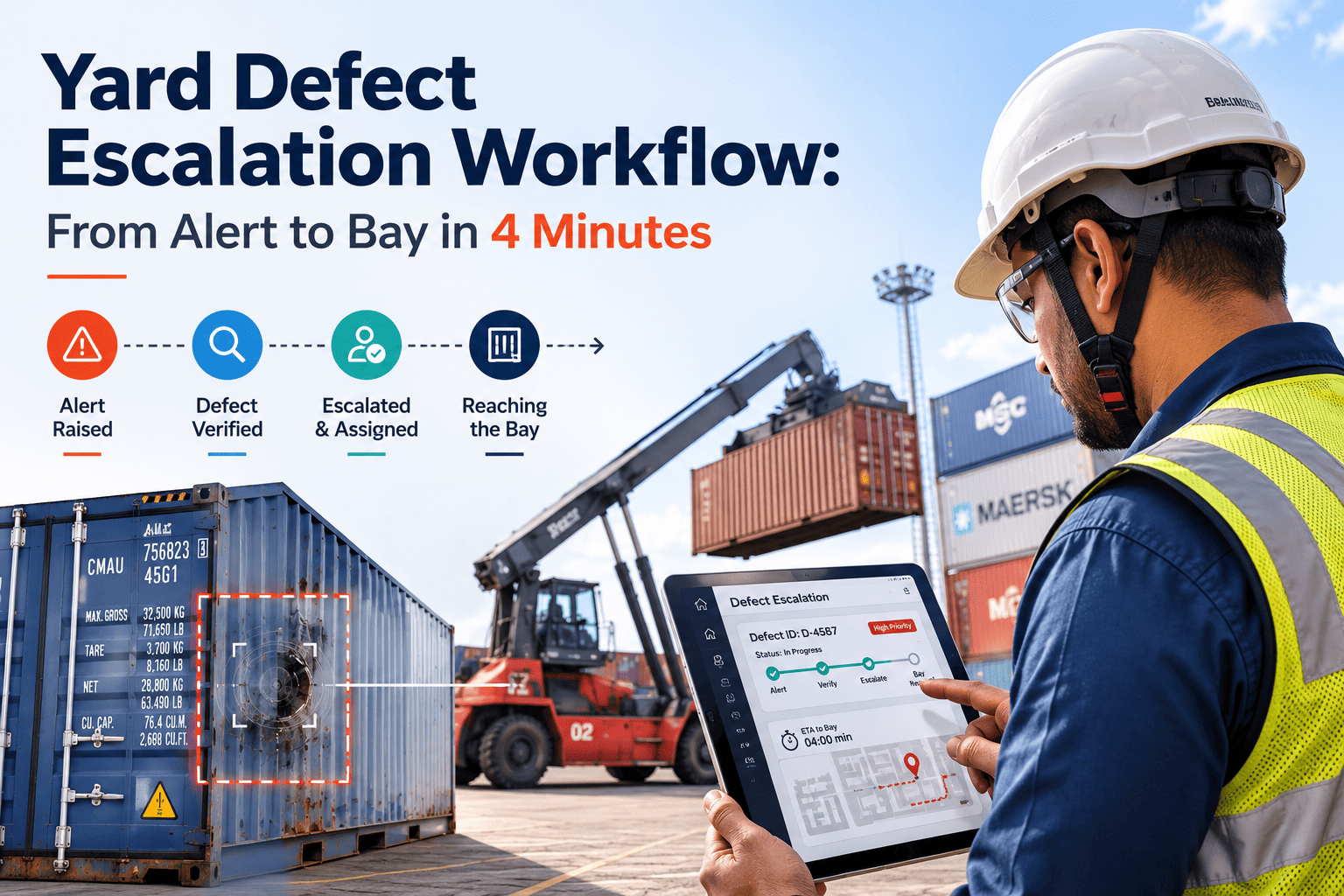
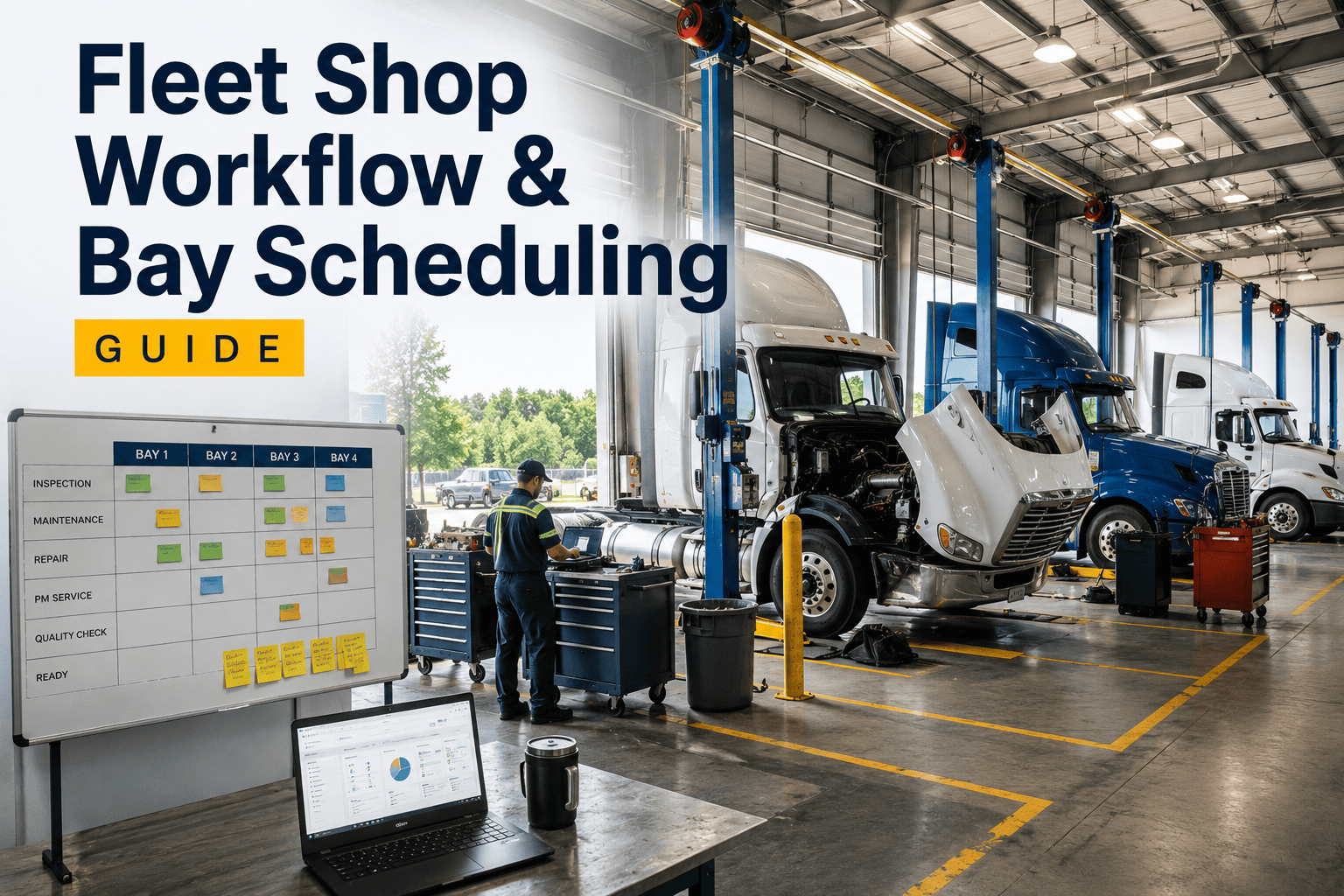
A driver flags a cracked air line during a pre-trip walk-around. In most yards, that defect sits in a paper stack or a group chat for hours before a technician ever sees it — and the truck sits right along with it. The fleets that have solved this don't have faster technicians; they have removed the gaps between the moment a defect is spotted and the moment a bay, a tech, and the right part are all ready for it. This is the exact routing sequence they use, broken into the four checkpoints that separate a same-shift fix from a truck parked for two days, and you can see how the same routing runs against your own yard with a free trial.
Yard Operations
Stop Losing Shifts to Defects Nobody Routed
A defect that takes four minutes to reach a bay gets fixed the same shift. The same defect routed by radio and paper trip sheet can sit for hours, taking a parking spot and a load slot with it. See where your yard's current process is losing time, checkpoint by checkpoint, before you change anything about how your technicians work.
4 min
Typical time from defect flag to bay assignment on an automated routing path
3-6 hrs
Common delay when the same defect is routed by radio, text, or paper trip sheet
1 record
Single defect entry that follows the truck from gate to bay to closeout
0 handoffs
Lost between dispatcher, foreman, and parts desk when routing is automatic
100%
Of defect status changes logged automatically, with no manual update required
24/7
Routing coverage, so a defect flagged on a night shift still starts moving instantly
Where the Hours Actually Go
A yard defect rarely stalls because nobody noticed it. It stalls in the space between people. The driver tells a gate guard, who radios a dispatcher, who has to find a foreman, who has to check bay availability, who has to confirm a part is in stock — and every one of those handoffs is a chance for the defect to sit untouched while the truck occupies a parking spot that another unit needs. None of these gaps show up on a single defect report; they only become visible when you add up how many hours a yard loses to them across a full week of traffic. Each card below is a real point where trucks get stuck in yards that still route defects manually.
Handoff Gap 1
Driver to Dispatch
Defect gets described secondhand, over radio or text, with details that don't match what the technician needs to prep for.
Handoff Gap 2
Dispatch to Shop
No visibility into which bay is free or which technician has the right certification, so the truck waits while someone finds out.
Handoff Gap 3
Shop to Parts
Technician arrives at the bay before checking stock, discovers the part isn't on hand, and the truck loses its slot to the next unit.
Handoff Gap 4
Shop to Driver
Repair finishes but nobody tells dispatch the truck is clear, so it sits in the bay long after the work is actually done.
The Four-Minute Path From Alert to Bay
This is the sequence that replaces the radio-and-paper chain above. Each checkpoint fires automatically off the one before it, so the truck's status updates in real time without anyone chasing it down. Every timestamp below is logged against the defect record, which is also what gives fleet managers a clean audit trail later instead of a reconstructed guess.
1
0:00
Defect Logged at the Gate
Driver enters the defect on a mobile inspection app during the pre-trip or post-trip check, with a photo and severity tag attached. The entry captures exactly what the driver saw, not a secondhand description relayed over radio a few minutes later.
2
0:45
Severity Routes the Alert
Out-of-service defects trigger an immediate hold and notify the shop foreman directly, bypassing the general dispatch queue entirely. Lower-severity defects route to a standard work order instead, so the shop isn't treated as an emergency every time.
3
2:10
Bay and Technician Reserved
System checks open bays and technician certifications, then reserves the first available match instead of leaving it to a phone call. If the home yard is full, the reservation can route to a nearby location automatically.
4
4:00
Parts Staged Before Arrival
Inventory check confirms the likely part is in stock and stages it at the bay, so the technician starts the repair instead of a parts run. A shortfall gets flagged here too, before the truck ever leaves the gate.
See It Run on Your Yard
Watch a Defect Move From Gate to Bay in Real Time
Bring one recurring defect type from your yard and we will walk through exactly how the routing, bay reservation, and parts staging steps would handle it on your current fleet size and shop layout.
Manual Routing vs. Automated Escalation
The gap between these two columns is almost never about technician speed. It's about how many people a defect has to pass through before work actually starts, and how much of that trail exists anywhere after the truck rolls out again.
| Checkpoint |
Manual Radio and Paper |
Automated Escalation |
| Defect capture |
Verbal report, details often lost |
Photo and severity tag at the point of inspection |
| Dispatcher involvement |
Required for every defect, every time |
Only for defects that need manual judgment |
| Bay assignment |
Phone calls to check availability |
Reserved automatically against open bays |
| Parts readiness |
Checked after the technician arrives |
Confirmed and staged before the truck rolls in |
| Status visibility |
Whoever last heard an update, secondhand |
Live status on every defect, visible to any role |
| Record after closeout |
Scattered across radio logs and memory |
Single timestamped record from flag to clearance |
| Typical time to bay |
3 to 6 hours, longer on busy shifts |
Around 4 minutes for a standard defect |
What Faster Routing Actually Prevents
The four-minute path isn't valuable because speed is impressive on its own. It's valuable because of what it keeps from happening downstream, on the same day and over the following weeks.
Missed Load Assignments
A truck stuck waiting on routing is a truck dispatch can't commit to a load, which pushes that freight to another unit or another carrier.
Compounding Yard Congestion
Every truck parked on an unrouted defect is a spot another vehicle needs, and congestion tends to snowball during peak shift changes.
Untracked Defect History
Defects handled by radio rarely leave a record anyone can search later, which makes recurring problems on a unit hard to prove or budget for.
What Changes for Each Role
The same routing engine looks different depending on which seat you sit in. Here is what actually changes day to day for the five roles most involved in getting a defect from flag to fix.
Drivers
Log a defect once, from the same app used for the inspection, and get a status update instead of wondering if anyone saw it.
Dispatchers
Stop fielding radio calls for routine defects and step in only when a routing exception genuinely needs a judgment call.
Shop Foremen
See every open bay and its technician's certifications in one queue instead of walking the shop floor to check availability.
Parts Managers
Get a stock check the moment a bay is reserved, so shortfalls surface before the technician is standing at an empty shelf.
Fleet Managers
Get a clean record of how long each defect sat at each stage, which is the data that actually shortens the process over time.
Common Questions on Defect Escalation
Does every defect need to go through the full escalation path?
No. Minor defects that don't affect roadworthiness can route to a standard work order queue instead of triggering an immediate bay hold. Severity rules decide which path a defect takes, and you can see how those rules are configured with a
demo.
What happens if the reserved part isn't actually in stock?
The system flags the shortfall at the staging step, before the truck reaches the bay, so the foreman can reassign the slot or trigger an emergency order instead of the technician discovering it mid-repair.
Can this workflow handle multiple yards with shared technician pools?
Yes. Bay and technician availability are checked per location, and defects can route to a different yard if the home shop is at capacity and a nearby bay is open sooner.
How is the 4-minute figure measured?
It reflects the time from defect logging to a confirmed bay and technician assignment for a standard-severity defect with an in-stock part, based on typical routing performance across active fleets.
Does this replace the driver's DVIR process?
No, it runs alongside it. The defect entry that triggers escalation is the same entry that satisfies the pre-trip or post-trip inspection record, so drivers aren't logging anything twice.
Ready When Your Yard Is
Turn Your Next Defect Into a Same-Shift Repair
Every hour a defect sits unrouted is an hour that truck isn't earning. Set up the routing rules for your yard and see the first defect move through the full path in minutes, not hours.