
Refrigerated fleet management carries a cost dimension no other commercial fleet shares: cargo loss. A reefer unit failure on a loaded pharmaceutical trailer costs $18,000 in downtime plus up to $400,000 in destroyed cargo, FDA investigation, and customer contract exposure — for a single event. The refrigeration unit is life-critical for the cargo it protects. Managing it with the same PM discipline as the engine is not optional — it is the core operational competency of cold chain logistics. OxMaint's CMMS manages reefer PM schedules, temperature alarm records, and compliance documentation alongside vehicle maintenance in one platform.
Refrigerated Fleet Management: Maintaining Temperature-Controlled Transport
Complete guide to cold chain fleet operations — reefer PM, temperature compliance, pre-trip procedures, AI digital twin, OBD condition monitoring, SAP/PLC integration, and CMMS scheduling for temperature-controlled transport.
Temperature Compliance Zones: What the Regulations Require
Cold chain compliance is regulated at four distinct levels: FDA FSMA for food, GDP for pharmaceuticals, ATP for international transport, and customer SLAs. Each cargo type has a defined temperature envelope — excursions trigger mandatory documentation, regulatory reporting, and cargo destruction. A CMMS that logs temperature alarms against vehicle and load records creates the compliance trail auditors require. OxMaint links every temperature alarm to the vehicle's PM and compliance log automatically.
Reefer Unit PM: Hour-Based vs. Calendar Intervals
Reefer PM operates on a dual-trigger system: engine hours for the refrigeration unit — which accumulates 2–3× faster than tractor hours on high-cycle routes — and calendar intervals for refrigerant, defrost, and electrical systems that degrade by time rather than use. A unit running continuous frozen at −18°C may accumulate 2,200 hours/year while a low-cycle unit logs only 800 — yet both need annual refrigerant leak certification. OxMaint's dual-trigger PM handles both independently per reefer unit so no interval is missed.
The Cold Chain Failure Cascade: One Component, Full Cargo Loss
Cold chain failures cascade. A clogged condenser coil raises head pressure; elevated head pressure overworks the compressor; the compressor degrades the refrigerant charge; reduced charge drops cooling capacity; dropped capacity causes a temperature excursion. That entire cascade traces to a condenser cleaning deferred three weeks. 73% of cold chain cargo failures trace to a maintenance event missed, deferred, or incorrectly performed. OxMaint ensures every reefer PM trigger generates a work order that closes before the unit is dispatched — eliminating the entry point for cascade failures.
AI Digital Twin and Predictive Maintenance for Reefer Units
AI digital twin technology models expected reefer performance — head pressure, suction pressure, evaporator differential, compressor duty cycle — against operating history, ambient temperature, cargo load, and route profile. When actual sensor readings deviate from the modelled norm, the digital twin flags the anomaly 4–8 hours before a cargo-threatening excursion occurs. This is enough time to divert the vehicle, pre-arrange a relief unit, or protect cargo in transit. OxMaint integrates with reefer telematics to trigger predictive work orders automatically when digital twin models identify anomalies.
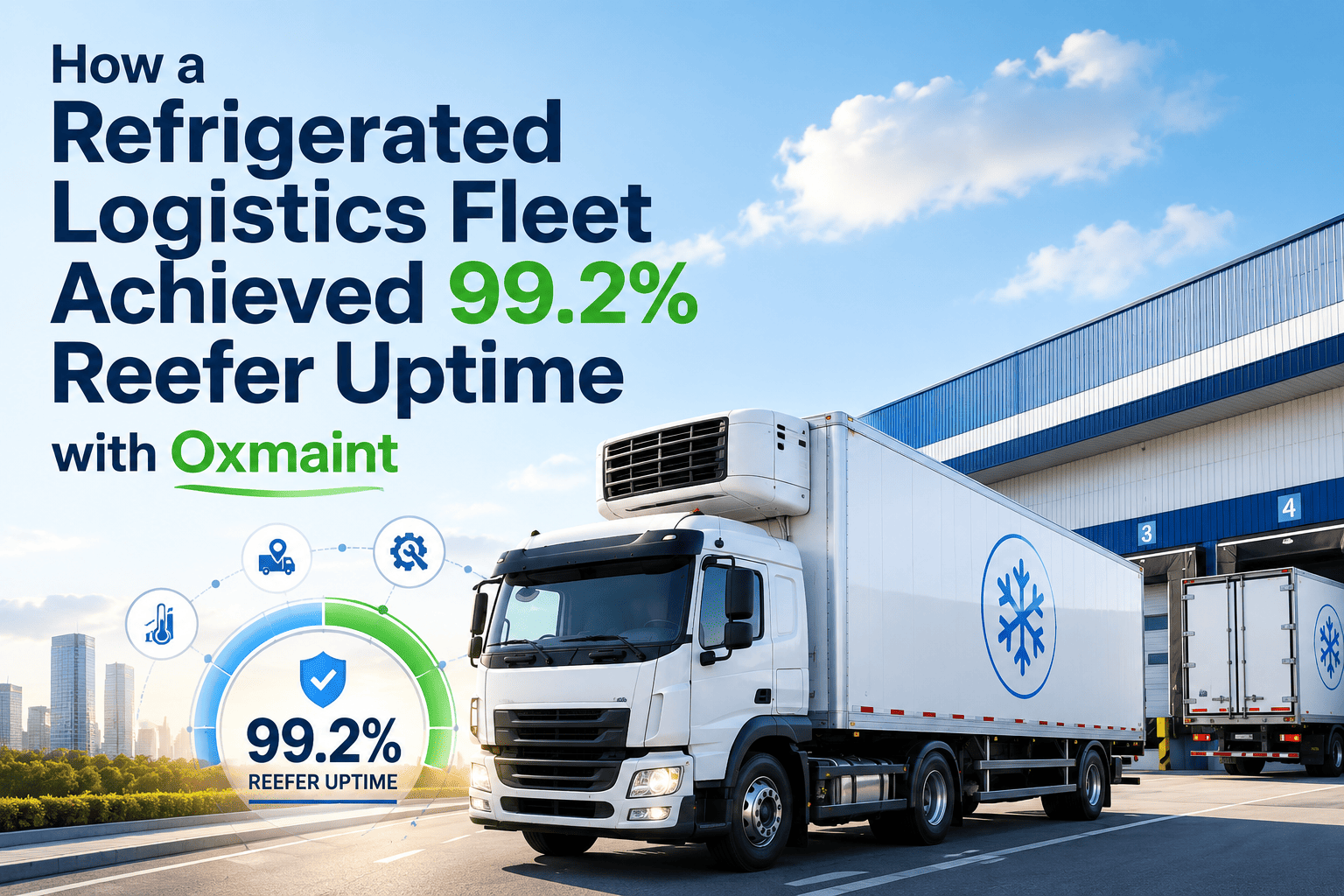
We had two pharmaceutical cargo losses in one year before tracking reefer hours properly. OxMaint showed our units were averaging 2,200 hours between services — nearly double the interval. After reconfiguring PM triggers per unit, we've had zero excursions in 18 months.
OxMaint manages reefer PM on hours, calendar, and alarm-based triggers — per unit, per cargo category. Free to start, no hardware required.
Reefer Fuel Optimisation: The Hidden $8K Per Unit Per Year
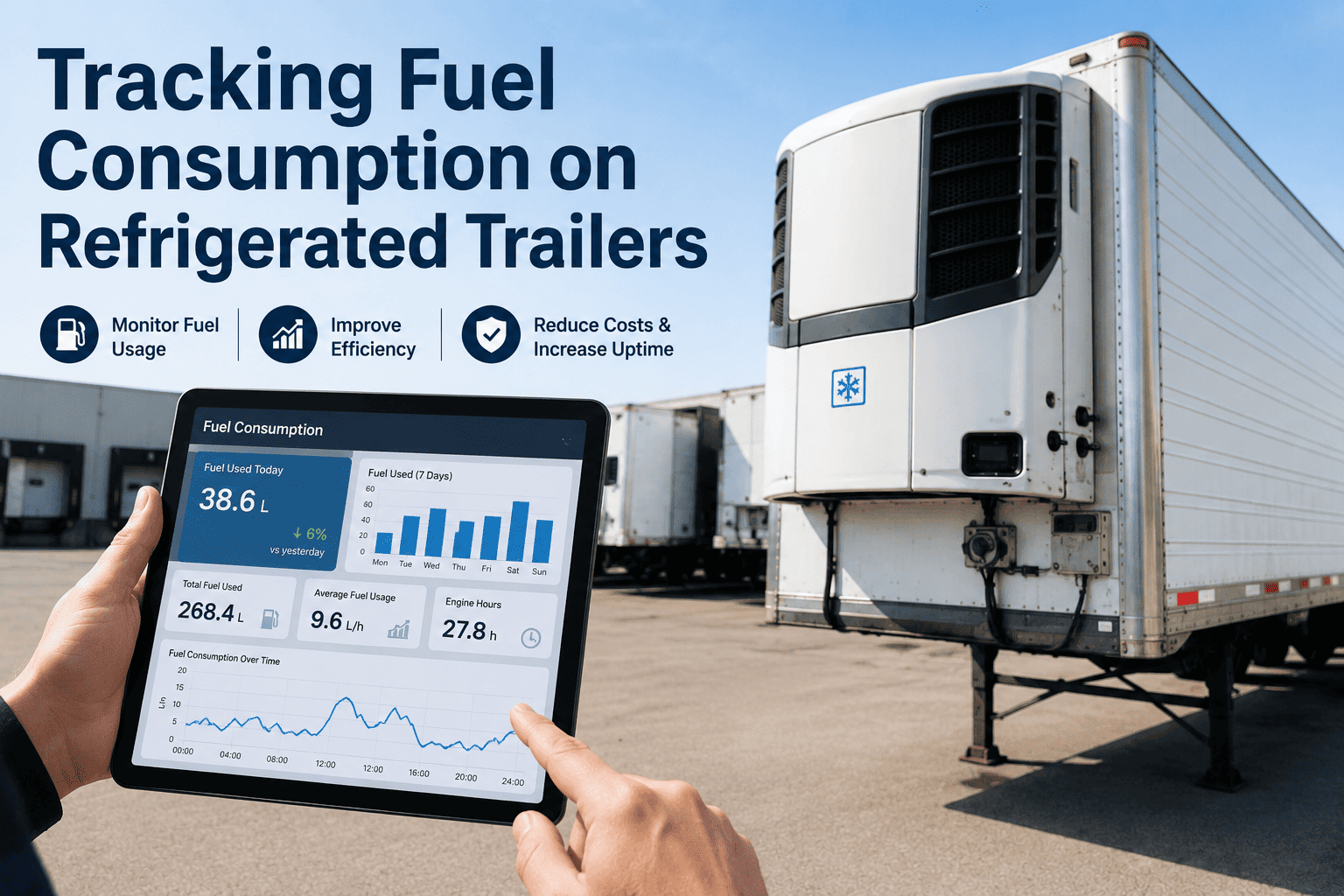
Reefer fuel is the second-largest operating cost in cold chain, and the least systematically tracked. A diesel reefer running continuous frozen consumes 0.85–1.42 gallons per hour depending on maintenance condition. A unit with a dirty condenser, worn door seals, or low refrigerant charge burns 15–67% more fuel than a maintained equivalent — $3,000–$8,000 per year in recoverable waste per unit. For a 30-unit fleet, maintenance-related fuel waste can reach $90,000–$240,000 annually. OxMaint tracks reefer fuel from OBD feeds, flagging units above fleet baseline as PM candidates before waste compounds.
Pre-Trip Cooling and Digital DVIR for Reefer Operations
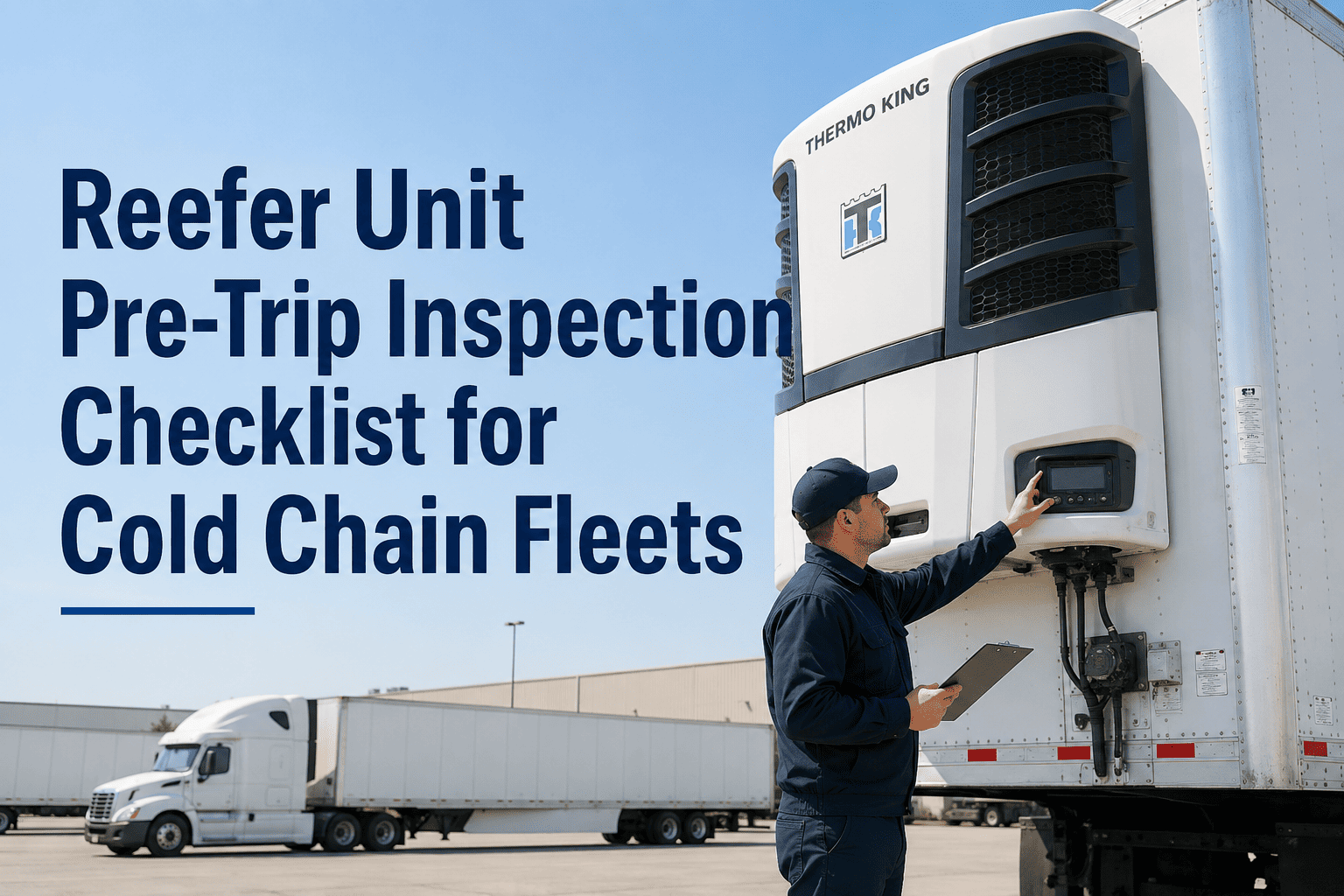
Pre-trip inspection for a refrigerated vehicle is a two-system checklist — tractor and reefer unit — yet most fleet DVIR programs cover only one. GDP guidelines for pharmaceutical loads require pre-cool temperature to be documented with GPS timestamp before loading begins — not just that the setpoint was set. A digital DVIR that captures actual compartment temperature at load time provides the compliance documentation paper logs cannot reliably generate. OxMaint's mobile DVIR captures reefer setpoint, actual compartment temp, and operator sign-off on every dispatch — building the GDP and FSMA record automatically.
Frequently Asked Questions
Zero Excursions Starts With PM That Never Misses.
OxMaint tracks reefer hours, calendar triggers, and alarm events in one platform — every cold chain PM completed before dispatch, every cargo protected.

.png)


