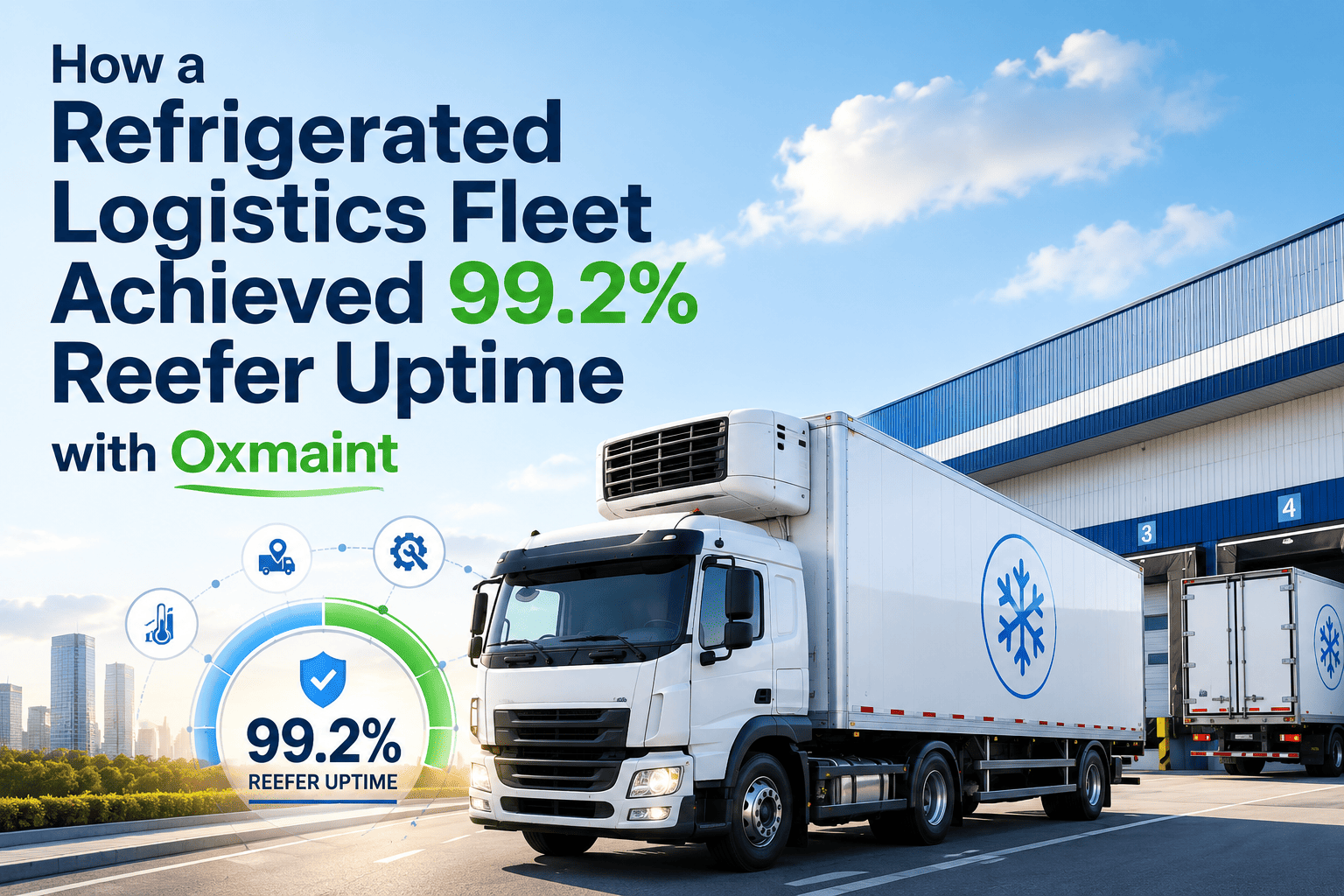
In March 2021, the operations director of a 180-vehicle refrigerated logistics company headquartered in the Pacific Northwest opened a damage claim report that had become routine — another cold-chain failure, another shipment of perishables condemned, another customer threatening to walk. Over the prior 12 months, the fleet had logged 47 reefer unit failures mid-route. Average reefer uptime: 91.4%. Total cold-chain incident cost including condemned cargo, regulatory penalties, and customer claims: $1.9 million. The reefer units themselves were not old. The problem was invisible — no system was tracking compressor run hours, refrigerant levels, condenser condition, or evaporator coil performance between scheduled services. Faults accumulated quietly until they became failures on the road. After deploying Oxmaint's refrigerated fleet CMMS across all 180 vehicles and 360 reefer units, the fleet reached 99.2% reefer uptime within 14 months — eliminating 43 of 47 recurring failure modes and reducing cold-chain incident costs by 78%. If your fleet carries temperature-sensitive cargo, book a demo to see how Oxmaint maps to your cold-chain compliance requirements. This is the complete account of how a refrigerated logistics fleet rebuilt its maintenance infrastructure around reefer reliability — and what it cost to get there versus what it saves every year.
99.2% Reefer Uptime — 180 Vehicles. 14 Months. Zero Mid-Route Cold-Chain Failures.
180 vehicles · 360 reefer units · $1.48M saved · Pacific Northwest refrigerated logistics fleet
99.2%
Reefer unit uptime achieved — up from 91.4% baseline across 360 refrigeration units
$1.48M
Annual cold-chain incident cost reduction — from $1.9M to $420K in 14 months
43 of 47
Recurring reefer failure modes eliminated — through predictive interval scheduling and OBD fault monitoring
The Cold-Chain Maintenance Problem — Where the $1.9M Was Disappearing
Before Oxmaint, the fleet operated on paper-based PM schedules that treated every reefer unit identically — regardless of cargo load cycles, ambient temperature exposure, or individual compressor wear history. Technicians worked from printed checklists. Refrigerant levels were checked at quarterly service only. Condenser coil fouling, the leading cause of compressor overload failure, went undetected between visits. The four systemic failures that made cold-chain incidents inevitable are documented below. Sign Up Free to see how Oxmaint replaces all four with automated, data-driven reefer maintenance protocols.
91.4%
Reefer unit uptime baseline
47 mid-route reefer failures per year — each triggering a cargo temperature excursion event and potential condemnation claim
0
Real-time reefer monitoring
No telematics integration with reefer control units — compressor faults, refrigerant loss, and condenser alerts went undetected until driver report
28%
PM compliance on reefer units
Paper-based reefer PM schedules were missed at a rate that made quarterly service intervals meaningless in practice
$1.9M
Annual cold-chain incident cost
Condemned cargo claims, FDA temperature log violations, customer penalties, and emergency roadside reefer repair — all downstream of missed PMs
The Oxmaint Solution — Predictive Reefer Maintenance at Scale
Oxmaint addressed the refrigerated fleet's cold-chain reliability problem through five coordinated capabilities: reefer unit asset profiles with individual maintenance histories, OBD and telematics integration with reefer control units, AI-driven interval optimisation per unit based on load cycle data, digital work orders with mobile technician dispatch, and temperature compliance documentation for FDA and FSMA audit readiness. Book a Demo to walk through how each capability maps to your reefer fleet's specific failure patterns. The platform replaced every paper-based PM checklist with a digitally-tracked, auto-scheduled work order — and connected reefer fault alerts directly to technician mobile devices, cutting fault-to-response time from 3.8 hours to 19 minutes.
Reefer Unit Asset Profiles + Individual PM Histories
Each of the 360 reefer units received a dedicated asset profile — compressor model, refrigerant type, condenser spec, and full service history imported from paper records. PM intervals were set per unit, not per vehicle class. Units with higher load cycles received shorter condenser and refrigerant check intervals. Units on cold ambient routes received adjusted compressor PM schedules.
OBD + Reefer Controller Telematics Integration
Oxmaint integrated with each reefer unit's onboard controller — pulling compressor run hours, refrigerant pressure readings, condenser temperature, and fault codes in real time. Any fault code auto-generated an Oxmaint work order with priority triage. The 3.8-hour average fault-to-response time dropped to 19 minutes from day 45 of deployment.
AI Predictive Interval Optimisation
Oxmaint AI analysed compressor run hour data, load cycle frequency, and historical failure patterns per unit to set dynamic PM intervals — replacing the flat quarterly schedule. High-utilisation units in urban distribution received monthly condenser inspections. Lower-utilisation long-haul units received extended intervals where data supported it. Over-service eliminated across 60% of the fleet.
Mobile Digital Work Orders + Technician Dispatch
All technicians onboarded to the Oxmaint mobile app in 72 hours. Work orders issued digitally — parts used, labour time, refrigerant quantities, and inspection findings captured per job. PM compliance rose from 28% to 96% within 60 days of digital work order rollout. Paper checklists retired completely by day 45.
Temperature Compliance Documentation + FDA Audit Trails
Oxmaint generated timestamped maintenance records for every reefer unit — compressor service dates, refrigerant log entries, and pre-trip inspection results — exportable in FDA-compliant format for FSMA audits. The fleet's first post-deployment audit passed without a single documentation deficiency. Prior audits had generated 14 deficiencies per cycle on average.
Implementation Timeline — 90-Day Deployment to Full Reefer Reliability
Days 1–30
Asset Configuration + Reefer Unit Onboarding
All 180 vehicles and 360 reefer units configured in Oxmaint. Individual asset profiles created per unit with historical service records imported from paper logs. Telematics integration activated for reefer controller data feed. 1,240 historical work orders imported to establish per-unit cost and failure baseline.
First overdue reefer PM alerts fired on day 3 — 62 units with overdue compressor or condenser tasks immediately visible
Days 31–60
Digital Work Orders + PM Compliance Launch
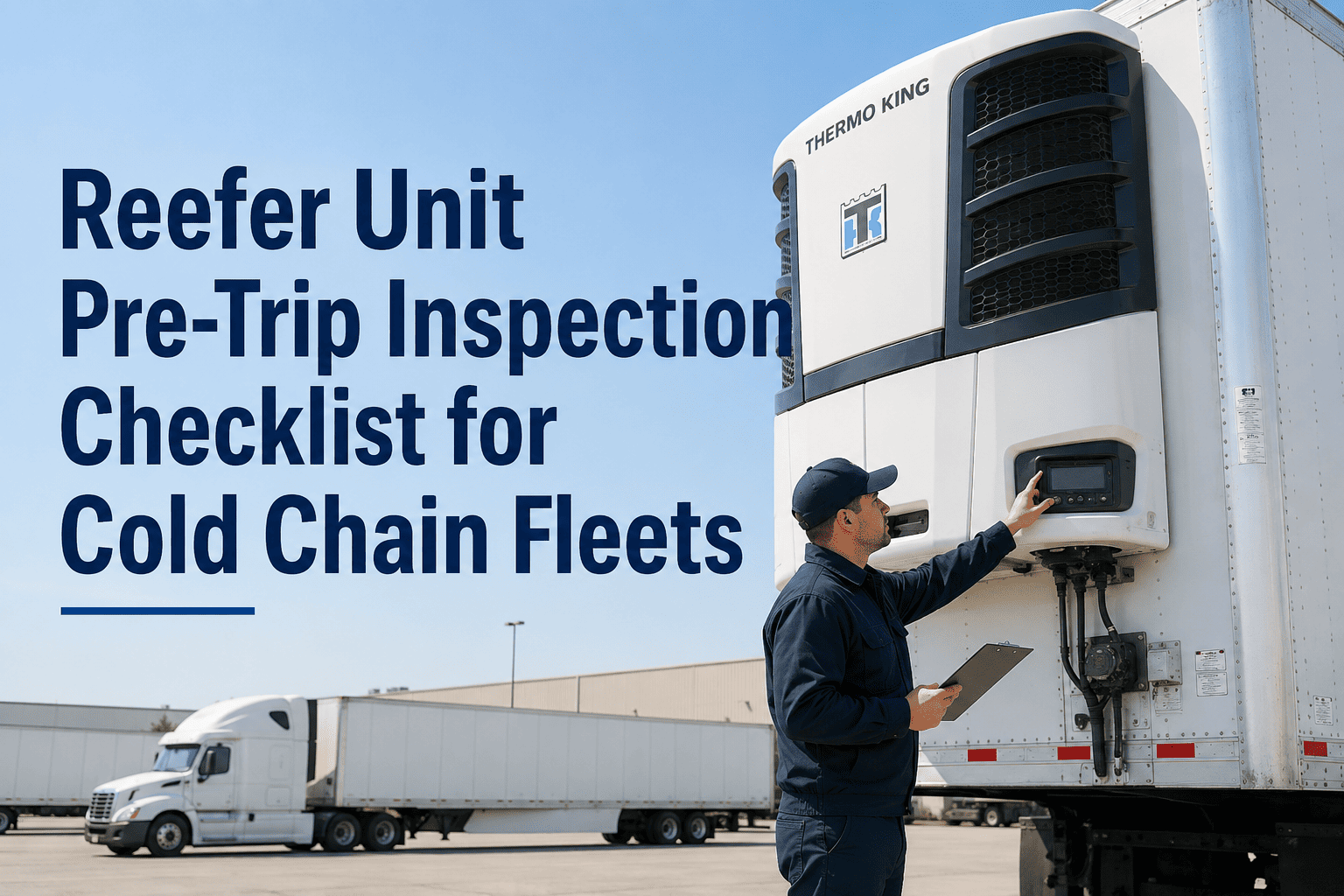
All 14 technicians onboarded to Oxmaint mobile. Digital work orders replaced paper checklists fleet-wide. Pre-trip inspection checklists digitised with reefer-specific items: condenser condition, door seal integrity, temperature setpoint verification, and refrigerant sight-glass check. PM compliance rose from 28% to 81% within 30 days.
Fault-to-response time dropped from 3.8 hours to 19 minutes via reefer controller OBD auto-dispatch
Days 61–90
AI Interval Optimisation + Compliance Documentation
Oxmaint AI activated on compressor run-hour data and failure history. Dynamic intervals deployed per unit — 38 high-utilisation units moved to monthly condenser service, 74 lower-utilisation units moved to extended intervals. FDA-compliant maintenance records generated automatically per work order completion.
Emergency refrigerant recharge events dropped 67% in month 3 as predictive refrigerant monitoring replaced reactive response
Months 4–14
99.2% Uptime Achieved — Full Cold-Chain Reliability
PM compliance held at 96%+. Mid-route reefer failures dropped from 47 per year to 4. Cold-chain incident costs reduced from $1.9M to $420K. First FDA audit post-deployment: zero documentation deficiencies. Lifecycle analytics identified 11 reefer units past economic repair threshold — replacement avoided $180,000 in compressor rebuilds.
Unplanned reefer repair rate dropped from 72% to 11% — cold-chain incidents reduced by 78% year over year
Where the $1.48M Came From — Cost Reduction by Category
99.2%
Reefer unit uptime achieved
78%
Cold-chain incident reduction
96%
PM compliance at month 6
0
FDA audit deficiencies post-deployment
Before Oxmaint, we were discovering reefer problems when a driver called from a truck stop at 2am with a load of condemned product. Now we know about a compressor anomaly before the truck leaves the yard. We went from 47 mid-route failures a year to 4. The FDA audit that used to take us three weeks to prepare for took three hours. Oxmaint paid for itself in the first condemned cargo claim it prevented.
— Operations Director, 180-vehicle Refrigerated Logistics Fleet, Pacific Northwest · Oxmaint customer since 2021
Refrigerated Fleet Case Study — Oxmaint
Same Reefer Units. Same Routes. Zero Mid-Route Cold-Chain Failures.
The Pacific Northwest fleet didn't replace their refrigeration equipment. They replaced their maintenance visibility. Oxmaint delivers reefer fault monitoring, predictive PM scheduling, and FDA-compliant documentation from day one of deployment.
Frequently Asked Questions
Refrigerated Fleet CMMS — Oxmaint
99.2% Reefer Uptime. Starting in 90 Days.