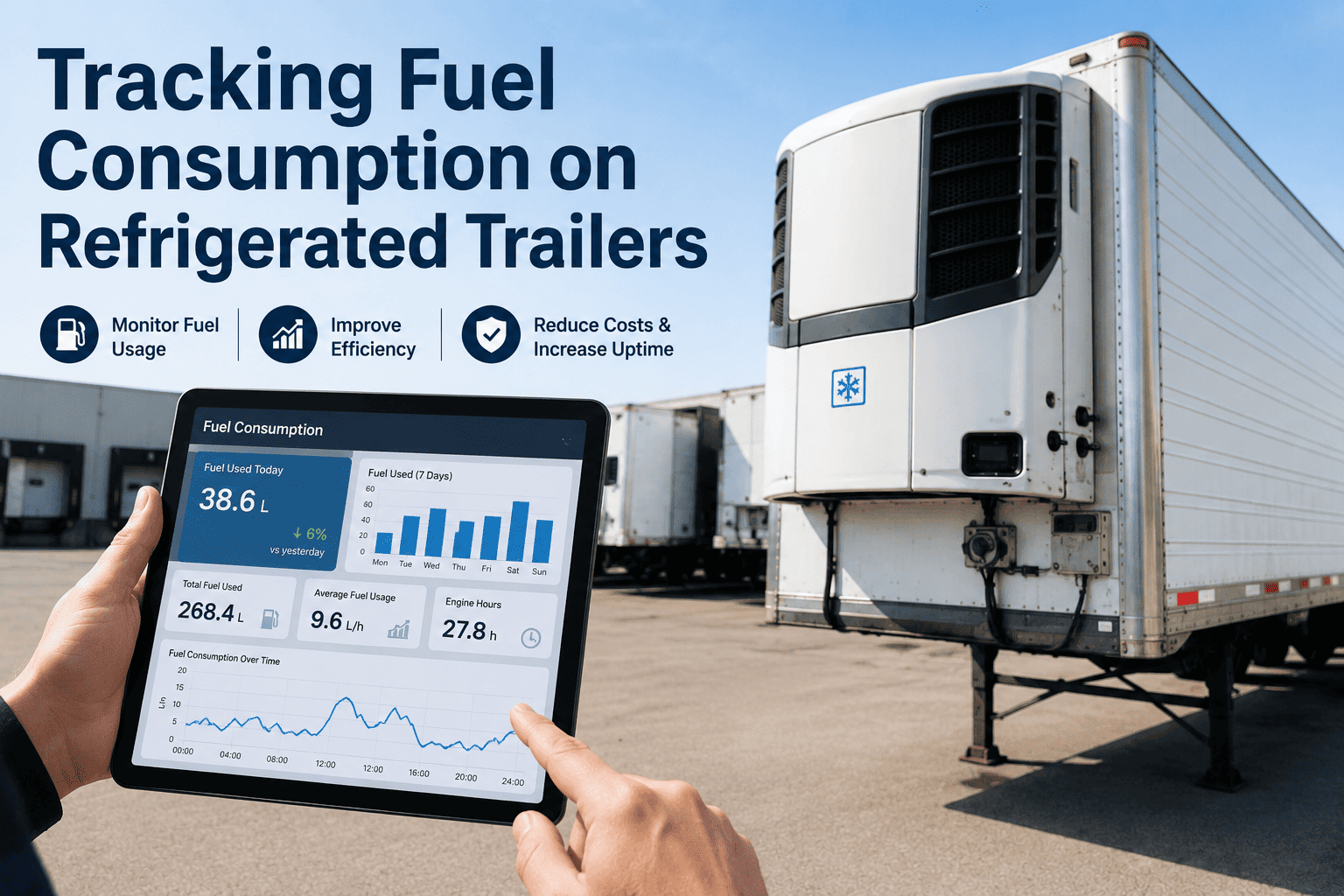
Reefer fuel is the most overlooked expense in refrigerated trucking because it doesn't move when the tractor moves. A refrigeration unit burns diesel independently of the truck's engine, and most fleets have no visibility into which trailers are running efficiently and which ones are quietly draining the budget. Depending on the unit's age, the setpoint, and how often dock doors open, a single reefer can burn anywhere from 0.4 to 1.5 gallons of diesel every hour it runs, whether the tractor is on the highway or parked overnight at a warehouse. Multiply that across a mixed fleet of frozen and chilled trailers running 18 to 24 hours a day, and small inefficiencies turn into thousands of dollars a month. Most operations only discover a problem once a reefer runs dry mid-route or a load gets rejected for a temperature failure. A platform like OxMaint tracks reefer runtime and fuel burn the same way it tracks tractor fuel, so the losses surface before they become spoiled freight.
Tracking Fuel Consumption on Refrigerated Trailers
See exactly how much diesel every reefer unit burns, hour by hour, and catch the losses that never show up on a mileage report.
Why Reefer Fuel Doesn't Behave Like Tractor Fuel
Tractor diesel and reefer diesel are chemically similar, but they are consumed, taxed, and tracked in completely different ways. Treating them as one fuel line is the fastest way to lose visibility into where the money actually goes.
See every reefer's fuel burn in one dashboard
OxMaint tracks reefer runtime, fuel level, and consumption rate separately from tractor fuel, so you know exactly which trailers are costing you the most.
5 Factors That Push Reefer Fuel Consumption Higher
Two identical trailers running the same route can burn very different amounts of reefer fuel. These five variables explain most of the gap between an efficient unit and an expensive one.
Continuous mode runs the compressor nonstop and is required for frozen loads, consuming fuel at the top of the range. Start-stop mode cycles the unit on and off around the setpoint, which is suited to chilled freight and can cut consumption significantly over the same run.
A reefer working to hold a setpoint against a 100-degree afternoon burns noticeably more diesel per hour than the same unit on a mild spring day. Older units under sustained heat can climb toward 2 to 3 gallons an hour.
Every dock stop lets warm air into the trailer, and the unit has to work harder to pull the interior back down to setpoint. Multi-stop routes with frequent door openings quietly add runtime hours that never show up in a mileage log.
Older reefer units commonly burn 1 to 3 gallons per hour, while newer, well-maintained units run closer to 0.4 to 1.1. Dirty filters, worn compressors, and skipped service intervals push older units toward the high end of that range.
Damaged door seals, worn floor panels, or degraded wall insulation let cold air escape constantly. The refrigeration unit compensates by running longer to hold temperature, burning extra fuel that has nothing to do with the load itself.
Estimate Your Reefer Fuel Cost by Operating Mode
Use this reference table to see how operating mode and unit condition translate into daily, monthly, and annual reefer fuel cost for a single trailer running roughly 20 hours a day.
| Operating Mode | Fuel Burn Rate | Daily Consumption | Monthly Cost (est.) | Annual Cost (est.) |
|---|---|---|---|---|
| Modern Unit, Start-Stop | 0.4–0.6 gal/hr | 8–12 gal | $850–$1,400 | $10,200–$16,800 |
| Modern Unit, Continuous | 0.7–1.1 gal/hr | 14–22 gal | $1,450–$2,550 | $17,400–$30,600 |
| Older Unit, Standard Load | 1–2 gal/hr | 20–40 gal | $2,100–$4,600 | $25,200–$55,200 |
| Older Unit, Extreme Temp | 2–3 gal/hr | 40–60 gal | $4,600–$6,900 | $55,200–$82,800 |
Estimates assume roughly 20 hours of daily reefer runtime and reefer fuel priced near $3.50 to $4.00 per gallon. Actual costs vary by region, unit model, and load type.
Turn reefer runtime into a real cost report
Connect fuel sensors and telematics to OxMaint and get a per-trailer breakdown of runtime hours, fuel burned, and cost per load, automatically.
5 Data Points Reefer Fuel Tracking Should Monitor
Fuel receipts alone won't tell you which reefer is losing money. These are the signals that separate a trailer running normally from one that needs attention today.
Compare logged engine run-time hours against gallons consumed. A spike in fuel use without a matching increase in runtime hours points to a leak or a siphoning event.
Ultrasonic fuel sensors report tank level in real time, so a trailer never runs dry mid-route and an overnight drop in fuel level triggers an immediate alert.
Track outside temperature against burn rate to catch a unit working harder than its own baseline for the same conditions, a common early sign of mechanical wear.
Flag refuel transactions that don't match the reefer's actual GPS position at the time of purchase, the same location-mismatch pattern that exposes tractor fuel theft.
Benchmark every reefer's gallons-per-hour against the fleet average for similar routes and loads to spot the one unit quietly costing more than the rest.
Frequently Asked Questions
How much fuel does a reefer trailer use per hour?
How is reefer fuel tracking different from tractor fuel tracking?
Can I track reefer fuel level in real time?
Why does my reefer burn more fuel in summer?
How do I know if a reefer is losing fuel to theft or a leak?
Bring reefer fuel tracking into one platform
Connect tank sensors, telematics, and maintenance records so every trailer's runtime hours, fuel burn, and cost per load are visible in one place, not scattered across paper logs.





.png)