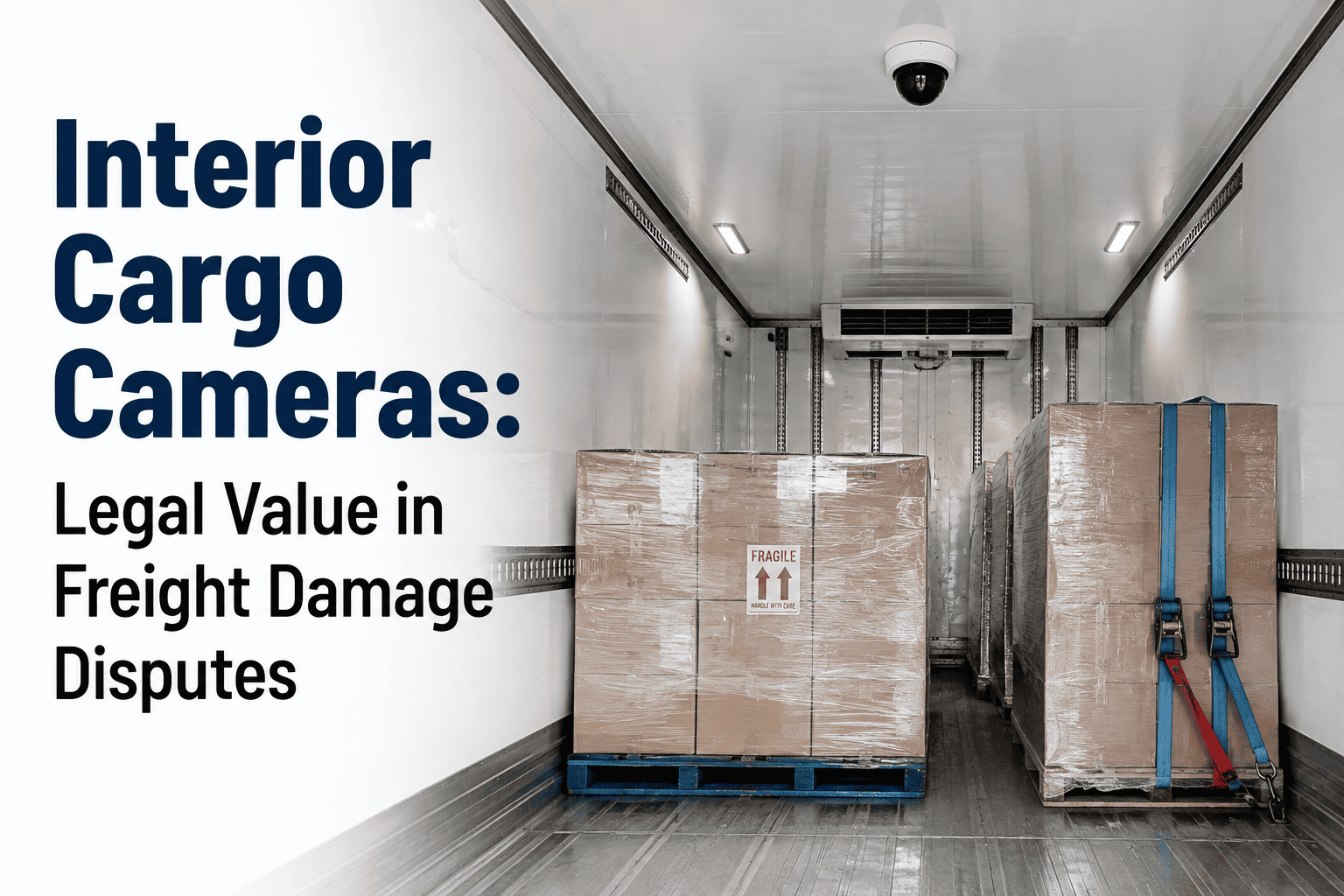
A shipper claims the load arrived damaged and wants the carrier to pay. The carrier insists the freight was secured properly and that something must have happened after handoff. Without a camera pointed at the actual cargo, this argument comes down to two conflicting stories and whichever paperwork looks slightly more convincing — and freight claims decided that way tend to go against the carrier by default, since the burden of proof usually sits with whoever was hauling the load. Interior trailer cameras change that dynamic entirely, because they record the one thing neither side can argue with: what the cargo actually did during transit, from the moment the doors closed to the moment they opened again. This guide breaks down what interior cargo cameras actually capture, how that footage holds up when a damage dispute goes to review, and which setup makes sense depending on your trailer type and claim history. For a look at how footage-backed claim data flows straight into your maintenance and dispatch records, you can start a free trial today.
Why Freight Damage Disputes Default to a He-Said, She-Said
Cargo damage rarely happens in front of a witness. It happens somewhere between pickup and delivery, often during a hard brake, a sharp turn, or hours of accumulated vibration on a long haul that nobody was watching in real time. By the time the trailer doors open at the destination, all anyone has to go on is the condition of the freight and a set of assumptions about when the damage occurred. Photos taken at delivery capture the aftermath, but they say nothing about the sequence of events that led up to it, which is exactly the information a damage dispute actually needs.
That gap is exactly where disputes live. A shipper assumes the damage happened in transit because that's the last time they had visibility into the load. A carrier assumes it happened during loading, since they didn't touch the freight again after departure. Both positions are reasonable, and both are unprovable without a record of what the cargo was actually doing during the trip — which is the specific gap an interior camera is built to close.
Three Things an Interior Camera Actually Records
Comparing Interior Cargo Camera Setups
| Setup | Best For | Storage | Typical Trade-off |
|---|---|---|---|
| Single rear-mounted camera | Short-haul, smaller trailers | Onboard SD card | Limited view of freight near the front wall |
| Dual front-and-rear cameras | Full 53-foot dry vans | Onboard with cloud backup | Higher upfront hardware cost |
| Motion-triggered recording | Long-haul, storage-limited setups | Rolling local storage | Only captures footage around triggered events |
| Continuous cloud-connected | High-value or high-claim freight | Live cloud streaming | Requires reliable cellular coverage on route |
What an Unresolved Damage Claim Actually Costs a Carrier
The dollar amount on the claim itself is usually only part of the real cost. A disputed claim also ties up dispatch and accounting time gathering paperwork, delays payment on the load in question, and in repeated cases can affect insurance premiums or shipper relationships that took years to build. A carrier that settles the same category of dispute three or four times in a year often pays more in accumulated administrative time than the value of the freight ever in question. That hidden cost rarely shows up as a single line item, which is part of why it goes unaddressed for so long — it's spread across dispatcher hours, accounting follow-up, and the slow erosion of trust with a shipper who starts routing sensitive freight elsewhere.
Interior footage doesn't just help win an individual dispute — it changes the pattern entirely. Once shippers and brokers know a fleet consistently records the interior of every load, disputes over unclear damage tend to drop sharply on their own, simply because both sides know the footage exists and would settle the question quickly if pulled.
Other Ways Fleets Put Interior Footage to Work
Does This Footage Actually Hold Up in a Damage Dispute?
Interior cargo footage is treated the same way any other business record is treated in a freight claim review: it needs a clear timestamp, an unbroken chain of custody from recording to review, and confirmation that the footage hasn't been edited or selectively clipped. Camera systems that log continuous, timestamped video directly to a secured storage location — rather than footage that gets manually pulled and re-saved by whoever is handling the claim — hold up far better under scrutiny.
The practical value shows up well before any formal review happens, though. In most disputes, simply having the footage available changes the conversation. A shipper reviewing clear, timestamped video of a properly loaded and undisturbed trailer tends to drop a claim rather than pursue it further, because the alternative explanation for the damage becomes obvious once the transit period is accounted for on video. That shift in tone, from accusation to quick review, is often the biggest practical benefit of the system, well before any claim reaches a formal dispute process.
What to Check Before Installing a Camera System
How to Roll Out Cameras Without Slowing Down the Fleet
Fleets that try to install cameras across every trailer at once often stall the project halfway through, simply because coordinating downtime across an entire yard is harder than it looks on paper. A phased rollout tends to work better in practice: start with the trailers running the highest-value or highest-dispute lanes, confirm the footage retrieval workflow actually works end to end for a real claim, and only then expand to the rest of the fleet once the process is proven.
It also helps to loop in whoever handles claims and dispatch before installation day, not after. If the person fielding a shipper's damage complaint doesn't know footage exists or doesn't know how to pull it quickly, the camera system provides no practical benefit no matter how good the hardware is. A short internal walkthrough on where footage lives and how to request it turns the investment into something the team actually uses under pressure, rather than a feature that sits unused until someone remembers it exists during an already stressful dispute.
Pricing conversations with shippers and brokers also shift once cameras are in place consistently. Some carriers use documented interior monitoring as a selling point when bidding on higher-value freight, since shippers moving sensitive or fragile loads are often willing to pay a premium for a carrier that can prove exactly what happened to their freight in transit, and that premium can offset the cost of the camera hardware within a handful of loads.
Interior Cargo Cameras — Frequently Asked Questions
Does interior camera footage actually count as evidence in a freight claim?
How much storage does a typical long-haul trailer camera need?
Can a single camera cover a full 53-foot dry van?
What happens to footage if the trailer loses power mid-route?
Can cargo camera event data be tied to a specific trailer's maintenance record?
What to Look For When Reviewing a Disputed Load
Not every frame of footage is equally useful in a review. The moments that matter most are the load closing at pickup, any door-open events during transit, and the minutes surrounding a hard brake or sharp turn logged by the trailer's telematics, since those are the points most likely to correlate with an actual shift, impact, or unauthorized access. Reviewing the full trip end to end is rarely necessary once those specific windows are identified.
It also helps to cross-reference footage against the trip's route and stop history rather than treating it in isolation. A door-open event that lines up with a scheduled fuel stop tells a very different story than one that occurs at an unplanned location in the middle of the night, and having both pieces of information side by side is usually what turns a review into a clear, defensible answer rather than another point of debate between the shipper and the carrier.