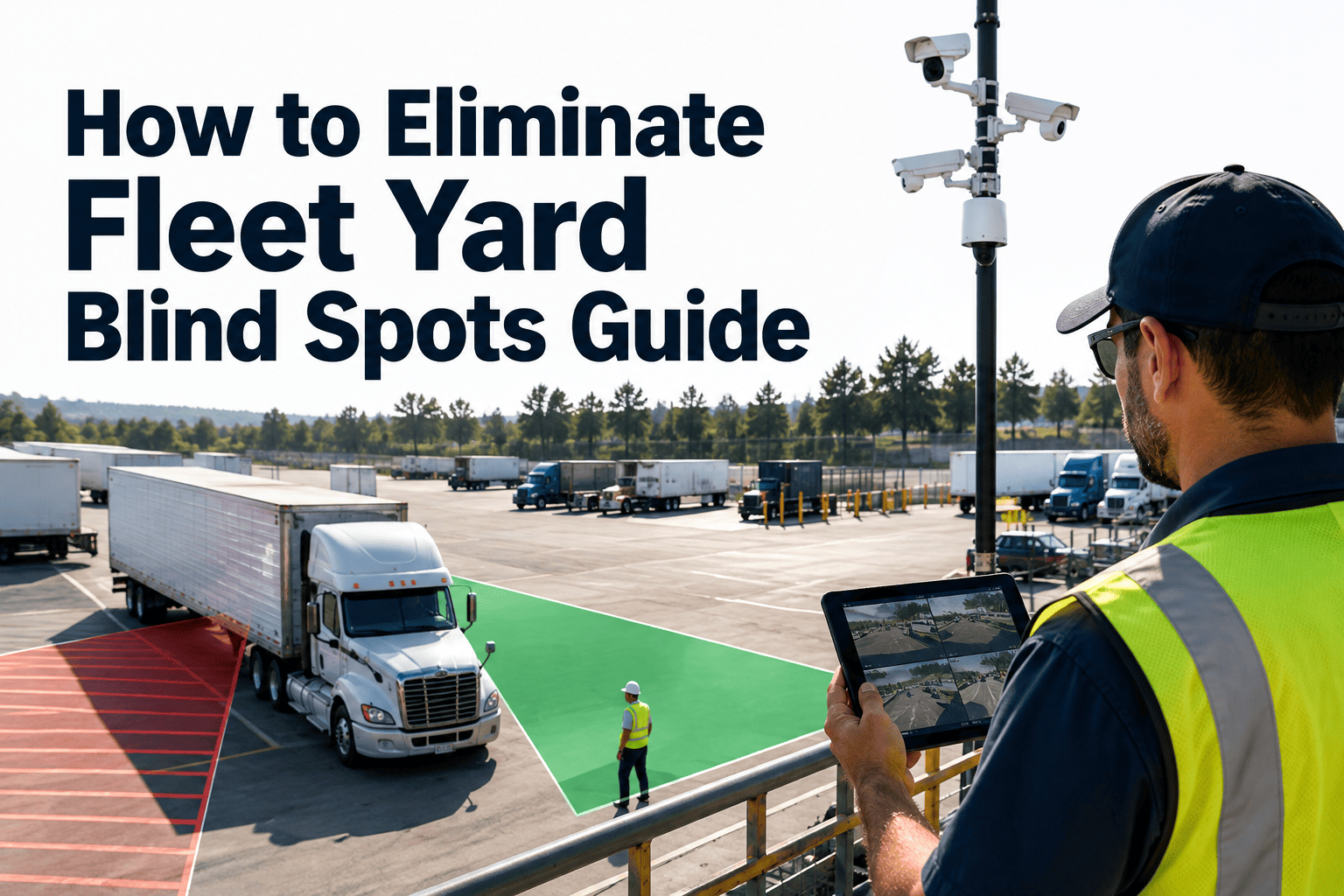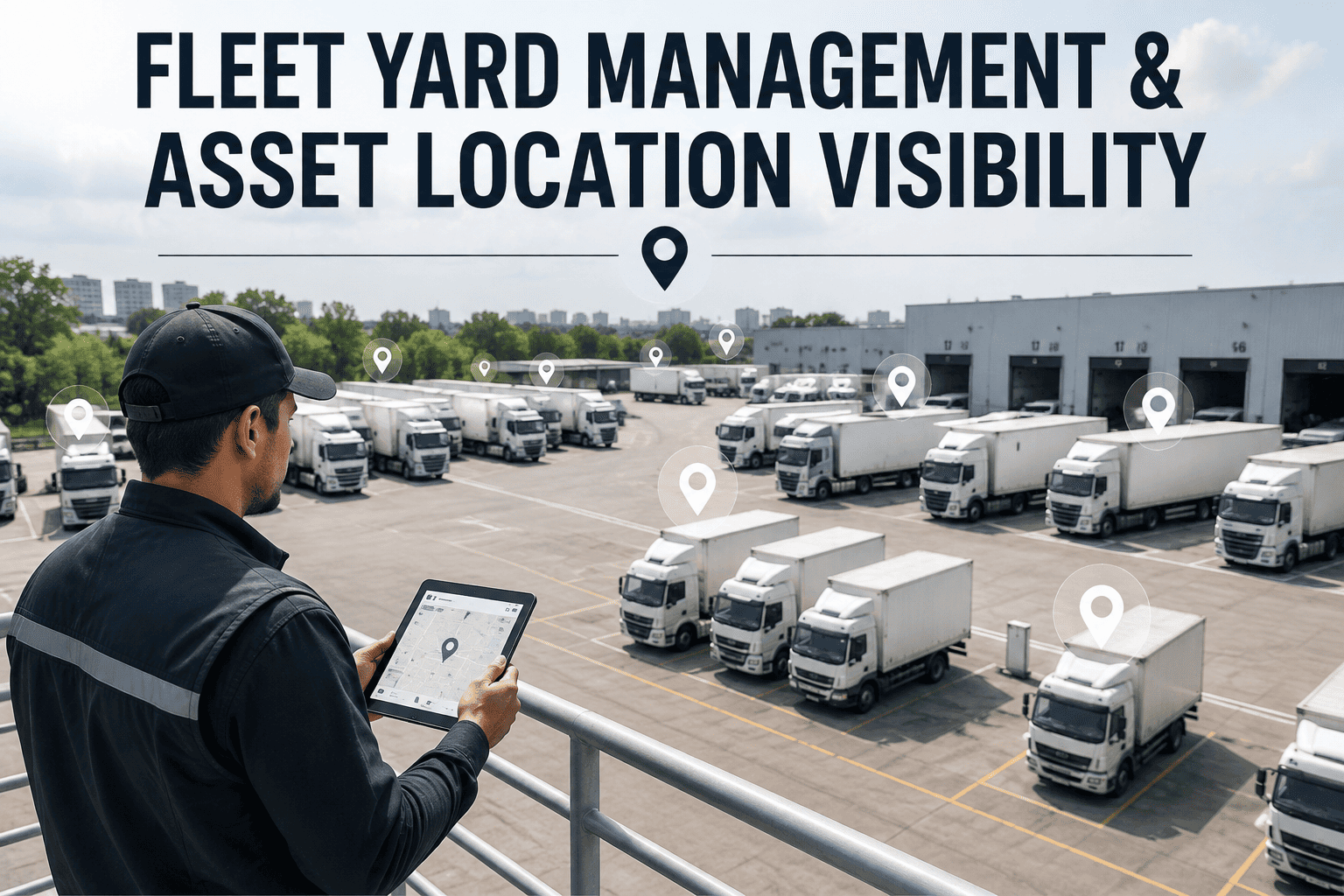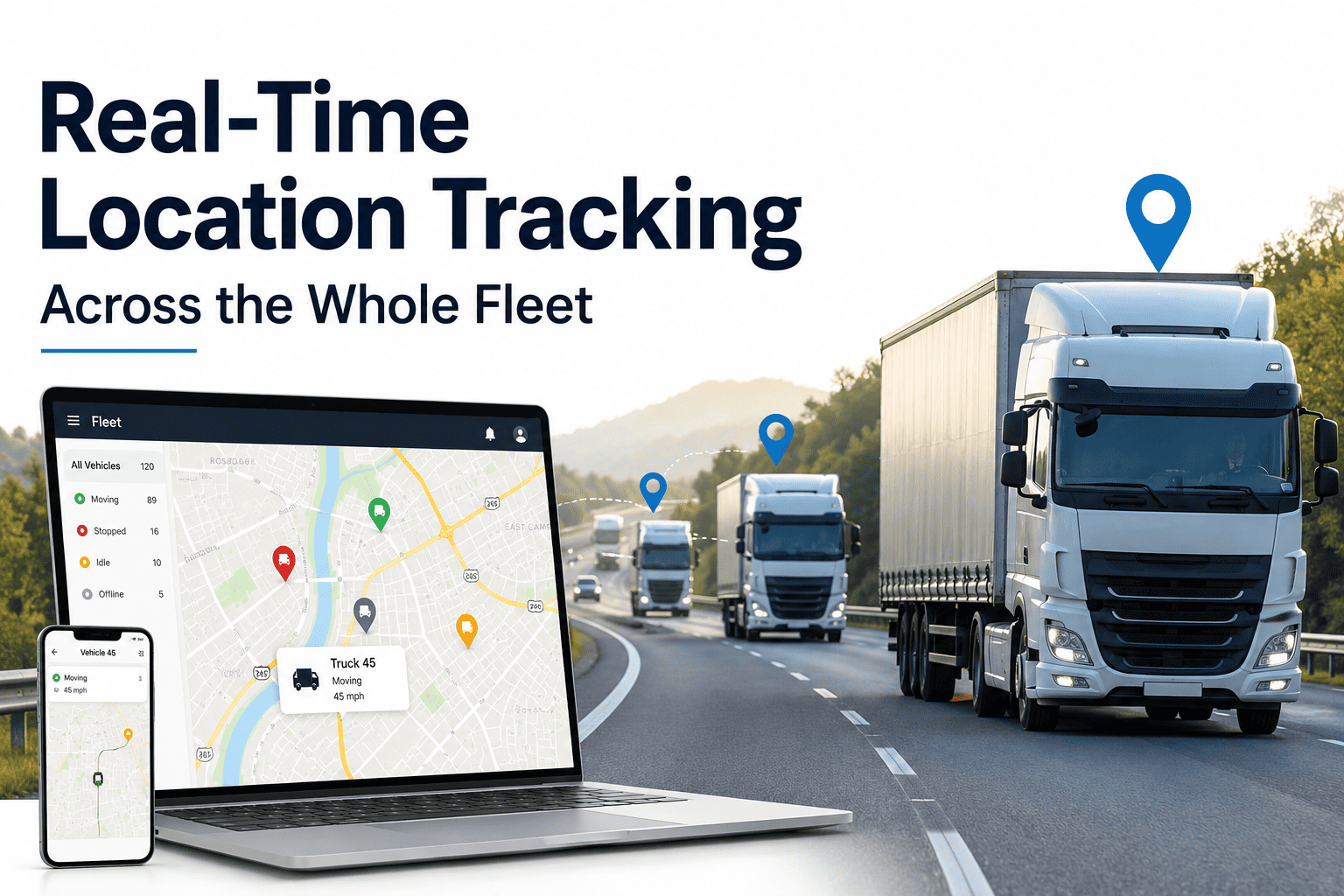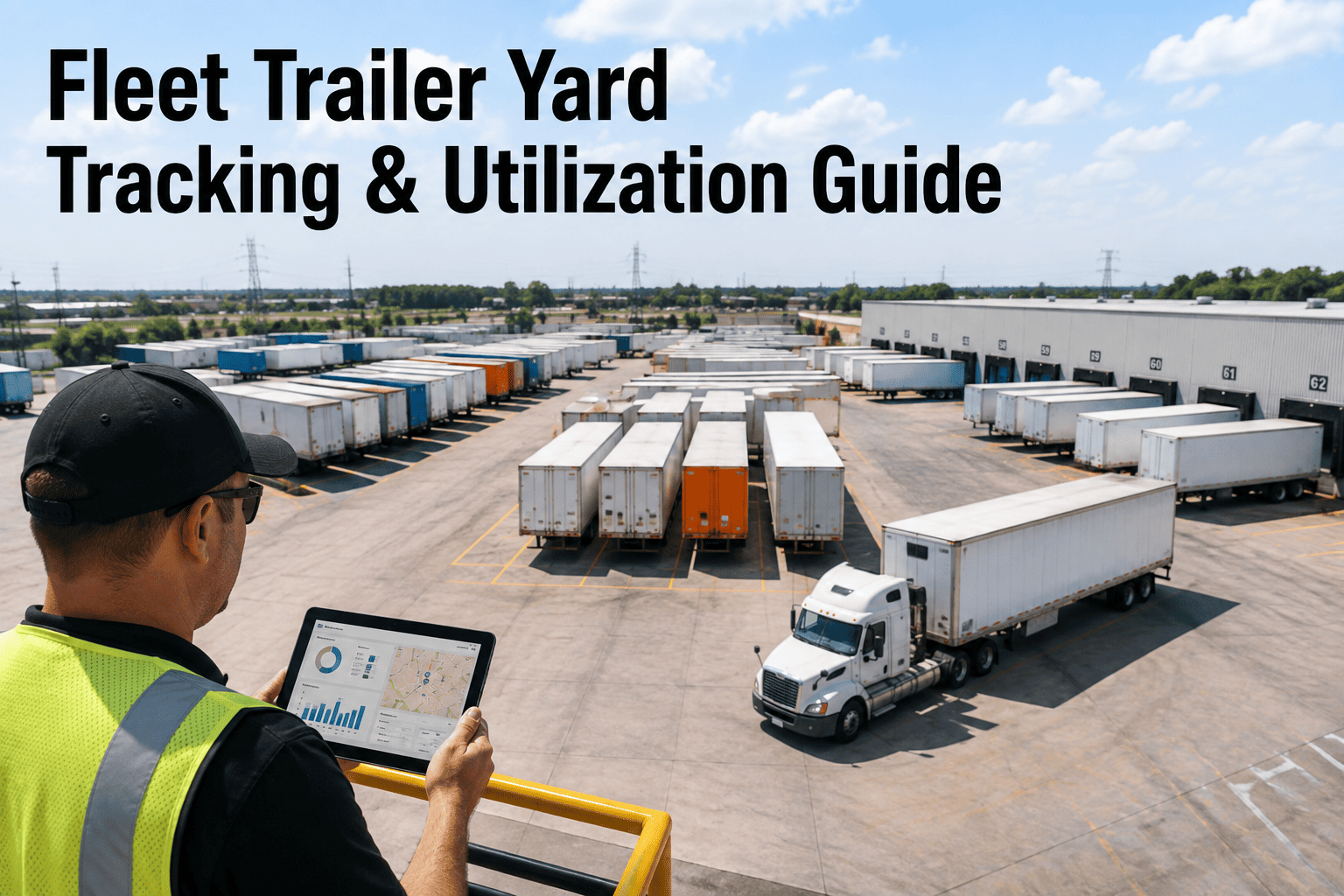
Fleet trailer yard tracking is the practice of knowing, in real time, where every trailer sits in your yard, how long it has been there, and whether it is earning revenue or just consuming space — and it is the single fastest way to recover hidden capacity in a busy fleet operation. Industry yard studies consistently show that 15–30% of trailers in a typical fleet yard are idle, misplaced, or forgotten at any given moment, which means a 200-trailer fleet may be carrying 30–60 units of dead capital. This guide breaks down how trailer yard visibility works, what utilization benchmarks to target, and how a CMMS-driven program turns raw location data into right-sizing decisions worth hundreds of thousands of dollars. If you want to see this running on your own assets, Start Free Trial and connect your first trailers in minutes. By the end, you will have a complete framework for fleet trailer utilization that your operations, maintenance, and finance teams can all act on.
How much trailer capacity is sitting invisible in your yard right now?
Most fleets can answer "how many trailers do we own?" instantly — but not "where are they, how long have they been there, and which ones earned revenue this week?" That gap is where capital goes to die.
What poor trailer yard visibility actually costs a fleet
A single dry van trailer costs $30,000–$45,000 new and roughly $400–$700 per month to own when you factor depreciation, insurance, registration, and parking. Every trailer that sits untracked for 30+ days is a direct hit to margin — and most fleets underestimate their idle count by half.
Worked example: A regional carrier running 180 trailers discovers through trailer yard tracking that 41 units (23%) have dwelled over 21 days. At $550/month carrying cost each, that is $270,600 per year in idle capital. Right-sizing by selling or leasing out just 25 of those units frees roughly $165,000 annually — before counting the recovered yard space and reduced shunt labor.
The 4 building blocks of fleet trailer yard tracking
Effective yard trailer tracking for fleets is not a single technology — it is four disciplines working together. Miss any one of them and the data stops being trustworthy within a quarter.
Real-time location (GPS / telematics / geofence)
Battery-powered GPS trackers or solar units on each trailer, paired with a geofenced yard map, give you trailer yard location visibility down to the parking row. Modern trackers report every 5–15 minutes in motion and on movement events when parked, with 5–7 year battery life.
Dwell time analysis
Location alone is not utilization. Dwell analysis timestamps every arrival and departure, flagging trailers that exceed your threshold (commonly 7, 14, and 21 days). This is where fleet trailer utilization yard decisions actually come from.
Utilization analytics
Miles per trailer per month, loaded vs. empty ratio, and turns per week convert raw pings into a utilization score per unit. Best-in-class fleets run 75–85% trailer utilization; the industry average sits near 60%.
CMMS integration — where data becomes action
A trailer flagged as long-dwell or fault-reported should automatically generate an inspection or maintenance work order. This is the step most tracking-only tools miss, and it is exactly where a CMMS like OxMaint closes the loop.
Trailer yard utilization KPIs every fleet should track
You cannot right-size a fleet on gut feel. These six metrics form the dashboard of a mature fleet yard trailer tracking program — review them weekly, act on them monthly.
| KPI | How to calculate | Healthy target | Red flag |
|---|---|---|---|
| Trailer utilization rate | Days in revenue service ÷ total days available | 75–85% | Below 60% |
| Average dwell time | Total parked hours ÷ number of yard stays | Under 48 hours | Over 5 days |
| Long-dwell count | Trailers stationary 21+ days | Under 5% of fleet | Over 15% of fleet |
| Search time per move | Minutes to locate a requested trailer | Under 5 minutes | Over 20 minutes |
| Trailer-to-tractor ratio | Active trailers ÷ active power units | 2.5–3.0 (drop-and-hook) | Above 3.5 sustained |
| PM compliance | Trailers current on FMCSA annual inspection | 100% | Any overdue unit |
FMCSA requires an annual periodic inspection on every trailer (49 CFR 396.17). Long-dwell trailers are the ones most likely to slip past that date — a compliance exposure that trailer yard visibility eliminates automatically.
How to roll out trailer yard tracking in 90 days
Fleets that try to instrument everything at once stall. A phased 90-day rollout gets you from zero visibility to data-driven right-sizing without disrupting dispatch.
Baseline the yard
Physical audit: count every trailer, record location, condition, and last move date. Most fleets find 3–8% of units on the books that nobody can immediately locate. Set your dwell thresholds (7/14/21 days).
Instrument and geofence
Install trackers (15–20 minutes per trailer), draw geofences around yards, customer sites, and drop lots. Register every trailer as an asset in your CMMS with VIN, plate, inspection dates, and PM schedule.
Automate the workflows
Configure rules: long-dwell trailer triggers an inspection work order; fault code triggers a repair ticket; inspection due in 30 days triggers a PM reminder. This is where fleet trailer yard visibility becomes self-sustaining.
First right-sizing review
Pull the first utilization report. Identify the bottom 10% of trailers by usage and decide: redeploy, lease out, sell, or scrap. Present the carrying-cost math to finance — this review typically pays for the entire program.
Turn trailer yard data into decisions with OxMaint
Tracking hardware tells you where a trailer is. OxMaint tells you what to do about it — connecting yard trailer tracking data to work orders, PM schedules, and utilization analytics in one platform.
Every trailer as a tracked asset
Register each unit with full spec, VIN, registration, and inspection history. QR-code check-in lets drivers and yard jockeys pull up a trailer's record from any phone — ending the clipboard hunt for good.
Outcome: 100% asset registry accuracy in week oneDwell-triggered work orders
When a trailer crosses your dwell threshold, OxMaint auto-generates an inspection task so idle units get checked for tires, brakes, and lights before they return to service — not after a roadside violation.
Outcome: zero overdue FMCSA annual inspectionsUtilization & cost-per-trailer analytics
Dashboards rank every trailer by usage, maintenance cost, and downtime, so right-sizing debates end with a report instead of an argument. Export straight into your fleet budget review.
Outcome: typical fleets identify 10–20% excess capacityPreventive maintenance on autopilot
Time-, mileage-, or utilization-based PM schedules keep every trailer roadworthy. Spare-parts inventory ties tires, gladhands, and ABS parts to the units that need them, cutting emergency purchases.
Outcome: 30–50% less unplanned trailer downtimeSee your yard the way OxMaint sees it
Book a 30-minute demo and we will walk through trailer tracking, dwell alerts, and utilization dashboards using your own fleet scenario.
Fleet trailer yard tracking FAQs
What is fleet trailer yard tracking?
Fleet trailer yard tracking is the use of GPS or telematics devices, geofenced yard maps, and software to monitor where every trailer is located, how long it has been stationary, and whether it is available, loaded, or due for maintenance. It replaces manual yard checks and spreadsheets with real-time visibility.
How do you measure trailer utilization in a yard?
Divide days in revenue service by total days available — a healthy fleet runs 75–85%. Supporting metrics include average dwell time (target under 48 hours), long-dwell count (trailers parked 21+ days), and turns per week. OxMaint calculates these automatically once trailers are registered as assets.
What does a trailer tracking system cost per unit?
Battery GPS trackers typically run $50–$150 per unit hardware plus $5–$15 per month for connectivity; solar units cost more upfront but need no battery swaps. With idle trailers carrying $400–$700 per month in ownership costs, finding even one excess unit usually pays for a year of tracking across the whole yard. Book a Demo to model the ROI for your fleet size.
Can trailer yard tracking help with FMCSA compliance?
Yes. Long-dwell trailers are the units most likely to miss the FMCSA annual periodic inspection required under 49 CFR 396.17. When dwell alerts feed directly into a CMMS, inspection work orders are generated before deadlines pass, keeping every trailer audit-ready with a documented history.
How long does it take to set up trailer yard tracking?
A phased rollout takes about 90 days: two weeks to baseline the yard, a month to install trackers and geofence locations, and a month to automate workflows and run your first utilization review. Tracker installation itself is fast — roughly 15–20 minutes per trailer with no wiring on most units.
Stop paying for trailers you cannot see
Put every trailer on the map, automate dwell and inspection alerts, and right-size your fleet with real utilization data — all inside OxMaint.
Free 14-day trial · No credit card required · Set up in minutes