
Tires are the second-largest maintenance line item in most commercial fleet budgets — and the one with the most systematic, recoverable waste. The average commercial fleet spends $1,200–$2,400 per vehicle annually on tires, and industry data consistently shows that 25–35% of that spend is preventable through proper pressure management, rotation discipline, tread depth tracking, and timely retread decisions. On a 50-vehicle fleet, that gap represents $15,000–$42,000 in annual recoverable cost — before accounting for the fuel efficiency penalty of under-inflated tires, the accelerated wear from misaligned or unrotated sets, and the accident exposure from operating tires below safe tread depth. CMMS-based tire management platforms like OxMaint address all four cost drivers simultaneously — tracking tire pressure per axle, automating rotation schedule triggers, monitoring tread depth trends, and managing retread qualification — so tire lifecycle decisions are driven by data rather than reactive replacement after visible failure.
Fleet Tire Management: Reducing Costs and Improving Safety with CMMS
CMMS-based tire management reduces fleet tire costs by 20–30% — tracking pressure, rotation intervals, tread depth, retread eligibility, and predictive replacement timing in a single system that eliminates the waste built into reactive tire programs.
The 4 Drivers of Fleet Tire Cost — and Where the Waste Actually Lives
Fleet tire cost waste distributes across four distinct failure modes that compound each other. Under-inflated tires increase rolling resistance and generate heat, accelerating casing wear and increasing fuel consumption simultaneously. Missed rotation intervals produce uneven wear patterns that shorten tire life 20–35% and disqualify otherwise-eligible tires from retread programs. Tread depth monitoring gaps allow tires to operate past optimal replacement points — generating both safety exposure and reduced retread eligibility. And reactive replacement scheduling purchases tires at spot rates rather than planned procurement prices, adding 10–20% to every tire's cost basis.
Tire Pressure Monitoring: The Highest-ROI Tire Management Action
Tire pressure management delivers the fastest return on investment of any fleet tire program component because its benefits compound across three cost lines simultaneously. Every 10 PSI of under-inflation adds approximately 3% fuel consumption from increased rolling resistance, reduces tire life by 8–12% from heat buildup and casing flex fatigue, and increases blowout probability in high-load, high-temperature operating conditions. On a Class 8 tractor-trailer with 18 tires where average under-inflation runs 12–15 PSI — a common finding in fleets without automated TPMS — the combined fuel and tire life penalty can reach $2,800–$4,200 per vehicle per year. OxMaint's TPMS integration reads pressure per axle position from connected sensors, flags out-of-threshold readings automatically, and creates a maintenance work order for inflation correction before the pressure-related wear cycle begins.
Rotation Schedules: Matching Intervals to Axle Load and Route Type
Tire rotation is the maintenance function most frequently deferred in reactive fleet programs — not because it is expensive or difficult, but because there is no visible symptom when a rotation is overdue. The consequence accumulates invisibly over thousands of miles as front tires develop shoulder wear from steering inputs and rear drive tires develop center wear from traction load — producing uneven wear patterns that shorten tire life 20–35% and disqualify casings from retread programs even when they have substantial remaining tread depth. Rotation interval is not one-size-fits-all: a delivery van making 30 stops per day on urban routes needs rotation every 4,000–5,000 miles, while a highway tractor might extend to 8,000–12,000 miles. OxMaint tracks per-vehicle rotation intervals against live odometer data and generates work orders automatically at the correct mileage for each vehicle's specific duty cycle.
Tread Depth Tracking: When to Replace, When to Retread, When to Wait
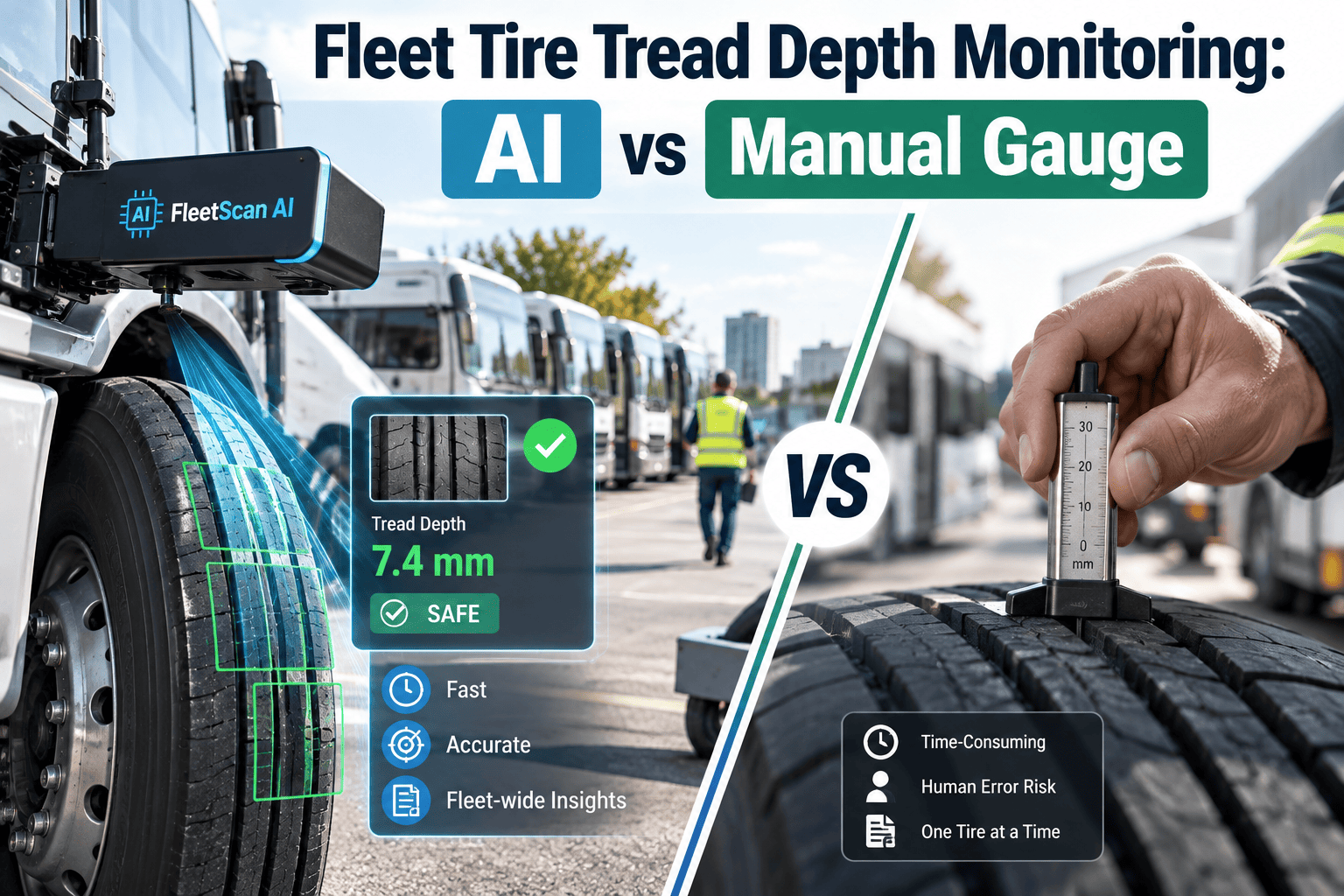
Tread depth management connects routine tire monitoring to the two highest-cost tire program decisions: replacement and retread qualification. The federal minimum tread depth for steering axle tires is 4/32" and 2/32" for all other positions — but these are legal minimums, not fleet operating standards. Most commercial fleet programs should pull steering axle tires at 4/32" and all other positions at 3/32" for safety margin, and evaluate retread eligibility before those thresholds are reached — because a tire worn to the legal limit has often sustained casing damage that disqualifies it from retreading. Systematic tread depth tracking per tire per vehicle creates the data layer that enables accurate retread eligibility decisions.
Retread Programs: The Most Underused Fleet Tire Cost Lever
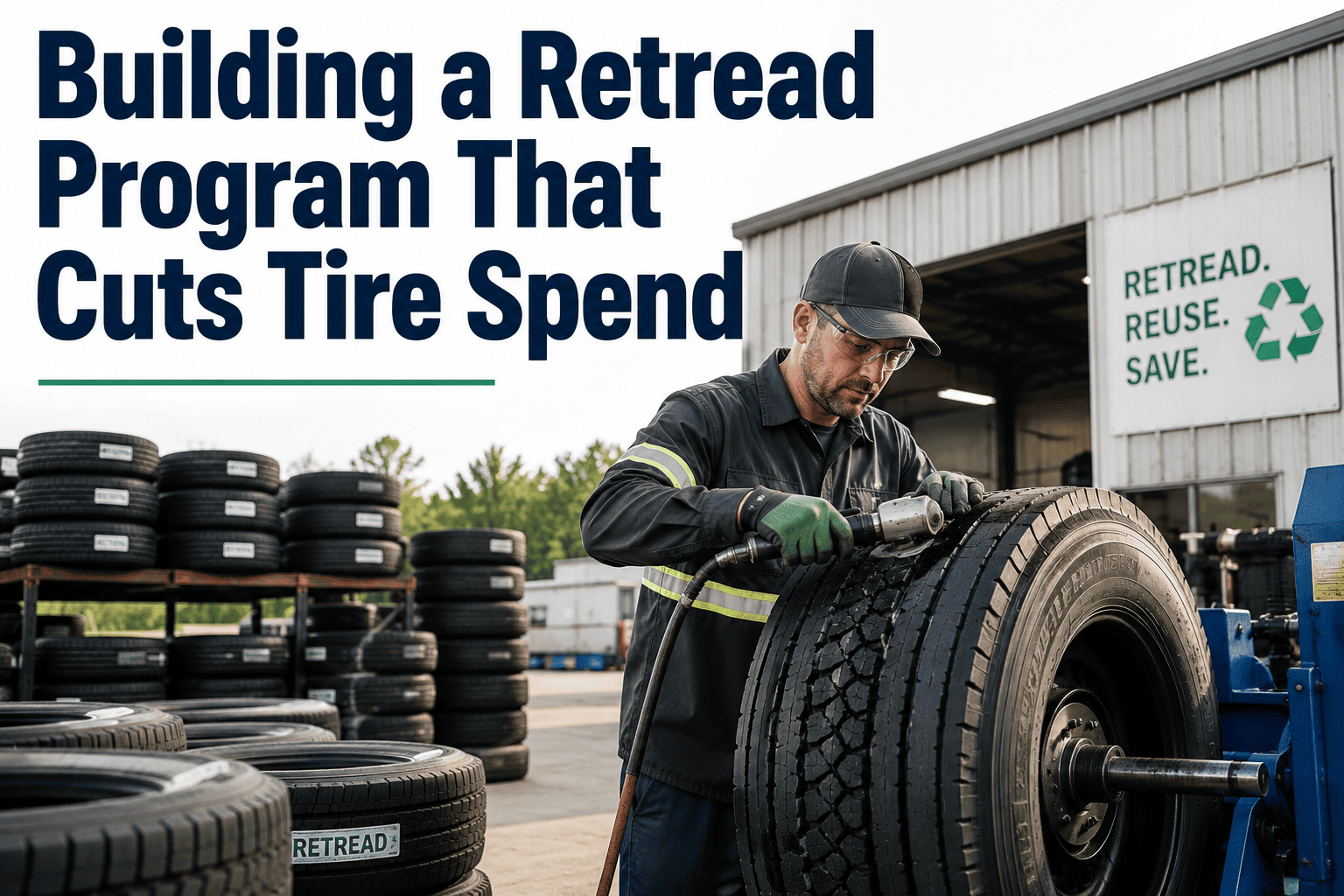
Commercial tire retreading is one of the highest-ROI fleet cost reduction strategies available — and one of the most consistently underimplemented. A quality retreaded tire costs 40–60% less than an equivalent new tire and delivers comparable service life on appropriate applications. For a Class 8 fleet averaging $600–$800 per new drive-position tire, a retread costs $175–$280 — a saving of $320–$520 per tire position, per replacement cycle. On a tractor with 10 retread-eligible positions replaced every 18–24 months, the annual saving per unit is $2,600–$4,300 versus all-new replacement. The critical operational requirement is casing management — the fleet must track each tire's service history, rotation record, and inspection status continuously to maximize the number of tires reaching retread eligibility in qualification condition.
CMMS Tire Tracking: How OxMaint Manages the Full Tire Lifecycle
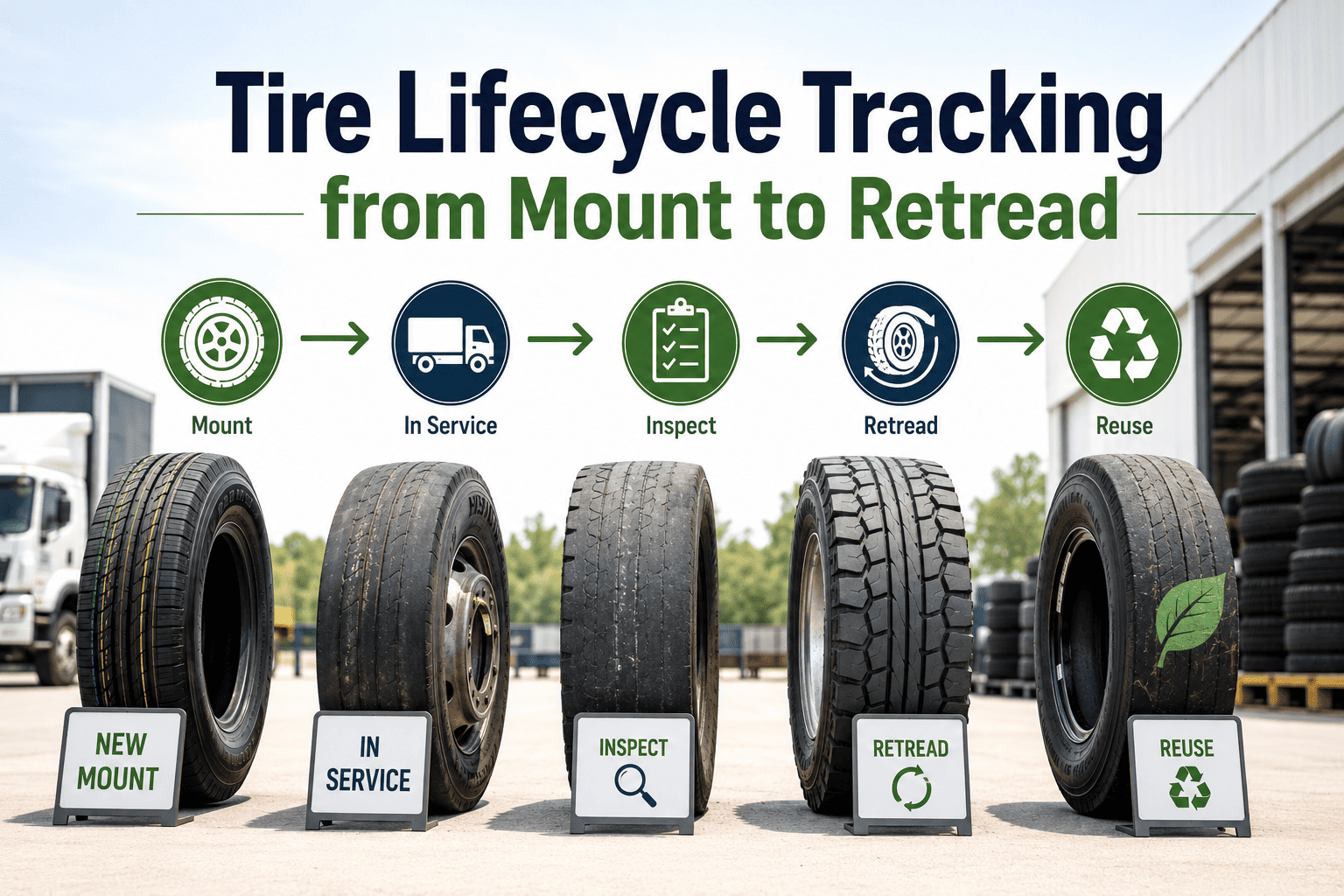
The operational challenge in fleet tire management is not knowing what the right intervals and thresholds are — it is tracking compliance against them across a fleet of 30, 100, or 500 vehicles without a system that maintains state per tire position per vehicle continuously. Manual tire tracking fails at scale for the same reason manual PM scheduling fails: the gaps between updates are where the wear, waste, and safety exposure accumulate. OxMaint's CMMS tire management module maintains a digital tire record per position per vehicle — tracking installation date, mileage at installation, rotation history, tread depth readings, pressure check results, and retread eligibility status — updated automatically from telematics odometer data and manually from technician inspection entries.
Track Every Tire, Every Position, Every Mile — Automatically
OxMaint's CMMS tire management tracks pressure, rotation intervals, tread depth, and retread eligibility per position per vehicle — eliminating the waste built into reactive tire programs. Free to start.
Reactive vs. CMMS-Managed Tire Program: The Operational Comparison
Frequently Asked Questions
$750–$1,340 Per Vehicle in Recoverable Tire Waste. OxMaint Recovers It.
OxMaint's CMMS tire management automates pressure alerts, rotation scheduling, tread depth trending, and retread eligibility tracking — eliminating every source of fleet tire waste in a single platform. Free to start. No hardware required.
-for-commercial-fleets.png)


