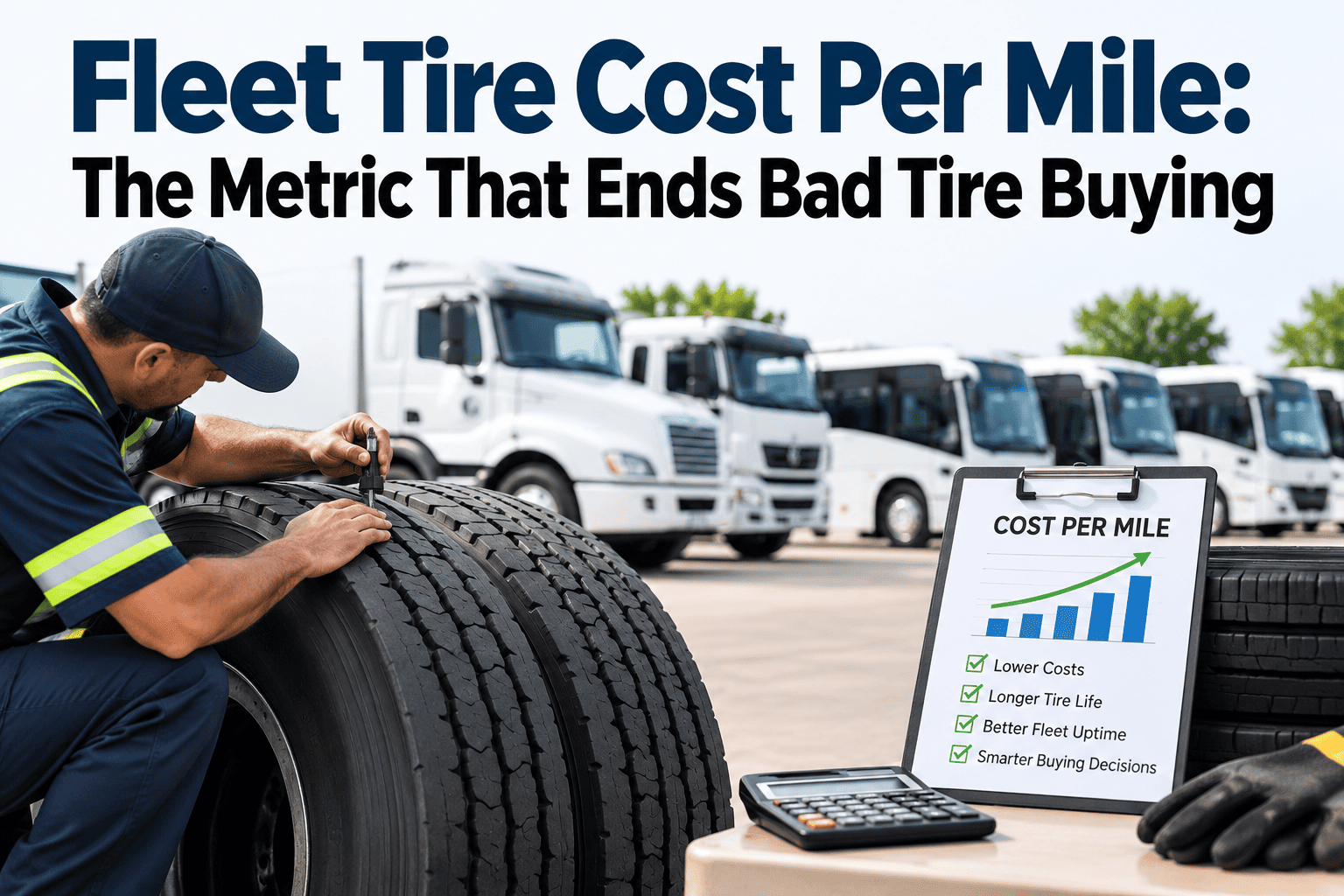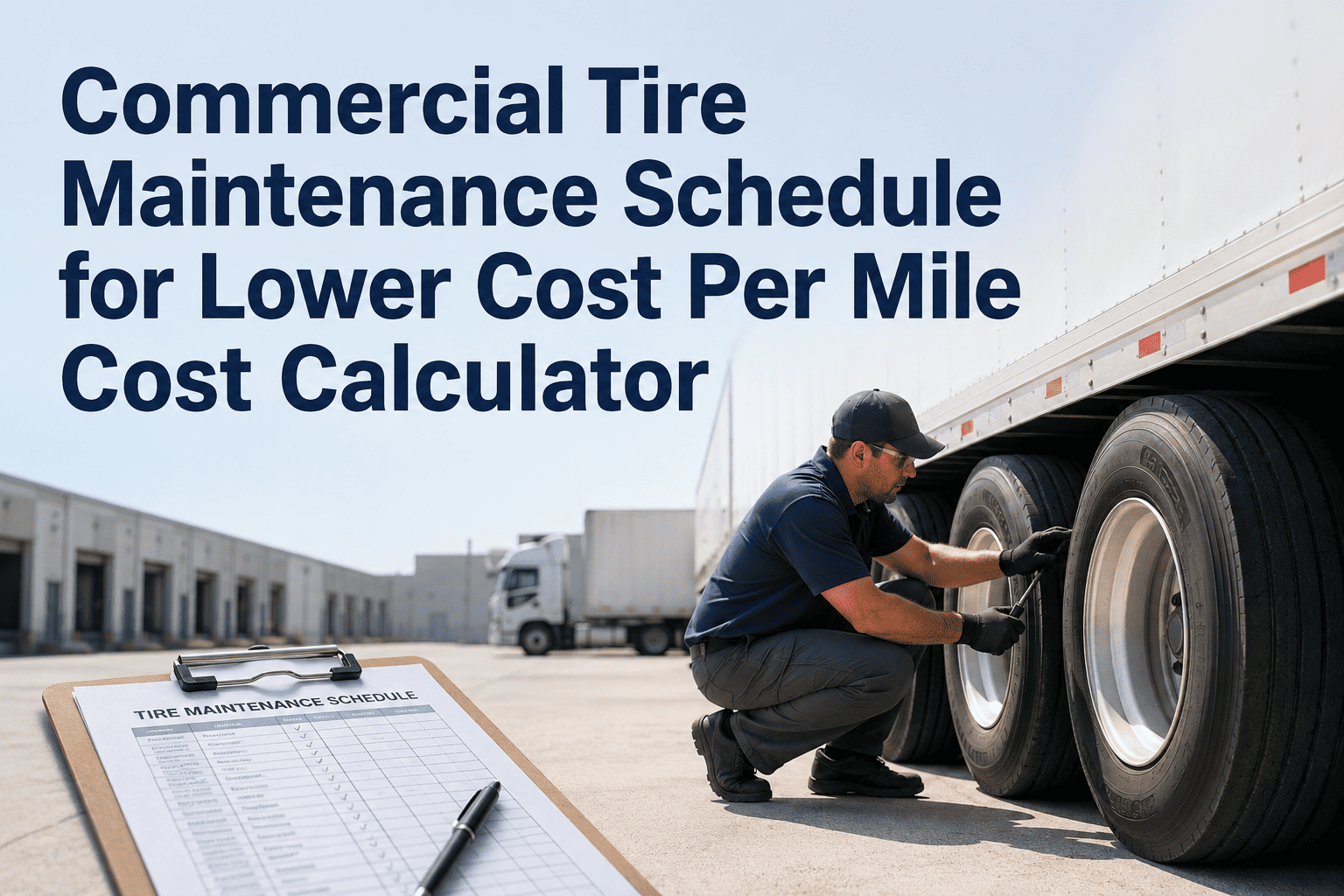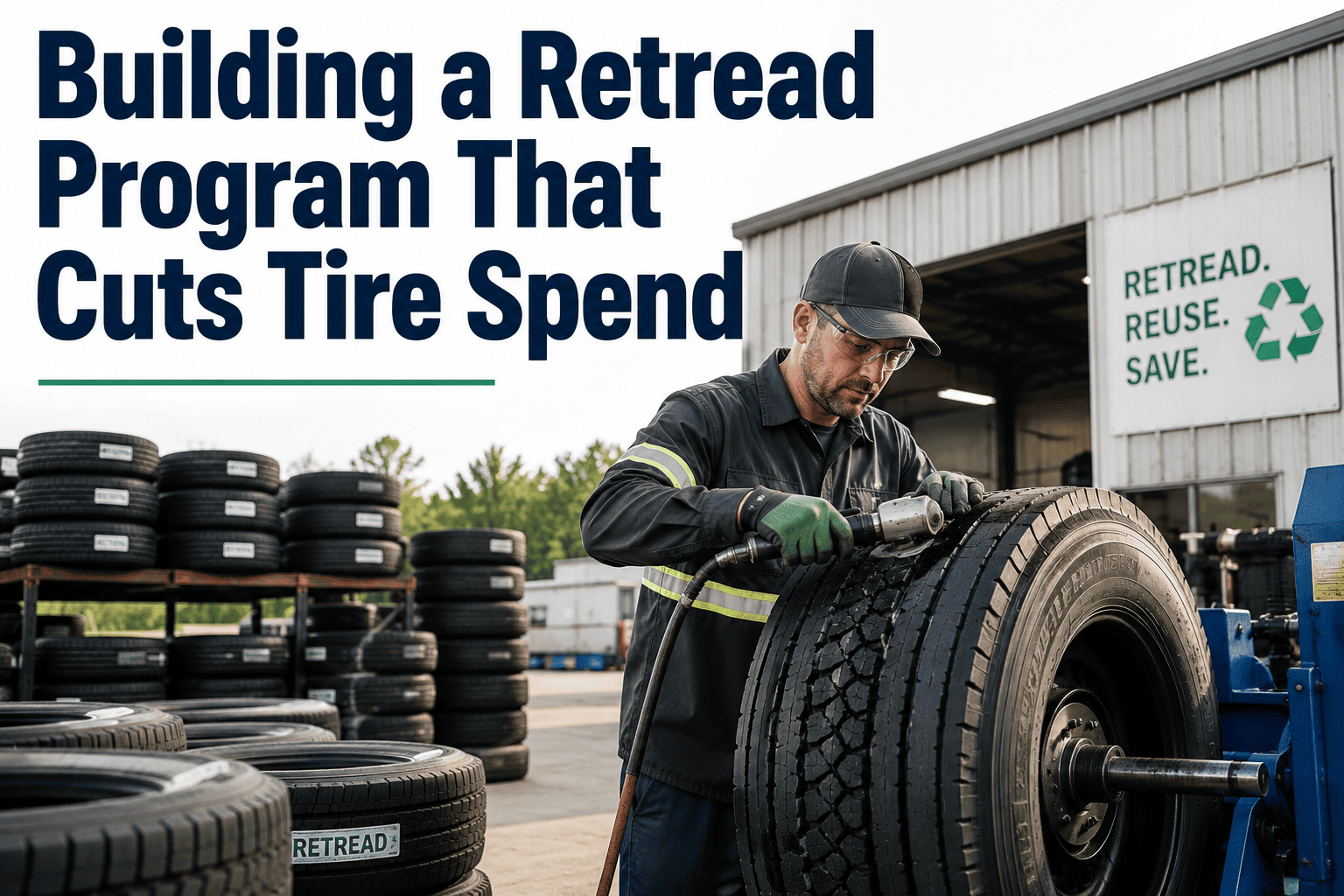
A retreaded commercial tire costs roughly $130 to $180 per casing, compared with $450 to $650 for a new tire — that is a 70 to 75 percent saving every time a casing qualifies, yet most trucking fleets still scrap casings by default instead of routing them back into service. Airlines retread around 80 percent of their tires; commercial trucking fleets that fail to run a structured program leave an estimated $1,500 to $2,500 per truck per year on the table. The four pillars — casing selection, partner certification, DOT-coded tracking, and application matching — push retread rates from the industry average of 30 to 40 percent up to 70 to 85 percent, with corresponding tire-budget reductions of 25 to 40 percent. You can begin auditing your own casing lifecycle today by signing up for a Start Free Trial of Oxmaint, where retread eligibility, per-casing history, and cost-per-mile comparisons surface automatically.
Is your fleet scrapping casings worth $130 each?
Most fleets retire casings by default — not because the casing failed inspection, but because no one tracked whether it qualified for retread. The result: paying $450–$650 for new rubber when a $130 retread would have met or exceeded new-tire performance on drive and trailer positions.
Why structured retread programs outperform scrap-by-default
A retread is not a shortcut — it is a remanufactured tire built to industry standards under TRIB and TIA certification. The economics only break down when casings never reach the retreader because removal, inspection, and tracking are handled manually.
Four disqualifying conditions that decide the casing's fate
Before a casing ever reaches the retreader, a technician must confirm the structural condition. Fleets that skip this step either send dead casings (wasting freight and inspection labor) or scrap good ones (wasting $300+ in residual value).
Belt separation
Any sign of steel-belt delamination — bulges, edge gaps, or irregular wear patterns radiating from the belt package — disqualifies the casing. Retread compound will not bond to a structurally compromised belt.
Sidewall cuts through the casing
Surface scuffs are acceptable, but any cut that penetrates the casing ply or exposes cords means the tire cannot hold retread pressure. Casing integrity is non-negotiable for safety and longevity.
Shoulder damage
Shoulder-impact damage — curbing, pothole strikes, chunking at the shoulder edge — compromises the casing where stress concentrates. These casings fail curing pressure tests.
Repeated prior repairs
A casing with multiple nail-hole patches or section repairs already has a weakened envelope. Most certified retreaders cap acceptable repair history at one or two prior fixes per casing.
The retread-vs-new math every fleet manager should run
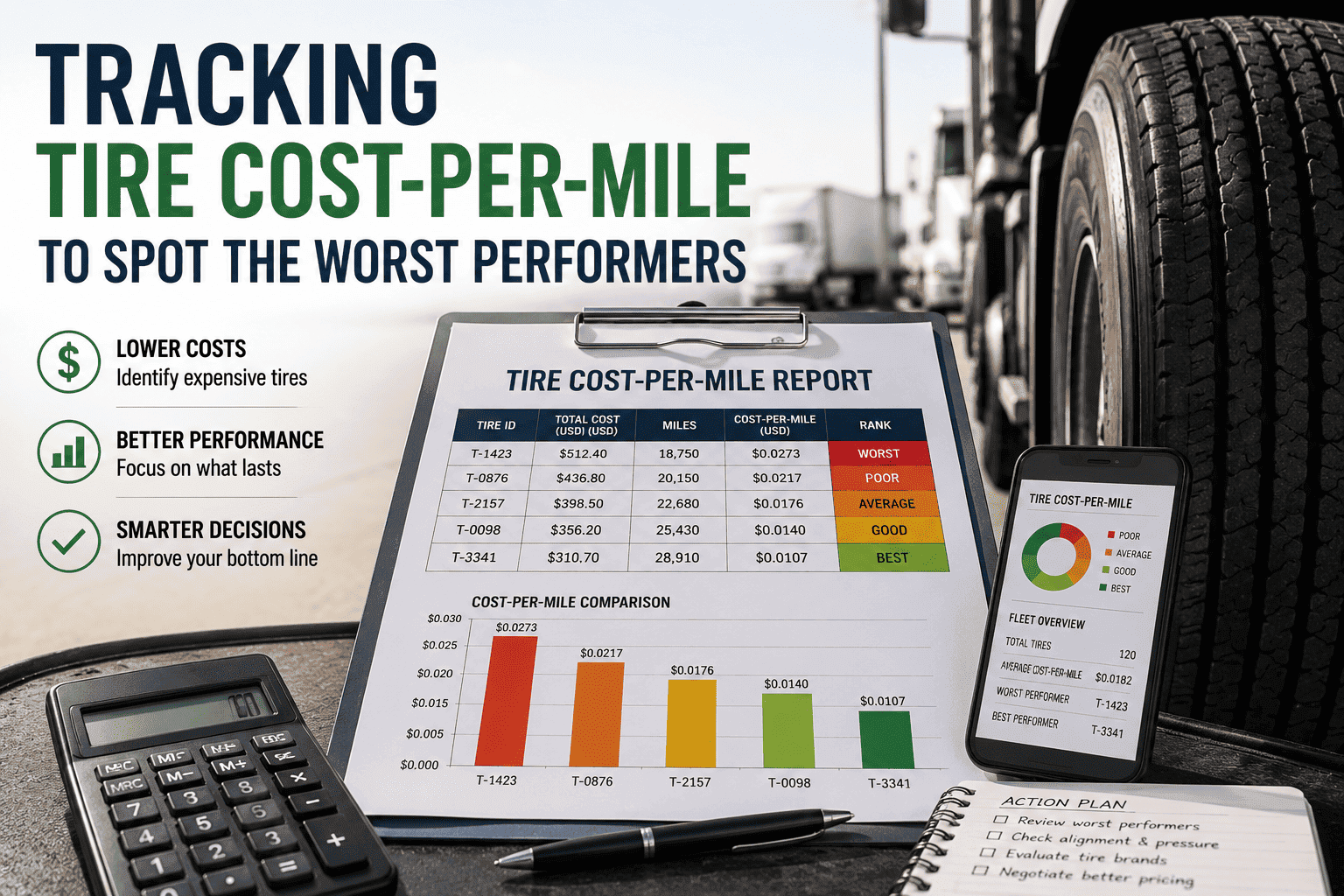
Tire cost-per-mile is the metric that separates a fleet that retreads systematically from one that reacts to blowouts. The formula is simple; the discipline is in tracking the inputs.
A $150 retread running 150,000 miles = $0.001/mi. A $550 new tire running 250,000 miles with a $40 casing credit = $0.00204/mi. The retread nearly halves per-mile rubber cost.
A 50-truck fleet (18 tires each) with 60% casing eligibility on drive and trailer positions saves roughly $54,000 per retread cycle — typically every 12 to 18 months.
| Tire scenario | Unit cost | Service life (miles) | Cost per mile | 3-yr cost (8 tires) |
|---|---|---|---|---|
| New drive tire (premium) | $550 | 250,000 | $0.00220 | $13,200 |
| 1st-life retread on drive | $150 | 150,000 | $0.00100 | $3,600 |
| 2nd-life retread on drive | $150 | 130,000 | $0.00115 | $4,140 |
| New trailer tire (line-haul) | $450 | 200,000 | $0.00225 | $10,800 |
| Retread on trailer position | $130 | 140,000 | $0.00093 | $3,120 |
From removal to remanufactured: a certified retreader's five steps
A qualified retreader following TRIB and TIA standards does not just glue new tread on. Each casing is inspected, prepared, rebuilt, and pressure-cured to meet or exceed new-tire performance for most fleet applications.
Initial casing inspection
Each arriving casing is logged by DOT code and visually inspected for the four disqualifying conditions. Casings failing here are scrapped and the residual value is credited or charged back to the fleet.
Shearography and pressure test
Non-destructive shearography imaging detects internal separations invisible to the eye. The casing is then inflated to verify it holds the pressure it will see in service.
Buff and shear remaining tread
The old tread is sheared away to expose a clean, true casing profile. Buffing radius determines the tread footprint and is matched to the fleet's application.
Apply new tread compound
A fresh tread — selected for the fleet's route type, load, and weather — is applied using either a cold-cap (pre-cured tread bonded with cushion gum) or hot-cap (uncured tread) process.
Pressure-cure and final QC
The assembled tire is placed in a curing chamber under heat and pressure, bonding tread to casing. Final inspection balances, trims, and stamps the new DOT code linking it back to the original casing.
Where retreads belong — and where they do not
Position matters as much as casing condition. Most fleets spec new tires on steer for safety reasons per DOT guidance, while drive and trailer positions are prime retread candidates.
Drive position
Drive tires carry load and transmit torque, but heat and wear profiles are predictable. First and second retread lives are well-documented on line-haul drive axles.
Trailer position
Trailer tires see lower torque and steadier loads — ideal conditions for retreads. Many line-haul fleets run trailers exclusively on retreaded rubber without performance penalty.
Steer position
Most fleets spec new tires only on steer for safety and liability reasons. DOT regulations do not prohibit retreaded steers, but insurers and internal policy often do.
A 180-truck regional fleet turns $0.40/mi into $0.26/mi
A 180-truck dry-van fleet running regional routes was spending roughly $42 per tire per 1,000 miles — about $0.042/mi per tire, or $0.40/mi across an 18-wheel set. Their retread rate sat at 28 percent because casings were scrapped at removal without inspection.
After implementing a structured retread program with a certified TRIB partner and per-casing DOT tracking in Oxmaint, the fleet's eligible-casing rate rose to 72 percent on drive and trailer positions. Cost per mile dropped to $0.26 across the wheel set.
Result: $1.08M annual tire-spend reduction with no change in routes, drivers, or equipment — only casing discipline.
Stop scrapping casings worth $130 each.
Oxmaint flags retread eligibility at removal, tracks retread history per DOT code, and compares retread vs. new cost-per-mile head-to-head — automatically.
Retread program questions fleet managers actually ask
How much can a fleet actually save by running a structured retread program?
Fleets moving from a 30 to 40 percent retread rate up to 70 to 85 percent typically see tire-budget reductions of 25 to 40 percent. Per-truck savings land between $1,500 and $2,500 per year depending on routes, load profiles, and how aggressively casings are tracked instead of scrapped at removal.
Are retreaded tires safe for all wheel positions?
Retreads perform well on drive and trailer positions, where load and torque profiles are predictable. Most fleets spec new tires only on steer for safety and liability reasons, even though DOT regulations do not outright prohibit retreaded steers. Match the retread to the position and casing condition, not the other way around.
How many times can a single casing be retreaded?
The industry guideline is one to three retreads per casing over its lifetime, depending on original casing quality, operating conditions, and the application. Each retread event is logged against the DOT code so the fleet and retreader both know when a casing has reached its cap. Exceeding the cap — not retread quality itself — is the most common root cause of retread failures.
What makes a casing ineligible for retread?
Four conditions disqualify a casing outright: belt separation, sidewall cuts that penetrate the casing ply, shoulder-impact damage, and a history of repeated prior repairs. Casings from chronically underinflated or overloaded runs also frequently fail non-destructive shearography even when they look acceptable externally. You can audit your casing eligibility in Oxmaint — Start Free Trial gives you access to automatic eligibility flags at removal.
How does Oxmaint track retread history and cost per mile?
Each casing is identified by its DOT code and logged against the asset it is mounted on. When a tire is removed, Oxmaint evaluates casing condition data and flags whether it is retread-eligible. The system then tracks every retread event per casing and compares retread vs. new cost-per-mile side by side, so the fleet sees the actual rubber cost of every mile run. To see it configured for your operation, Book a Demo.
Build your retread program in Oxmaint today.
Automatic eligibility flags, per-casing DOT tracking, and head-to-head cost-per-mile comparison — everything a fleet needs to stop scrapping good casings.
Free 14-day trial · No credit card